Gresham House Strategic £1m gain

AIM-quoted investment company Gresham House Strategic (LON: GHS) has made a £1m gain on its investment in the newly floated MJ Hudson (LON:MJH).
 
The MJ Hudson stake was valued at £2m in the September 2019 balance sheet of Gresham House Strategic and it was held in a combination of shares and convertibles, which had the right to convert at a discount to the placing price of 57p. There were sellers of existing shares at the time of the flotation but Gresham House Strategic was not one.
The fully converted stake is 5.03 million shares, which equated to a 2.9% shareholding. This means share...

Markets – a day on from the General Election

The time is 12:30 on Thursday the 12th of December. I tell my colleague to bet on cable, shorting the pound until 20:00 – election day is always jittery. The time comes to 21:50, moments before the exit poll. I tell him to back Sterling with everything he’s got, he doesn’t, and minutes later I was doing my best ‘I told you so’ face. The Conservatives weren’t the only winner of the General Election, the pound won too. Peaking at 2% up against the dollar, it was hardly a surprising accompaniment to a decisive Tory majority. What was noticeable, though, was that during the session following the election result, FTSE struggled to gain traction. Likewise, with such strong movement in the pound, the idleness of the FTSE was hardly a shock. Another factor to consider was our regular suspect, Donald Trump, doing his best to upset the party. While indices were happy to rally on the back of Boris Johnson’s success, the Twittering POTUS took it upon himself to dispel any rumours of trade deal progress. Speaking on Friday’s market movements, Spreadex Financial Analyst Connor Campbell stated, “Donald Trump himself couldn’t hurt sentiment this Friday, the markets ignoring his Twittervention to keep climbing higher.”

“The President claimed that Thursday’s Wall Street Journal report – the one stating that a trade deal had been reached in principle, with the US agreeing to rollback some pre-existing tariffs in exchange for China buying up more American agricultural goods – were ‘completely wrong’, labelling it as ‘fake news’.”

“Yet investors didn’t seem to pay attention. The Dow Jones hit a fresh all-time high of 28250 after adding another 150 points, while the DAX and CAC maintained their respective 1%-plus increase.”

“Friday’s real change came from the FTSE. Initially it opened just 0.3% higher, cowed by the sheer strength of the pound’s gains. However, with sterling pulling back oh so slightly – it is still up 1.6% against the dollar and 1.3% against the euro – and the banking and housebuilding sectors seeing some red-hot growth, the UK index was able to jump 1.6%, re-crossing 7400 in the process.”

“All this index growth, however – be it in the US, Eurozone or UK – will quickly come unstuck if Trump is telling the truth. A lack of trade deal or tariff delay would see another $156 billion in Chinese goods smacked with extra charges this Sunday, setting back talks between the superpowers and ending the year on a dour, pessimistic note.”

Elsewhere on Friday, following the election results, Lloyds Banking Group rallied (LON: LLOY), Miton UK MicroCap Trust PLC (LON: MINI) gave shareholders a modest update, Moodys Corporation (NYSE: MCO) gave a steady oil and gas outlook, and Taylor Wimpey (LON: TW) bounced following the Conservative win. So, the day was largely positive. Going forwards, though, it will be important to see if Boris Johnson can inspire anything beyond than short-term profit maximisation. As reported by the FT, many leading economists spare little hope for long-term investment, innovation and opportunity-creation, but only time will tell.

Ferro-Alloy shares crash on falling vanadium prices

0

Ferro-Alloy Resources Ltd (LON: FAR) have seen their shares crash on Friday afternoon as the gave a disappointing update.

The Ferro-Alloy Resources Group (“FAR”) is developing the giant Balasausqandiq vanadium deposit in Kyzylordinskaya oblast of southern Kazakhstan.

The ore at this deposit is unlike that of nearly all other primary vanadium deposits and is capable of being treated by a much lower cost process.

It is planned that output will be increased in stages to reach 22,400 tonnes of vanadium pentoxide per year, mostly in the form of ferro-vanadium.

The firm said its profitability and cash flows have suffered as vanadium prices fell more sharply than expected.

The drop in the price of vanadium pentoxide to its current level of around USD5 per pound from around $16 per pound at the start of 2019 has hurt Ferro-Alloy’s profitability as well as its cash flow. Despite being widely forecast, the price decline was steeper and more rapid than expected, the company said.

According to the firm, the reason was largely due to China’s initial lack of enforcement on its new higher construction steel standards and an abrupt increase in China’s vanadium production.

However, this enforcement is now considered to be “much stronger” and China’s vanadium production is likely to slow as prices stabilize. Ferro-Alloy’s long-term price forecast for vanadium pentoxide is $7.50 per pound, around the historic average.

“In the longer term the outlook for vanadium demand growth is very strong from its traditional market to steel-makers, putting upwards pressure on prices and necessitating the building of new supply which, other than by Ferro Alloy, is unlikely to happen until prices rise to considerably higher levels than today’s,” said Ferro-Alloy.

The impact of the fall in price was worsened by limited production whilst the firm was implementing the expansion of its vanadium concentrate processing operation. The building expansion is now complete and the first phase of new equipment for the operation are being commissioned.

Additionally, the firm appointed SRK Consulting and Coffey International to upgrade its feasibility study to Western bankable standards.

Ferro-Alloy Chief Executive Nick Bridgen said: “The expansion of the existing operation, the first phase of which will be operational by the end of December, and the advances we have made with our main project, give reasons for an optimistic outlook for 2020. The recent fall of the vanadium price from the frothy levels of last year can be viewed as a positive for the industry as it will allow demand to continue growing, particularly in the nascent flow battery industry, and will lead to the shut-down of high cost opportunist production. Furthermore, it highlights the clear advantage of the Balasausqandiq project, which is expected to become the world’s lowest cost primary supplier.”

In the mining sector, there have been updates. Coal miner Edenville Energy saw their shares rally on two investors which have said they intend to provided funding for their mining operations.

Additionally, Centamin PLC have seen their shares in green on Friday morning, as the firm announced a new interim CEO appointment.

Chief Financial Officer Ross Jerrard has been made interim CEO, following the departure of Andrew Pardey.

Additionally, the announced the FTSE250 listed firm appointed Jim Rutherford as a non executive director. He will then become deputy non-executive chair after 2020’s annual general meeting, when incumbent Gordon Edward Haslam departs.

Rutherford has over 25 years of industry experience and specialized in the global mining and metals sector, and has has much knowledge in the investment banking arena.

He currently works at FTSE100 listed Anglo American plc where is a non-executive director.

Shares of Ferro-Alloy crashed 22.94% to 11p. 13/12/19 15:09BST.

Shell shares dip despite announcing new credit facility

1

Royal Dutch Shell Plc (LON: RDSA) have seen their shares dip on Friday afternoon despite giving shareholders an interesting update.

Shell have seen a mixed few weeks of trading, and shares have been volatile over the past few months. At the end of October, Shell received a Halloween scare when they revealed that their profits took a bruising.

Shell saw their profits slump but they comfortably beat market and analyst expectations posting earnings of $4.8 billion (£3.7 billion), well ahead of the $3.91 billion anticipated.

This is the second time that this has happened during 2019 trading after second quarter results saw profits slow but the still beating consensus.

In this update, Shell joined fellow oil titans such as SABIC who reported an impairment loss of $400 million, and Total SA to report slower profits as profits fell 15% in the third quarter update.

A week after, the FTSE100 listed firm, announced that they would be merging with French firm EOLFI as part of its plans to expand into the oil major’s electricity business.

“We believe the union of EOLFI’s expertise and portfolio with Shell’s resources and ability to scale up will help make electricity a significant business for Shell,” Offshore Wind Shell vice president Dorine Bosman said in a statement

In an update on Friday, the firm updated shareholders about a $10 billion new credit facility. The new facility has been agreed with a total of 25 banks and replaces the existing framework valued at $8.84 billion.

It will also, in a first, have interest and fees linked to Shell’s progress in reached its short-term net carbon footprint target. Shell has targeted reduce its footprint by 2% to 3% by 2021.

“We are delighted to support the transition to new benchmark interest rates with this, market leading, syndicated SOFR facility,” said Russell O’Brien, Group Treasurer at Shell. “This is an innovative deal which also demonstrates Shell’s broad-based commitment to reducing the Net Carbon Footprint of the energy products we sell. We appreciate the strong support and commitment from our relationship banks.”

Shell has set an ambition to reduce the Net Carbon Footprint of the energy products by around 50% by 2050 and by 20% by 2035 in a time of high environmental awareness.

The move to promote environmentalism comes at an important time where multinationals such as Coca Cola HBC AG have added to the growing list of firms who have looked to reduce their carbon footprint.

The update concluded by saying “The $10 billion unsecured revolving credit facility consists of a five-year, $8 billion revolving credit facility, and a one-year, $2 billion facility. Each facility includes two one-year extension options at the discretion of each lender”.

“Bank of America and Barclays Bank acted as joint coordinators for the facility”.

Shares of Shell dipped 0.82% on the announcement and trade at 2,164p. 13/12/19 14:52BST.

Immupharma announce intentions to list on Life Sciences Heavy Brussels Index

0

ImmuPharma PLC (LON: IMM) have announced that they will list on the Life Sciences Heavy Brussels Index.

ImmuPharma is dedicated to the development of innovative drugs to treat serious medical conditions, characterised by high unmet medical need, low marketing costs and relatively low development costs.

Shares of ImmuPharma jumped 3.64% to 18p on the announcement. 13/12/19 12:31BST.

At the end of November, the firm saw their shares rally over 200% as it announced it had agreed a new US licensing deal.

The firm landed a licensing deal worth $100 million for Lupuzor, its drug to treat autoimmune disease lupus. The group will receive up to $70 million of milestone payments, with $5 million due on regulatory approval of the drug.

ImmuPharma will also get royalties of up to 17% on sales, while there are financial incentives to expand Lupuzor’s use into other autoimmune diseases.

Chief executive Dimitri Dimitriou said Avion had a strong track record of taking late stage drugs through the regulatory process and onto commercialisation.

In an update on Friday, the firm has told the market about its intentions to begin trading in Brussels next week as it eyes “additional visibility” among European investors.

On Thursday, Immupharma will list on Euronext Growth Brussels, Europe’s largest market for life science firms, the company said. Euronext Growth Brussels houses 106 life science companies, the index’s head of listing said.

Immupharma said: “The dual listing on Euronext Growth Brussels aims to further increase the visibility of ImmuPharma’s shares in continental Europe where the company is conducting its research & development activities in France and Switzerland.

“In addition to AIM, this dual listing on Euronext allows ImmuPharma to join the number one European stock exchange for life sciences and the world’s second biggest for biotech companies after the United States.”

Chief Executive Dimitri Dimitriou said: “This dual listing on Euronext Growth Brussels gives ImmuPharma additional visibility among European investors. We are confident that our listing on Euronext Brussels will allow us to meet and develop relations with a community of new investors in continental Europe.”

In the pharmaceuticals industry, it has been a busy week for firms, with market leaders making gains.

FTSE100 listed GlaxoSmithKline plc saw their shares modestly boosted on Thursday afternoon following an announcement by the firm on a drug application in the United States.

The firm said last week that ViiV Healthcare has completed submission of a new drug application to the US Food & Drug Administration, seeking approval of fostemsavir.

ViiV Healthcare is majority owned by GSK, with rival firms Pfizer Inc ) and Shionogi Ltd as a minority shareholders.

Miton UK shares rally despite modest update

1

Miton UK MicroCap Trust PLC (LON: MINI) have seen their shares spike on Friday afternoon despite the firm giving shareholders a modest update.

Premier Miton was formed in November 2019 from the merger of Premier Asset Management Group plc and Miton Group plc. They manage £11billion on behalf of a wide range of individual investors and institutions.

Shares in Miton UK rallied 5.27% to 51p on Friday. 13/12/19 12:15BST.

The firm said its net asset value per share declined in the first half of its year.

The firm alluded to the strain of Brexit on smaller stocks, with Nanoco Group PLC (LON: NANO) its worst performer. Nanoco is the market leader in the research, development, licensing and large scale manufacture of novel nanomaterials for use in various commercial applications

The slump from Nanoco was due to the fact that Nanoco’s largest prospective customer will not be using its new factory, despite having paid for all the new machinery.

Given the lessened chance of Nanoco generating enough cash funds in the next few years, Miton UK MicroCap sold its stake.

The venture capital trust’s NAV per share as at October 31 was 48.92p per share, down 13% from 56.13p at the end of April.

Gervais Williams and Martin Turner, Miton UK MicroCap’s investment managers, said: “Brexit anxiety subdued smallcap buyers, and hence the FTSE Smallcap Index excluding investment companies fell 5.9% and the AIM All-Share Index fell 8.2%. Generally, microcap share prices fell somewhat further, in part because their market liquidity is more limited as a result, the NAV of the trust fell 13% over the six months to October.”

Chair Andy Pomfret said: “As global growth falls back to pre-globalisation norms, we believe that a quoted microcap approach is advantageous. When economic conditions are challenging, the management agility that many microcaps demonstrate is important. Importantly, since acquisitions or mergers can turn out to be transformational, microcaps have a history of delivering much greater returns than those of the mainstream indices.

“In summary, the growth prospects for the UK economy may be no better than others. Importantly and uniquely, the UK stock market contrasts with others in that it has retained a vibrant universe of quoted microcaps over the period of globalisation. In a slow-growth world, the trust’s microcap strategy is particularly well-placed to deliver premium returns. Furthermore, since we believe that UK microcaps themselves are overdue a period of major performance catch-up, we consider that the Trust has the potential for strong prospects over both the short and the longer term.”

Following the election results announced this morning, an update has come from Centamin.

The firm announced the appointment of both an interim chief executive and a new deputy chair. Chief Financial Officer Ross Jerrard has been made interim CEO, following the departure of Andrew Pardey.

Centamin also announced the appointment of Jim Rutherford as a non executive director. e will then become deputy non-executive chair after 2020’s annual general meeting, when incumbent Gordon Edward Haslam departs.

Hollywood Bowl profit grows, shares rise

1
Hollywood Bowl (LON:BOWL) shares rose on Friday after the company posted a 15% increase in its full year profit. Shares in the bowling alley operator were up almost 9% during Friday morning trading. Hollywood Bowl said that, for the year ended 30 September, profit before tax grew by 15.3% to £27.6 million, compared to the £23.9 million figure recorded the year prior. Meanwhile, total revenues grew by 7.8% to £129.9 million, up from last year’s £120.5 million. Hollywood Bowl added that it has six further bowling centres in the development pipeline from 2021-2023. The company said that food and drink revenue was up 6.3% on the year before, amounting to £35 million. It said that more customers chose to spend as a result of the launch of its new menu and its enhanced bar and diner experience. “I am delighted to report another year of strong profitable and cash generative growth, demonstrating the consistent delivery of our proven, customer-led strategy,” Stephen Burns, Chief Executive of Hollywood Bowl, commented in a statement. “In addition to driving these further strong returns, we also achieved excellent customer feedback following the ongoing investment in our centres, further innovation of our industry-leading customer proposition and the continued development of our team members,” the Chief Executive continued. “We also increased the size of our portfolio to 60 high-quality, all profitable centres. As a result of this strong financial and operational performance, we are delighted to announce a special dividend for the third consecutive year, which will result in a total of £47.7m being returned to shareholders since IPO.” The Chief Executive said: “We have made a solid start to the new financial year and we expect to make further progress in our ongoing refurbishment programme, investment in technology and continued roll out of customer innovations. I am confident that we will continue to deliver value for all of our stakeholders.” Shares in Hollywood Bowl Group plc (LON:BOWL) were up on Friday, trading at +7.34% as of 11:57 GMT.

Moody’s give stable outlook for oil/gas industry and tobacco markets

3

Moodys Corporation (NYSE: MCO) have said that the stable for the Oil & Gas and Tobacco markets is stable for the new year.

Today, Moody’s investors have said that the oil/gas industry and tobacco scene looks broadly stable for 2020.

The oil price will remain volatile next year, Moody’s said, with key issues being producer responses to growing inventories, the recovery in Saudi Arabian volumes, accelerating US output, and a slowing in demand in general across the world.

Big names such as FTSE100 (INDEXFTSE: UKX) listed Shell (LON: RDSB) saw their profits take a hit at the end of October, as the firm alluded to tough trading conditions and volatile oil prices.

Shell saw their profits sink during this time, however they comfortably beat market and analyst expectations posting earnings of $4.8 billion (£3.7 billion), well ahead of the $3.91 billion anticipated.

“The stable outlook for the integrated oil and gas sector is driven by an expected recovery in earnings before interest, tax, depreciation, and amortisation on the back of upstream production growth and higher refining margins,” said Steve Wood, a managing director at Moody’s.

“Companies’ financial policies will become more shareholder friendly, with rising dividend payments. These firms will also increase their investments in low-carbon operations,” Wood added.

The exploration & production sector’s outlook remains stable, Moody’s said, and it forecasts low single-digit growth in Ebitda in 2020. Volume growth will ease, but will remain at 5% to 7%, with a focus on capital discipline and cash flow “pivotal”.

In the tobacco scene, Moody’s believes the global industry will see operating profit growth of 3% to 4% in 2020, with low-to-mid single-digit falls in cigarette volumes offset by price rises.

“While heated tobacco and vaping products will continue to gain traction, increasing investment needs will constrain profit growth for some companies,” said Roberto Pozzi, a Moody’s senior vice president.

Notable performance in the tobacco industry came from British American Tobacco PLC (LON: BATS) who saw their shares rally on after the firm gave a confident expectation outlook for 2019.

BAT continues to expect US industry volumes for 2019 to be down by 5.5%, while for 2020 it expects a drop in the range of 4% to 6%.

For the Tobacco Heating Products division, the glo product in Japan held its volume share at 4.9% reborn with the launches of glo Pro and glo Nano in a highly saturated market.

Earlier this week, Moody’s lowered the Irish banking outlook from positive to stable.

The credit ratings agency said banks’ earnings will come under pressure from low interest rates, with asset risk continuing to fall.

Profitability will decline,” said Moody’s analyst Arif Bekiroglu. “Irish banks’ high reliance on net interest income makes them sensitive to the low interest rate environment. High exposure to low-margin tracker mortgages, rising costs due to increased debt issuance, revenue losses from sales of problem loans, and Brexit uncertainty are further headwinds for profitability.”

Expenses will remain high, as IT costs surge on a move towards digitalization, regulation and pending fines.

The agency continued: “Meanwhile, banks’ asset risks are set to keep falling, as economic growth and low rates support borrowers’ finances, and as banks continue to sell and restructure problem loans. Enhanced risk management and stricter Central Bank of Ireland affordability guidelines should prevent excessive risk taking, holding back new problem-loan formation. Moody’s also expects capital ratios to hold steady, and funding and liquidity to remain strong.”

The performance from the Bank of Ireland (LON: BIRG) however seems to defy the change made on Tuesday. Bank of Ireland recorded €1.5 billion of net lending growth in the nine-month period, which is 800 million higher than in the same period a year ago.

Additionally, Moody’s lowered the UK Banking sector outlook from stable to negative, which caught news headlines at the start of December.

“The UK’s economy is weakening, making it more susceptible to shocks, and prolonged uncertainty over Brexit has reduced the country’s growth prospects,” said Laurie Mayers, associate managing director at Moody’s. “Meanwhile, persistently low interest rates and increased mortgage market competition are eroding the net interest margins of most UK lenders. These challenges will outweigh the sector’s strong capital and liquidity buffers, and an expected decline in banks’ conduct costs.”

Moody’s believes “problem loans” will increase moderately on weaker economic growth and higher unemployment.

“Even so, banks’ capital will remain broadly stable as they will likely counterbalance lower organic capital generation by reducing their shareholder distributions,” Moody’s added.

In compliance with EU regulations, UK lenders will continue to issue loss absorbing debt, wheich Moody’s said will create an “additional buffer” to protect depositors and bondholders.

“In addition, banks will continue to reinvest cost savings achieved in enhancement of IT platforms and digitalisation of processes and channels. Some large lenders, however, will likely report higher net profit in 2020, helped by a sharp fall in conduct costs after an August 2019 deadline for compensation claims for mis-sold payment protection insurance,” the credit rater added.

Amid the tensions from the Brexit negations, the General Election results announced this morning , the ongoing saga between China and the United States and political tensions in Hong Kong, the state of the global finance industry has not looked so gloomy since the financial crash of 2008. However, many British lenders have seen shares in green following the Conservative landslide.

“A deteriorating operating environment weighs on banks’ asset quality and profitability, and low interest rates and increased competition in mortgages reduce net interest margins of most UK lenders,”

Moody’s said in a report on Tuesday. “The UK’s economy is weakening, making it more susceptible to shocks, and prolonged uncertainty over Brexit has reduced the country’s growth prospects,” said Laurie Mayers, Associate Managing Director at Moody’s Investors Service.

“Our base case is that the UK and the EU will ultimately reach a free-trade agreement, but it is increasingly unlikely that any such deal will substantially mitigate the negative economic impact of Brexit,” Moody’s concluded.

Homebuilding firms shares rally on election results

3
Several big players in the homebuilding industry have seen their shares rally on the announcement that the Conservative Party had won the 2019 election.

In the FTSE 100 (INDEXFTSE: UKX), Taylor Wimpey (LON: TW) saw their shares rally 14.88% to 200p.

At the end of November, Wimpey reported strong second half demand for their housebuilding services, despite tough market trading conditions. Britains third largest homebuilder gave shareholders reassurance that they were not going to let Brexit complications and external market issues affect trading.

Berkeley Group Holdings PLC (LON: BKG) shares spiked 13.06% to 5,102p. Last week, Berkeley saw their shares in green despite a timid update.

Berkeley sources three quarters of its revenue from London, set a pretax profit aim of £3.3 billion over the six years to 2025. The firm expected profits to be within the £500 million and £700 million guidance in any one year. The company, which operates primarily in London, Birmingham and the South of England, said pretax profit fell 31% to 276.7 million pounds ($355.01 million) for the six months ended Oct. 31.

Barratt Developments Plc (LON: BDEV) shares rose 12.52% to 755p. In October, the firm saw sales slip amid tough market conditions.

Barratt said they expect the volume of house sales to grow toward the end of the of their medium-long term target range of 3-5% annually. Total sales rose to 12,963 units from 12,903 earlier this year. However, this was offset by a fall in the value of these homes by 2.4% to £3.07 billion.

Finally Persimmon plc (LON: PSN) shares have rocketed 11.01% to 2,790p. At the start of November, Persimmon reported that Summer trading had met expectations, and this was down to robust trading and consumer resilience.

In the second half of 2019, Persimmon commented on the ‘resilient’ trading patterns alluding to full sale allocations for the year. Around £950 million of forward sales are secured beyond 2019, compared to £987 million this time a year ago.

Analysts at Peel Hunt commented: “It’s difficult not to see the election result as a healthy boost for the whole UK building sector. Stalled commercial projects should now get going, while more clarity on Brexit should give consumers a bit more confidence to be more active in the housing market, as well as get going on some renovation projects. We suspect the new housing market will be the first to see the benefits, with a pick-up in volumes and house prices as the traditional spring season gets off to an early start. Tax and spend changes in the likely February budget should provide some further good news for the sector.”

Lloyds Banking see shares in green following Conservative landslide

5
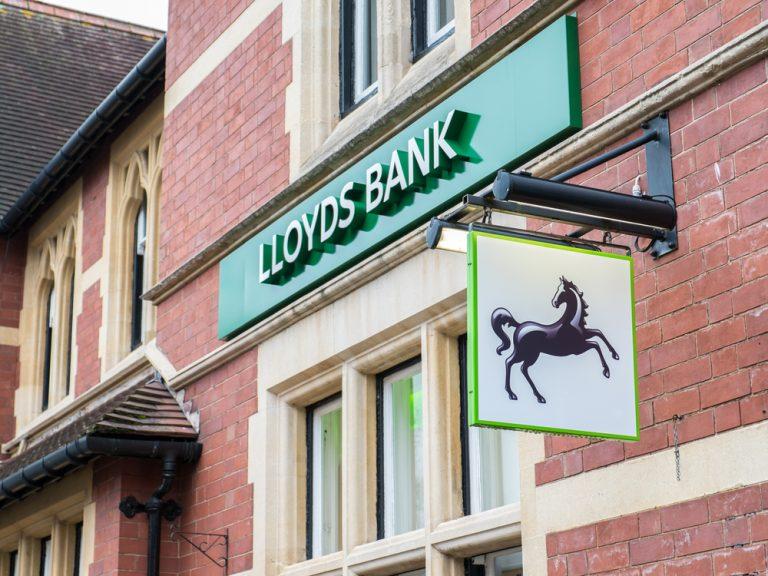
Lloyds Banking have seen their shares in green on Friday morning as the results of the General Election were announced. The Conservative Party smashed the election and now we will await the next updates on Brexit negotiations.

Last week, Moody’s Corporation (NYSE: MCO) lowered the UK banking sector’s outlook from stable to negative. However, shares have leapt on the announcement and have seen shares in green.

At the end of October, Lloyds Banking Group PLC (LON: LLOY) saw their shares crash following a poor quarterly update. The firm saw a 97% fall in pre-tax profit for the third quarter from last year.

The bank’s chief executive, Antonio Horta-Osorio, said: “I am disappointed that our statutory result was significantly impacted by the additional PPI charge in the third quarter, driven by an unprecedented level of PPI information requests received in August”.

Additonally, a few days back, Lloyds received criticism for the treatment of HBOS fraud victims.

Watchdog the Financial Conduct Authority said it would consider ‘further action’ against Lloyds over the failings, adding that they needed to be addressed quickly.

We are disappointed that, after such a long period of time, the consequences of the HBOS Reading fraud for customers have not yet been properly remediated by LBG,” the FCA added.

Today, shares in Lloyds have jumped 6.4% to 65p on the election results. Following the election landslide, the future of British politics has been given some clarity however the newly elected Conservative government still has a lot of work to do. Although, the election has given concrete results there is still so much uncertainty with Brexit negotiations, the future of the NHS and Foreign Relations. The shares prices of British banks have seen their shares in green, and noteworthy rises have also come from Royal Bank of Scotland Group plc (LON: RBS) who have seen their shares spike 10.69% to 257p. Additionally, Barclays PLC (LON: BARC) shares rallied 7.77% to 185p. 1/12/19 11:17BST. Following a tough period of trading for banks in the global industry, the news this morning will only see shares temporarily boosted. However, this does give a good platform for the banks now to devise long term business plans to sustain growth and stimulate business in a tough market. Certainly for now, the UK business sector awaits an update on Brexit negotiations, but banks will be pleased on reflections in share price movement this morning.