
Games Workshop shares surge on profit expectations

Games Workshop Group PLC (LON: GAW) have seen their shares surge amidst speculation that there will be strong profit gains in their next trading update.
The firm reiterated strong trading and a solid increase in profit and revenue for the first half of its financial year, which spurred shareholder optimism.
Amidst a tough time of trading for UK high street retailers, this will come as a relief for shareholders as UK markets stagnate due to Brexit complications.
Established high street retailers such as Marks and Spencer (LON: MKS) have seen their profits sink amidst slow business rates, leading to mass store closures all over the country.
Additionally, TheWorks (LON: WRKS) have also seen their shares left in red as profits slump due to slow retail business. Earlier this week Mothercare entered administration (LON: MTC) as the baby goods firm descended into collapse, alluding to a bigger problem on the high street.
Game Workshop however, did not fall victim to this slump. Shares in the FTSE250 (INDEXFTSE: MCX) listed firm were 14.45% to the good, at 5,157p per share. 8/11/19 10:09BST.
For the six months trading period ending December 2, Games Workshop expects pretax profit to be no less than £55 million, and sales to be at least £140 million.
This shows a 34% rise from £40.8 million pretax profit, and an 11% climb from £125.2 million in revenue the year before.
The update arrived on the back of ongoing momentum in recent months, with royalty growth driven by the ‘timing of guarantee income on signing new licences,’ Games Workshop said.
This morning’s statement said: “Following on from the group’s update in September, trading to 3 November 2019 has continued well.
“Compared to the same period in the prior year, sales and profits are ahead. “Royalties receivable are also significantly ahead of the prior year driven by the timing of guarantee income on signing new licences.”
Bank of England expects weaker economy after Brexit
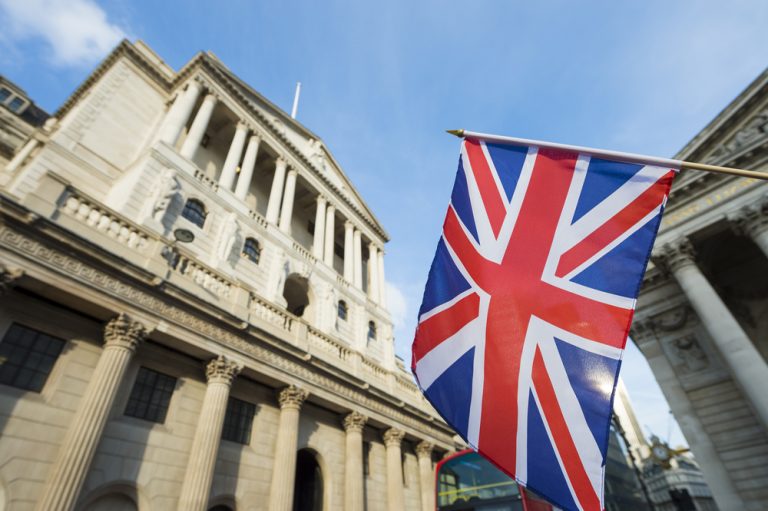
The Bank of England published its formal forecast of the economic impact of Prime Minister Boris Johnson’s Brexit deal.
The Monterey Policy Report
The Monetary Policy Report revealed that the Bank of England expects a weaker economy during the course of the next three years following Brexit. Previously, the Bank of England decided against forecasting on the basis of Theresa May’s Brexit deal. Instead, the Bank of England published a forecast based on a wide range of possibilities linked to Brexit. The Bank of England changed its approach, and decided to incorporate Prime Minister Boris Johnson’s Brexit deal into its Monetary Policy Report. The Brexit deal Prime Minister Boris Johnson negotiated with Brussels passed its second stage of reading in the House of Commons. The Bank of England is now forecasting on the basis of the deal.The Brexit Deal
Prime Minister Boris Johnson’s Brexit deal implies customs checks. Furthermore, the United Kingdom is likely to have different regulations than its European trading partners. The Monetary Policy Report suggests that customs checks and regulatory divergence will have a negative impact on the economy. On the other hand, the Monetary Policy Report suggests that the deal can cause a short term economic boost by removing uncertainty caused by Brexit negotiations. The report did not indicate a change in quantitative easing and interest rates.Controversy
The publication of the Monetary Policy Report is controversial. As the United Kingdom expects an early general election, public bodies are typically expected to remain neutral. The Bank of England’s forecast attracts a lot of attention due to the current political atmosphere in the United Kingdom. Prime Minister Boris Johnson’s Brexit deal is not the only reason the Monetary Policy Report expects a weaker economy following Brexit. The Bank of England included considerations of asset prices as well as changes in the global economy.

IMI shares rise as a result of positive trading update
IMI plc (LON: IMI) have updated shareholders saying that third quarter trading across all divisions has been largely in line with expectations, which has led to shares rising.
The positive trading update led to shares soaring 8.86% to 1,155p across Thursday trading. 7/11/19 14:24BST.
IMI added that the company is making good progress in its business improvement and cost-reduction initiatives.
The FTSE250 (INDEXFTSE: MCX) listed company said organic revenue for the three months to September 30 were 2% lower year-on-year and, before adjusting for the impact of foreign exchange movements, flat on an adjusted basis.
Despite the lower sales, the company achieved higher margins in the third quarter, IMI said, adding that its units have “acted decisively” to reduce costs and protect margins.
IMI’s Precision Engineering business suffered a 4% year-on-year fall in organic revenue in the third quarter.
The Critical Engineering unit saw a 1% drop in organic revenue despite 10% lower order intake. Hydronic Engineering’s organic revenue growth in the three months was 2% year-on-year, which shows relatively consistent results.
MI said it has now completed a full review of its business operations which confirms significant value-creation opportunities.
IMI added that they expect second half organic revenue to decline as was experienced in the first half.
Profit for the second half is expected to be similar to the year-ago period, supported by the company’s ongoing business improvement programme.
IMI also added that they conducted a full business review, and have plans to implement operations to increase value creation.
“By executing on these key strategic areas, we believe IMI will be a fundamentally stronger business that will deliver significant improvement in returns over the next few years,” IMI said.
IMI plans to maintain its capital spend at similar levels to the last five years and hopes to continue to pay a progressive dividend whilst improving dividend cover through profit and margin growth, it said.
IMI will release their 2019 annual results on February 28 2020.
KEFI Minerals shares surge after conflict is resolved
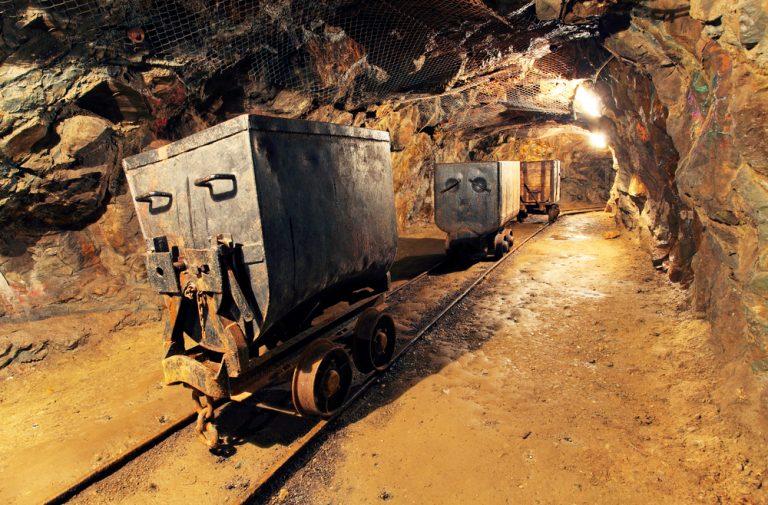
KEFI Minerals plc (LON: KEFI) have seen their shares surge on Thursday, administration problems with regard to Ethiopian operations were resolved.
The specialist gold and copper miner saw their shares rise 55.11% during Thursday trading to 1.15p. 7/11/19 14:05BST.
KEFI Minerals confirmed that it has now resolved outstanding internal administrative arrangements with respect to the Tulu Kapi gold project.
In late October, the company had to wait for the Ethopian Government to resolve “certain internal administrative matters”.
This will come at a pleasing time for KEFI Minerals, as competitors report strong profit gains in their relevant updates.
Big time competitor Hochschild Mining (LON: HOC) have issued a strong statement for future mining projects in their most recent update. Additionally, Serabi Gold (LON: SRB) reported strong production gains in their update.
The gold exploration and development company said these outstanding government administrative arrangements had held up the closing of project financing past the originally set date of October 31.
The issues related to how the government manages its shareholding in Tulu Kapi Gold Mines Share Co, KEFI said back in October.
“The community, contractors and other stakeholders will now also be asked to prepare for the commencement of project development and the site and district security arrangements will continue to be checked and refined with all the authorities,” the company said.
KEFI gave shareholders a strong outlook as they forecasted 140,000 ounces of gold per year for the first seven years from the open pit at Tulu Kapi.
The Tulu Kapi Gold Mines Share Company is a high-profile public-private partnership in Ethiopia which KEFI said “has the potential to be the largest single export-generator” for the country.
With this conflict being resolved, this will allow KEFI to use the untapped potential of the Tulu Kapi Gold Mine.
If these operations live up to their potential, shareholder of KEFI could be very excited about future gains as productions of gold and copper rise in the long term.
Deutsche Telekom cuts its dividend, leaving stocks in red

Deutsche Telekom (ETR: DTE) have cut their 2019 dividend, reflecting uncertainty over a potential merger and also the substantial 5G implementation costs that it will incur, which has left the stock in red.
The proposed merger came after industry rivals Vodafone (NSE: IDEA) approached the German mobile firm earlier this year.
The significant cut in dividend returns sent the stocks crashing, as shares in Deutsche Telekom fell 2.68% to €15.26. 7/11/19 13:58BST.
Shares fell despite a strong third quarter trading update as it raised its profit outlook on strong growth at U.S. unit T-Mobile (NASDAQ: TMUS).
Deutsche Telekom plans to pay a 60 euro cent ($0.66) dividend for 2019, down from last year’s 70 cents, regardless of the outcome of T-Mobile’s $26.5 billion takeover of rival Sprint (NYSE: S) that is currently awaiting regulator approval.
“The 60 euro cents announced today is our new minimum dividend amount,” CEO Tim Hoettges told reporters on a conference call. He said he firmly believed that the U.S. deal would go through, although this was now expected in early 2020.
Creating clarity means that we will pay out the minimum dividend not only if the deal goes through, but also in the unlikely event of a no-deal scenario.”
Citi (NYSE: C) analyst Georgios Ierodiaconou described the shift as sensible, even if it meant that shareholders might miss out on a higher payout should the U.S. deal fall through – an outcome that would lift near-term profits at Deutsche Telekom.
Facing saturated markets and with billions to spend launching 5G networks, the telecoms industry’s main attraction to investors has long been its long term dividend yields, however this has been cut short by Deutsche Telekom and rivals Vodafone.
Deutsche Telekom said it expects earnings before interest, taxation, depreciation and amortization after leases off €24.1 billion this year. That is up from a forecast of €23.9 billion previously.
After adjusting for exchange rate effects, the underlying gain in profits was 3% while revenues rose by 1.7%.
Siemens remain pessimistic despite beating quarterly expectations
Siemens AG (ETR: SIE) have given shareholders a gloomy outlook for the next financial year, despite beating quarterly expectations.
A booming software industry helped Siemens to reach their quarterly sales target in the fourth quarter.
The Thursday update provided positive figures for the German titan, however ended with a rather gloomy note on the expectations in Financial 2020.
Siemens commented that it expected the macroeconomic environment to remain “subdued” next year, citing geopolitical and economic risks, as well as elections in big markets like the United States.
Additionally, the software giant alluded to the issues that its short cycle products would face, including reduced demand in the automotive and machinery industries, where the company expects a “moderate decline” in the market.
There was some hope for investors, as Siemens issued a bold statement saying that there would be strong recovery in the second half of 2020, and that it still expected to ‘outperform’ the market.
“The weakening of the global economy accelerated considerably fiscal 2019,” CEO Joe Kaeser told reporters, adding Siemens nonetheless achieved its fiscal guidance.
“While many other industrial companies had to revise their outlooks, and some conglomerates had to struggle even more to survive, we kept our word.”
Siemens is not the only firm which has given a low-tempo forecast for 2020 trading.
Competitors such as ABB (NYSE: ABB), General Electric (NYSE: GE) and ArcelorMittal (NYSE: MT) have all issued statements to shareholders about the worries of future trading prospects.
Despite the gloomy outlook, following the positive trading figures Siemens saw their shares rally 4.85% to €113. 7/11/19 12:58BST.
Orders rose 4% to 24.71 billion euros, and revenue by 8% to 24.52 billion euros – both beating forecasts.
During the quarter, the company benefitted from demand at its smart infrastructure business, which makes products to automate buildings, and Siemens Healthineers (ETR: SHL) , the medical equipment maker where Siemens retains an 85% stake.
CEO Kaeser said customer confidence was being hit by political and economic uncertainties, such as the U.S.-China trade war and Britain’s relationship with the European Union.
“Machine-building production in the most important export nations – Germany, Japan, China and the U.S. is a widely followed parameter for the global economy. The best case scenario for 2020 assumes a certain degree of stabilization,” he said.
During its 2020 financial year, Siemens expects total revenue growth of 3-5%.
Commerzbank send profit warning to shareholders

Commerzbank AG (ETR: CBK) have issued a statement to shareholders warning them off expected lower revenues due to a weaker economic backdrop and Brexit uncertainty.
Despite a positive third quarter update, where the German bank reported a 35% surge in its third-quarter net profit, the bank seemed pessimistic about the next trading year.
“Consolidated net income for the 2019 financial year is expected to be lower than in the previous year,” the bank said.
In May, Commerzbank saw their profits collapse due to failed merger negotiations with Deutsche Bank (ETR: DBK), but seem to have made ground since the mid year crisis.
The global banking sector has seen sinking profits for many firms, and the collapsed merger with Deutsche Bank may come as a blessing with the ongoing crisis that is causing loses.
Additionally, both HSBC (LON: HSBA) and Lloyds (LON: LLOY) have seen their profits sink amid structural changes and poor business performance.
The German bank also cited trade conflicts and expectations for a higher tax rate in the fourth quarter for the profit downgrade.
“We deliberately set long-term success above short-term return targets,” Chief Executive Officer Martin Zielke said.
Commerzbank overhaul includes cutting staff, closing branches and selling mBank (WSE: MBK) in Poland.
Commerzbank, part owned by the German government after a bailout, has been struggling for years with a legacy of bad debts, high costs and fines, and tough trading conditions have hampered its recovery efforts.
Net profit in the third quarter amounted to €294 million (£253 million), up from €218 million last year, in line with expectations published last year.
Commerzbank have published impressive third quarter figures, despite the crisis which occurred with Deutsche Bank. Ground does seem to be made, but seniority do not seem optimistic about the future outlook.
With the global banking scene slumping, Commerzbank may have to be patient and wait the struggles out before forecasting revenue and profit gains for its shareholders.
Shares of Commerzbank dropped 0.29% to €5.75. 7/11/19 12:42BST.
Galliford Try and Bovis Homes agree substantial home building deal

Galliford Try plc (LON: GFRD) and Bovis Homes Group plc (LON: BVS) have agreed a substantial home building deal, for Bovis to takeover the two Galliford housebuilding business units.
The deal was announced during Thursday trading and is valued at GBP1.14 Billion, which sends out a huge statement of intent for competitors.
Across the sector, there has been a reported slump as demand for UK housing fell along with house price growth as reported by Halifax this morning.
Competitors such as FTSE100 (INDEXFTSE: UKX) listed Persimmon (LON: PSN) have reported a positive trading statement and have remained confident despite the uncertain political climate.
However, the optimism hasn’t been industry wide as Grafton Group (LON: GFTU) speculated on low profits, leaving their stocks in red.
The agreement comes after Galliford rejected a £1.05 billion bid from rival Bovis for its Linden Homes and Partnerships & Regeneration businesses back in May.
In September the two confirmed they had resumed talks. Bovis was to issue shares worth £675 million and pay £300 million in cash, combined with £100 million of Galliford debt.
The two firms announced that the terms from the September agreement were unchanged, and will see will see Bovis issue 63.8 million new shares to Galliford, valued at £675 million, pay £300 million in cash, and take over Galliford’s £100 million debt.
Bovis shares were 0.17% to the good, trading at 1,165p per share, whilst Galliford Try shares also appreciated 0.63% at 711p. 7/11/19 12:19BST.
The transaction values the two Galliford businesses at a combined GBP1.14 billion, and gives Galliford a 29% stake in the expanded Bovis group. It leaves Galliford with its construction business.
“This transaction is a positive development which is in the best interests of both our shareholders and wider stakeholder group. For Galliford Try, it establishes a focused and well-capitalised construction business led by a very experienced and dedicated management team. Supported by a robust order book and strong market positions in key sectors, Galliford Try will be well positioned for the future,” said Galliford Chair Peter Ventress.
“This transaction also creates one of the UK’s leading Housebuilding and Partnerships businesses with great opportunity ahead, from which Galliford Try shareholders will benefit through their continued shareholding.”
Greg Fitzgerald, the chief executive of Bovis, added: “This is an exciting and transformational opportunity to create a leading UK housebuilder with an enhanced customer proposition and the ability to increase delivery to more than 12,000 new homes per year”.
“The combination with Galliford Try Partnerships gives Bovis Homes a market leading position in the high growth, more resilient partnerships market, with significant potential to increase revenue and profit while delivering more affordable homes at a time when they are needed more than ever.”
Bovis also added that they will carry out a “bonus issue” of 5.7 million shares to existing shareholders. It will pay a dividend of 41p in May, instead of a final dividend for 2019.
Tate & Lyle shares rally after profits surge

Tate and Lyle PLC (LON: TATE) have seen their shares rally after a trading updated released on Thursday showed profits increasing and strong consumer demand.
Shares of Tate and Lyle rallied 5.78% to trade at 702p during Thursday trading. 7/11/19 11:52BST.
The FTSE250 listed (INDEXFTSE: MCX) food and drink ingredient supplier posted a bullish trading update to shareholders, which sparked investor optimism.
Tate and Lyle reported a pretax profit for the six months to the end of September of £164 million, 45% higher compared to £113 million a year ago, as sales grew by 6.7% to £1.48 billion from £1.38 billion.
This comes at an interesting time considering the state of the supermarket and food industry in the UK.The big supermarkets have seen their profits sink and business slow in a tough UK domestic market.
This morning, Sainsbury’s (LON: SBRY) reported a huge profit sink which alerted shareholders to poor business performance.
Additionally, Marks and Spencer (LON: MKS) have closed 120 off their high street stores amidst a crisis which has seen a huge slump in sales.
The London-headquartered company said new product sales were 12% higher year-on-year, driven largely by the clean-label starches and fibre products.
Tate & Lyle increased its interim payout to 8.8 pence a share from 8.6p paid a year prior.
“We made encouraging progress in the first half,” said Chief Executive Nick Hampton. “Our priorities to sharpen the focus on our customers, accelerate portfolio development and simplify the business are driving momentum across the organisation and supporting performance.”
Looking ahead, Hampton added: “Despite market challenges, our outlook for the year ending March 31, 2020, is unchanged and we continue to expect earnings per share growth in constant currency to be broadly flat to low-single digit.”
The company concluded that it was on track to deliver its £100 million productivity target, which was a bonus to shareholders.
This programme started last year to drive supply chain and selling and administration costs benefits, delivering £25 million in productivity benefits in its first year.