
Amazon backs Deliveroo’s latest £450 million funding round
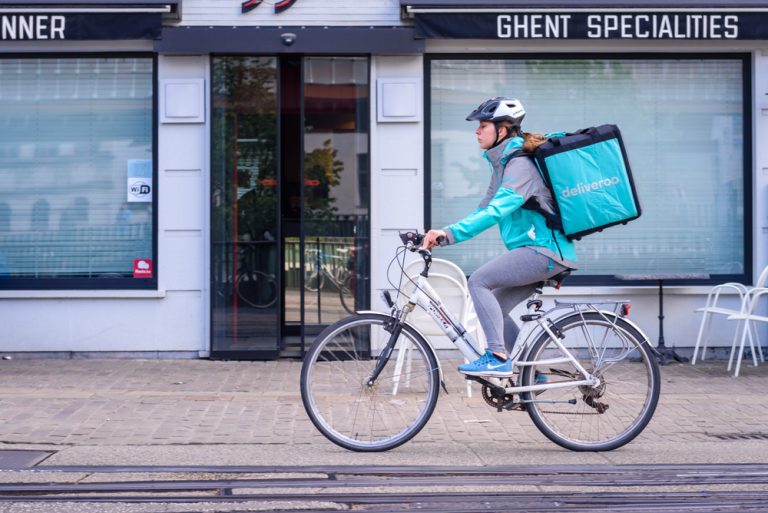
Amazon (NASDAQ:AMZN) is set to invest in the popular UK food delivery app, Deliveroo. News emerged of the deal just days after rival Uber’s listing on the New York Stock Exchange.
Revealed in an exclusive Sky News report, Amazon is leading a new £450 million fundraising round in Deliveroo.
“This new investment will help Deliveroo to grow and to offer customers even more choice, tailored to their personal tastes, offer restaurants greater opportunities to grow and expand their businesses, and to create more flexible, well-paid work for riders,” Will Shu, founder and CEO of Deliveroo, commented.
“Amazon has been an inspiration to me personally and to the company, and we look forward to working with such a customer-obsessed organisation,” the founder and CEO continued.
“This is great news for the tech and restaurant sectors, and it will help to create jobs in all of the countries in which we operate.”
In addition to Amazon’s funding, Deliveroo’s existing investors T. Rowe Price, Fidelity Management and Research Co, and Greenoaks also contributed funds.
The British online food delivery company was founded in 2013 and is based in London. It currently operates in two 200 cities in countries such as Britain, the Netherlands, France, Germany, Belgium, Spain and Ireland – to name a few.
Its deal with Amazon, the multinational technology company based in Seattle, Washington, is just days after Uber Technologies (NYSE:UBER) made it stock market debut, selling shares on the New York Stock Exchange. Uber Eats rivals Deliveroo in the food delivery market.
In the lead up to its stock market debut, doubts emerged over whether Uber’s IPO would ever be profitable when the ride-hailing firm released details of its IPO plans. Moreover, Uber drivers across the UK were prepared to strike against pay and work conditions.
Elsewhere for Amazon, it announced earlier this week that it was set to partner with another British company, high street retailer Next (LON:NXT), to launch a click and collect service which will allow Amazon parcels to be collected in store.
At 19:59 GMT -4 Thursday, shares in Amazon.com Inc. (NASDAQ:AMZN) were trading at +1.95%.
Shares in Uber Technologies Inc (NYSE:UBER) were last trading at +4.13%.

Boris Johnson confirms Tory Leadership bid
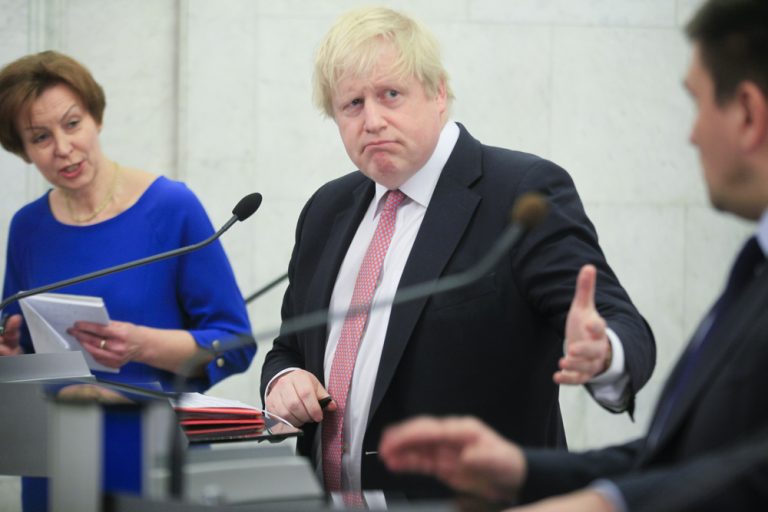
Zany ex foreign secretary Boris Johnson confirms he’ll be throwing his hat into the ring for the Tory leadership once Theresa May stands down.
The Boris question
The controversial character and former Mayor of London was quoted as acknowledging that no vacancy currently existed in Downing Street, but at a business event in Manchester, he responded to a question about his potential candidacy by saying,“Of course I’m going to go for it.”Mr Johnson resigned from the cabinet last year in protest at Theresa May’s prospective withdrawal agreement. As a prominent Leave campaigner, the question will remain whether he would be the right person for the job, at least in the eyes of Leave voters who feel betrayed by the incumbent government’s inaction and who would perhaps favour a No Deal scenario to a period of extended negotiations.
https://platform.twitter.com/widgets.jsOf course I’m going to go for it — says @BorisJohnson about the Conservative leadership speaking at @BIBAbroker in Manchester #BIBA2019 pic.twitter.com/IR5AzTT3s1
— Huw Edwards (@huwbbc) May 16, 2019
The coming contest and Theresa May
Johnson will join the growing list of Number Ten hopefuls, with the coveted role surprisingly not being viewed as a political hot potato, but perhaps a moment to claim some accolade, with any future premiership likely to be more proactive than that of Mrs May. Formally announced contenders so far include International Development Rory Stewart and Pensions Secretary Esther McVey. Commons Leader Andrea Leadsom said that she was “considering” joining the leadership contest and several other members of the Conservative high ranks have been touted to follow suit, including; Michael Gove, Amber Rudd, Sajid Javid, Dominic Raab, Jeremy Hunt, Liz Truss and Penny Mordaunt. Mrs May has said that she will resign once the House of Commons reaches a compromise and backs her Brexit deal. Talks are continuing to be held with senior Conservatives who are insisting that the incumbent prime minister sets a date for her departure from office. Mrs May’s priorities, at least publicly, are elsewhere this week. Somewhat diverting from the predictable Brexit script, the PM has been stressing the importance of online security and managing the impact of social media, as well as drawing attention to the need to de-stigmatise mental health.https://platform.twitter.com/widgets.js The latter point, at least, earned the prime minister as much flak as praise. While questions of proportional funding are contentious, the number of mental health staff has continued to decline during Theresa May’s time in office, with a total cut of 6,610 mental health nurses between 2010 and 2017.Last night we lit Downing Street in green to mark the start of #MentalHealthAwarenessWeek.
We must all work together to make sure that looking after our mental health is as natural and positive as looking after our physical health. pic.twitter.com/PRBDPXYnc0 — Theresa May (@theresa_may) May 14, 2019
Sophos profits jump with subscription revenues
Cyber security firm Sophos (LON:SOPH) booked positive full-year results with healthy profits driven by an increase in subscription revenue, despite a year the company described as “challenging”.
Profits and expanded customer base
The company reported impressive expansion of their customer base, finishing the year with 335,000 term customers, which represents an increase in excess of 35,000 new term customers over the course of the year. This growing client base supported growth in revenues, which led the pre-tax profit growth. The company finished the year up $54 million, up $95 million from their $41 million from the previous year. Additionally, the 15.9% increase in subscription revenue pushed total group revenue up 11.2% to $711 million.Sophos comments on impressive performance
“FY19 was a challenging year, primarily due to a difficult compare. However, we are pleased with the strategic progress we made during the year as we drive Sophos’ transition to be a market leader in next-generation cybersecurity,” the company said. “The demand environment for cybersecurity solutions continues to be robust, and we are confident that we are well positioned competitively, especially as more organisations move to adopt next-generation cybersecurity offerings,” CEO Kris Hagerman added. “We believe the drivers are in place for continued future revenue growth, principally driven by growth in our subscription business, especially in our next-generation products. We also expect a return to operating profit margin leverage, following a reduction in the current year as the one-off benefit seen in FY19 from reduced variable performance-related pay unwinds,” he added.Sophos portfolio potential
The company’s shares have rallied 13.94% or 47.4p since trading began on Thursday morning, with shares currently trading at 387.5p. UBS and Shore Capital analysts are in consensus on their ‘Buy’ stance regarding Sophos stock, while Liberum Capital reiterated their ‘Hold’ rating.Anglo Asian Mining reports pre-tax profits of $25.2m, shares rally

Anglo Asian Mining shares rallied during Thursday trading on the back of a promising set of full-year results for 2018.
The AIM-listed mining company reported pre-tax profits of $25.2 million, up from US$5.7 million a year ago.
This was as a result of production proving to be at the upper range of the forecasts, at 83,736 gold equivalent ounces compared to expectations of between 78,000 to 84,000 GEOs.
Overall, total production for the full-year rose 17%, and on a year-on-year basis to 83,736 GEOs.
Gold production increased the most, up by 22%. Silver production also rose to 210,184 ounces, compared to 172,853 ounces recorded in 2017.
Conversely, copper production fell to 1,645, down from 1,991 the previous year.
The company recorded total annual sales of Gold bullion of 59,481 ounces, up from 43,496 ounces a year ago.
These were completed at an average of $1,265 per ounce, unchanged from 2017.
Meanwhile, the cost of gold production decreased in the lowest quartile to $541 per ounce during the period.
Anglo Asian Mining also announced a final dividend of $0.04 per share, resulting in a dividend of $0.07 per share for the year.
Shares in the London-listed firm are currently up 4.26% as of 13:13, as the market takes stock of the figures.
Anglo American rallies on diamond vessel approval
Mining multinational Anglo American Plc (LON:AAL) has seen its share price rally in morning trading following its announcement that its plans to construct a new diamond recovery vessel had been approved.
Strong start continues
The world’s largest provider of platinum was already reeling after it announced an extension to its dividend in February this year, and it seems that strong start to 2019 is set to continue. The firm announced that it expected some reduced output in its diamond and copper sectors compared to last year, but some of the fears surrounding any long-term depletion in diamond production should be at least partially offset by today’s announcement. The company’s plans to construct the custom-built diamond recovery vessel are set to go ahead, and marks the continued erosion of the lamented De Beers monopoly of the diamond industry which extended from the 19th century. That being said, these latest plans were approved by Debmarine Namibia, which is a 50:50 joint venture between the Government of the Republic of Namibia and De Beers.Increased yields prompting a positive outlook
“This highly attractive investment offers a three-year payback, a more than 25% IRR and an EBITDA margin of more than 60% – typical of the high quality of our brownfield growth options”, said Mark Cutifani, Chief Executive of Anglo American. “We will continue allocating appropriate levels of capital in a disciplined manner across Anglo American’s wider organic pipeline of near- and medium-term growth opportunities, including the world-class Quellaveco copper development in Peru, that we expect to contribute towards our 20-25% production growth by 2023.” Set to become the seventh component of the Debmarine Namibia fleet, the new vessel is set to add 500,000 carats to annual production, which would represent a 35% increase on Debmarine’s current output. The vessel is set to have a total capital cost of $468 million, and is expected to begin production in 2022.Anglo American portfolio potential
The company’s share price is currently trading up 58p or 3.03% since trading began on Thursday morning, with shares currently trading at 1,972p a share 16/05/19 11:55 GMT. Corporate analysts were unable to reach a consensus on rating Anglo American stock, with Citigroup reiterating their ‘Buy’ stance, Barclays Capital reiterating their ‘Equal Weight’ position, UBS remaining unchanged in their ‘Sell’ rating and Credit Suisse reiterating their ‘Outperform’ stance, having upgraded their rating earlier in May.Thomas Cook £1.5 billion loss and the Brexit effect
British travel company Thomas Cook (LON:TCG) has seen its losses widen in the first half, which has led the company to consider bids for its assets and revise its expectations for the second half.
Summer sun quells Winter fun
Much to the chagrin of Thomas Cook beneficiaries, the market wouldn’t emulate the trope of the HBO hit series – Winter did not come. “The prolonged heatwave last summer and high prices in the Canaries reduced customer demand for winter sun, particularly in the Nordic region, while there is now little doubt that the Brexit process has led many UK customers to delay their holiday plans for this summer,” said Chief Executive Peter Fankhauser. The travel giant posted an underlying EBIT loss of £245 million, which widened by £65 million during the six month period ending 31 March 2019. This, the company added, was driven by lower demand for its tour operator businesses and uncertainty across all its markets, the risk of which had only been partially mitigated by reducing capacity across the board.Writing down value, lowering expectations
Much of the recent figure has been attributed by analysts to the company writing down the value of its subsidiary MyTravel Group, which it acquired for £1.1 billion in 2007. Regardless of the reason, the company opted to tap the nerve of Brexit uncertainty and said that a great deal of the blame for ongoing market frigidity could be placed at the feet of consumer uncertainty and Brexit negotiations. “This combined with higher fuel and hotel costs, is creating further headwinds to our progress over the remainder of the year,” added Fankhauser. The result of this, the company said, was that it expected to revise its second half expectations, with H2 earnings set to fall short of the same period in the previous financial year.Bids and lending and an attempt to stop revenues freezing over
The once go-to holiday group is perhaps falling between the cracks of luxury long-haul and cut-price competitors, and perhaps its board recognises this. It said that it had already received “multiple bids” for the whole or parts of its airline business and has yet refused to rule out any possibilities, stating that it would provide an update, “in due course”. However, the company shouldn’t be written off just yet. The firm said that it has already secured a £300 million bank ‘financing facility’ with its lenders, which is set to work alongside its existing revolving credit and bonding facilities, which currently amount to £875 million and are set to mature in November 2022. The new facility is designed to help the company provide additional liquidity for the 2019-2020 Winter season, and Thomas Cook said its availability was dependent on its progress in carrying out the strategic review of the Group Airline. It will be available from the 1st of October this year and will mature on the 30th of June 2020.Thomas Cook as a portfolio prospect
Too big to fail or just a bigger FlyBe (LON:FLYB)? The firm’s share price has fallen 3.74p or 16.25% in morning trading, down to 19.26p a share 16/05/19 10:51 GMT. Analysts from UBS remain unchanged in their ‘Neutral’ assessment of Thomas Cook stock, while Numis have their stance ‘Under Review’.Burberry annual revenue flat despite turnaround plan

Burberry (LON:BURB) reported its final results for the year on Thursday, sending shares downwards.
The luxury brand said that revenue for the year to March-end was £2.72 billion, broadly flat on figure of £2.73 billion the year before.
However, pre-tax profit, climbed 7% to £441 million a reported basis, nevertheless, on a adjusted basis profit dropped 6% to £443 million.
Burberry is in the midst of implementing a turnaround plan amid years of faltering sales.
The brand announced the departure of longstanding creative director Christopher Bailey last year.
Ricardo Tisci, formerly at Givenchy, replaced Bailey, and has been tasked with revitalising the iconic British brand.
Since taking on the role, Tisci has re-worked the brand’s branding, introducing a new signature monogram print, designed by Peter Saville, into the collection.
https://platform.twitter.com/widgets.js Nevertheless, investors proved less than impressed with these latest results, particularly in light of weak single digit sales figures across Asia. Burberry has been particularly affected by the economic slowdown in China, which has deterred spending on luxury goods. Marco Gobbetti, chief executive of Burberry commented: “We made excellent progress in the first year of our plan to transform Burberry, while at the same time delivering financial performance in line with expectations. Riccardo Tisci’s first collections arrived in stores at the end of February and the initial reaction from customers is very encouraging. The implementation of our plan is on track, we are energised by the early results and we confirm our outlook for FY 2020.” Shares in the company are currently down -4.81% as of 11:21AM (GMT).Coming soon#ThomasBurberryMonogram @GigiHadid pic.twitter.com/6ooyjTj38t
— Burberry (@Burberry) May 13, 2019
Michelin set to acquire telematics company Maternaut
Michelin announced on Thursday that it has acquired Masternaut, one of the largest European telematics providers. The exact amount Masternaut was acquired for has not been specified.
According to Michelin, the acquisition will speed up the development of its Services & Solutions business for light vehicles, enable Masternaut to roll out its offering across the whole of Europe by taking advantage of the Michelin network’s geographical coverage and increase the volume of data captured, allowing it to provide its customers with the best solutions, increase product performance and develop its data science deployments.
Michelin said that the transaction was made on the basis of 8 times 2018 EBITDA before synergies.
“Michelin is consolidating its expertise in telematics, enabling us to optimize customer mobility and respond to the needs of a changing market. Masternaut represents a further step in the expansion of our Services & Solutions business, especially in Europe ad for light vehicle fleets,” Florent Menegaux, Managing General Partner of Michelin, commented on the announcement.
Based in Clermont-Ferrand, Michelin is a French tyre manufacturer and second largest in the world following Bridgestone.
Masternaut mainly operates in France and the UK. The business provides a technical platform that boasts the latest technology and offers on-board telematics solutions to optimize vehicle fleet management and monitoring.
Masternaut currently manages more than 220,000 mostly light utility vehicles.
Last year, the tyre manufacturer announced that it was set to close its Dundee factory, which employs 845 people at the time and has been open since 1971. The group said that the plant will shut by mid-2020 as a result of a decline in the demand for the specific tyres it produces, and competition in Asia.
At 09:13 CEST Thursday, shares in Cie Gnrl des Etblsmnts Michelin SCA (EPA:ML) were trading at -1.25%.
Nestle enters negotiations to sell Nestle Skin Health
Nestle (SWX:NESN) announced on Thursday that it had entered into exclusive negotiations with a consortium led by EQT for the sale of Nestle Skin Health for 10.2 billion Swiss francs.
EQT is a wholly owned subsidiary of the Abu Dhabi Investment Authority (EDIA).
Nestle said that the deal is subject to employee consultations and approval of regulatory authorities. It expects to close around the second half of the current year, when the company will provide an outline on the use of the proceeds and its future capital structure.
According to Reuters, sources have said that there was competition from a consortium of Advent and Cinven in addition to a U.S private equity firm KKR & Co Inc and European fund PAI partners.
Nestle is a leading Swiss food and drink company across the globe with its headquarters in Vevey, Vaud, Switzerland.
Established in 2014, Nestle’s Skin Health unit provides science-based solutions to address specific skin health needs of healthcare professionals, patients and consumers. Nestle said that it offers a range of leading medical and consumer brands through three complementary business units in prescription, aesthetics and consumer care.
Nestle Skin Health is headquarters in Lausanne, Switzerland, and employs over 5,000 workers across 40 different countries.
Last month Nestle confirmed its annual guidance following a good momentum in its US and China markets. Excluding businesses under strategic review, the group posted an organic growth of 3.2%.
As for its confectionary brands, the success of its well loved KitKat chocolate means that it does not need to add any new business to its portfolio. It also sold its U.S confectionary business to Italy’s Ferrero last year in a $2.8 billion deal, in order to position itself closer to health-conscious products. Because of its KitKat success, the company does not need to fill the confectionary-shaped gap following the sale to Ferrero.