
Domino’s international will not break even following weak European sales
Domino’s (LON:DOM) announced on Tuesday that it no longer expects its international business to break even this year following a weak system sales performance and a first-quarter operating result below that of last year.
Domino’s, the UK’s leading pizza delivery business, said that group system sales were up 4.5%. Additionally, 11 stores were opened in the past year to date, 7 of these opening in the UK, bringing the group’s total to 1271.
Domino’s international system sales increased 1.1% in local currency, a performance which the group has labelled disappointing. The group has tightened its capital deployment and the immediate focus of the management team is on driving performance across the existing estate, amid a challenging market backdrop.
“With continued like-for-like growth, the year has started well across our core UK and Republic of Ireland markets, which account for 90% of our business. Our digital expertise remains a key driver of customer engagement, with online accounting for a record 81.7% of total sales in the UK. We remain in open and ongoing dialogue with our UK franchisees, actively exploring win-win solutions for stimulating growth and new store openings,” Chief Executive Officer David Wild commented.
“Internationally, performance remains disappointing and trading visibility is limited. As we outlined at the full year results, we have new management in Norway, Sweden and Switzerland, and a heightened focus on store level performance. However, given persistently weak system sales in all our International markets we no longer expect this part of our business to break-even this year. We are therefore further tightening our focus on International costs and capital deployment. We will provide a further update at our first half results,” the Chief Executive Officer continued.
Earlier this year, Domino’s revealed that it expected its annual pre-tax profit to be at the lower end of its guidance. It highlighted the weakness of its international sales despite its strong UK performance.
Throughout last year the pizza delivery chain saw its sales continue to rise.
The popularity of Domino’s is not as strong in the rest of Europe – can the pizza delivery chain match the traditional delicacies of other nations?



HSBC posts 31% rise in first quarter profits
HSBC (LON:HSBA) announced a 31% rise in profit for its first quarter on Friday, driven by its operations in Asia.
HSBC, the leading banking and financial services organisation globally, reported a profit after tax that amounted to $4.9 billion, up 31%.
Additionally, reported revenue was up 5%, whilst adjusted operating expenses were up 3.2%.
HSBC’s reported operating expenses were down 12%, assisted by one-off sales in retail and commercial.
“These are an encouraging set of results, particularly in the context of heightened economic uncertainty globally. We remain focused on executing the strategy we outlined last June, while also being alert to risks in the global economy,” Group Chief Executive John Flint commented on the results.
HSBC said it had experienced particularly strong growth in Asia in spite of a softer rate and growth environment. Reported profit before tax for its Asia operations increased by 5% to $5 billion, with the region comprising 81% of HSBC’s overall profits.
It said it was progressing on its US turnaround, though this still remains HSBC’s most challenging strategic priority.
At the start of the year, HSBC revealed its financial results for 2018 in which it posted a fall in profits as a result of the economic downturn in China.
Elsewhere in banking, Deutsche Bank and Commerzbank recently abandoned talks of a merger, following shareholder concerns over the complexities of the decision.
Lloyds Bank’s (LON:LLOY) first quarter profits missed expectations, as pre-tax profits for the quarter remained unchanged from the same period a year prior.
The Bank of England announced only yesterday that it will be keeping interest rates on hold at 0.75%, following the stronger than expected performance of the UK economy. It said that it now expects growth of 1.5% this year, an increase compared to the 1.2% forecast in February.
Shares in HSBC Holdings plc (LON:HSBA) were up 2.25% as of 08:03 BST Friday.
Adidas results ahead of expectations, full-year outlook confirmed
Adidas (ETR:ADS) posted its first quarter results on Friday and confirmed its full-year outlook.
The multinational sportswear manufacturer said that its currency-neutral revenues grew 4% in its first quarter and 6% in euro terms to €5.883 billion. The company has said that this was driven by a 5% growth at brand Adidas.
According to Reuters, analysts were predicting a €5.8 billion figure, which the actual amount tops.
E-commerce was particularly strong, with sales growing by 40%.
“We had a successful start to the year, delivering double-digit sales increases in our strategic growth areas Greater China and e-commerce as well as another strong profitability improvement,” CEO Kasper Rorsted commented on the results.
“We confirm our full-year outlook and remain confident about the top-line acceleration in the second half of the year. 2019 will be an important milestone toward achieving our 2020 targets,” the CEO continued.
Net income from continuing operations amounted to €631 million, a 16% rise compared to the €542 million reported the prior year.
Adidas said that is continues to expect sales in increase during 2019 at a rate of 5-8% on a currency neutral basis. It reiterated its announcement in March regarding the strong demand growth for its mid-priced apparel, which it is unable to satisfy in full as a result of supply chain shortages. As a result, Adidas expects a sales growth of 3-4% for the first half of the year, and will rely on the second half of 2019 to accelerate its sales.
Founded and headquartered in Herzogenaurach, Germany, Adidas is a leading sportswear brand.
Elsewhere in the UK retail market, sportswear retailer JD Sports (LON:JD) also delivered a set of promising results, beating the current high street gloom. Its increase in annual profits confirm its confidence amid growing Brexit uncertainty.
JD recently saved its smaller competitor Footasylum (LON:FOOT) in a £90 million deal as the smaller branded trainers and tops store struggled.
The Bank of England raises UK growth forecast to 1.5%
The Bank of England opted to keep interest rates on hold at 0.75% on Thursday, citing the stronger than expected performance of the UK economy.
The UK’s central bank said that it now expects growth of 1.5% this year, up from the 1.2% forecast in February.
With respect to inflation, the Bank of England said that it expects inflation to fall to 1.6% towards the end of the year, before rising again back to 2% the follow year.
The bank also forecast the unemployment rate to fall to 3.5% by 2022.
https://platform.twitter.com/widgets.js Earlier this month it was announced the Bank of England had commenced the search to replace current governor Mark Carney. The government has publicly advertised the portion, with a salary of £480,000. The new governor will be tasked with taking over form Carney in January 2020. They will be tasked with steering the bank during a time of economic uncertainty, particularly amid ongoing Brexit negotiations. The chancellor, Phillip Hammond said in comments to the Commons Treasury select committee: “It is very important to have someone, not only who can do a first-class job at home, but someone who commands respect in the international arena,”We have kept interest rates at 0.75%. Find out why in our visual summary: https://t.co/NErJey2wDI #InflationReport pic.twitter.com/e66OrM3Owm
— Bank of England (@bankofengland) May 2, 2019
Paddy Power Betfair shares down as online sales slip
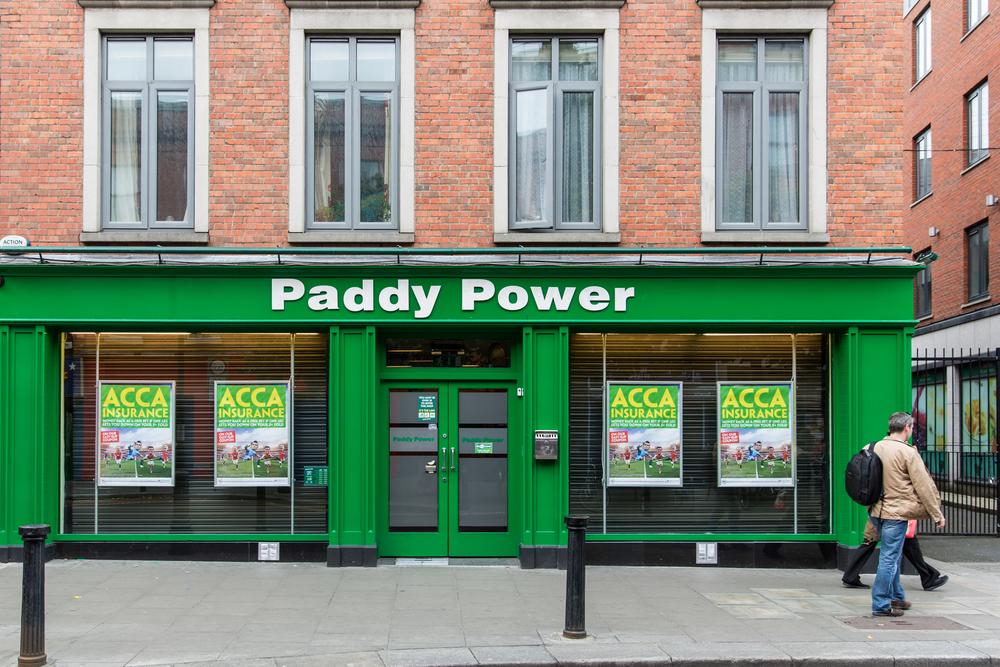
Paddy Power Betfair (LON:PPB) published a trading update on Thursday, causing shares to fall.
The betting firm said that quarter 1 revenue increased 17% year-on-year.
This was attributed to driven ‘excellent growth’ in both Australian and US markets.
In the group’s sports division, revenue growth was strong at Sportsbet and FanDuel.
However, online performance was particularly impacted by unfavourable results in the UK and Ireland, falling 1%.
Gaming also proved strong, with ‘excellent growth’ online across Europe and the US.
Paddy Power Betfair also benefited from the acquisition of Adjarabet back in February.
Looking ahead, the firm said its full-year outlook remains in line with expectations, particularly amid good returns on US investment.
Peter Jackson, Chief Executive, commented on the update:
“Q1 was a good quarter for the Group with revenues up 17%, notwithstanding customer friendly sports results in the UK. Underlying momentum remains good for Paddy Power with 22% growth in average daily actives.
For Betfair, we continue to make good progress on the technology development work to enhance our global customer propositions which will enable us to accelerate international growth. Meanwhile, the geographical diversification of our online business has been further enhanced by the addition of Adjarabet in February, with integration progressing well.”
The firm was founded after a merger between Paddy Power and Betfair back in 2015.
It is listed on the London Stock Exchange and is a constituent of the FTSE 100 Index.
Shares in Paddy Power Betfair (LON:PPB) are currently down -5.29% as of 12:58PM (GMT).
Lloyds Bank Q1 profits miss expectations
Lloyds Bank reported its results for the first three months of the year, missing expectations.
Pre-tax profits for the quarter were flat, at £1.6 billion, unchanged from the same period a year ago.
This was due to one-off costs and continued Brexit related uncertainty.
The bank set aside £339 million for “banking volatility and other items”, relating to cost as a result of exiting an agreement with Standard Life.
The bank also earmarked an additional £100 million for payments relating to mis-sold PPI compensation.
A further £126 million in costs were racked up for restructuring measures during the period.
Nevertheless, the bank said overall operating costs fell by 3% to £1.9 billion, which ultimately contributed to a 8% increase in underlying profit to £2.2 billion.
António Horta-Osório, group chief executive, said: “While Brexit uncertainty persists, and continued uncertainty could further impact the economy, I remain confident that our unique business model, and in particular our market leading efficiency and targeted investment, will continue to deliver superior performance and returns for our customers and shareholders.”
Shares in Lloyds (LON:LLOY) are currently down -1.07% as of 12:39PM (GMT) as the market reacts to the results.
Coca-Cola HBC q1 revenue up 4.7%
Coca-Cola HBC reported its first quarter results on Thursday, posting a 4.7% rise in revenue.
The bottler of the Coca-Cola brand said that volumes increased by 3.5% over the period compared to the same period a year before, despite the impact of a later Easter.
In addition, established segment volumes rose by 0.2%, amid growth in Ireland and Greece, alongside a ‘notable improvement’ in Italy.
Meanwhile, developing segment volumes increased by 2.6% during the quarter.
Emerging segment volumes also grew by 5.7% particularly in Nigeria.
Performance was also boosted by strong growth from Russia, Romania and Ukraine.
Zoran Bogdanovic, Chief Executive Officer of Coca-Cola HBC AG, commented:
“We have started the year well, delivering solid growth in revenues despite the impact of this year’s late Easter. Volume growth accelerated compared to last year and our ongoing revenue growth management initiatives continue to deliver improvements in price/mix.
This good start sets us up well to deliver on our plans and make 2019 another year in which we achieve FX-neutral revenue growth above our targeted range with another step up in margins.”
He is also announced that the board had agreed to propose a special dividend of €2.00 per share.
Mr Bogdanovic said that this reflected “successive years of strong performance, confidence in the future and our commitment to creating value for our shareholders.”
Shares in Coca-Cola HBC (LON:CCH) are currently up +3.12% as of 10:39AM (GMT).
Reckitt Benckiser first-quarter sales rise 1%, growth expected rest of year
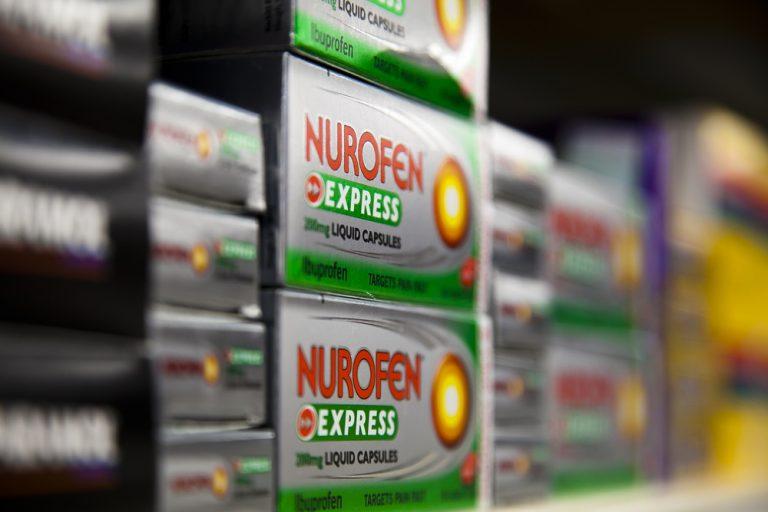
Reckitt Benckiser (LON:RB) posted a 1% rise in its first-quarter sales on Thursday but expects to see “improving growth” during the remainder of the year.
Head quartered in Slough, England, Reckitt Benckiser is a multinational consumer goods company boasting iconic brands such as Dettol, Strepsils, Gaviscon, Air Wick and Vanish.
Like-for-like sales rose 1%, falling below the 1.8% figure expected by analysts.
Shares in the company were almost 2% lower during early trading on Thursday.
“As expected, Q1 saw a slow start to the year, especially in OTC (Over The Counter). We expect to see improving growth in the remainder of the year, particularly H2,” Chief Executive Officer Rakesh Kapoor commented on the results.
“Our health business unit (BU) was impacted by the unusually weak cold and flu season across US and several European markets and associated retailer inventory movements. While our seasonal products declined, Nurofen and Gaviscon delivered good growth from a combination of recent innovations and quality base products. Our IFCN business delivered a good Q1 (+5%), with innovation led momentum continuing in the US and further progress in China,” the Chief Executive Officer continued.
Reckitt Benckiser said that it remains on track to deliver its full year net revenue target of +3-4% like-for-like, with its growth to be weighted by the second half of its financial year.
“RB2.0 remains fully on track and we reiterate our 2019 targets of 3-4% LFL net revenue growth and adjusted operating margin to be maintained,” Rakesh Kapoor concluded.
At the start of the year, however, the company posted a 65% drop in its annual profits, but insisted that this was impacted by one-off gains from the previous year.
Its sales also suffered at the end of 2018 as a result of a manufacturing disruption at a European baby formula factory, appearing to be prone to multiple one-off incidents in the past.
At 08:28 BST Thursday, shares in Reckitt Benckiser Group plc (LON:RB) were trading at -1.91%.