
Imperial Brands shares dip despite H1 profits
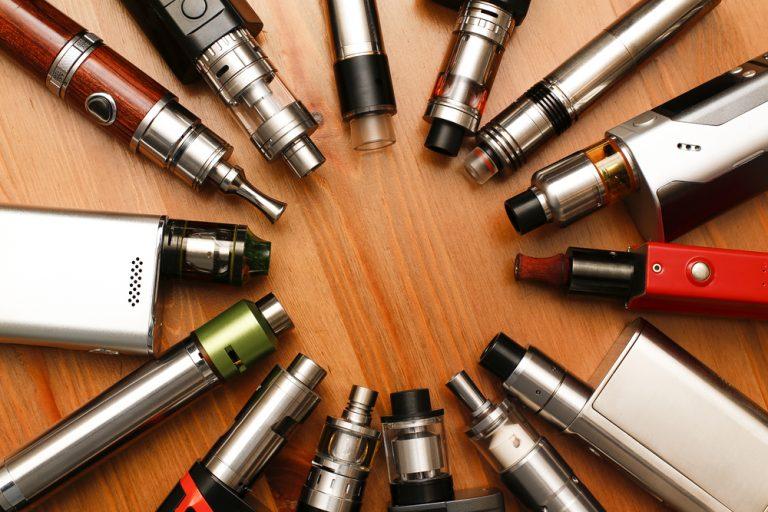
Bristol-based British tobacco multinational Imperial Brands Plc (LON:IMB) have seen their share price dip despite impressive growth in its vaping division.
KPMG fined £5 million for Co-op audit failings
KPMG has been dealt a £5 million penalty due to failings relating to an audit of the Co-operative Bank.
The Financial Reporting Council (FRC) ‘severely reprimanded’ the auditor, alongside one of the firm’s partners Andrew Walker.
Mr Walker was fined £125,000 following admission of misconduct relating to the 2009 audit.
This was discounted to a £100,000 settlement due to his cooperation.
KMPG also received a discounted settlement to £4 million for agreeing to pay the penalty.
The firm has also been ordered to pay £500,000 towards the FRC’s costs.
In a statement, the FRC said the charges related specifically to:
“failures to obtain sufficient appropriate audit evidence; failures to exercise sufficient professional scepticism and a failure to inform Co-op Bank that the disclosure of the expected lives of the Leek Notes in the financial statements was not adequate.”
Last month, the auditor was criticised by Patisserie Valerie shareholders for its audit of the struggling chain, despite an apparent conflict of interests.
KMPG is also under further scrutiny from the UK’s competition regulator, the Competition and Markets Authority (CMA).
KPMG alongside PwC, Deloitte and EY are all facing scrutiny over a series of auditing failures.
As a result, The CMA has called for the break-up of the ‘big four’ accounting firms in the U.K, to lessen their dominance within the industry.
JD Wetherspoon shares fall amid slim margins
JD Wetherspoon updated the market with a trading update on third quarter trading on Wednesday, sending shares downwards.
The British pub operator said that like-for-like sales rose by 7.6% and total sales grew by 8.4%, for the 13 weeks to 28 April.
Meanwhile, year-to-date like-for-like sales increased by 6.8% and total sales also climbed 7.6%.
JD Wetherspoon also said it had opened three new pubs and closed seven during the course of the year.
It intends to open an additional two pubs during the remainder of the year.
The company said that net debt at the end of the quarter totalled £746 million, with it expected to fall to £740 million by the end of the financial year.
Slimmer profit margins were ultimately attributed to wage rise costs over the course of the period.
Despite these debts, the statement affirmed that the company ‘remains in a sound financial position’.
The chairman of JD Wetherspoon, Tim Martin, said:
“We continue to anticipate a trading outcome for this financial year in line with our previous expectations.”
Martin founded the pub chain back in 1979. It now operates around 900 pubs around the UK including the Lloyds No.1 brand.
He has been a vocal supporter of Brexit, and has pledged to serve more British and Australian sparkling wines, as opposed to popular European alcoholic beverages.
Shares in JD Wetherspoon (LON:JDW) are currently down -4.46% as of 11:17PM (GMT).
Commerzbank net profit falls following merger collapse
Commerzbank revealed a 54% decrease in net profit for its first quarter.
For the quarter, net profit amounted to €120 million, compared to the €262 million figure from a year prior. Additionally, revenue also was down year-on-year at €2.16 billion, a decrease compared to the previous €2.22 billion figure.
Commerzbank cited a higher tax burden of roughly €90 million as a reason for the drop in its net profit.
“We are addressing the right issues with our strategy”, Martin Zielke, Chairman of the Board of Managing Directors of Commerzbank, commented.
“Our growth with customers and assets is enabling us to strengthen our revenue base thereby compensating the effects from low interest rates and margin pressure. We’ll leverage the current momentum with our customers to further implement our strategy. With Campus 2.0 we will become ever more efficient. And of course we will continue to work on our profitability.”
The results come less than a month after the collapse of merger talks with Deutsche Bank, following concerns by shareholders over the complexities of the plan.
Had the two banks merged, then they would have held one fifth of the German retail banking market. Their joint employee numbers would have reached 140,000 workers world-wide. Additionally, the merger would have created a combined business with roughly €1.81 trillion worth of assets.
Many doubted the potential merger, with a representative of German union Verdi saying that the merger between the two rivalling banks could lead to as many as 30,000 jobs being cut in the long term.
“Business with our clients remains on a positive track. Even in a very competitive environment, Q1 is proof of the resilience of our corporate clients business and an example of what is possible. The challenge now is to build on this progress”, Stephan Engels, Chief Financial Officer of Commerzbank, commented on the results.
“We are continuing to implement cost reductions despite further increases in compulsory contributions and ongoing strategic investments. Our cost targets remain unchanged.”
Uber drivers strike ahead of IPO launch

Uber drivers across the UK are set to strike against pay and work conditions just days before the company launches its initial public offering.
Drivers in British cities such as London, Nottingham, Glasgow and Birmingham will protest, in addition to drivers in New York, San Francisco, Chicago, Los Angeles, San Diego, Philadelphia and Washington DC across the pond.
The company is set to be listed on the New York Stock Exchange under “UBER”, and is one of 2019’s most anticipated initial public offerings.
Uber’s floatation will raise roughly $9 billion.
The United Private Hire Drivers Branch of the Independent Workers Union of Great Britain (IWGB) is set to stage a boycott of the app that will last for nine hours.
Uber drivers in the US will receive support by drivers for Lyft (NASDAQ:LYFT), Uber’s competitor. Lyft is Uber’s smaller rival and the first of the two ride-hailing businesses to float, listing at the end of March.
Uber’s past is filled with controversies. From its work place culture, in which certain sexual harassment and discriminatory practices occurred according to a former employee, to the treatment of its drivers.
“It is the drivers who have created this extraordinary wealth but they continue to be denied even the most basic workplace rights,” James Farrar, chair of the United Private Hire Drivers branch of the IWGB union commented, according to the BBC.
“We call on the public not to cross the digital picket line on 8 May but to stand in solidarity with impoverished drivers across the world who have made Uber so successful.” James Farrar continued.
Towards the end of last year, Uber also revealed plans to launch a subscription for customers in Los Angeles, Austin, Denver, Miami and Orlando, allowing customers to always ride at a fixed rate and avoid price surges during peak hours.
At 19:59 GMT -4 Tuesday, shares in Lyft (NASDAQ:LYFT) were trading at -2.03%.

Greatland Gold starts exploration at Black Hills

Greatland Gold shares ticked up on Tuesday after the company announced the beginning of its field exploration campaign at Black Hills.
The natural resources exploration company said high powered, deep sensing IP survey had commenced at Black Hills, with the aim of ‘extending the strike length of the chargeability anomaly’, which was identified by a survey conducted back in 2018.
Greatland Gold said that it expects the first drilling programme at the location to begin early next month.
The company added that the campaign will involve more than 20 Reverse Circulation drill holes to depths of up to 300 million for approximately 6,000m of drilling.
Gervaise Heddle, Chief Executive Officer, commented: “We are very pleased to have commenced 2019 field activities in the Paterson region, which is currently one of the most active exploration areas in Australia following recent exploration success by Greatland and others.
“The high powered, deep penetrating IP survey at Black Hills is designed to test whether the large, chargeability anomaly that was previously identified over 1,000m of strike, and which is spatially coincident with gold mineralisation identified at surface, continues further to the south-east.
“We intend to immediately follow up this survey by commencing Greatland’s first drilling campaign at Black Hills in early June. It is set to be a busy exploration season this year and we look forward to pursuing multiple exciting exploration targets at Black Hills and across the Paterson region.”
Back in March the AIM-listed firm announced it had secured a £65 million farm-in agreement with Newcrest to advance its Havieron project in Western Australia.Shares in Greatland Gold (LON:GGP) are currently down +2.59% as of 12:18PM (GMT).
Purplebricks announces CEO departure, shares plunge

Purplebricks announced the departure of co-founder and chief executive Michael Bruce on Tuesday.
The online estate agency said that the Board has appointed Vic Darvey to replace the outgoing chief executive.
Vic Darvey previously held the position of chief operating officer at the firm.
In the trading update, Purplebricks said that it also intends to exit the Australian market amid a disappointing performance in the region.
This was attributed to execution errors as well as a increasingly difficult market conditions.
In the UK, the firm said that despite a similarly challenging property market, the company ‘continues to out-perform the market and the Board remains confident about the future of the business.’
In Canada, trading continued to prove strong and in line with management expectations.
Purplebricks added that its US operations were also under review to assess its performance and associated risks, moving forward.
Paul Pindar, Non Executive Chairman, said: “The Board is delighted to have an executive of Vic Darvey’s calibre to take on the leadership of our business for its next important phase of development. We have a lot to do and Vic has a clear vision of the priorities we need to address.
Importantly, we are very conscious that the Group’s performance has been disappointing over the last 12 months and we sincerely apologise to shareholders for that. With hindsight, our rate of geographic expansion was too rapid and as a result the quality of execution has suffered. We have also made sub-optimal decisions in allocating capital. We will learn from these errors and will not make them again.”
Shares in Purplebricks (LON:PURP) are currently down -4.90% as of 11:14AM (GMT).
GW Pharma Q1 revenues surge, shares rise
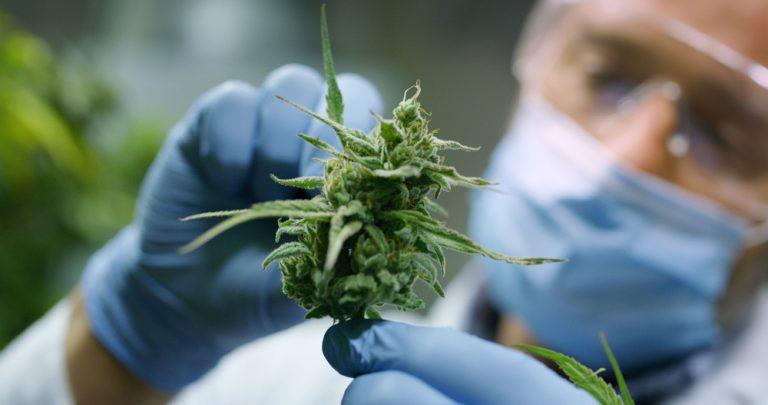
GW Pharma published its results for the first quarter of the year on Monday, sending shares upwards.
The British biopharmaceutical company said that revenue for the quarter to March-end was $39.2 million, up from $3 million the year before.
GW Pharma also reported a net loss for the quarter of $50.1 million compared to $69.5 million for the same period in 2018.
The firm also confirmed a closed transaction to sell Rare Pediatric Disease Priority Review Voucher for $105 million in April.
GW Pharma said that the sale would be reflected in its second quarter results.
Cash and cash equivalents at the end of the period totalled $521.7 million, down from $591.5 million as of December-end 2018.
Alongside updating the market on financial performance, GQ Pharma also announced a positive set of results from its Phase 3 trials for its EPIDIOLEX product.
EPIDIOLEX is a cannabidiol or CBD product developed for the treatment of seizures associated with Tuberous Sclerosis Complex.
The firm confirmed that it had achieved its primary objective with the treatment during the trial.
Justin Gover, the company’s chief executive commented in a statement:
“We are pleased to report a strong launch of Epidiolex in the US and continue to be encouraged by the level of support for this medicine from patients, caregivers and healthcare professionals. As the first and only plant-derived CBD medicine approved by the FDA, Epidiolex offers a novel treatment option for patients with Lennox-Gastaut Syndrome and Dravet syndrome, two highly treatment-resistant forms of childhood-onset epilepsy”,
He added:
“In addition, we are delighted to report today positive results from a Phase 3 trial in patients with seizures associated with Tuberous Sclerosis Complex, and are excited at the prospect of expanding the use of Epidiolex to these high need patients in the future.”
Shares in GW Pharma (NASDAQ: GWPH) are currently trading down -2.62% as of 10:34AM (GMT).
Pandora progresses with business transformation plan
Pandora (CPH:PNDORA) announced on Tuesday that it has progressed well with its business transformation programme, labelled Programme NOW.
Announced earlier this year, the transformation programme aims to cut costs following the business’ disappointing 2018 results. Pandora aims to save 1.2 billion Danish crowns under the plan by 2022.
The programme follows a disappointing set of annual results for the jewellery retailer, in which like-for-like sales dropped 4% for the year, decreasing a further 7% in its fourth quarter.
Though the transformation programme is mainly aimed to support revenue growth from late 2019, the business is currently trialling various commercial initiatives to prepare for the re-launch of the brand.
Pandora said that the initiatives have shown encouraging results and includes collaborations with celebrities and influencers.
Pandora is an international Danish jewellery manufacturer and retailers. Founded in 1982, the business is most known for its charm bracelets. Sold in over 100 countries on six different continents, the company employs over 28,000 people across the globe.
Its first-quarter results for 2019 were weak, as the company expected, and were impacted by the commercial reset initiative under the business transformation programme.
Total like-for-like sales dropped 10% as a result of lower store traffic. EBITDA fell 12% to 1.5 billion Danish Crowns, but came in above the 1.3 billion predicted by analysts in a Reuters poll.
“Programme NOW is progressing rapidly and is creating a real transformation of our business, culture and organisation. As expected, the first quarter was characterised by continued weak like-for-like further burdened by our deliberate commercial reset. While the first quarter emphasises the need for our planned brand re-launch, it is encouraging to see that our initial commercial pilots and marketing tests to Reignite a Passion for Pandora show good results,” Anders Boyer, CEO of Pandora, commented.
The jewellery brand will cut a further 1,200 workers in Thailand as the business seeks to turn itself around.
At 09:21 CEST Tuesday, shares in Pandora A/S (CPH: PNDORA) were trading at +0.97%.