
SpaceandPeople shares down 25% after “very challenging year”

SpaceandPeople shares (LON: SAL) have fallen by almost 25% as the group revealed losses for the first half of the year.
The retail, promotional, and brand experience specialist shared interim results for the six months ended 30 June 2020 where net revenue plunged 72% to £1.1m.
SpaceandPeople felt “profound” effects from the lockdown and the continuing restrictions and economic climate. During the lockdown, the group said almost all activities stopped and as a result, all bookings for that period were canceled or postponed. For three months, SpaceandPeople recorded virtually no revenue.
Nancy Cullen, the group’s chief executive, said: “As you would expect, 2020 has been a very challenging year for the Group so far. The Covid-19 pandemic has impacted all areas of our business in every territory we operate.
“The challenge to our staff, clients, promoters and operators has been enormous and I am extremely grateful to them all for their help, resilience and understanding. I would have liked for my first report as CEO to have been during more normal times, however, I am proud of how the Group has coped with the challenges it has faced and I look forward to better times in the future.”
Since the lockdown enforced in March, the German arm of the business is now almost back to normal levels of trading. However in the UK, restrictions on media budgets and nervousness about running activations whilst social distancing needs to be maintained have led to activity cancellation and have had “a strong depressive effect on the brand business.”
Cullen added on the outlook of the business: “As I write this, Covid-19 cases in the UK are on the rise again and local restrictions are being put in place in many areas of the country. Our industry is slowly recovering, but is by no means back to normal.
“When we forecast the outlook for our business earlier this year, we assumed scenarios where there were further lockdowns. Although this would be extremely unwelcome news for us, we are confident that we will be able to trade through such events and emerge in a position to take advantage of the recovery. We have good cash headroom, are streamlined and very focused on achieving results and seeing the grass roots of recovery in bookings from 2021 onwards.”
SpaceandPeople shares (LON: SAL) are currently trading -13.98% at 4,00 (0913GMT).
Mind Gym shares plummet amid Corona disruption

Mind Gym shares (LON: MIND) plummeted 17% on Friday’s opening as the group was hit by Covid disruption.
In the six months to 30 September 2020, the gym group a 40% fall in revenue compared to a year earlier.
Mind Gym said in a trading update released today that it anticipates making an adjusted loss before tax in the six months to 30 September 2020 of between £1m-£1.5m.
“As our clients focused on dealing with their own operational changes, including moving to remote working, they were forced to cancel face-to-face leadership events and training programmes and most of the new work usually commissioned with us between February and July was suspended,” said the group.
Whilst overall revenue fell, Mind Gym saw 78% in revenue from virtual live deliveries – compared to the 32% for the same period a year earlier.
Octavius Black, Chief Executive Officer of Mind Gym, commented: “The first six months of the current financial year was a period of great uncertainty as companies focused their attention on the operational challenges of adapting to COVID-19. We were successful in pivoting clients to virtual delivery, feedback for which is very strong, and in leading the market again in product development.
“The Group has taken the opportunity to increase its focus on the medium to long term digital strategy and investment which will ensure Mind Gym grows its share of the corporate development and behaviourial change market. Growth is returning, showing up in both booked revenues and the opportunity pipeline and we are confident that revenue performance and profitability in H2 FY21 will be significantly better than H1.
“We continue to have a strong cash balance that protects the business and provides the resources for investing in growth.
“Despite the challenges brought by COVID, our strong proposition, team and financial position combined with an improving performance leaves us confident about the future,” he added.
Mind Gym shares (LON: MIND) have recovered slightly since opening and are currently trading -4.28% at 89,50 (0840GMT).
Boots sales fall as people avoid high streets
Sales at Boots fell 30% in this year’s fourth quarter as shoppers stayed away from high streets.
In the three months till the end of August, the pharmacy chain saw a drop in sales across all markets except beauty due to people buying their pharmacy products from supermarkets.
As people are working from home, sales at stores dropped, however, online sales in the period were seen to surge by 150%.
Walgreens Boots Alliance, the owner of Boots, said the stores that had been most affected were those in the city centres and at travel sites due to the drop in tourism.
We think the UK is the country where there might be [further] lockdowns. It is quite unpredictable. We don’t see major risk in the US, but the UK presents risks to the [sales] projections,” said James Skinner, the group’s chairman.
In June, the group said it would cut 4,000 jobs and last year it said it planned to cut 200 stores in an effort to save $2bn in costs by 2022.
Sebastian James, the managing director of Boots UK, said about the job cuts: “The proposals announced today are decisive actions to accelerate our transformation plan, allow Boots to continue its vital role as part of the UK health system, and ensure profitable long-term growth. In doing this, we are building a stronger and more modern Boots for our customers, patients and colleagues.
“We recognise that today’s proposals will be very difficult for the remarkable people who make up the heart of our business, and we will do everything in our power to provide the fullest support during this time,” he added.
Walgreens Boots Alliance expects a profit growth over 2021. Shares in the group rose in pre-market trading.
Apple’s iPhone 12 – formidable or forgettable?

The eve of Apple‘s (NYSE:AAPL) long-awaited next instalment is upon us, and in just a matter of minutes, excited applets will be able to pre-order the latest, aluminium-coated slice of Californian tech – the iPhone 12.
 And that pretty much sums it up for me. Being a past Apple patron myself, these infuriating details seem to mount up to a high-style, low-substance final product; where the suave-woke zeitgeist of the brand doesn’t quite wash against what is quite clearly the company’s priority: it’s balance sheet.
With that being said, I hope the new phone meets everybody’s expectations – it may well end up being a roaring success.
And that pretty much sums it up for me. Being a past Apple patron myself, these infuriating details seem to mount up to a high-style, low-substance final product; where the suave-woke zeitgeist of the brand doesn’t quite wash against what is quite clearly the company’s priority: it’s balance sheet.
With that being said, I hope the new phone meets everybody’s expectations – it may well end up being a roaring success.
But do we think the iPhone 12 is worth the hype?
Well, in terms of features, there are a few new things to talk about. For instance, the confirmed iPhone Mini at 5.4 inches and iPhone 12 at 6.1 inches. Unusually, though, there could be up to four sizes launched on within a short range of release dates, with a 6.1 inch iPhone Pro and a sizeable 6.7 inch iPhone Pro Max also being announced.What has really been grabbing headlines, though, are the iPhone’s new tech features and appearance. Boasting 5G capabilities and a 3D depth-sensing camera, Apple have made an some effort to move with the times – and will also be keeping their popular 14 interface for the launch of their new models. In terms of the look of the thing, the iPhone 12 seems to hark back to the reliable and popular iPhone 5, taking a leaf out of the old-school book with sharp, rather than rounded edges. The phone is also being showcased in dark blue, a new colour scheme for Apple’s staple product. The main selling point for many though, will be the price, $699 in the US and £699 in the UK for the Mini, which is far short of the iPhone X’s £999 price tag, and may appear slightly more affordable than the £729 asked for the basic iPhone 11 model.iPhone 12 Size Comparison: All iPhone Models Side by Sidehttps://t.co/pZ2YatGkMx pic.twitter.com/xnXfG8JIff
— MacRumors.com (@MacRumors) October 15, 2020
Or is the iPhone 12 more predictability from Apple?
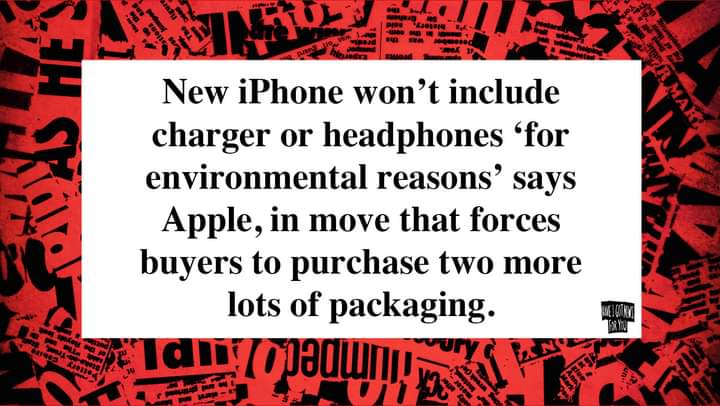
Having completely blown mobile phone technology into a new paradigm with the iPhone 3G and 3GS, it is little secret that ever since, Apple has been trying to find ways to replicate that success. Indeed, as stated by Daniel Morgan, senior portfolio manager Synovus Trust Co.:“Since 2014, the newest iPhone launches have felt more like ripples opposed to a wave,”And, to be honest, it doesn’t look like this model will be the one to do it, at least not on merit. Apple’s last big boom in devices followed the launch of the iPhone 6 and 6 Plus, and while the iPhone X’s top range models saw the company boast record-breaking revenues, its new features seem more in the range of like novelty, than revolutionary. But perhaps that’ll be enough to get fans onboard. Indeed, Apple is seen as the cutting edge of tech fashion, its devices are battery-powered status symbols, and the addition of a swanky display was enough to get some people to pay around £1,400 for the top spec iPhone 11. Also, some analysts (granted, ones who work for companies with large Apple holdings) believe that the iPhone 12 will spur sales that exceed beat 231 million devices sold during the 2015 fiscal year. Dan Ives, analyst for Wedbush Securities, comments: “I believe it translates into a once-in-a-decade-type upgrade opportunity for Apple,” One factor that might drive sales will be the pandemic, with Apple shares rallying more than 50% and its market value climbing above $2 trillion. Similarly, with consumers being more reliant on tech than ever, and looking to enjoy the endorphin hit provided by a sleek new device, the next dose of Apple might prove to be just what the doctor ordered. Equally, though, the pandemic might discourage consumers from lavish new expenditure, or more importantly, home-working might reduce the demand for high-speed, wireless connections, as people rely more heavily on home Wi-Fi. The other factor which could – and should – turn off some potential customers, is the fact that the iPhone 12 doesn’t actually cost £700. If you include essentials, or the items that are normally included when you buy a new handheld device – earphones, the obligatory earphone adaptor, and charger – this will set you back an additional £78. As put by Have I Got News for You:
 And that pretty much sums it up for me. Being a past Apple patron myself, these infuriating details seem to mount up to a high-style, low-substance final product; where the suave-woke zeitgeist of the brand doesn’t quite wash against what is quite clearly the company’s priority: it’s balance sheet.
With that being said, I hope the new phone meets everybody’s expectations – it may well end up being a roaring success.
And that pretty much sums it up for me. Being a past Apple patron myself, these infuriating details seem to mount up to a high-style, low-substance final product; where the suave-woke zeitgeist of the brand doesn’t quite wash against what is quite clearly the company’s priority: it’s balance sheet.
With that being said, I hope the new phone meets everybody’s expectations – it may well end up being a roaring success. Why does ‘King of the North’ Andy Burnham matter?
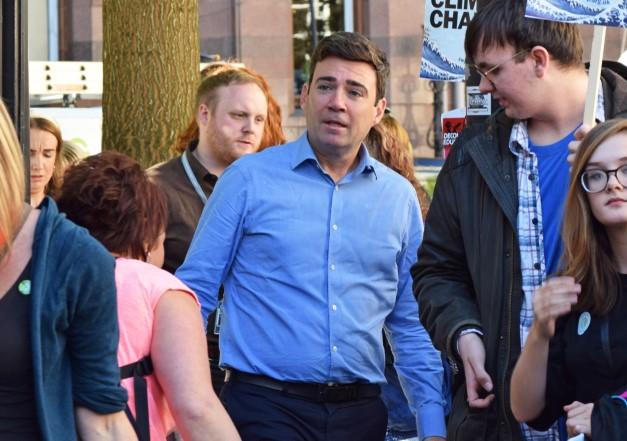
You’ll likely of heard of the fury stirred up by today’s mutiny, with high-profile Labour MP, Mayor of Greater Manchester and ‘King of the North’, Andy Burnham, refusing to implement Tier 3 restrictions on his home city. Why is he doing it? Well, because he’s probably gauged that a second lockdown won’t be popular in his area. But how is he justifying it, and why should we care?
Well the nigh-on instinctive response are economic justifications. Between a lack of clarity on how long restrictions will be in place; unable to plan for unexpected overheads; fluctuating degrees of financial support from the government (et al.) are all contributing to the sense that another wave of restrictions might be too great a burden for many.
Not only are residents worried about their jobs, but the flip-flop on lockdown policy, and the Chancellor’s tightening purse strings, are causing local businesses to ask questions about their long-term viability. Job losses, and business closures, aren’t just harmful for the economy, but for the fabric of a community.
A second reason, that is not discussed enough, is good will turning into apathy. While many would support lockdown in spirit, even at a cost to themselves, there just doesn’t seem to be a big pay-off in sight. Sure, we might know the lockdown protects lives, but its ultimate goal is to buy time – specifically, time for a vaccine to be developed.
Between Donald Trump’s half-witted and expedient ramblings about a vaccine being ready by November, and delays to Astra Zenica’s vaccine trials, there appears to have been a real lack of good news on the vaccine front. While it might seem like a somewhat abstract discussion, not having an end in sight, and a clear goal to work towards, can make extremely tedious undergoings – like lockdown – unpleasant enough that we just give up the ghost.
Third, and Burnham will have been acutely aware of this from the get-go: the North-South divide narrative has been a potent weapon since the 1980s. With Boris Johnson asking cities in Northern England to be the forerunners in implementing the most stringent Tier of lockdown restrictions, Burnham decided it was time to light the political touch-paper.
Lamenting the ‘one rule for the South and another for the North’, the Mayor of Greater Manchester has challenged the PM’s platform as the champion of ‘regular’ people. And, true or not – given that restrictions are now being implemented in London – framing Boris as an out-of-touch Southerner, is the last thing the PM needs, amid questions being asked about gross overpayments to Test and Trace operators.
What is so significant about these recent breakthroughs, though, is that Burnham positioning himself as – or merely being crowned – the ‘King of the North’, allows him to test Johnson’s already-shaky working class support. Crucially, it might challenge Boris‘ status in the ‘Red Wall’ seats that saw him win so decisively in 2019. To regain the favour of Northern cities such as Manchester, the PM will either have the unenviable task of convincing them his way of doing things is better than Burnham’s, or conceding, which would likely spark further dissent around the country.Excellent intervention from Andy Burnham. What you get from voting Labour – in Manchester, Liverpool and Wales – is people who will stop you being used in Dom’s vast eugenic experiment against working class people 👇 https://t.co/GwYOnF5y3f
— Paul Mason (@paulmasonnews) October 15, 2020
Three reasons why FTSE oil stocks are at their lowest since the turn of the century
It’s little secret that FTSE 100 oil stocks have been absolutely battered in 2020, and today’s share price drops seemed to add icing to the rather underwhelming cake. If you’re confused about why today in particular is significant, here are a few reasons why it might be so.
Number 1: Sluggish oil price recovery
Yes, I know, very obvious – but also necessary. With Brent crude having climbed up from its $19.30 nadir in March, up to $46.29 in August, the oil price recovery appears to have lost steam in the last couple of months, fluctuating and now sliding down to $41.84. This pattern is pretty much mirrored by WTI crude. Having peaked at over $63 a barrel in January, WTI fell to little over $12 in March, rallied to over $43 throughout August, and then lost momentum, down to $39.51 today. The two oil price indexes shed 3.42% and 3.73% respectively on Thursday, and this is hardly what you’d want to see, if hoping for a recovery in oil equities.Number 2: Costly clean energy transitions
Realising mounting pressure from activists, the media, consumers and financial institutions, oil majors know that a cultural shift in the energy industry is underway. They can either be carried, kicking and screaming towards this change, or move with the times, and take the costly hits involved in making the proactive shift to renewables. FTSE oil giants, Royal Dutch Shell (LON:RDSA) and BP (LON:BP), have decided to do precisely that, both announcing in 2020 that they would be undergoing seismic transitions through buy-ups of clean energy assets. Between RDS pledging a budget of up to $4 billion per year for its New Energies business, and BP aiming for carbon neutrality by 2050, the expensive operational overhauls might be reflected in short term hits to earnings, but may also translate into protection of long-term returns.Number 3: Financial institutions phasing out support for high-carbon-emitters
This latter point could be a long term driver of risk for oil and gas producers, with institutional investors and central banks deciding that supporting high-carbon businesses is at odds with their environmental goals, and against what is being demanded by a growing number of investors, and society at large. Indeed, the Bank of England announced during the summer that its bond-buying strategy was directly in contradiction with its climate change prevention goals, and is considering a shift in focus to green bonds. Similarly, and more relevant, perhaps, ECB president, Christine Lagarde, announced yesterday that she would be considering a shift from ‘neutrality’ in corporate bond-buying, to a methodology which factors in environmental risk. She told viewers of the UN Environment Programme Finance Initiative event that: “In the face of what I call the market failures, it is a question that we have to ask ourselves as to whether market neutrality should be the actual principle that drives our monetary policy portfolio management.” “I’m not passing judgment on the fact that it should no longer be so, but it warrants the question and this is something we are going to do as part of our strategy review.” “[…] more needs to be done because it is probably the case that financial markets by themselves are not actually measuring the risk properly and have not priced it in”. Lagarde also said that central bankers “will have to ask themselves the question as to whether or not we’re not taking excessive risk by simply trusting mechanisms that have not priced in the massive risk that is out there”. Similarly, we could see a change in the attitudes of institutional investors, with calls for more stringent and exacting Responsible Investment criteria to be implemented by pension funds and investment trusts. Indeed, Temple Bar Investment Trust Director, Lesley Sherratt, has called for the goalposts of RI to be shifted, and states that if institutional investors were to apply more limited but demanding criteria, then companies would be obliged to change their business models, in order to be eligible for Responsible Investment portfolios.The situation as it stands
While a traditionally formidable class of equities, oil majors seem to be at the wrong end of a major 2020 trend: fossil fuel consumption is out of fashion. That isn’t to say that we don’t need oil or that it won’t make a recovery, but that at the moment, the pandemic has meant that fuel consumption is as low as its been in recent history, and the drive for renewables has more traction than ever. At present, FTSE oil major shares are all suffering on Thursday. Shell shares are down 4.77%, BP shed 4.21% and Tullow Oil (LON:TLW) dropped 7.11%, down to their respective lowest levels since the turn of the century, though it may even be a three or more decade-low, if you’d care to check for yourselves.Marston’s shares plummet as group axes 2,150 jobs
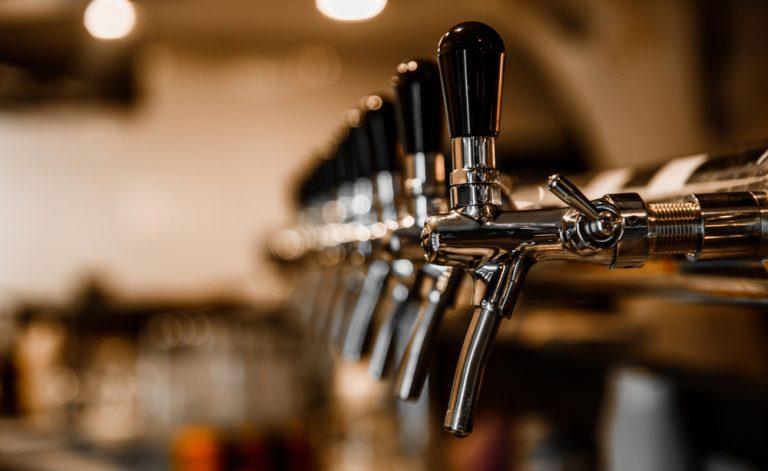
British brewery, pub and hotel operator Marston’s plc (LON:MARS) has seen its share price slide nearly 5% after announcing it will cut up to 2,150 furloughed jobs.
The government’s wage subsidy scheme is set to wrap up at the end of the month, and with a swathe of British cities facing further coronavirus restrictions which have decimated the hospitality industry, Marston’s joins a number of chains which have had to lay off staff to stay afloat in recent months.
Last month, The Independent reported that high street pub chain JD Wetherspoon (LON:JDW) had announced it would be cutting up to half of the jobs across its 6 airport sites following a slump in passenger numbers.
Marston’s was forced to close its doors between April and July as part of the UK’s lockdown measures, and despite several months of trading since then, sales in its pubs were still down 34% year-on-year, while its beer company sales slipped 22% on last year’s figure.
Although outperforming the UK pub sector by a decent 7% overall, Marston’s expressed its regret that it would be unable to sustain 2,150 of the jobs currently on the furlough scheme once the subsidies run out, calling the Coronavirus Job Retention Scheme “vital” to the “health and livelihoods” of its employees.
CEO Ralph Findlay commented on the “testing” year for Marston’s, stating:
“This year has been testing on many fronts, predominantly from having to navigate the consequences of COVID-19. Despite this, we have also created an exciting new joint venture between Marston’s Beer Company and Carlsberg UK during the period. I am grateful to all at Marston’s for their support, resolve and commitment during this time.
“There is much uncertainty ahead, the majority of which is outside of our control, however we will continue to focus on the safety of our teams and guests. Looking beyond the immediate challenges, we look forward to our future as a focused pub operator, returning to growth when trading conditions allow and realising the opportunities which are open to us over the medium to longer term”.
Shares at Marston’s slid a hefty 4.68% to 42.74p at BST 14:05 15/10/20, with a 5.96% drop over the past 3 months.
Domino’s Pizza Group shares look half-baked as orders slide in consecutive quarters
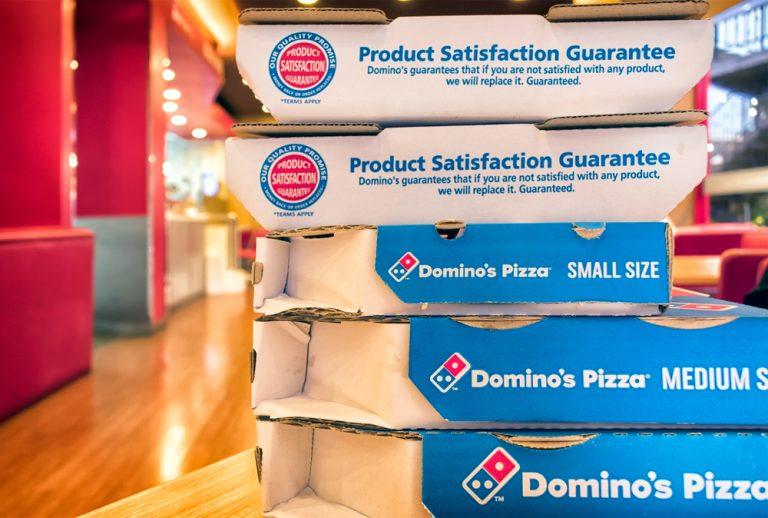
British subsidiary, Domino’s Pizza Group (LON:DOM) saw its shares slide as orders fell for the second quarter in a row.
Having initially risen by 1.8% during the first quarter of FY 2020, total orders fell year-on-year by 11.3% during the second quarter and then again by 6.0% in Q3.
These dips in orders were led by a significant contraction in collection-based orders. While delivery orders rose consecutively by 2.5%, 22.4% and 11.8% over the three quarters, collections were flat, before dropping considerably by 87.2% and 41.5%.
In more positive news, UK Domino’s announced that it had opened five new stores during Q3, and thirteen during the year-to-date, with only one planned closure.
It added that online sales growth stood at 35.6% in its UK operations and at 18.0% in the Republic of Ireland. It added that in the UK, online orders now account for more than 95% of its delivery sales and 68.5% of its UK and ROI collection sales, up from 45.8% year-on-year.
On its supply chain, Domino’s said that its supply operations service levels retained 99.9% availability and accuracy, and construction of its facility in Scotland remains on track. However, COVID-related costs in its supply chain, enabling social distancing, will amount to around £2 million.
Domino’s Pizza Group hopes to implement well-rounded strategy
Speaking on the results and the company’s strategic outlook, CEO, Dominic Paul, commented:
“I am pleased to report a strong performance in Q3. Delivery orders were up 11.8% and we also benefitted from the reopening of our collection business. I am delighted by the agility the Group and our franchisees have demonstrated in order to maintain our momentum. We welcome the UK government’s reduction to VAT in mid-July which helped franchisees mitigate costs and gave them the opportunity to pass savings on to customers.”
“Working closely with our franchisees we continue to do everything we can to keep our people and customers safe, including wearing masks, the use of perspex screens, contact free delivery and collection and continued menu rationalisation. It is a privilege to stay open and serve our local communities, and we are confident that we have operational plans in place to adapt to different levels of lockdown that may arise in the coming months. I would like to say a huge thank you to the Domino’s teams across our system for their dedication and hard work.”
“We continue to work on a long-term strategic plan for the business. At the heart of our future plans is realignment with our franchisee partners and we are having detailed discussions to agree a sustainable way forward, although we continue to expect that these discussions will take some time. Despite the ongoing uncertain backdrop, we expect to report full year Underlying Group PBT in the range of £93m to £98m, in line with market consensus.”
Investor notes
Following the news, Domino’s Pizza Group shares fell by 8.82% or 32.81p, to 339.19p apiece 15/10/20 13:18 GMT. This is 7.3% above its target price of 315.00p a share, but a notable drop from its year-to-date high of 372.00p a share, seen on October 14. The company currently has a p/e ratio of 21.24, slightly below the consumer cyclical average of 26.34. Analysts have a consensus ‘Sell’ stance on the company’s stock, while the Marketbeat community gives it a 50.91% ‘Outperform’ rating.BP shares dive to 25-year low amid climate crisis fears

Shares at BP plc (LON:BP) have plunged to their lowest level since 1995, reaching a mere £2.10 on Wednesday and falling from its £5-a-share value at the start of 2020, just weeks after new CEO Bernard Looney warned of a major restructuring drive amid mounting fears about the role of the oil industry in the climate crisis.
Oil is currently experiencing one of its most tumultuous years on record, after prices sank to their lowest level since 1982 during the coronavirus lockdown due to a worldwide slump in demand.
Its value has since rallied, but WTI crude oil is still sitting significantly lower than its annual high of $63.27 in the first week of January, now a mere $39.71 as of Thursday afternoon.
Similarly, Brent crude stands at $42.24, down from $68.91 at the start of the year.
BP was forced to cut its dividend in August for the first time since the Deepwater Horizon oil spill in the Gulf in 2020, which National Geographic researchers reported was continuing to harm resident wildlife even a decade on.
Market analysts told The Guardian that BP currently faces a double risk due to its “potentially expensive and financially risky transition into low-carbon energy” along with the “uncertain outlook” for the oil industry as a whole.
CEO Looney announced in February that BP would be committing to a net-zero carbon emission scheme by 2050, but with its share price consistently low over the past few months and numerous countries considering secondary lockdowns, investors have been understandably apprehensive.
BP’s share price is down 4.47% to 203.15p as of 13:15 15/10/20, with a dividend yield of 0.14%.
AO World shares surge 20% thanks to strong UK & German trading

AO World shares (LON: AO) jumped over 20% as sales surged by 57% in the six months till the end of September.
The European online electrical retailer revenue in Germany increase by 87% whilst UK revenue grew by 54%.
AO World said they saw a significant shift to online sales over the course of the pandemic. Most brick-and-mortar stores reopened in July but the group saw continued from Q1 throughout Q2.
John Roberts, the chief executive, said: “The last six months of trading have been like no other during my two decades in the business. AO was in good shape coming into this financial year and the global, structural shift in customer behaviour to online, accelerated by Covid, emphasised our strengths.
“The progress that we’ve made in Germany gives us the platform and confidence to grow. We remain excited by the opportunities ahead and ambitious to realise them.
“Whilst we remain mindful of the uncertain economic climate caused by the pandemic and Brexit, we are on track with plans and well set for our biggest ever peak trading period in the UK and Germany.”
The Group will announce its interim results for the six months ended 30 September 2020 on 24 November.
AO World shares (LON: AO) are trading +21.17% at 280,50 (1222GMT).