Moody’s lower Irish Banking outlook from positive to stable

1

Moody’s Investors Service (NYSE: MCO) have lowered the outlook for Ireland’s banking system from positive too stable.

The credit ratings agency said banks’ earnings will come under pressure from low interest rates, with asset risk continuing to fall.

Profitability will decline,” said Moody’s analyst Arif Bekiroglu. “Irish banks’ high reliance on net interest income makes them sensitive to the low interest rate environment. High exposure to low-margin tracker mortgages, rising costs due to increased debt issuance, revenue losses from sales of problem loans, and Brexit uncertainty are further headwinds for profitability.”

Expenses will remain high, as IT costs surge on a move towards digitalization, regulation and pending fines.

The operating environment should remain stable, Moody’s noted, forecasting real GDP growth of 3.2% in 2020 and 3% in 2021. The agency said growth should be supported by rising employment and investment.

Brexit could weigh on GDP, but Moody’s doesn’t expect an “economic shock”.

“Global economic uncertainty increases tail risk due to Ireland’s open economy, which hosts many multinational corporations,” Moody’s added.

The agency continued: “Meanwhile, banks’ asset risks are set to keep falling, as economic growth and low rates support borrowers’ finances, and as banks continue to sell and restructure problem loans. Enhanced risk management and stricter Central Bank of Ireland affordability guidelines should prevent excessive risk taking, holding back new problem-loan formation. Moody’s also expects capital ratios to hold steady, and funding and liquidity to remain strong.”

The performance from the Bank of Ireland (LON: BIRG) however seems to defy the change made on Tuesday.

Bank of Ireland recorded €1.5 billion of net lending growth in the nine-month period, which is 800 million higher than in the same period a year ago.

Bank of Ireland commented that the economic growth in its core markets of Ireland and UK remained “positive”, despite the “ongoing uncertainties” related to the UK’s decision to leave the EU.

Just one week ago, Moodys lowered the UK Banking Sector outlook from stable to negative. It seems that analysts at Moody’s still seem more optimistic on the Irish Banking sector compared to the UK one.

Certainly looking at the slow performance from FTSE100 listed HSBC (LON: HSBA) who have seen a slowdown in trading following an operational overhaul, neither the UK or Irish sector is looking too promising amid political and economic turmoil currently dominating news headlines.

MS International attributes poor results to ‘political and economic instability’

UK manufacturer MS International plc (LON: MSI) has seen its shares slide following a half year of financial under-performance, which the Board had predicted prior to the period starting. The Company’s woes were evidenced first and foremost by a year-on-year revenue comparison, which showed that sales were down by little under £4.5 million, to £33.3 million, for the half year ended October 31st. This led a narrowing in the Group’s gross profits, which fell from £10.6 million to £8.4 million, in a comparison of the same period. What really claimed the headlines though, was the fact that the Company swung from an operating profit, to an operating loss; with its bottom line switching from positive £3.2 million during the six-month period during 2018, to negative £0.5 million for 2019. The situation was equally turgid for MS International shareholders, with the Group announcing EPS had swung from 15.2p, to a loss per share of 2.5p, on-year. Other uninspiring news has come from; Rolls-Royce Holding PLC (LON: RR) dipping on shareholder departure, Ted Baker (LON:TED) issuing a profit warning and Santander (LON: BNC) cutting senior pension perks. On a brighter note, J D Wetherspoon plc (LON: JDW) pledges to create 10,000 jobs.

MS International comments

“We anticipated that the first half year, ended 31st October 2019, would be a challenging period and advised in September that, in the short term, we expected a substantial weakening in the Company’s results. The half year shows a loss of £0.49m before taxation (2018 – £3.19m profit), on reduced revenue of £33.32m (2018 – £37.74m). Loss per share amounted to 2.5p (2018 profit per share – 15.2p). Notwithstanding, the balance sheet remained strong with net cash at £19.37m compared to £22.89m at the last year end.”

“Clearly, although not unforeseen, the performance has been disappointing in some areas of the group but elsewhere what is being achieved is quite pleasing, albeit the benefits are yet to be demonstrated in our results. Opportunities are undoubtedly there, while fresh ones continue to arise, so we are seriously endeavouring to ensure that we are in a positive and capable position to maximise prospects as and when presented.”

Currently, many markets that we serve have tightened considerably owing, inter alia, to the well-chronicled effects of global political and economic instability that prevail. Moreover, such widespread tough conditions have been exacerbated by some sector specific issues impacting across the Company.”

Investor notes

The Company’s sahres dipped 10.00p or 5.56, to 170.00p per share 10/12/19 09:43 GMT. The Group’s p/e ratio stands at 7.79, their dividend yield is inviting at 5.08%.

McColl’s shares fall on cautious update

1

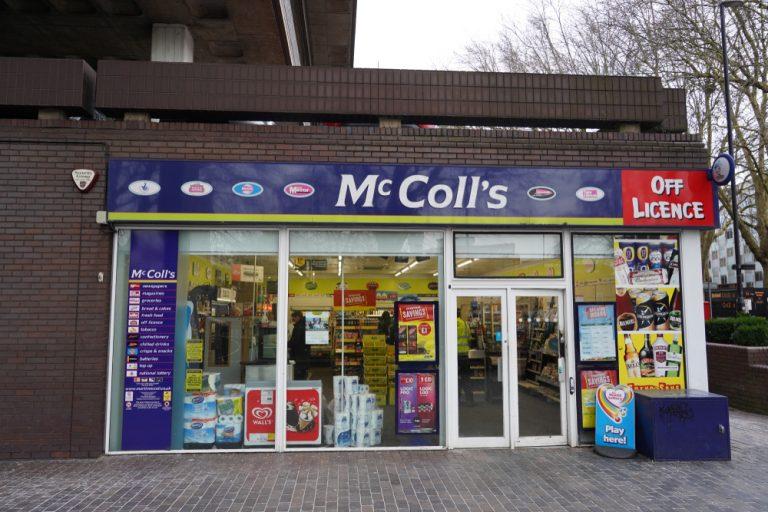
McColl’s Retail Group PLC (LON: MCLS) have seen their shares fall on Tuesday afternoon, as the firm gave shareholders a cautious update.

McColls Retail Group is a British convenience shop and newsagent operator, trading under the trading names McColls, Martins and RS McColl for shops in Scotland. McColl’s also operates post offices in one third of the estate, making them the largest post office operator in the United Kingdom.

Shares in McColls fell 3.51% to 39p on the announcement. 10/10/19 13:01BST.

The firm has seen a modest time of trading in 2019, as it saw its profit take a tumble back in February.

Pre-tax profit for the period decreased to £7.9 million, more than half of the £18.4 million figure from the year prior. Total revenue was up 8.1% to £1.24 billion. The company has said that this reflects the annualisation of an acquisition in 2017.

McColl’s has guided for adjusted earnings before interest, taxes, depreciation, and amortisation for the 52 weeks to November 24 of £32 million, “marginally” below expectations. It blamed this on softer second-half conditions due to unseasonable weather and dampened UK consumer confidence.

Annual revenue declined 1.9% mainly due to store sales, as like-for-like sales flat after a 1.4% fall in the prior year.

“While 2019 has been another challenging year for the business, we have made good progress against our goals of operational stability and good retail execution. We are also pleased to confirm that we have continued to reduce net debt, with further progress anticipated due to our ongoing capital discipline,” said Chief Executive Jonathan Miller.

“The fundamentals of the convenience channel are strong and we remain a resilient, profitable and cash generative business. We are confident in our plans to rebuild momentum in 2020, and look forward to providing a fuller strategy update at our preliminary results in February.

McColl’s have seen tough trading periods similar to many UK hughstreet firms.

There seems to be a larger issue on the UK high street which have caused firms to slump and even descend in administration.

This morning, Mothercare posted a wider loss in its half year results. Mothercare said that, for the 28 week period to 12 October, group loss before tax amounted to £21.2 million, deeper than the £18.5 million loss posted the year prior.

The performance of Mothercare coupled with the recent collapse of Thomas Cook shows that firms are struggling to fight an increasingly tough market.

Even with bigger retailers, firms such as Sainsbury’s who are a FTSE100 listed company saw their profits take a bruising.

The firm said that, for the 28 weeks to 21 September, underlying profit before tax declined by 15% to £238 million, compared to the £279 million figure recorded for the same period the year prior.

Whatever the outcome of the upcoming election, the governing party needs to make an extra effort to rescue the seemingly demise led high street, as many businesses are falling to slumping business, slow trading and lower foot fall.

Domino’s Pizza Chair set to leave

2

Dominos Pizza Group PLC (LON: DOM) have updated the market saying that their Chair is set to leave in December.

Domino’s as a brand have seen a mixed few months, the Polish section of the firm saw its share spike on an excellent set of H1 results, and the performance of the American division (NYSE: DPZ) has remained solid across the year.

The Group noted that System Sales grew 10% during H1 2019 on a year-on-year basis, with 80% of delivery sales coming from online orders. From March 2019, the Company said like-for-likes had been ‘building’, such as 6% growth in like-for-like order between March and June 2019.

Additionally, the firm reported in October that it would be quitting its international operations. It said that though the financial results have stabilised, international system sales remain “disappointing”.

“Although the financial results have stabilised, the performance of our international business remains disappointing,” David Wild, Chief Executive Officer, commented in a third quarter trading update.

Today, the firm have announced that Chair Chair Stephen Hemsley will step down before the end of the year.

Dominos said that they will continue the search for his successor and for a new chief executive.

Domino’s said: “The board would like to place on record its appreciation of Stephen’s exceptional contribution to the development of Domino’s. Since joining in 1998, he has seen the company through its IPO on AIM and has taken it from a market capitalisation of £25 million to almost £1.5 billion today, and from nearly 100 UK stores to over 1,250 stores spanning the UK, Irish, and other international markets.”

The FTSE250 listed firm said that Senior Independent Director Ian Bull will become interim chair while the search continues.

Domino’s added: “The search for a new chairman is progressing, and will be followed by the appointment of a new CEO. Further announcements will be made in due course.”

Dominos have had a relatively successful trading time in financial 2019, despite plans to quit international operations which may have alerted shareholders.

American rival brand Yum! Brands, Inc saw their shares in red as the firm alluded to missing profit expectations.

Additionally, UK based Restaurant Group (LON: RTN) saw their shares crash at the end of November.The group saw a slow period of trading however, performance from Wagamama was noteworthy.

Wagamama reported strong second quarter gains, as revenues rose 11% year-on-year to £93.5 million, with like-for-like revenue growth coming in at 6.3%.

Certainly, Dominos will have a long list of candidates who will be looking to fill the vacancy. Shareholders can be optimistic about the future, and should look forward to good reading.

Nexus Infrastructure shares dip on falling profit reports

0

Nexus Infrastructure PLC (LON: NEXS) have seen their shares dip on Tuesday morning, as the firm reported falling profits.

Nexus is a leading provider of essential infrastructure services to the UK housebuilding and commercial sectors. The Group comprises three businesses:

TriConnex, which designs, installs and connects utility networks to properties on new residential and commercial developments

Tamdown, a provider of specialised infrastructure, civil engineering and reinforced concrete frame services

eSmart Networks, provides Electric Vehicle (EV) charging infrastructure, battery storage and specialised distribution network services

Shares of Nexus dipped 4.09% to 164p on the announcement. 10/10/19 12:25BST.

At the end of October, Nexus gave shareholders reassurance in an uncertain time of trading in the domestic UK market. The firm alluded to the cautious political background as a hamper on business, which led to a cautious period of trading.

The Essex based firm said that revenues ended the year at £338.9 million, a 17% year on year increase, which gave shareholders something to hold onto.

Today, the firm has updated the market with record full year revenue figures although profit fell on rising costs, and its larger business seeing slower growth coupled with lower margins.

In the year ended September 30, revenue was up 15% year-on-year to £155.1 million, a record for the company, from £134.9 million.

Pretax profit fell by 38% to £5.7 million from £9.2 million, with administrative costs rising 20% to £21.9 million from £18.2 million.

Driven by “continuing demand”, Nexus reported revenue growth in all three of its operating units, which will please shareholders.

Nexus said: “Revenue growth in Tamdown was limited to 9.5% by industry-driven delays and changes to customer build programmes, which affected resource planning, increased mobilisation costs and impacted efficiency on site. In addition, customer pricing pressure, along with cost inflation, have resulted in increased pressure on revenues and margin.”

In TriConnex, which works with the UK’s utility services providers, revenue rose by 30% to £41.8 million and revenue more than doubled to £2.1 million in eSmart Networks.

Chief Executive Mike Morris said: “We believe that the structural demand for housing in the UK, the low interest rate environment and Government-supported incentives in the sector from all major political parties, all play well to Nexus’ strengths as a trusted supplier.”

In the infrastructure and housebuilding sector, firms have seen mixed updates amid political and economic tensions.

This morning, FTSE100 listed Ashtead Group plc saw their shares drop despite a positive update.

For the six months ended October 31, the equipment rental firm posted a £660.2 million pretax profit, 8.2% higher than its £610.0 million profit the year before.

Additionally, At the end of November, CRH saw their shares rally as the firm gave shareholders a bullish third quarter update.

The firm reported reported a 9% rise in third quarter profit on a like-for-like basis, and also alluded to sustained demand and pricing which it expects to continue in 2020.

As it is the case with many firms, shareholders of Nexus will have to be patient as the global market is experiencing exogenous variables caused by political and economic uncertainties. As the election draws closer, the winning party may be able to give some clarity to the UK domestic market which will then allow Nexus to stimulate trading and update shareholders with positive figures.

Wetherspoon pledge to create 10,000 jobs over next four years

3

J D Wetherspoon plc (LON: JDW) have pledged to create 10,000 new jobs over the next four years as it expands its presence in the British pub market.

Wetherspoons have seen a very positive financial 2019, as the firm saw their shares rally in November after an impressive quarterly update.

The company reported higher demand for coffee, pink gin, real ale and breakfast. Additionally beer sales rose significantly as British consumer trends changed by the quarter.

J D wetherspoon’s like-for-like sales rose 5.3%, which exceeded both market and analyst expectations.

Today, the FTSE250 listed firm has pledged to create 10,00 jobs as it plans to invest £200 million to open new branches in the UK and Ireland.

The expansion will likely increase the size of Wetherspoon’s workforce by 25%, comes as many rivals have seen a mixed period of trading.

The combination of slow trading, high wages and increased rent rates has seen some UK pub chains struggle.

As a result of these factors, recently Greene King (LON: GNK) was bought out by Hong Kong’s richest man Li Ka-Shing who owns CK Asset Holdings.

Additionally, Slug and Lettuce pub chain owner Stonegate agreed to buy Ei Group in a deal valued at £1.27 billion.

Wetherspoon updated the market by saying that they plan to open between 50-60 new pubs and hotels.

These new branches will be located within in small and medium-sized British towns and cities but also in London, Edinburgh, Glasgow, Birmingham and Leeds as well as the Irish cities of Dublin and Galway.

“Wetherspoon will not be entering into any deal like everyone else,” a company spokesman said.

Tim Martin, who is the company’s biggest shareholder has been flooding news headlines since the Brexit referendum has been an advocate of Brexit.

“We are looking forward to opening many more new pubs as well as investing in existing pubs over the next four years,” Martin said in a statement.

New Wetherspoon pubs will open in places such as Bourne, Ely, Diss, Felixstowe, Newport Pagnell and Prestatyn, the company said.

Once again, it seems that Wetherspoon has pulled the rabbit out of the hat with the statement updating the market today.

Shareholders should be very impressed with the update and the pledge made this morning, and certainly this does impose a stamp of domination onto the British pub chain market.

Sanofi shares jump on narrow drug focus

0

Sanofi SA (EPA: SAN) have seen their shares jump on Tuesday morning, after the firm said that it would be narrowing its drug focus.

Sanofi shares jumped 4.56% to €85. 10/12/19 11:50BST.

Sanofi hit news headlines yesterday, as the firm announced the purchase of biotechnology firm Synthorx Inc (NASDAQ: THOR) in a deal valued at $2.5 billion.

Additionally, At the end of October, Sanofi reported strong sales growth €9.5 billion, up 1.1%. Its notable highlights included; a 19.5% jump in sales from Sanofi Genzyme, driven by the ‘strong’ uptake of its Dupixent product; emerging markets sales growth of 9.7% and CHC sales growth of 0.4%.

Today, the firm has seen its shares spike as the firm said it would focus on vaccines and treatments to grow sales in a business restructuring program.

Rivals, such as FTSE100 listed GlaxoSmithKline have also pledged to cut costs, and have also seen a period of strong trading.

GSK have seen their expectations rise and also have won marketing authorization for drugs in China.

Additionally, Novartis (NYSE: NVS) made a pledge to the market and shareholders to cut their costs in an attempt to boost margins and zoom in on specific drugs. However, for Novartis this has led to job cuts and many operational scale backs.

Sanofi have been a leader in the diabetes market with its prescription medication Lantus, Sanofi has struggled in recent years to keep up the pace in this field with new treatments, and revenues faltered as patents expired.

“We are encouraged that Sanofi is prioritizing Dupixent,” analysts at Credit Suisse said in a note.

Sanofi also announced a target to reach a core operating margin of 30% by 2022, up from 25.8% last year, and ahead of some analysts’ targets, including those at Jefferies, according to Reuters.

The group said that it would leave its consumer health business as a standalone unit which freedom to work individually, on top of three main divisions.

Deutsche Bank shares dip on modest predictions

0

Deutsche Bank AG (ETR: DBK) have seen their shares dip on Tuesday morning, after the firm gave investors a modest presentation update.

Deutsche Bank has been in recent crisis, and has experienced a turbulent 2019 where shareholders have been kept on the edge of their seats.

The bank in July had flagged a loss this year and announced restructuring plans worth $7.4 billion including the elimination of 18,000 jobs.

At the end of October, the firm reported a third quarter loss which sent shares in free fall.

The third quarter results followed a poor trading update in the second quarter which puts heavy scrutiny on the bank’s operations and management.

The quarterly loss follows one of €3.15 billion in the second quarter and contrasts with a €229 million net profit a year earlier.

Today, the firm pared back its revenue growth target, which sent shares in red.

The firm blamed rock bottom interest rates for bruising business in a modest update to shareholders and investors.

The German bank said it expected revenue at its core banking business to grow by just 1% in the run up to 2022, half the growth level estimated in July. It put emphasis instead on efforts to cut billions of euros in costs.

Chief Executive Christian Sewing pointed to “significant progress” in recent months in turning around the bank in the presentation ahead of an investor day. But the bank highlighted the impact of low interest rates in the euro zone on its business.

The firm also added that low rates would hurt its retail bank as well as corporate banking in the medium term, but remained hopefully in its investment banking division.

The bank said it had taken steps to cope with low rates, including lending more and “selectively” passing on to customers the costs it faces for keeping cash at the central bank.

The update that Deutsche Bank have provided, reiterate the state of the European banking industry.

Just one week ago, Moody’s lowered the UK banking sector’s outlook from stable to negative.

Alongside Deutsche Bank, many other firms in the industry have experienced business slumps.

At the end of October, Lloyds Banking Group PLC (LON: LLOY) saw their shares crash following a poor quarterly update. The firm saw a 97% fall in pre-tax profit for the third quarter from last year.

Additionally, FTSE100 listed HSBC (LON: HSBA) are another household name who have experienced the slump, and have announced changes to their structural organization as well as a strategy to lower costs leading to job cuts.

Shareholders of Deutsche Bank will remain cautious as it seems that the German firm is fighting an increasingly tough battle, however if a concerned effort is made to cut costs and stimulate business then shareholders can hold onto something.

Shares of Deutsche Bank trade at €6, dipping 1.06%. 10/12/19 11:30BST.

No festive sparkle for UK supermarket sales

1
Supermarket sales growth slowed over the past 12 weeks, new data by Kantar revealed on Tuesday. Indeed, year-on-year supermarket sales grew by merely 0.5% as political uncertainty surrounding the upcoming general election weighed on shoppers, Kantar said. Indeed, with Brexit delayed yet again, parties now campaign to win votes ahead of Thursday’s general election. Kantar added that shoppers seem to be delaying their preparations for Christmas following a dull Black Friday shopping period and wet autumn. The data shows that shoppers have made on average one less visit to the shops over the quarter compared to the same period a year prior. “We’re yet to see consumers ramp up their spending in the run up to Christmas and, as anticipated, Black Friday only brought a limited boost for the grocers,” Kantar said in its report. “The number of people claiming to take advantage of Black Friday this year fell to 53% from 57% in 2018, with signs of ‘promotion fatigue’ among consumers, an increased scepticism regarding the value of the deals on offer, and some retailers pulling back from the day all together.” Kantar’s data revealed that Christmas puddings and seasonal biscuit sales were down 16% and 12% over the past four weeks, compared to the same period the year prior. Tesco (LON:TSCO) performed best out of the larger supermarkets over the period. It recently began to offer a subscription customer loyalty scheme, though Kantar said that it is too soon to determine whether Clubcard Plus has had an impact, and sales dropped by 0.8%. Meanwhile, sales at Sainsbury’s (LON:SBRY) declined by 1.1%, at Asda (NYSE:WMT) by 1.9% and at Morrisons (LON:MRW) by 2.9%.

Santander cut senior pension perks

0

Santander (LON: BNC) have joined the long list of financial firms who have slashed the pension perks of their senior management teams.

Shares of Santander currently trade at 298p (-1.88%). 10/10/19 11:14BST.

The firm announced that UK Chief Executive Nathan Bostock will have his pension allowance cut from next year.

The bank has told shareholders that it will look at investor concerns to rein in senior management perks.

Bostock’s pension allowance, valued at £558k will be reduced from 35% of his base pay to 22% and to 9% in 2021.

This will equate to a cut of more than £400k across two years, following activism from shareholders to make these cuts.

He received a total pay package worth £6.4 million in 2018, including a final £1.8 million payment for share awards he gave up when he left Royal Bank of Scotland.

The move to cut pensions comes at a good time for Santander shareholders, and the firm has seen a positive few weeks of trading. At the start of November, Santander announced that they had invested into Ebury, which sent shares up.

Ebury is a trade and foreign exchange facilitator for small and medium-sized companies and have boasted impressive figures in their recent trading years.

Santander join rivals such as Standard Chartered who announced that they will cut the pension allowance for their Chief Financial Officer and Chief Executive Officer will be cut following discussions with shareholders.

Winters’s pension allowance will be reduced by 50% to £237,000 from £474,000, while Chief Halford’s pension allowance will also be cut by 50% to £147,000 from £294,000.

Barclays made a similar announcement saying that they will make similar strategic changes, in an update published at the end of November.

Finally, Lloyds Banking Group joined the movement when the global bank announced that they cut the pension allowance paid to Chief Executive Antonio Horta-Osorio, by £228,000.

Horta-Osorio, the longest-serving of Britain’s top banking bosses, pocketed a contribution of around 419,000 pounds this year, equating to 33% of his £1.27 million base salary.