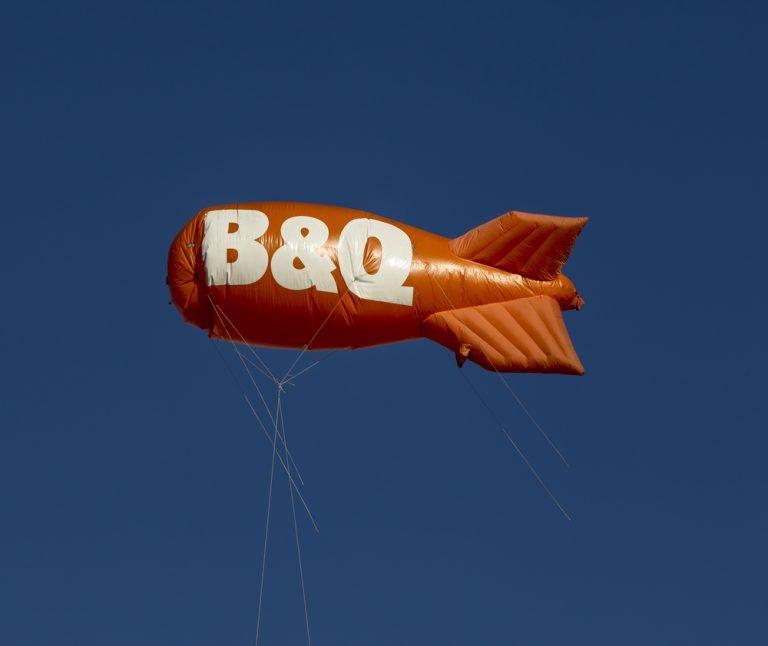
Kingfisher shares sink following disappointing update

2

Kingfisher plc (LON: KGF) have seen their shares sink on Wednesday as the firm updated shareholders with a set of disappointing results.

Kingfisher are a DIY retailer that have operations across the world, but have boasted strong trading figures in Europe in recent years.

Shares in Kingfisher sunk 5.7% to 196p. 20/11/19 10:26BST.

The poor set of results follow a disappointing interim update in September, where the firm saw its half year profits fall significantly.

The FTSE100 (INDEXFTSE: UKX) listed firm said trading in the three months to October was “disappointing”, with sales falling 3.7% to £2.96 billion.

Like-for-like revenue slipped 3.7%. Kingfisher said this “reflects continuing disruption from new range implementations, lower promotional activity and ongoing operational challenges in France, and softer market conditions in our main markets”.

“My early assessment is that we have not found the right balance between getting the benefits of group scale and staying close to local markets. We are suffering from organisational complexity, and we are trying to do too much at once with multiple large-scale initiatives running in parallel,” said chief executive Thierry Garnier, who was brought in to turn the company’s fortunes around.

“I am proud to be leading a group with strong assets, excellent market positions, differentiated business models and strong brands,” he said.

B&Q sales sank 3.5% year on year to £820 million, slightly offset by an eight per cent rise in Screwfix sales to £477 million.

Richard Hunter, head of markets at Interactive Investor, said Garnier “could be forgiven for thinking that he has been handed a poisoned chalice”.

He added that Kingfisher’s transformation plan has not been effective and the firm’s vast complexity leaves it vulnerable to nimbler competitors, leading to plunging sales.

“Unfortunately the near-term outlook from the company is equally bleak and the new CEO will have the combined challenges of both assimilating Kingfisher’s culture for himself as well as making the necessary improvements to the company’s fortunes.

“This further decline brings Kingfisher’s status as a FTSE 100 constituent into question and without some improvement in the lead up to the December reshuffle, the company is a strong contender for relegation,” he said.

Kingfisher are one of many firms who have seen slips in the DIY and homebuilding industry, established names such as Barratt Developments (LON: BDEV) have seen slow sales in their most recent update. Additionally, Galliford Try (LON: GFRD) and Bovis Homes (LON: BVS) agreed a merger deal in order to combat the slump in demand and slow trading period.

Fever-Tree loses its sparkle in UK

4
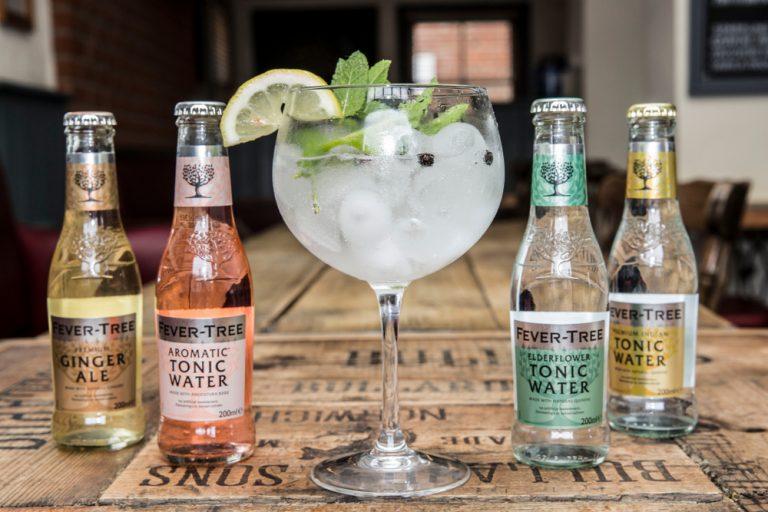
Fever-Tree (LON:FEVR) warned on Wednesday that “short-term headwinds” in its UK market will hit its revenue for the full year. Shares in the producer of drink mixers were up during Wednesday morning trading. Fever-Tree blamed tough comparators with last summer and a slowdown in consumer spending. “Our performance has been behind our expectations in the second half as we continued to lap very tough comparators in July and August and more recently seen a slowdown in consumer spending, as reflected in the wider retail data,” the company said in a statement. Fever-Tree said that it now expects revenue for the full year to lie within the £266 million to £268 million range, which represents a year-on-year growth of 12-13%. Earlier this year in March, Fever-Tree saw its annual adjusted core earnings surge, boosted by the UK gin craze. Indeed, Fever-Tree’s premium tonic water is often paired with the alcohol, benefitting from the nation’s growing thirst for gin. However, Fever-Tree’s announcement on Wednesday does not come as too much of a surprise. The company previously warned in July that the UK had seen a moderation in growth rates for the first half of 2019. “We continue to see growth across all four regions. Indeed, sales accelerated in our key growth markets of the US and Europe,” Tim Warrillow, CEO, commented on the announcement. “Fever-Tree’s progress in the US is particularly encouraging and the signing of a US bottling partner is a further step in building our operations in this exciting market,” the CEO continued. The CEO said: “Despite challenging comparators, our performance in the UK On-Trade underlines the strength of the brand and while the mixer category in the Off-Trade is moderating alongside the recent slowdown seen across the wider grocery channel, we continue to maintain our clear UK market leadership position.” Shares in Fever-Tree Drinks plc (LON:FEVR) were up on Wednesday, trading at +6.26% as of 09:17 GMT.

The story writes itself: markets flat on trade war inaction

The story begins to write itself at this point. Goldman Sachs (NYSE: GS) tells us that the negative impact of the US-China trade war will diminish in 2020, but the refusal of gold prices to stage any kind of concerted climb-down tells us the opposite story. As the Tuesday session lets out its final breath, the predictable bottom line is the same as it has been for what will soon feel like an eternity: there hasn’t been substantive progress of resolving trade tensions, so markets have nothing to celebrate. Speaking on the market’s movements, or lack thereof, Spreadex Financial Analyst Connor Campbell commented,

“The markets were a mixed bag on Tuesday afternoon, the uncertainty regarding the US-China trade deal leaving the European and US indices without a uniform direction.”

“The Dow Jones, which at one point spiked to 28150, pulled back under 28000 as the session went on. That 50 point loss seems, in part at least, to stem from the confusion surrounding the trade deal. From a ‘constructive’ phone call on Saturday morning to reports of Chinese pessimism on Monday, with a Huawei (SHE: 002502) ban delay and hopes of Chinese stimulus thrown in to muddy the waters, it is hard to work out exactly where the superpowers stand.”

“One relatively clean positive, at least, was the claim by Goldman Sachs that the negative impact the trade war is having on the global economy should start to fade in 2020. And even then that is only if there isn’t any further escalation – and remember, there is another round of tariffs scheduled for December.”

“Elsewhere the CAC lost its initial 0.4% rise to fall 0.1%, but with the DAX holding onto its own half a percent increase. The FTSE, meanwhile, put some distance between it and 7300 with a 30 point rise.”

Outside of trade war fears, the UK had the small matter of the general election to contend with.

“Sterling showed the hint of some pre-debate nerves on Tuesday, flitting in and out of the red against both the dollar and euro without ever seriously threatening to undo yesterday’s gains. It will be interesting to see how the currency behaves on Wednesday morning, post-Boris v Jeremy. A perceived Tory win could see it climb higher; the alternative may give the right-leaning markets cause for concern.”

A Conservative triumph does seem likely this evening. Though an important distinction should be made between a volume contest – or even valence attributes such as debating skills – and the merit of individual policies, I imagine the Labour leader will fail to articulate his policies convincingly, and will likely succumb to Boris’s highly compelling “Marxist!” jibes or empty promises to champion the NHS.

Why is Labour’s co-operative company model logical?

Its important to begin by saying that neither the mutualised structure, nor its benefits, are completely extinct within British society. Indeed, not only do companies such as the Co-operative Group adhere to an explicitly co-operative structure, but John Lewis functions as an employee-owned mutual and Lidl has the kind of pay structure you’d expect from a mutualised company, without actually being one. So, why have Labour decided to champion this kind of company composition?
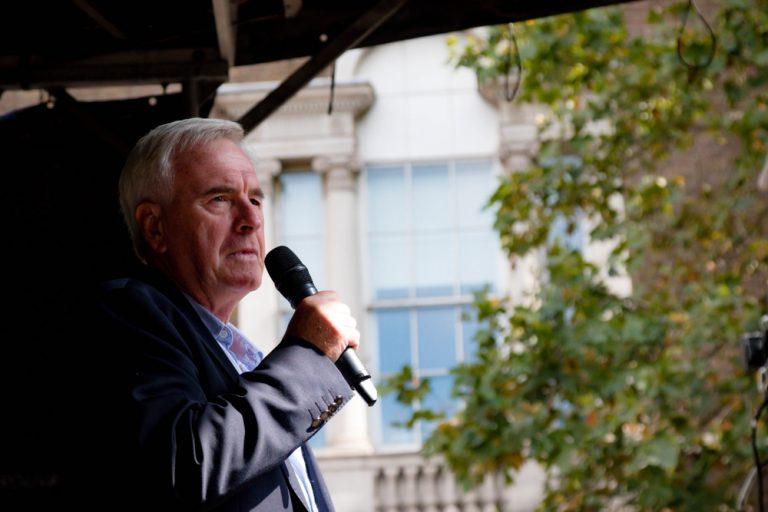
According to John McDonnell, workers and consumers will “take back control”.

Giving a speech in Westminster on Tuesday, McDonnell laid out the following tenets for company restructuring and regulation under a Labour government:

  • Employees and elected members will sit on company boards and have greater say over pay structure.
  • Public sector chief executives would not be allowed to earn more than 20 times living wage (ie a maximum salary before bonuses of £350,000).
  • Employees would own shares in their companies.
  • Introduction of an ‘Excessive Pay Levy’ to charge companies over pay disparities between the highest and lowest brackets.
  • A requirement for policies to lay out their policy for addressing the gender and ethnicity pay gap.
  • A warning that any company not adequately tackling climate change will be delisted from the FTSE 100.
  • No windfall tax on oil companies making excessive profits (the last two policies seem somewhat contradictory in message).
  • An overhaul of the UK regulatory system, including establishing its own regulatory bodies.
Speaking on the aims of these policies, McDonnell said that the plan was to create a business model that wasn’t based on the “unfettered pursuit of profit maximisation”. he added that the relentless appetite for shareholder value and “corporate greed” had been detrimental to regular working people whose hard work created the wealth that a small number shuffled around in zero-sum games. “Labour’s reforms to how our large businesses and public utilities are governed, owned and regulated and how both workers and consumers are represented will genuinely enable them to take back control,” he added He said Labour wants to “rewrite the rules” of the business model and “treat people fairly and with respect”. Under the current model, people have “often been treated as virtual chattels”. As is often thought of Corbynist Labour policies, they likely ask for too much, too quickly. I think this policy package will, or already has been, tarred with the same brush of judgement. I will say, however, that these policies move toward the correct, or at the very least an admirable, direction. Co-operative or mutualised company structures are conducive not only to fairer work conditions but, following Fordist logic, could lead to greater productivity. Such policies lead to better quality employment: fairer representation, a stake in Company progress and narrative and an interest in giving your best to an employer that treats you with dignity. And these themes are hardly the musings of left-wing ideologues either. In the eminent wisdom of his book ‘The Future of Capitalism’, my idol and Oxford University Economics Professor Paul Collier speaks out against the precarious, impersonal and myopic shareholder structure, and talks favourably about a return to pre-1986 mutualised corporate structures. Ultimately, a shift of focus, from agglomeration to reciprocity. New Statesman author Jason Cowley called the essence of Collier’s ideas ‘radical’, and I certainly can’t disagree that such a move would be a slap in the face to free-market doctrine. But from the perspective of the policymaker, such ideas are entirely within the remit of the state, and vital in their often forgotten role (in everything but rhetoric) of ameliorating divisions and tensions within society. With this being the case, and within the current context of austerity-Brexit Britain, I side with Collier in saying such policies are quintessentially pragmatic and very much needed. As far as Labour are concerned, I applaud the idea but I’d urge them to reign in their ambitions. Even if all the changes being tabled are ostensibly wise, forcing such a seismic shift within such a short space of time isn’t politically prudent. It will likely lead to deepening of existing divides, adversarial politics and the emotional bombast that fester in British society, and prevent productive discussions from being had. Also, in the interest of appearing to be a realistic party of government, I’d suggest Labour look for synonyms for the word ‘worker’. It is inherently Marxist terminology, and while this point may appear superficial or even facetious, I think we can all appreciate they don’t do themselves any favours, and right wing rags will happily use any ammunition they’re given.  

Uniphar announce two new acquisitions

1

Uniphar Group Plc (LON: UPR) have announced that they have acquired Nordic based EPS Group and Irish firm M3 Medical.

The total potential cost for EPS Group and M3 medical will be approximately €40 million, and they payment will be spread over four years.

The deal will be financed from the funds raised from the initial public offering in July, and coupled with a combined placing shortly after was valued at €139 million.

On a proforma basis, for 2019, these acquisitions in aggregate are expected to deliver revenue of about €22 million.

Both the EPS Group and M3 Medical will be integrated into the Commercial & Clinical Medtech division of Uniphar.

Uniphar Chief Executive Ger Rabbette said: “These acquisitions are a key strategic step in Uniphar’s plan to offer its pharmaco-medical clients a pan-European service by adding new countries and new agencies to our roster.

“With this development, we add to our already considerable expertise in the area of interventional technologies in key therapeutic areas, and Uniphar advances its ambition to become a leading independent distributor of medical devices throughout Europe. We expect to invest in these platforms in the short term as part of growing our unique and compelling proposition to emerging and specialist medical device manufacturers seeking a commercial partnership across their European business.”

“It gives us the opportunity to develop our existing relationships and to extend these across new geographies through Uniphar’s growing European offering,” said Killian O’Dowd, managing director of M3 Medical. “Uniphar’s scale, digital solutions, regulatory expertise and impressive ambition in Europe will be a great platform for M3 Medical to grow and flourish in the years to come.” These seem like two impressive acquisitions for Uniphar, and reinforces the firms plans to diversify and grow within the next few years. In the pharmaceuticals and medical industry, there have been updates. Global competitors such as Pfizer (NYSE: PFE) smashed market expectations in their third quarter update.Additionally, GlaxoSmithKine (LON: GSK) another titan in the industry saw their shares surge after strong profit gains. Whilst the big guns are dominating the pharmaceuticals industry, firms such as RA Pharma (NASDAQ: RARX) and UCB (EBR: UCB) have merged to spur product development and innovation.

2018 TSB crash investigation confirms app failure as main cause

1

Last year, an IT crash that was reported which locked out two million TSB customers and halved Sabadell’s (BME: SAB) profit for last year.

Investigations into the issue have been ongoing since it was reported, and reports today suggest that the main cause was a move to a new banking platform before it had undergone rigorous testing.

The report by law firm Slaughter & May found TSB’s board failed “to fully understand the scope and complexity” of the new system prior to its failure, which forced out the then CEO Paul Pester after heavy criticism from customers and politicians.

Sabadell continued to support TSB all the way through the investigation despite heavy public scrutiny and fallen faith by shareholders.

TSB was bought by Sabadell in 2015, had to compensate for weeks of TSB customers being unable to access their money and rising fraud attacks.

The IT crash has cast a long shadow over the bank, as it tries to move on under new chief executive Debbie Crosbie, who is set to outline her strategy for the bank next week, as Reuters reported.

In a statement on Tuesday Pester criticised Slaughter & May’s “scattergun approach” to its investigation and attempted to shift blame to Sabadell’s IT arm Sabis for the failures.

“If these findings are right, Sabis rolled the dice by running tests on only one of TSB’s two new data centres and this decision was kept from me and the rest of the TSB board,” he said.

The global state of the finance industry has not painted a pretty picture, and there seems to be a slump with many of the major banks. Big names such as Lloyd’s (LON: LLOY) and HSBC (LON: HSBA) have seen their quarterly profits crash amidst cut throat market conditions, whilst Deutsche Bank (ETR: DBK) have confirmed their crisis state as they reported a loss in their third quarter.

Europa Metals update shareholders on Toral operations

0

Europa Metals (LON: EUZ) have updated shareholders about its operations at the wholly owned Toral exploration project in Spain.

The statement updated shareholders about the potential diamond drilling operations in Spain which will please shareholders.

Shares of Europa Metals trade at 0.027p. 19/11/19 14:11BST.

At the end of October, it was reported that Europa Metals got a boost in its Spanish operations which caused shares to rise.

The new resource that was discovered a few weeks back estimated a 30% increase in contained tonnes of zinc to approximately 830,000 tonnes.

Europa said: “The board views this resource update as being a significant step forwards for the overall project programme from the initial conceptual scoping study based on Europa Metals’ work conducted at Toral in 2017-2018 and the previous inferred-only resource estimate announced on December 10, 2018.

The board also added “The upgraded resource estimate follows the processing of assays from the company’s 2018 and 2019 diamond drilling campaigns into a new resource model. It also reflects the findings from a 2018 surface mapping programme, analysis of faulting structures and increase in bulk density measurements, and incorporated data obtained from the 2018 and 2019 reverse circulation and diamond drilling campaigns, combined with the historic core re-logging.”

The update provided today outlined the plans to focus on a larger area to the west of the current indicted resource area,

The campaign has the overall objective of increasing confidence levels in the resource, Europa said, which is within the central, proposed future mining area of Toral.

Recently, executive director Laurence Read said geotechnical and hydrogeological work at Toral, combined with the metallurgical results, are all “fundamental next steps for de-risking the mine development pathway” for the project.

In the mining sector, competitors have experienced mixed trading periods. Whilst Hochschild Mining (LON: HOC) and Serabi Gold (LON: SRB) have reported positive trading updates, Antofagasta (LON: ANTO) and Thor Mining (LON: THR) have seen their shares slip.

Wentworth Resources remains ‘on track’ to clear its debt

AIM listed independent, East Africa-focused natural gas company Wentworth Resources PLC (LON: WEN) issued a positive update and guidance report on Tuesday. The update told investors that it it was on target to be debt-free by January 2020, and that it also remained on track to fall within its full-year average daily Mnazi Bay production range of 68-72 million cubic feet. This appears increasingly likely. Although second quarter production averaged 65.6 mmcf per day, year-to-date production stands at 70.35 mmcf per day and the daily average during Q3 was 77.93 mmcf. Despite output being up in the third quarter, its full potential was limited by the MB-2 well being closed due to a flowline problem to the MB-3 cluster. In the meantime, partners on the Mnazi Bay project are planning to recomplete the MB-4 well, which will see production averages bounce to 90 mmcf per day from December. The Company expect output to be greater in 2020, when the flowline reconnecting the MB-2 well is reconnected. Elsewhere in oil and gas, Enteq Upstream plc (LON: NTQ) and Premier Oil PLC (LON: PMO) offered positive financial news, while Tullow Oil plc (LON: TLW) offered a less uplifting outlook.

Wentworth Resources comments

Speaking on the Company’s update, Interim CEO and CFO, Katherine Roe, stated,

“We have established a highly robust operational and commercial foundation for the business. We are working well with our JV Partners to ensure we achieve optimal field management and are fully aligned with our Operator on remedial works for MB-2 and recompletion plans for MB-4. Stable production from the field to meet existing and growing demand is allowing the JV Partners to anticipate higher production levels into 2020 and we will look to provide full year 2020 production guidance early in the new year. Receivables are now the lowest the JV Partners have experienced since production into the transnational pipeline began. With a near debt free position, growing cash balance, a maiden dividend paid last month and a simplified corporate platform, Wentworth is in robust financial health and well positioned to meet the increasing demand we foresee in Tanzania.”

Investor notes

After a slight drop, the Company’s shares have rallied 7.83% or 1.35p on Tuesday, up to 18.60p per share 19/11/19 13:16 GMT. Peel Hunt reiterated their ‘Buy’ stance on Wentworth Resources stock, their dividend yield stands at 2.37% and their market cap is £35.43 million.  

Coca Cola addresses environmental concerns

4

Coca Cola HBC AG (LON: CCH) are set to trial recycled plastic for PET bottles in Sweden.

The move comes as part of Coca Cola’s European strategy to expand environmental friendly policies and increased use of recycled plastic.

Coca Cola announced on Tuesday that the switch at the Jordbro factory near Stockholm would allow the reduction of 3,500 tonnes of newly produced plastic.

Last week, Coca Cola updated shareholders on their third quarter results, and gave an impressive update causing shares to rally.

Additionally, the form added that the shared use of recycled material was a strategy to reduce CO2 footprints in a time where the environmental policies of multinational firms are heavily scrutinized.

“That means a 25% reduction of CO2 emissions annually compared with before the transition, when the portfolio consisted of around 40% recycled plastic,” it said, referring to its Swedish operations.

Along with Coca Cola, rivals such as PepsiCO (NASDAQ: PEP) and Nestle (NSE: NESTLEIND) are attempting to promote the use of recycled plastic as firms respond to plastic waste pollution worries.

Environmental group Greenpeace said in October that Coca-Cola was the world’s biggest producer of plastic waste for the second year in a row.

The move as the first step in ensuring that all PET bottles are produced from 100% recycled plastic by the end of 2023.

At group level, Coca-Cola’s recycled plastic ratio is 11% currently, and in western Europe, 27%, Keane said.

Last year, Coca-Cola pledged to collect and recycle a bottle or can for every one it sells globally by 2030.

As the awareness of global warming and environmental concerns continue to sweep firms and legislators, the move by Coca Cola is a step in the right direction. This move should set an example to other firms in the industry as the move to cut plastic use is one that is shared by all.

Shares of Coca Cola are trading at 2,452p. 19/11/19 13:42BST.

Tri-star shares jump after progress made in Oman operations

0

Tri-star Resources PLC (LON: TSTR) have seen their shares jump after the firm reported that progress had been made in its Oman operations.

Tri-star shares jumped 23.23% on Tuesday afternoon, to 38p. 19/11/19 13:25BST.

Tri-star gave shareholders a positive update when they alluded to the production of antimony metal at world standard commercial grade. The discovery was made at the Port of Sohar Freezone processing facility in Oman.

This comes at a good time for Tri-star where competitors have reported mixed results, and this discovery will allow the firm to stay with the pack. Established names such as Hoschchild (LON: HOC) Mining have given strong reassurance to shareholders amidst an uncertain trading update. Whilst Serabi Gold (LON: SRB) reported a strong third quarter performance as they update shareholders. Additionally, Thor Mining (LON: THR) and Avesoro (LON: ASO) saw their shares sink following modest trading updates.

Tri-star said that they wanted to focus on the rapid scaling of production at the plant, and the facility is operated by Strategic & Precious Metals Processing LLC.

Tri-star hold a 40% stake in Strategic & Precious Metals Processing LLC.

The firm has a target capacity to produce over 50,000 ounces of gold, and 20,000 onnes in combined antimony metal and antimony trioxide per annum.

Tri-Star said it has “expressions of interest” from potential customers which would double the expected combined gold capacity from the plant.

Tri-Star Chair Adrian Collins said: “I am delighted that the major milestone of producing antimony metal at a grade of 99.65% has been passed; this proves the metallurgy of the process and enables us now to focus on full-scale commercial production.

“To this end, we are advancing offtake agreements with potential buyers keen to diversify away from their reliance on the current dominant Chinese suppliers.”

Tri-Star said the plant is the largest antimony roaster outside China.

Collins added: “Additionally, the gold circuit is working well, and the first sales of gold have now been made; SPMP is continuing to improve the grade and is now producing gold dore at a grade in excess of 25%.

“Given the robust market fundamentals for our products including high-grade antimony ingots, antimony trioxide and gold dore together with the planned ramp up of production, SPMP is at a tipping point, which we believe will see shareholders rewarded for their support.”