
Lloyds Banking report drop in Q3 pre-tax profits
Lloyds Banking Group PLC (LON: LLOY) have announced results of their most recent trading update, in this statement pre-tax profits fell amidst a slump in the global finance industry.
Lloyds reported a a 97% fall in pre-tax profit for the third quarter from last year.
The company’s profit before tax for the third quarter fell 97 percent to 50 million pounds from £1.82 billion last year.
Statutory loss after tax for the quarter was £238 million or 0.5 pence per share, compared to profit of £1.42 billion or 1.8 pence per share in 2018.
The third quarter results, were significantly impacted by a £1.8 billion payment protection insurance or PPI charge, driven by a high levels of PPI information requests received in August.
Additionally, net income for the quarter declined 6% to £4.19 billion from £4.45 billion pounds a year ago.
The news comes at a time where there has been mixed updates from competitors.
HSBC (LON: HSBA) have reported a fall in revenues and a restructuring change may lead to job cuts, and Deutsche Bank (ETR: DBK) appear to be in further crisis as they report a third quarter loss.
Gains have been made by Standard Chartered (LON: STAN) and Bank of Ireland (LON: BIRG), as they third quarter trading updates show strong performance and revenue growth.
Lloyds banking forecasts net interest margin of 2.88%, in line with previous guidance of about 2.9% which does give shareholders something to hold onto amidst this poor quarterly performance.
The bank’s chief executive, Antonio Horta-Osorio, said: “I am disappointed that our statutory result was significantly impacted by the additional PPI charge in the third quarter, driven by an unprecedented level of PPI information requests received in August”.
We will maintain our prudent approach to growth and risk whilst continuing to focus on reducing costs and investing in the business to transform the group for success in a digital world,” he said.
The fact that COO Juan is departing after eight years at the company also is a worry as no potential successor has been lined up.
Lloyds have said however that the appointment will be announced in the near future, as and when candidates are shortlisted.
António Horta-Osório, Group Chief Executive, said “Juan has made a very substantial contribution to helping to turn Lloyds around. His work in Risk was outstanding and led to his invitation to join the Board. Throughout the Group, and externally too, Juan is respected for his exceptional judgement and insight. Juan has made a tremendous impact on the Group and we shall be sorry to see him go.”
Catherine Woods will join the Board on 1 March 2020 after retiring as Deputy Chairman and Senior Independent Director of Allied Irish Bank in October 2019.
Nevertheless, Mr Horta-Osorio said the bank’s financial performance had been solid despite a “challenging external environment”.
Currently, shares of Lloyds are trading at 56.55p per share, slipping 1.82% during Thursday trading. 31/10/19 11:08BST.
Peugeot and Fiat finalize merger
Peugeot (EPA: UG) and Fiat Chrysler (NYSE: FCAU) have completed their merger deal, after negotiations commenced yesterday.
After reports during Wednesday trading, the two automobile giants formalized the move which stampedes authority into the global car market.
This creates a new trans-Atlantic automaking giant with roughly 410,000 employees and combined revenues of $190 billion.
Shareholders of each company will have an equal stake in the newly formed titan, as the companies said in a statement released on Thursday morning.
The combined company would be based in the Netherlands, which is the current headquarters of Fiat Chrysler.
John Elkann, the current chairman of Fiat Chrysler would perform the same role at the combined company, while PSA Group chief executive Carlos Tavares would be CEO.
The merger comes at an interesting time, where the automobile market saw a global slow down.
The deal shows the willingness of both firms to expand their global client base and cross fertilize to form a supergiant in the automotive industry.
“We view the combination of these two companies as reasonable given global competition, high capital intensity, and industry disruption from electrified powertrain as well as autonomous technologies,” Richard Hilgert, a senior equity analyst at Morningstar, said in a research note on Wednesday.
After this deal was formalized in the early hours of Thursday trading, firms such as Volkswagen (ETR: VOW3) have been stunned into fear about the potential of this new company to dominate the market.
A combined Fiat Chrysler-PSA will have a market value of about $50 billion (£39.9 billion) with annual sales of 8.7 million vehicles.
There have been no plans to shut operations in the UK, however unions have expressed worries about the impact this will have on firms such as Vauxhall.
“Merger talks combined with Brexit uncertainty is deeply unsettling for Vauxhall’s UK workforce which is one of the most efficient in Europe,” said Unite national officer Des Quinn.
“The fact remains, merger or not, if PSA wants to use a great British brand like Vauxhall to sell cars and vans in the UK, then it has to make them here in the UK.”
Prof David Bailey, from the Birmingham Business School said “I have a real fear that if this merger goes ahead the likes of Ellesmere Port, which is a very efficient plant, could be sacrificed to get the sort of savings the company is looking for, especially in all the uncertainty over Brexit.”
He added: “The government will be particularly vigilant over preserving (the group’s) industrial footprint in France.”
Regulators have given the green light for this deal to happen, and this may allow a transition in market share for the newly made firm, it will be interesting to see how firms such as Renault (EPA: RNO) and Nissan (TYO: 7201) respond after operations commence.
UK car production down 3.8% in September

UK car production fell 3.8% in September, new data revealed on Thursday.
The Society of Motor Manufacturers and Traders said that UK car output dropped 3.8% to 122,256 units, rounding off a “turbulent” first nine months.
Almost 5,000 fewer units were built compared to September last year.
The data marks a 15-month period of decline for the sector, the Society of Motor Manufacturers and Traders said.
In the month of September, production for the UK dropped 5.1%, with political and economic uncertainty dampening the domestic market.
Additionally, exports fell 3.4%.
“Another bitterly disappointing month reflects domestic and international market contraction,” Mike Hawes, the Society of Motor Manufacturers and Traders’ Chief Executive, commented on the data.
“Most worrying of all though is the continued threat of a ‘no deal’ Brexit, something which has caused international investment to stall and cost UK operations hundreds of millions of pounds, money that would have better been spent in meeting the technological challenges facing the global industry,” the Chief Executive continued.
The Chief Executive said: “A general election may ultimately provide some certainty, but does not yet remove the spectre of no deal which will continue to inhibit the UK industry’s prospects unless we can agree and implement a new, ambitious and permanent relationship that safeguards free and frictionless trade.”
With the deadline for the nation’s departure from the European Union postponed yet again, political and economic uncertainty continues to prevail.
The UK was supposed to to exit the European Union today, on the 31st October.
Brexit has now been delayed until the 31 January 2020.
Meanwhile, MPs have supported a bill to hold a general election on the 12 December, later this year.
https://platform.twitter.com/widgets.js“Most worrying of all though is the continued threat of a ‘no deal’ Brexit, something which has caused international investment to stall and cost UK operations hundreds of millions of pounds” CEO @MikeHawesSMMT responds to UK car production figures https://t.co/H2gKAe9sNL pic.twitter.com/Cc3XtCVyms
— SMMT (@SMMT) October 31, 2019
Volkswagen’s sales revenue and profit grow
Volkswagen (ETR:VOW3) posted a rise in sales revenue and profit on Wednesday.
Shares in the German multinational automotive manufacturing company were up during trading on Wednesday. Volkswagen said that, in the first nine months of the current financial year, it performed well amid a “difficult” market environment. The carmaker said that, between January and September, sales revenue rose by 6.9% year-on-year, amounting to €186.6 billion. Operating profit before special items also increased, jumping 11.2% to €14.8 billion. “Despite the gain in market share, the Volkswagen Group anticipates that vehicle markets will contract faster than previously anticipated in many regions of the world,” the company said. In light of this, the company said that it expects deliveries to customers in 2019 to be on a level with the year prior. It had been expecting a slight increase. “In terms of the Group’s operating profit before special items, an operating return on sales of between 6.5% and 7.5% is predicted. Including special items, the Group projects an operating return on sales at the lower end of the range announced,” Volkswagen said. It expects sales revenue to exceed the prior year figure by as much as 5%, Volkswagen said. “The Volkswagen Group achieves a good performance amid a challenging market environment. The performance in the first nine months of the financial year makes us optimistic that we will achieve our full-year targets for 2019,” Frank Witter, Member of the Board of Management of Volkswagen AG responsible for Finance and IT, said in a company statement. “Continuous improvement in our profitability is key to mastering our ongoing transformation on our own. We will continue to work systematically towards this goal,” Frank Witter continued. Shares in Volkswagen AG (ETR:VOW3) were trading at +0.43% as of 16:32 CET Wednesday.Sports Direct lash out at CMA after publishing of incorrect market data
Sports Direct International Plc (LON: SPD) have lashed out at the Competition and Markets Authority after alleged wrong market data was used in an investigation currently being carried out.
The response from Sports Direct comes as the CMA investigates the potential merger of JD Sports (LON: JD) and Footasylum (LON: FOOT).
The proposed merger between the two competitors of Sport Direct is estimated to be worth £90 million.
In a statement published on the London Stock Exchange this morning, Sports Direct’s Mike Ashley said he disagreed with the CMA’s estimates only months after being reelected into his senior position.
I have been watching this from the side lines to date and now having had the opportunity of considering the CMA decision, I would now welcome the opportunity to provide the CMA with the correct market data,” Ashley said.
Additionally, Ashley added “For example, our market share of Adidas Originals in Sports Direct is virtually zero.”
The statement added: “The CMA has published inaccurate estimates of Sports Direct’s share of the supply of ‘sports-inspired casual apparel and also footwear’, both on an in-store and online basis, which wrongly suggest that Sports Direct would have a comparable share of supply to the merged parties.”
Sports Direct have ‘welcomed’ the CMA’s action to correct these percentages, giving a fair and accurate indication of Sports Direct’s presence in this market.
Sports Direct also said the CMA “does not have a meaningful, if any, presence in these markets”.
Earlier this month, Sports Direct called for an investigation on sports titans Adidas (ETR: ADS) and Nike (NYSE: NKE) following market exploitation and domination claims.
The company said the “must-have” retailers hold a bargaining position which allows them to control the supply and the price of their products.
Adidas has blocked Sports Direct from selling some of its products, Sports Direct said.
Sports Direct said on Wednesday, that in its decision, the CMA acknowledged that Sports Direct had a “differentiated product offering” from JD Sports and Footasylum, and had experienced a “lack of access to SMUs/exclusive and/or high-end/premium products”.
Currently, shares of Sports Direct are trading at 303.6p per share. 30/10/19 15:26BST.
Yum shares sink after third quarter disapointment
Yum! Brands, Inc (NYSE: YUM) released their third quarter trading statement during Wednesday trading, in the statement they missed profit expectations causing share prices to sink.
Yum Brands alluded to failures across a few of their franchised brands, but emphasized a write down in the value of its investment in delivery company GrubHub (NYSE: GRUB) and the collapse of many Pizza Hut stores.
The Louisville, Kentucky-based company also reported same-store sales below Wall Street estimates.
“Following a very strong first half of 2019 and in line with our expectations, third-quarter results were consistent with our long-term growth plan,” CEO Greg Creed said in a statement, who is set to retire.
“We’re rapidly approaching the end of a truly historic year. 2019 will not only mark the completion of our 3-year transformation of Yum!, but will also mark the end of my tenure as Yum! CEO,” he added.
As there appears to be an apparent shift in the market for delivery services, following the expansion of firms such as Just Eat (LON: JE) and Takeaway.com (AMS: TKWY), the Kentucky firm attempted to invest in technological and structural changes in its operations.
To keep up with the changing trend, Yum bought a stake in GrubHub last year, hoping to boost sales at its KFC and Taco Bell restaurants in the United States.
Of course, this transition will undoubtedly lead to some disruption and choppiness in the short term,” outgoing CEO Greg Creed told analysts on the conference call Wednesday.
The recent failure of both Pizza Hut delivery and stores comes as no surprise for Yum seniority, as competitors such as Domino’s (NYSE: DPZ) seize the pizza industry with strong trading figures across 2018/19.
Same-store sales at Pizza Hut were flat in the reported quarter, compared with the growth of 1.46% forecast by analysts.
KFC same-store sales rose 3%, also missing expectations according to data from Reuters.
Edward Jones analyst Brian Yarbrough said “They’ve (Pizza Hut) done a lot of marketing, they’ve launched a lot of value-priced items… it still doesn’t seem to be working. “That was one of the big bull pieces to the story, the big Pizza Hut turnaround… it seems to be falling kind of flat.”
The one bright spot for Yum was the progress of the Taco Bell franchise, with sales at restaurants rising 4%, compared with the estimated growth of 3.5%.
Net income fell 44% to $255 million, which has caused significant worries for shareholders and investors alike.
Yum earned 80 cents per share in the quarter ended Sept. 30, excluding one-time items, 14 cents lower than Wall Street expectations, according to IBES data from Refinitiv.
Shares of Yum are currently trading at $99.21 per share, falling 9.52% after the poor trading update. 30/10/19 14:58BST.
Study finds most expensive areas to sell homes in UK
New data has found that it costs British home sellers an average of £21,721 to sell their home in current market conditions.
The research by the estate agent comparison website GetAgent.co.uk takes a look at the most expensive areas to sell homes.
GetAgent.co.uk examined the current cost of selling across the UK based on the average estate agent fee on the average price achieved in each location. However, as Brexit has caused homeowners to sell their property for below asking price, the research also takes into consideration the depreciation in property values between the asking and sold price due to the prevailing political uncertainty.
Westminster is the most expensive area for current sale as sellers are achieving just 90.9% of asking price, in addition to the average agent fee of 1.8%, costing sellers in this area £334,874 to sell now.
This is followed by Kensington and Chelsea with a cost of £210,521, and Camden at £144,439.
In contrast, Sheffield is the most affordable market costing only £5,385, the research shows.
“Finding a good agent has always been about the optimum balance of achieving a good price and the fee they will charge to do so and one of the hang ups of the online sector in particular, has been that while you pay a low upfront fee, you also secure a far lower price, making it more expensive all in all,” Founder and CEO of GetAgent.co.uk, Colby Short, commented on the research.
“In any market, home sellers always tend to be over optimistic in their asking price expectations and so achieving below this benchmark isn’t just Brexit related, however, at the moment we’re seeing many have to accept as much as an eight to ten percent reduction in order to secure a sale which is far from normal,” the Founder and CEO continued.
“All things considered, selling your home in the current market can be an expensive and drawn out endeavour and ensuring you instruct the best agent, at the best price, is the best way to maximise your property’s profitability.”
Deutsche Bank reports third quarter loss, alarming shareholders
Deutsche Bank (ETR: DBK) have released their interim trading update, which has shown a third quarter loss caused by restructuring costs and weakness in fixed income trading.
The German bank reported an $924 million loss in their third quarter, which has caused shares of the German bank to sink after a streak of poor performance reports.
The bank in July had flagged a loss this year and announced restructuring plans worth $7.4 billion including the elimination of 18,000 jobs.
The third quarter results followed a poor trading update in the second quarter which puts heavy scrutiny on the bank’s operations and management.
The quarterly loss follows one of €3.15 billion in the second quarter and contrasts with a €229 million net profit a year earlier.
CEO Christian Sewing noted the bank’s four core divisions posted a pretax profit. “These quarterly results are just an interim assessment, but they are encouraging,” Sewing wrote to staff.
The bank is attempting to break even in 2020, but market analysts continue to fuel speculation about the German lender’s ability to spark revenue.
“One has to look very hard to find anything positive in Deutsche Bank’s results this quarter,” said Octavio Marenzi, CEO of capital markets management consultancy Opimas.
The loss comes at a poor time for seniority at the Bank after competitors such as Standard Chartered (LON: STAN) and Bank of Ireland (LON: BIRG) announced revenue growth in their respective third quarter trading update.
Additionally, Credit Suisse (NASDAQ: TVIX) reported a rise in third-quarter earnings buoyed by higher revenue in markets and international wealth management.
Revenue fell 15% to €5.3 billion, short of a €5.6 billion expected by analysts, according to Refinitiv Eikon data.
Recent times have dictated the need for a change at the German bank after a stream of losses and scandal
This prompted Deutsche Bank to embark on one of the biggest overhauls to an investment bank since the aftermath of the financial crisis.
The bank said that revenue at its private bank, which focuses on retail clients and Germany and is the bank’s largest division, would be “slightly lower” in 2019, due to lower interest rates. That is a downgrade from earlier expectations for little change from 2018.
Deutsche Bank appear to be in crisis, and have not recovered any ground to compensate shareholder worries.
Expressing the plight of the bank, seniority almost made six weeks of negotiations redundant by calling off the proposed merger with Commerzbank (ETR: CBK).
Shares of Deutsche Bank are trading at €6.66, dropping 7.69% across Wednesday trading. 30/10/19 14:37BST.
GSK raise annual profit forecast
GSK (LON: GSK) have raised their annual profit forecasts after a positive trading update, on the back of increasing sales.
GSK noted that there had been a significant increase in the soaring sales of its Shingles vaccine seeing shares climb during Wednesday trading.
The drugmaker now expects full-year profit to be roughly flat compared to last year at constant currency, up from a previous forecast of a fall of 3% to 5%.
Chief Executive Officer Emma Walmsley set plans in the update to change the public image and operations of GSK, these include the spin off or sale of a number of businesses since she took over in 2017 and greater focus on the company’s pharmaceuticals business.
Walmsley said “GSK has made further good progress in Q3, with sales growth across all three businesses, and we have today upgraded our full-year EPS guidance. This quarter we have continued to strengthen our pipeline and have advanced assets in Respiratory, HIV and, notably, Oncology, where we are on track to file three innovative medicines by year end, following positive pivotal trial data”
Sales of Shingrix, launched in 2017, rose 76% to £535 million, beating analysts’ expectations of £464 million, leading vaccines unit sales to rise 15% to £2.31 billion.
Additionally, turnover rose 11% to £9.39 billion in the three months ended Sept. 30 from a year earlier.
The timing of these results boosts GSK, as competitors such as Pfizer (NYSE: PFE) beat market expectations yesterday and LundBeck (CPH: LUN) announced a new digital marketing campaign.
Analysts on average had expected earnings of 33 pence and sales of £9.02 billion, according to a company-compiled consensus here of 15 analysts.
Walmsley concluded “We also achieved a significant milestone with the completion of our new Consumer Healthcare Joint Venture with Pfizer, to create a new world leading consumer healthcare business.”
Shares of GSK are trading at 1,748p per share, and after today’s positive results shares climbed 0.52%. 30/10/19 14:13BST.
Fiat Chrysler and Peugeot in talks over potential merger
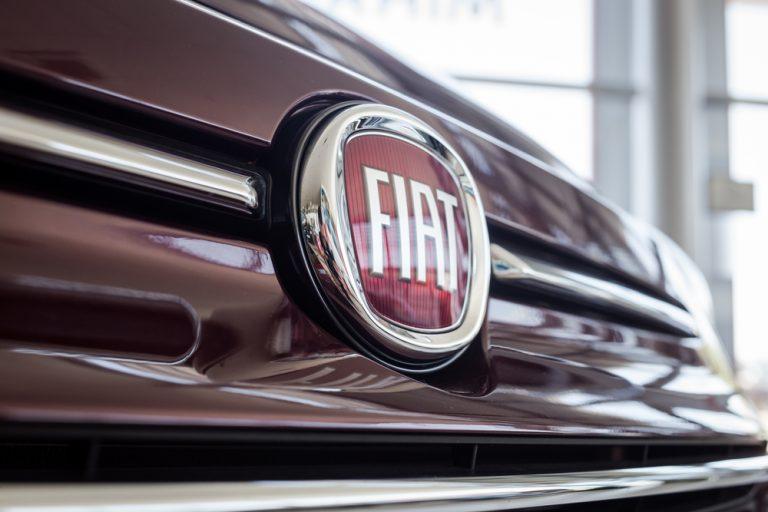
Fiat Chrysler (NYSE: FCAU) and Peugeot (EPA: UG) are in talks to sign a potential $50 million tie up subject to regulatory approval.
The deal could create a new car giant if the two firms do merge, and negotiations have sped up during Wednesday operations. A deal could be announced as early as Thursday morning as long as approval is met.
The two automotive firms discussed intentions to consolidate their market share, and the planned merger will allow the formation of a car titan.
Additionally, the two firms said that the merger would be better placed to tackle a host of costly technological and regulatory challenges facing the global auto industry.
After ditching a proposed merger with Renault (EPA: RNO), the FCA Chairman John Elkann confirmed the group’s bid to pursue an alternative alliance as carmakers face huge investments in electrification, emission reduction and autonomous driving technologies.
The deal also may have been deterred further after Renault cut their full year guidance, causing their shares to plunge earlier this month.
The deal is being confirmed at a time where the global automotive industry seems to be in decline, when the cost of investments into low-emission technologies are rising.
Morningstar senior equity analyst Richard Hilgert said ““We view the combination of these two companies as reasonable given global competition, high capital intensity, and industry disruption from electrified powertrain as well as autonomous technologies,”
Total volumes of Fiat Chrysler and Peugeot totaled 8.7 million vehicles last year, making this the fourth largest producer after Volkswagen (ETR: VOW3), Toyota (NYSE: TM) and Renault/Nissan alliance (TYO: 7201).
Fiat Chrysler had described its bid for Renault as a “transformative” proposal that would create a global automotive leader.
Negotiations are still in the initial phase, however both firms seem very confident on the deal to land, however representatives from both companies have remained tight lipped but if negotiations move swiftly, the deal could be announced in the early hours of Thursday trading.