Gleeson rallies on record performance

Urban regeneration and land development specialist MJ Gleeson PLC (LON: GLE) have posted strong sales, which they have attributed to high demand for homes for sale in Northern England and the Midlands. The Group did end the year with lower cash balances – £30.3 million versus £41.3 million on-year – but it said this was expected.

Gleeson Homes

The Company’s first subsidiary, Gleeson homes, announced its largest annual volume growth. It sold 1,539 homes during the financial year, which represents a 25% increase on the 1,225 sales for the year before.

Gleeson Homes is currently active on 69 sites and expects to grow to 80 sites in the coming year. It is also on track to achieve its goal of doubling its volumes to 2,000 new homes per year by 2022.

“Gleeson Homes remained active in purchasing sites in both existing and new areas during the year. The land pipeline of owned and conditionally purchased plots at 30 June 2019 increased by 5.6% compared to the prior year end, totaling 13,575 plots, of which 7,050 plots have been purchased subject to planning permission. In addition, there are a further 473 plots which are in the pipeline to be acquired”, the Company said in its statement

Gleeson Strategic Land

The Company’s second subsidiary, Gleeson Strategic Land, said it had sold nine land interests during the course of the year and had potential to deliver 1,775 other plots for development. Its portfolio contains 60 sites with potential to deliver 44 acres of commercial land and 21,730 plots. Its current financial year is also off to a strong start,

“Nine sites with planning permission, or resolution to grant, have the potential to deliver 2,929 plots for housing development. Three of these sites are in a process for sale. Planning decisions are expected on a further six sites.”

Gleeson comments

On the latest results, the group commented,

“As a result of the Group’s strong performance, the Board is confident that the results for the financial year will be comfortably in line with expectations.”

The Group’s Interim Chief Executive Officer, James Thomson, then added,

“Gleeson Homes’ unique model of acquiring land at low cost and building homes for sale to people predominantly on low incomes in the North of England and the Midlands continues to deliver sustainable growth as we progress towards our target of doubling volumes to 2,000 new homes per year by 2022.”

“Both Gleeson Homes and Gleeson Strategic Land have delivered a record performance with the Group’s positive outlook underpinned by continued strong demand.”

Investor notes

The Company’s shares rallied 5.42% during morning trading, up 40p to 778p a share. Liberum Capital analysts have reiterated their ‘Buy’ rating while Peel Hunt upgraded their stance from ‘Reduce’ to ‘Hold’ on Gleeson stock. Elsewhere in property development and estate agency news, there have been updates from; Somero Enterprises Inc (LON: SOM), Bovis Homes Group plc (LON:BVS) and Telford Homes plc (LON: TEF).

Mattioli Woods expect strong results and changes director

3
Wealth management firm Mattioli Woods (LON:MTW) have given notice of their next round of results and announced a series of personnel changes in the run-up to their AGM. The Company announced that the next round of results would be posted on the third of September. Their outlook is positive, based on lowered costs, assets under management of £2.6 billion, cash of over £23 million and recent acquisitions ‘integrating well’. The Company expects strong on-year growth in adjusted Ebitda. The Company’s CEO, Ian Mattioli, added,

“I am pleased to report another year of sustainable profit growth, despite the ongoing political and economic uncertainties and generally poor investor sentiment over the 12 months ended 31 May 2019.”

“Our integrated business model allows us to address more of the value chain across advice, administration, platform, investment management and product provision. We have used the resultant economies of scale and operational efficiencies to reduce clients’ costs, while delivering sustainable returns for our shareholders.”

The group also announced a change in personnel, with their Managing Director Murray Smith due to depart at their next AGM on the 21st of October 2019. His management responsibilities will be handed to the Company’s Deputy Group Managing Director, Michael Wright. Mr Smith will move on to a different position in the Company, as Founder Director.

Elsewhere, the Company has announced the appointment of other personnel,

“Following the completion of rigorous recruitment processes, I am delighted to announce the appointment of James Wilson as Chief Compliance and Risk Officer, and the appointment of Ravi Tara to the new role of Group Finance Director (a non-plc board position), reporting to the Chief Financial Officer. “

“James has over 30 years’ financial services experience, including roles at the Law Society of Scotland, the Financial Services Authority and senior positions at IFG Group, Royal Bank of Scotland Group, Standard Life, TD Wealth International, Speirs & Jeffrey and FNZ, and has a strong background in pensions, investments, property and financial planning. His appointment will help us to build upon the strong compliance culture we already have in place.”

Investor notes

The Company’s shares have dipped 2.33% or 18.5p in morning trading, down to 774p a share 04/07/19 09:02 GMT. Shore Capital analysts have reiterated their ‘Buy’ stance on Mattioli Woods stock. Elsewhere in asset management, Intermediate Capital Group plc (LON:ICP) and Babcock International Group PLC (LON:BAB) posted updates.

Associated British Foods revenues rise with Primark growth

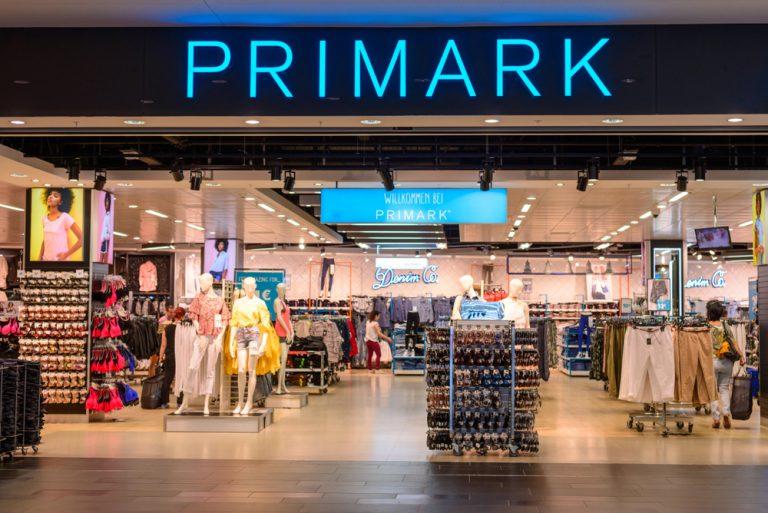
Multinational food processing and retail company Associated British Foods plc (LON: ABF) posted its trading update today, which revealed that the Company were expecting a full-year climb in revenues on the back of Primark profit growth. The Company’s sales are 3% ahead of last year’s on a constant currency basis and 2% ahead on actual exchange rates. Excluding sugar – which the expected to continue weighing down performance – the Company’s sales are up 4% on-year. While Primark saw a decline in like-for-like sale, the Company’s revenues were up 4% compared to the same period last year. This was due to an increase in selling space, up by over 800,000 square feet, from 14.7 to almost 15.6 million square feet across its 372 UK stores. For the full year, the Company are expecting good growth in Primark and growth on an underlying basis in its grocery arm.

Associated British Foods comments

In its update, the Company stated,

“For the full year we expect good profit growth in Primark and, on an underlying basis, in Grocery. We continue to expect that the full year profit decline in Sugar has been reflected in the first half. Our full year outlook for the group is unchanged, with adjusted earnings per share expected to be in line with last year.”

“Revenue in Grocery for the third quarter was 1% ahead of last year. Operating profit margin for the full year is expected to be ahead with good trading in Twinings Ovaltine, Acetum, AB World Foods, ACH in the US and George Weston Foods.”

“Revenue from continuing businesses at AB Sugar was in line with last year in the third quarter. This represented an improvement on the decline in sales in the first half and was driven by the expected later phasing and higher sales at Illovo.” “Revenue in the third quarter was 5% ahead of last year driven by both AB Mauri and ABF Ingredients.” “Revenue growth continued in the third quarter at AB Agri, driven by higher feed sales. Higher feed prices have reflected an increase in the cost of raw materials. However, margins remained under pressure with higher input and operating costs in UK feed and increased price competition in feed enzymes.” Regarding expanding its retail opportunities, ABF said, “Our business in the US continued to deliver encouraging like-for-like and strong total sales growth. We expect to open over the next twelve months the previously announced new stores at American Dream, New Jersey and Sawgrass Mills, Florida and we have now exchanged contracts on a store in State Street, Chicago.”

Investor notes

The Company’s shares rallied 0.61% or 15p to 2,459p a share in morning trading on Thursday. Analysts from UBS, Shore Capital and Liberum Capital all reiterate their ‘Buy’ rating, while Credit Suisse reiterated its ‘Outperform’ stance on Associated British Food stock. Elsewhere in retail and on the highstreet, there have been updates from H&M (STO: HM-B), Sports Direct International Plc (LON: SPD), and Superdry (LON: SDRY).    

IGas to seek new site and up to two exploration appraisals

Independent oil and gas exploration and production company IGas Energy PLC (LON: IGAS) seeks a new site and announces it could potentially drill two exploration and appraisal wells at its Weald Basin. The Company’s initial well would seek to test and evaluate the potential for commerical resources at both the Kimmeridge Mcrites and Portland Sandstones sites. Owing to the recent findings of a technical study, the Company decided that the Kimmeridge Mcrites had scope for approximately 300 million barrels of oil within the PEDL 235 in the Weald Basin; which it deemed ‘significant’.

IGas comments

On the update, the Company’s CEO Stephen Bowler stated, “As announced at the AGM in May 2019, we have been actively seeking sites that can appraise both the Kimmeridge Micrites and Portland Sandstones from a single well. Now, in conjunction with our own technical studies, and data from the discoveries in the Weald basin at Horse Hill, we are excited to be bringing forward up to two exploration/appraisal wells and production tests with the potential to unlock significant recoverable resources at a new site in the Weald Basin. We estimate hydrocarbon in place volumes of c.300 million barrels which have the potential to add significant value to the Company and our shareholders.” This news follows promising results from last week’s test of the Company’s Springs Road SR-01 Shale Exploration Well. Following last week’s news, the Company’s CEO commented, “This positive dataset is highly promising and materially advances our understanding of the hydrocarbon resources contained within the shales in the Gainsborough trough where IGas holds a large acreage position. We were particularly pleased with operational performance during drilling leading to the well costs coming in c.20% under budget.”

Investor notes

Owing to today’s update, the Company’s shares are up 3.24% or 1.83% to 58.33p a share 04/07/19 10:56 GMT. Elsewhere in the oil and gas sector, there have been updates from; Anglo African Oil and Gas (LON: AAOG), Nostra Terra Oil and Gas plc (LON: NTOG), Prospex Oil and Gas Plc (LON: PXOG), TomCo Energy Plc (LON: TOM), Rose Petroleum PLC (LON: ROSE), Petrofac Limited (LON: PFC) and Eco Atlantic Oil and Gas Ltd (CVE: EOG).  

Arc Minerals rallies and announces West Lunga as drilling target

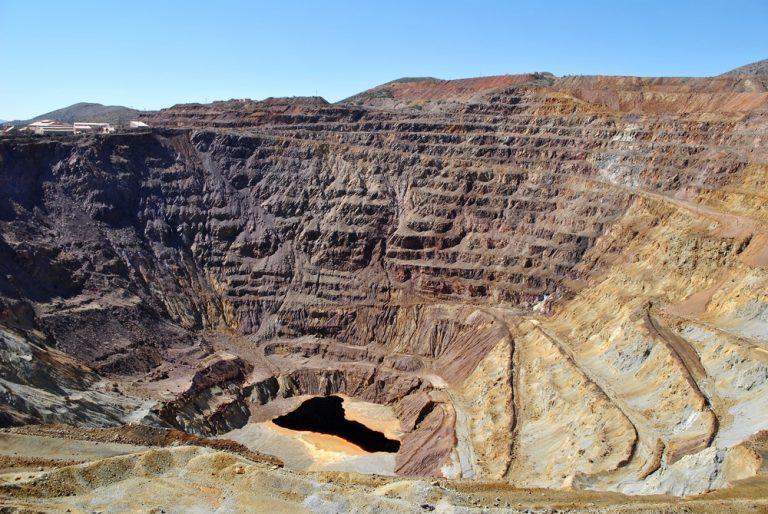
African-continent-based Copper, Gold and Cobalt mining company Arc Minerals Ltd (LON: ARCM) has today announced that it was going to prioritise West Lunga as a drill target following the ‘large’ Zamsortthe target being identified by technical consultants and the success of its Cheyeza East prospect last week. Following this latest discovery, the Company said it was likely to prioritise West Lunga, but said it would have to review its drill targets in their entirety. The Zambia-based West Lunga venture is located in the West of the Zamsort and Zaco licences. The Company said the site had displayed anomalous copper over a 6km strike, with values going up to 463ppm of copper.

Arc Minerals comment

The Company’s Executive Chairman, Nicholas von Schirnding, had this to say on the update, “This is very encouraging news – especially having been identified by the discovery team of Kamoa, one of the largest high-grade copper discoveries of recent times. This development means we are going to review the ranking of our 14 priority drill targets and it is likely that we will prioritise West Lunga as one of our highest priority targets.” As mentioned above, today’s news followed the successful testing of the Company’s Cheyeza East venture; on which the Company’s Executive Chairman said, “These maiden drill results have exceeded all our expectations both in terms of grade and thickness. While we are still at an early stage in the drilling programme, these results are highly encouraging and we have now deployed two rigs to Cheyeza East. Importantly our third hole 200 meters south also shows significant mineralization.”

Investor notes

Following what is seemingly a string of positive updates, the Company’s shares have rallied 7.35% or 0.25p during early morning trading, up to 3.65p a share 04/07/19 10:56 GMT. Elsewhere in the mining and minerals sector, recent updates have come from; Thor Mining PLC (LON: THR) Premier African Minerals (LON: PREM), Pathfinder Minerals (LON: PFP), Arc Minerals Ltd (LON: ARCM), AfriTin Mining Ltd (LON: ATM), Ferrexpo Plc (LON: FXPO) and Altus Strategies Plc (LON: ALS).

Anglo African Oil & Gas issue £8.25m share placement to fund oil production

Oil and gas producing company Anglo African Oil and Gas (LON: AAOG) announced on Wednesday that it had received commitments to raise up to £8.25 million via a share issuing to fund its attempts tore-enter the TLP-103C well. The well is based at the Company’s Tilapia field in the Republic of Congo, and the Company hopes to produce oil frpm the Djeno horizon. This fundraising venture includes a commitment from the Company’s existing institutional investors, which entails subscribing for 52,288,347 shares at a price of 5p share. Further, it included a signed balance sheet between Anglo African and European High Growth Opportunities Securitization Fund, with the group set to subscribe for a minimum of 106,331,011 shares.

Anglo African Oil and Gas comments

In its press release today, the Company confirmed the news with the following statement, “Anglo African Oil & Gas plc (AIM: AAOG), an independent oil and gas developer, announces that it has received commitments to raise up to £8.25 million (the “Fundraising”) through the issuance of new ordinary shares of 5 pence each in the capital of the Company (“Ordinary Shares”) at a price of 5.2 pence per Ordinary Share (the “Issue Price”). The Fundraising will provide the Company with the funds required to re-enter the TLP-103C well at its Tilapia field in the Republic of the Congo with a view to producing oil from the Djeno horizon.” The Company’s Executive Chairman, David Sefton, went on to respond, “It has been our goal since inception to produce oil from the potentially prolific Djeno horizon. Technical analysis of the well data and the oil that has subsequently come to surface has led to a revision of the operational plan such that we will now re-enter the Djeno in 103C and seek to produce from it. Once completed, this Fundraising will enable us to achieve this. We are grateful for the support shown and look forward to completing the Fundraising very soon.”

Investor notes

Following the announcement, Anglo African shares closed down 6.25% or 0.32p at 4.88p a share on Wednesday 03/07/19 16:25 GMT. Analysts from finnCap remained unchanged in their ‘Corporate’ stance on the Company’s stock. In the last few days there have been updates from Nostra Terra Oil and Gas plc (LON: NTOG) and Prospex Oil and Gas Plc (LON: PXOG), and elsewhere in oil sector, there has been news from; TomCo Energy Plc (LON: TOM), Rose Petroleum PLC (LON: ROSE), Petrofac Limited (LON: PFC), Eco Atlantic Oil and Gas Ltd (CVE: EOG) and Mayan Energy Ltd (LON: MYN).

‘Rock star’ Christine Lagarde claims ECB top job

1
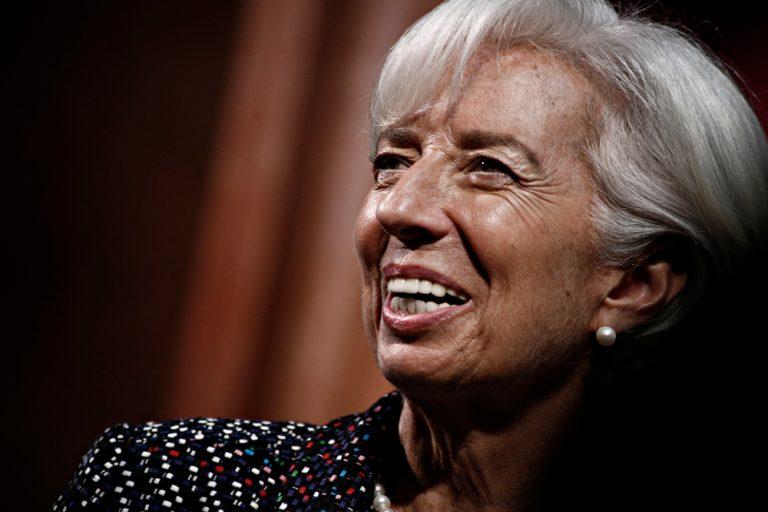
“no, no, no, no, no, no” Christine Lagarde was adamant last year that she wasn’t interested in running the European Central Bank. Now she stands nominated, and while many of the British public neither know who she is, nor what bearing this news has on them, the significance of the individual entering the position is certainly worth discussing. A determined and poised character, you do not have to agree with either her views or her approach to the tasks she undertakes to admire her drive. Ms Lagarde’s father passed away when she was only seventeen, and she notes that the strength her mother bore to raise four children by herself was something she drew inspiration from. As anyone familiar with Ms Lagarde’s work will know, this latest ‘honour’ is just one of many which has seen her acquire taglines and accolades such as the ‘rock star of finance’, and perhaps more significant, ‘first ever female’. That latter accomplishment has become something of a motif for Ms Lagarde, who after failing to be accepted into her chosen college three times went on to become the first woman to chair the international legal firm Baker McKenzie, the first female Finance Minister of France (or any G8 member nation-state) and most recently the first female managing director of the International Monetary Fund. In spite of this impressive list of credentials, she has already faced questions over whether she is suitable for her new role. “I’m not a super-duper economist” A quote taken from an interview with The Guardian in 2012. Her rivals’ supporters have raised the issue that Ms Lagarde has neither extensive academic or professional expertise in economic theory and practice. This issue being raised is of particular importance because her predecessor – incumbent ECB president Mario Draghi – was chosen for being exactly what she isn’t; well versed in economic theory. In the crisis period post-2008, Draghi was chosen for his creativity and it was thought his ingenuity in applying economic theory made him well-suited to tackle the monetary challenges faced by the eurozone. What should be considered though, despite the fact that Ms Lagarde herself confessed her lack of economic experience, is that she would not be the only major monetary policy player without a background in economics. The US Federal Reserve chairman, Jerome Powell, is also from a legal rather than financial background. Further, having an ECB president with more in-depth legal insight could be of use. If one appreciates that a large proportion of the movement of capital around the world is done either using legal mechanisms, or done because of the relative advantages offered by different legal systems, then having someone who is familiar with the legal procedures pertaining to trade and the movement and storage of capital, could prove useful. This is not to say that Ms Lagarde would be able or be interested in changing the way capital flows, rather, knowing the legal ins and outs of economics should make her just as qualified as an economic grand strategist. Regarding Europe specifically, Ms Lagarde worked extensively with struggling economies such as Greece and Portugal during her time chairing the IMF, and in turn appreciates not only the extent of the challenges these economies face but also understands the task of attempting to manage a divergent currency union. She would also see Draghi’s legacy continue after his departure, with some viewing Ms Lagarde as a ‘continuity candidate’ in favour of preserving the euro and supporting accommodative monetary policy to avoid deflation. This tag of continuity, though, weighs heavily on Ms Lagarde as far as her political life and views are concerned. Seen by some as favouring the politics of amelioration and consensus, there are fears that Ms Lagarde would be prone to outside influences; with her background in politics and negotiation inspiring fears that the ECB would lose its independence. There is an ongoing trend of political figures entering the top positions of Central Banks, as seen in Finland, Slovakia and even the vice presidency of the ECB. The fear is that the appointment of Ms Lagarde will see the ECB deteriorate into a bureaucracy, and that for Lagarde to be successful, she will need to emulate Draghi’s success in telling politicians what needs to be done, rather than pandering to external political agendas. This would not be a worry for those who know Ms Lagarde as a shrewd and straight-talking character, and that would be the case for her critics too, had her political standing and personal views not clashed on occasion. On the subject of austerity politics for instance; Ms Lagarde spoke out in support of Britain during its campaign of quantitative easing and fiscal retrenchment, only later going on to encourage countries to use their spending power to ease the burden of the least well-off and invest in environmentally friendly infrastructure. Now, Ms Lagarde is known for her right-of-centre politics during her time in office under Nicolas Sarkozy. We can either assume, then; that one of her two stances on austerity is merely disingenuous political rhetoric (most likely the latter), that Ms Lagarde doesn’t realise the correlation between austerity and funding cuts to public services (which I don’t believe), or that she indecisively panders to each side of the political mainstream. None of these scenarios are favourable, and reflect the characteristics of a political figurehead rather than a monetary decision-maker. That being said, Ms Lagarde’s reputation as a tough negotiator didn’t come from nothing. She is known for not being easily swayed and behaves according to her own agenda – the BBC even reporting that she sometimes exercises during meetings. In all seriousness though, Ms Lagarde has no qualms about carrying out necessary courses of action. Last year for instance, she presided over the IMF’s largest ever bailout, a sum of $57 billion to Argentina which many credited with curbing turbulence in emerging markets. Further, it has also been suggested that despite her economic inexperience, her political acumen could help her pursue progressive structural changes to the ECB, such as a possible euro zone fiscal budget to help countries suffering isolated shocks. Regardless of the opinions of either camp, the rock star of finance will have to remain strong, single-minded and reflect on her experience as a leader and decision-maker, should she hope to successfully carry out the office of ECB president. Possible successors for Ms Lagarde’s position at the IMF include the outgoing European commissioner for economic and financial affairs, Pierre Moscovici, and Governor of the Bank of England, Mark Carney.

Thor Mining advances vanadium JV plans

Mining company Thor Mining PLC (LON: THR), which manages a vanadium and titanium mining joint venture in Northern Australia, has announced plans to further its exploration and assessment of the Jervois vanadium project. Going forwards, work would include drilling the Casper, Coco and RD deposits as well as testing other prospects within the area for vanadium and titanium deposits of economic grade. At present, Thor Mining is the acting manager of the joint venture, holding a 40% stake to its partner Arafura’s (ASX: ARU) 60% holding.

Thor Mining comments

Talking of its previous exploration, the Company noted, “536 samples from the 2008 drilling were analysed for Au, Pt and Pd. Samples were selected from 14 holes from across the major magnetite rich areas. The samples represented the same magnetite rich intervals that were sampled and analysed for Fe/Ti/V mineralisation.” Speaking on what it hoped would be a successful outcome, the Company said its next steps would include the following, “Subject to successful outcomes from these activities, next steps would include detailed metallurgical test-work, and other technical activities, plus environmental and social impact studies aimed at progressing feasibility and mine development permitting.” “The joint venture parties plan to actively seek third party project investment in the Jervois Vanadium Project, with all potential options canvassed, to take this exciting project opportunity forward.”

Share Issuing

In addition to today’s news, the Company announced a share issuing which is set to utilise Thor’s existing capacity. “The Board of Thor Mining Plc (“Thor”) (AIM, ASX: THR) is pleased to announce that 4,687,500 New Ordinary Shares are to be issued by the Company at a deemed share price of 0.80p per share in lieu of marketing and communications services valued at £37,500.” “The services provided relate to multi-channel public and investor relations to broaden awareness of the Company, its business interests and its strategic and operational plans.”

Investor notes

Thor Mining shares rallied during trading on Wednesday morning, up 3.86% or 0.03p to 0.8p a share. Elsewhere in the mining and minerals sector, recent updates have come from; Premier African Minerals (LON: PREM), Pathfinder Minerals (LON: PFP), Arc Minerals Ltd (LON: ARCM), AfriTin Mining Ltd (LON: ATM), Ferrexpo Plc (LON: FXPO) and Altus Strategies Plc (LON: ALS).  

UK credit card debt rises to £72.9 billion

0
British consumers owe a total of £72.9 billion in credit card debt, recent data provided by the Bank of England shows. This debt has stemmed from relatively low-interest rates urging families in the UK to borrow more than they have before, following the financial crisis. The figure is a 5.6% increase, up £68.8 billion since May 2018. Some credit cards provide opening offers that quickly expire, which could cause some financial complications for millions of families across the UK. “We are in a whirlwind of debt and consumers are juggling what they owe onto credit cards. This can be a dangerous game to play in the medium and long term, with introductory rates quickly becoming high-interest, making them difficult to pay off,” Dr Roger Gewolb, the Executive Chairman and Founder of FairMoney, commented on the data. “With such pressure, it’s not surprising that consumers would turn to payday lenders to try to ease their financial burden. We’re over a decade on from the financial crash of 2008– but there is still need to for change,” the Executive Chairman and Founder of FairMoney continued. “It is time for consumers to take control of their personal finances with the solutions available to them. Taking out a loan to consolidate debts, and not having a number of credit cards, can make the repayment process easier and is often cheaper in the long-term.” “Millions of people are struggling under high-interest credit options – one of the biggest issues affecting UK society.” At the end of last year, the Financial Conduct Authority revealed its plans to ban banks from charging high overdraft fees.

Fattorie Dei Dolfi and the launch of their new investment wines

A new entrant but using traditional methods, both personal and romanticised but stressing its exclusive clientele. Fattorie dei Dolfi may confuse some with its dichotomies, but one thing cannot be confused – the vineyard’s painstaking attention to detail creates an inspired end product.

Fattorie’s launch

Last week Fattorie debuted its range of fine wines at the Gaggenau showroom near Cavendish Square, and the sense of occasion was palpable. The tasting began with Director of OenoFuture, Daniel Carnio, reflecting on his relationship with the owner of Fattorie and their mutual fixation with the process of creating a special wine. In what felt as much science lesson as history lesson, Daniel briefly set the scene for those in attendance, telling us of the success of new fine wine entrants from California, before going on to recite the merits of the Tuscan produce on offer that day. Everything from the blends of traditional grape varieties, soil types, weather, and light and climate exposure on the casks in a partially underground cellar – every fine detail was being considered by the vineyard which wants prospective clients to take its produce as seriously as it does. That isn’t to say the brand or end product lacks character, though. While the Company stressed the importance of exclusivity, I didn’t get the sense this came from a pompous outlook. Rather, it was evident that what was being produced was deeply personal to all of those involved in the process. Even though the owner of Fattorie wasn’t able to attend the launch – apparently unwilling to entrust the care of his vineyard to anybody else – the affection felt for what his team had produced was tangible to anyone who watched Daniel’s face as he enjoyed the nose of each wine. Torn between momentarily savouring each sip in silence and enthusiastically explaining the genealogy of each grape, anyone would have been forgiven for thinking that Daniel was describing a Company with long and illustrious history. While Fattorie itself may have been bottling its wines for little over a decade, the methods it uses are time-tested, using grapes loved by Italian wine enthusiasts and incorporating a passion passed down through generations. “My grandfather, Bendinelli Fornarino, was a relative of Don Giuseppe Bendinelli, parish priest of Perignano, Lari. Don Giuseppe had a real passion for wine and viticulture and he taught my grandfather the secrets and technologies already experimented in the past to produce high quality wines.” Said the owner of Fattorie on the Company’s website. “For some time, and in various contexts, I had known Dr Giacomo Tachis. After talking to him about my idea, being fascinated by his immense knowledge, I took his advice to heart and decided to keep doing what my family had done for centuries: the winemaker.”

The tasting

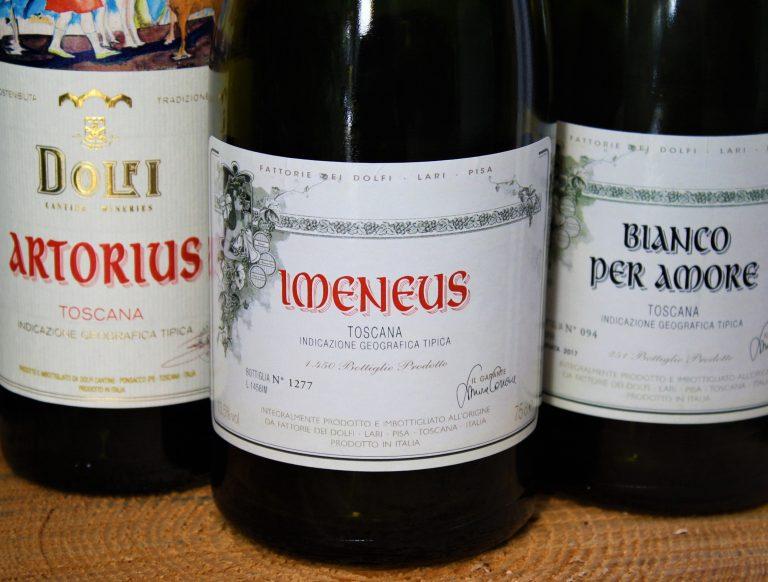
So, enough storytelling. I was lucky enough to try three editions of Fattorie’s limited wine stock – and when the Company say limited, they really mean it. The first wine, the Bianco Per Amore, was complex and unique. A mixture of Pinot and Chardonnay grapes, the wine set itself apart from the dry varieties one might drink on a day-to-day basis with the depth of its flavour. What really made it stand out though, was the speed at which its bouquet and palette matured. Within twenty minutes of our first taste – which revealed a nuanced, harmonious character – the wine had completely mellowed into a different but equally enjoyable experience. This wine is developed with a love one puts into something they want to drink and enjoy at every occasion, and that’s exactly what this wine is made for. The owner of Fattorie created this wine for himself, and at a production capacity of fewer than a thousand cases per year, this complex and unique creation represents an exciting investment opportunity, or better yet a thoroughly enjoyable wine for a special occasion. The second wine (not in the order tried on the day) is the Artorius. Well-balanced, ruby-coloured and direct, this wine sets itself apart from the other wines tried on the day with its simplicity. This wine is composed of Prugnolo Gentile, a grape loved in Italy and used in popular wines such as Brunello di Montalcino, it serves as a wine with character and should be shared over a meal with friends and family. This wine is produced in higher volumes than most of Fattorie’s repertoire, and while it isn’t a typical investment wine, its limited availability and sparse appearances at fine dining establishments makes it a talking point for any wine lover. The third and final wine is the very noteworthy Imeneus. A wine with an authentic identity – both its name and story – Imeneus was described by our host as “very Italian”. Being Italian himself, I sense he didn’t use those words lightly, and would go as far as to say he was proud to have this wine incorporated into our perceptions of Italian culinary culture. There are very few words that do justice to this member of the Fattorie family, but technically at least, it stands as a fine example of what an expert can do with the Prugnolo Gentile variety. Its lively, complex and spiced fruit aroma inspires an involuntary aura of festivity within anyone fortunate enough to drink it. Its smooth fragrance, tobacco aroma when left to age and its balsamic undertones once left open make it something truly special. With under two thousand cases of Imeneus made a year – my favourite fine wine investment cliché has never rung truer. It represents an investment with great potential for growth, but in the worst-case scenario, I’m sure you’ll have a great time drinking it.

Concluding thought

In a time where fine wine sales are on the increase and overall wine consumption is down, the Company hopes to capitalise on a shift in investor behaviour. The current climate is proving turbulent for stakeholders in commodities and equities and many are beginning to look toward a more secure and self-governed investment solution – a solution which fine wine producers like Fattorie are glad to offer. This Company is producing wines of distinction in its early years, and any investor can expect to see a return on a product which Fattorie’s owner hopes will someday rival Chateau Lafite. Speaking on the teachings of his mentor, Fattorie’s owner said,
“He always said that it is not enough to make a good wine; that wine must be exclusive and the true expression of the terroir.”