
Summit Germany dips amid probe

Commercial real estate company Summit Germany Ltd (LON:SMTG) saw their shares dip in trading on Wednesday following an announcement that the offices of their major shareholder, Summit Real Estate Holdings (TLV:SMT), had been searched as part of an ongoing investigation.
Transense Technologies rallies on new contract

Oxford-based technology transfer and sensor system supplier Transense Technologies Plc (LON:TRT) have seen their share price rally in Wednesday trading with the company announcing that they had secured a new contract.
Not a tyred matter
Transense announced on Wednesday that they had secured a further contract via their Ghanaian partner, to supply tyre monitoring systems for trucks at the Norgold Mine in Burkina Faso. These systems are to be supplied on a rental basis through the West African Tyre Services. ‘This method allows mining companies to benefit from the productivity gains and overhead savings provided by using the system without any of the associated capital cost, while providing Translogik with a recurring revenue stream,’ the company said.Transense as a portfolio candidate
This latest contract after the company announced the delivery of 50 of its iTrack II units to be installed in North Africa. The firm’s shares are currently trading up 1.5p or 2.16% to 71p per share 20/02/19 14:32 GMT. Analysts from finnCap have reiterated their ‘Corporate’ stance on Transense stock.Temple Bar Investment Trust performance slips with volatility

British investment trust and value-based stock-picker Temple Bar Investment Trust (LON:TMPL) posted a net negative annual performance for the full year through December.
The company attributed the disappointing results to volatility in international markets, with political and macroeconomic phenomena causing a tentative outlook and stifled liquidity.
The company’s returns on net assets for the full year stood at negative 11.2% by the end of December – this compared to a total return of 9.5% on the FTSE All Share Index.
“So far this year there have been encouraging signs that the anti-value stance of the market might be beginning to reverse and performance in January was impressive as a result,” chairman Arthur Copple said.
“It is still, however, very early days.”
“We continue to face several political and economic risks over the short to medium term, not least the ramifications of Brexit negotiations.”
“A return to more volatile market conditions, while undoubtedly offering a bumpy ride, is likely to play to Temple Bar’s strengths.”
“Our preference — stated on many occasions — is to focus on an individual company’s financial strength and performance rather than seek to predict the direction of markets.”
“Through maintaining our approach of investing in a diversified portfolio of mainly UK domiciled companies and with strict adherence to a value based approach we believe that Temple Bar can continue to prosper, notwithstanding future uncertainties.”
“Furthermore, Temple Bar is well positioned to maintain its policy of paying a high and growing dividend for the foreseeable future.”
Temple Bar as a portfolio candidate
The company declared a final dividend for the year of 20.47p per share, after paying three interim dividends of 8.75p during the course of 2018. At the end of December, the firm’s top holdings were GlaxoSmithKline (LON:GSK), Shell(AMS:RSDA), Capita (LON:CPI), BP (LON:BP) and Travis Perkins (LON:TPK). After a modest rally on Wednesday morning, Temple Bar shares are currently trading up 0.52p or 0.041% at 1,268.52p per share 20/02/19 13:55 GMT.Laura Ashley warns on annual profits, cites “turbulent market”
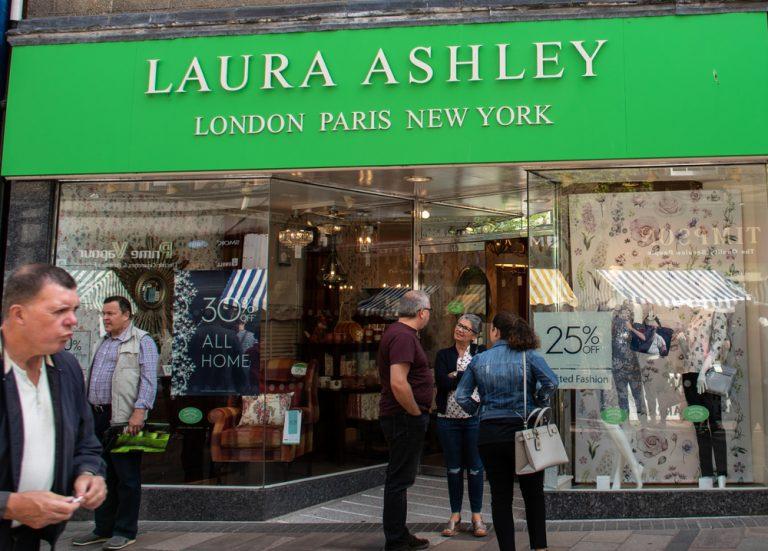
Laura Ashley has warned on annual profits, citing a “turbulent market” in its interim results.
The retailer reported a pre-tax loss of £1.5 million, compared to a £4.3 million profit the year before. Meanwhile, sales fell by 8.7% to £122.9 million.
The loss was attributed to a 4.2% fall in like-for-like sales. During the period, Laura Ashley closed four stores.
The businesses Furniture and Decorating offerings also witnessed a share decline in sales, with furniture plummeting by 14.4% and decorating down 12.4%.
Its fashion division performed better with an 11.8% increase in like-for-like sales.
The retailer announced a series of store closures in 2018, with 40 UK stores facing the axe.
Instead, Laura Ashley said it would be focusing upon growing its operation in China.
Since 1998, the company has been majority controlled by MUI Asia Limited.
Its been a difficult few years for the retail sector, with various well-known high street stores, including Laura Ashley announcing closures.
Retailers such as New Look, M&S (LON:MKS) and Waitrose all shut down sites in 2018, blaming falling footfall.
Also on Wednesday, shopping centre landlord Intu (LON:INTU) also reported a full in annual profits, causing shares to fall.
Intu cited an uncertain economic environment as well as difficult trading across the retail sector in general.
Shares in Laura Ashley (LON:ALY) are currently trading -1.46% as of 13:07PM (GMT).
Blancco Technology H1 profit with revenue hike

Data security firm Blancco Technology Group have managed to turn a profit for the first half, with strong Data Centre and Enterprise growth sparking a revenue jump of almost 20%.
Two-fold success
The company reported that profits could largely be reported to growth in two areas. Revenue grew in Data Centre and Enterprise to £4.7 million, up 30% on-year. Another success story, however, was IT asset disposition revenues, up 20% to £4.9 million. For the six month period to the end of December 2018, on-year profits jumped to 0.243 million, up from a £1.46 million loss on-year. “The Board is pleased with the performance of the company over the past six months, following on from a strong second half of the previous financial year,” the company said. “Excellent progress has been made against the new strategy launched in September 2018, and the platform is in place for long term sustainable growth.” “The board reiterates its confidence in full year market expectations, and is pleased with the progress made across the business in the first half of the year.”Blancco as a portfolio candidate
On-year, H1 revenue rose 19% to £14.6 million. The firm’s share price was up 2.87% or 3p a share. Twice this month, and as recently as Tuesday, Peel Hunt analysts reiterated their ‘Buy’ stance on Blancco Technology stock.Pan African Resources shares dip in spite of profit boost

Gold ore mining firm Pan African Resources Plc (LON:PAF) have seen their share price dip in morning trading on Wednesday, despite the firm posting a 30% spike in first half profits.
The positive results have been attributed to an increase in gold production at its existing mining operations. Production rose at continuing sites to 81,014 ounces, up 54% on-year.
Pan African Resources booked a total pre-tax profit of £9.3 million for the six month period through December 2018, which it owed to a 47% on-year spike in revenue to £75.3 million.
Chief Executive Cobus Loots, “Pan African Resources is pleased to report a robust operational, financial and safety performance for the six months ended 31 December 2018,”
“The group is now positioned as a low cost and long-life gold producer, in line with our stated strategy and our shareholders’ expectations.”
Pan African Resources as a portfolio candidate
The company’s chief executive then went on to add that the firm were on track to fulfil its full-year production guidance for 2019, which currently stands at approximately 170,000 ounces. PAR shares are trading down 0.26p or 2.43% at 10.44p per share 20/02/19 11:46 GMT. This month and as recently as Wednesday, Peel Hunt analysts reiterated their ‘Buy’ stance on Pan African stock.Kerry Group shares rally on annual profit growth
Irish based food production company Kerry Group Plc (LON:KYGA) have seen their share price rally in morning trading on Wednesday, as the company published a modest annual growth in profits on the back of a sales boost which kept margins healthy.
In spite of challenging conditions, the company posted a pre-tax profit for the year through December of 617.9 million EUR, a slight rise of 0.8% on-year. This however, does not do justice to its noteworthy growth in sales. Headwinds aside, the company booked an impressive spike of 3.1% in revenue on-year, coming to 6.6 billion EUR.
“We are pleased with our performance in 2018, with volume growth well ahead of our markets, underlying margin expansion in line with expectations and adjusted earnings per share growth of 8.6% in constant currency,” said chief executive Edmond Scanlon.
“In 2019 we expect to deliver adjusted earnings per share growth of 6% to 10% on a constant currency basis.”
Kerry Group as a portfolio candidate
The firm announced a final dividend of 49.2c per share which brought total dividends up 12% on-year -with 2018 dividends totalling 70.2c. Further, in spite of currency headwinds, sales grew 3.5% while trading margins were maintained at 12.2%. The company’s shares are trading up 1.8 EUR or 2.01% in morning trading to 91.5 EUR 20/02/19 11:05 GMT.Indivior releases new treatment, shares dip with copycat fears

FTSE 250 specialist pharmaceutical company Indivior Plc (LON:INDV) announced on Wednesday that it has released an authorised generic version of its treatment to combat opioid addiction. The treatment has been released in the US market in an attempt to combat the anticipated impact of rival companies launching ‘copycat’ products.
The decision to launch the treatment followed a decision by the US Supreme Court which denied an appeal from Indivior, which sought to keep in place a preliminary injunction which was previously granted against its rival firm Dr. Reddy’s Laboratories (NSE:DRREDDY), that prevented it from retailing a generic version of the company’s opioid addiction treatment.
The company said in a statement, “This business decision is based on the market impact expected from the anticipated at risk launch of a generic buprenorphine and naloxone sublingual film product in the U.S. by Dr. Reddy’s Laboratories and/or Alvogen.”
Indivior as a portfolio candidate
With ongoing fears about rival copycats and the impact of its previous generic release on material profits, it is little surprise perhaps that markets are being cautious about this company. The firm’s shares are currently trading marginally down – 0.45p or 0.43% – at 104.35p per share 20/02/19 10:47 GMT. Analysts from Jefferies International have downgraded their previous rating to a ‘Hold’ stacne on Indivior stock. Unsurprisingly, larger pharma players will be seen as the smart investment for long-term investors, with larger firms outperforming other sectors in 2018 and enjoying a positive start to 2019 – though some fears surround the longevity of profits as the year goes on.Sainsbury’s-Asda merger thrown into doubt after CMA findings
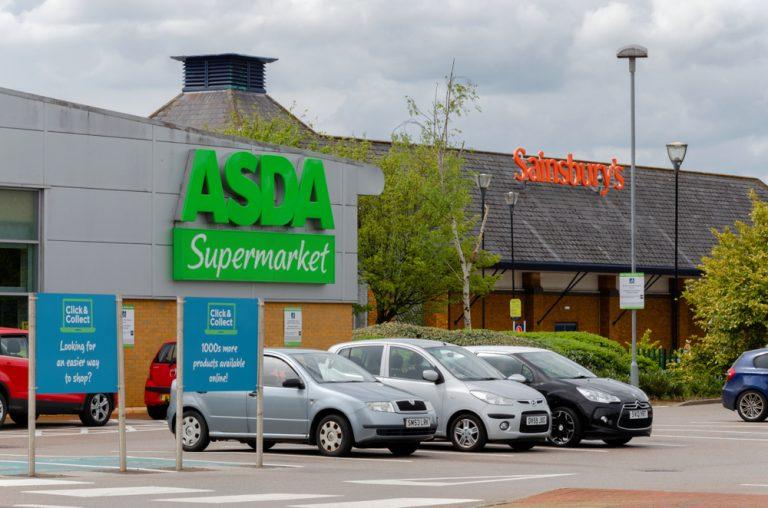
A proposed Sainsbury’s-Asda supermarket merger has been cast into doubt after the UK competition watchdog released its preliminary verdict.
The Competition and Market Authority (CMA) highlighted “extensive competition concerns” in its findings after conducting an investigation into the merger.
In a statement, Sainsbury’s said:
“We fundamentally disagree with the provisional findings. These misunderstand how people shop in the UK today and the intensity of competition in the grocery market. The CMA has moved the goalposts and its analysis is inconsistent with comparable cases.
It continued: “We are surprised that the CMA would choose to reject the opportunity to put money directly into customers’ pockets, particularly at this time of economic uncertainty.
We will be working to understand the rationale behind these findings and will continue to make our case in the coming weeks.”
Back in October, The CMA announced that it would be examining the £10 billion merger in detail, amid concerns that the deal would reduce choice and lead to higher prices for customers.
If the deal is given the green light, the Sainsbury’s-Asda merger would create the nation’s largest supermarket, surpassing Tesco (LON:TSCO).
As it stands, Sainsbury’s is the second biggest supermarket in the UK, holding a 15.4% market share as of October 2018. Walmart-owned Asda followed closely behind with a 15.3% market share.
Shares in Sainsbury’s (LON:SBRY) are currently down -16.66% as of 11:03AM (GMT).
McBride shares dip on profit warning

British cleaning product manufacturer McBride Plc (LON:MCB) have seen their share price dip in Wednesday morning trade, following a statement from the company that annual profit could fall as much as 15% with fears surrounding increased overheads for raw materials and distribution.
The news ended what was an optimistic period for the company, which enjoyed a profitable end to 2018. The company booked a bumper period in sales, with the six months through December representing a 6% rise on-year.
“However, the group continues to see pressure on its cost base,” McBride said in its statement.
“We continue to expect the overall raw material pricing outlook to show improvements in the second half, but not to the extent anticipated in early January.”
“In addition, distribution costs continue to rise beyond our previous estimates due to market rates and efficiency challenges driven by logistics capacity shortfalls and internal service gaps.”