
Comptoir performance “in line with market expectations”, shares up

Comptoir shares rose on Friday after the company confirmed that its annual results would be in line with market expectations.
The Lebanese mediterannean restaurant chain said on Friday that trading for the 52 weeks to 31st December 2018 proved “in line with market expectation”, with a strong finish expected in the second half of the year.
Over the course of the year, the group opened two sites in Birmingham and London Bridge.
In addition, Comptoir opened its second franchise site with HMS Host in Cheshire Oaks.
In September, the company posted its interim results for the period ended 30 June 2018.
In the trading update, Comptoir posted group revenue of £15.7 million up by 19.8%, compared to 13.1 million reported in 2017.
In addition, gross profit for the period came in at £11.3 million, proving an increase ofup 19% £9.5 million in 2017.
The restaurant chain finished the year with a total of 27 managed restaurants and 4 franchise sites.
The company was incorporated in 2006 and was listed on the AIM market of the London Stock Exchange in 2016.
Despite the encouraging market update, the UK restaurant sector has been struggling as of late, with rising costs and economic uncertainty proving challenging.
Various well-known restaurant chains such as Jamie’s Italian, Prezzo and Byron all announced site closures in 2018.
Shares in Comptoir (LON:COM) are currently +2.80% as of 11:46AM (GMT).
TSB posts £105m loss after IT chaos
TSB reported a £105 million loss in its full-year results for 2018, after racking up costs as a result of an IT issue.
The bank incurred heavy costs as a result of a computer system update malfunction.
TSB posted the hefty loss as opposed to the £162.7 million profit in 2017, after the update plunged the company into chaos.
Alongside IT issues, costs were also incurred as a result of customer compensation and fraud.
The bank said that £125 million was spent on customer compensation and £49 million was as a result of fraud claims and operational losses.
Meanwhile, £122 million was as a result of IT issues, and £33 million was lost from waived fees and charges.
Richard Meddings, executive chairman, said in a statement: “Last year was TSB’s most challenging year. But we enter 2019 with renewed ambition to re-emerge as the leading challenger bank in the UK – firmly on the side of the customer.”
The statement added that the Board decided to award employees £1,500 each in December, in recognition of the extra workload. Executives would be excluded from bonuses.
Back in November, TSB announced the appointment of Debbie Crosbie as chief executive. She is set to take up the role in Spring.
TSB bank is a subsidiary of Sabadell Group (BMAD:SAB). The bank was created after the division of Lloyds TSB (LON:LLOY).
Unilever stockpiling ice-cream ahead of Brexit date
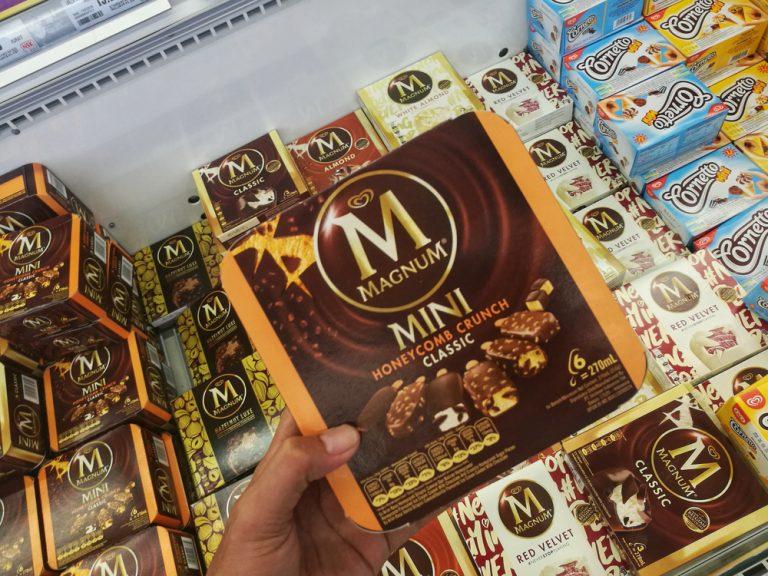
The Guardian has reported that Unilever (LON:ULVR) is stockpiling ice-cream ahead of the UK’s departure from the European Union. A few weeks’ worth of Ben & Jerry’s and Magnum bars are being stockpiled to ensure that that the UK will not face a shortage of its favourite brands once the official Brexit process begins.
The company will also be stockpiling its deodorant brands. These include Sure, Lynx and Dove.
Unilever’s Chief Executive, Alan Jope, said that “we have built inventory on either side of the Channel.” Additionally, he confirmed that “It’s weeks of inventory – not months or days.”
“If I was in the designer handbag business then I might have built further [inventory] cover but we’re not, we are in fast-moving consumer goods and one of the things we have learned is, when you build inventory, it can end up being the wrong mix of product.”
Unilever is not the only retailer to stockpile its products ahead of the Brexit date.
Nestle struggled to stockpile any further ahead of Brexit as its warehouses were almost entirely full of products. Moreover, Mondelez International, one of the world’s leading snack companies, also announced it would stockpile products and ingredients in fear of a Brexit product flow shutdown. Mondelez owns the popular Cadbury chocolate brand, as well as Milka, Oreo, Philadelphia and Toblerone. Equally, dairy company Ornua began to stockpile cheddar in the UK in order to avoid the impacts of price-hikes post-Brexit. As the prospect of a no-deal Brexit looms closer, companies brace themselves for all possible scenarios. Unilever also announced its full-year 2018 financial results on Thursday. The company experienced profitable growth, with an increase in its underlying full-year sales. However, it warned that market conditions were “volatile”. Indeed, CEO Alan Jope said that he expected these tough market conditions to remain “challenging” in 2019. At 14:46 GMT Thursday, shares in Unilever plc (LON:ULVR) were trading at -2.31%.Advanced Medical Solutions acquires Sealantis for $25 million

The surgical and advanced wound care company, Advanced Medical Solutions Group (LON:AMS), announced on Thursday that it has acquired the Israeli-based company Sealantis for $25 million.
Sealantis is a medical device company based in Israel. Sealantis’ technology platform has several synergies with Advanced Medical Solutions. The most notable are within the sales, marketing, regulatory and operational areas.
Sealantis develops medical device products that mimic the mechanism of adhesion of algae to rocks in water.
The first product is expected to enter the European market from the first-half of the 2021 financial year.
The acquisition of Sealantis will strengthen the company’s current product portfolio.
CEO of Advanced Medical Solutions Group, Chris Meredith, commented on the acquisition of Sealantis:
“This acquisition is in line with our strategy to acquire technologies that are complementary to our surgical portfolio as well as allowing us to leverage our global routes to market. The acquisition enhances our access to a significant and high-margin market in internal surgery, which includes areas of unmet need for effective and absorbable internal sealants, a market estimated at $1 billion.”
“We are particularly excited to welcome Sealantis’ innovation team of R&D experts to AMS and look forward to working alongside them to develop the technology in a wide range of potential applications and indications.”
“As we work towards the commercialisation of Seal-G Surgical Sealant over the next 18 months, we expect to maximise the full value of the platform and this innovative technology. AMS continues to actively monitor and evaluate other acquisition opportunities to capitalise on its strong financial and strategic position.”
In the pharmaceutical sector, Shield Therapeutics recently announced that it had made developments in its iron-deficiency study. It also announced the appointment of a new chairman earlier this month.
At 13:59 GMT today, shares in Advanced Medical Solutions Group plc (LON:AMS) were trading at +4.30%.
Italy slips into its third recession in a decade

Home to the third-largest Eurozone economy, Italy has slipped back into a recession. New GDP figures demonstrate that its economy has decreased by 0.2% in the last three months of 2018. This follows a 0.1% fall from the third quarter.
Analysts usually define a “technical” recession as two successive quarters of decline.
Given the size of it’s economy, Italy’s recession has hindered the growth of the wider Eurozone. The Eurozone only grew 0.2% in the final three months of 2018, the same increase as the previous quarter.
Last year, the right wing League party formed a coalition with the anti-establishment Five Star Movement. It spent months quarrelling with Brussels over its ambitious budget plans. Rome’s original deficit plans simply breached rules on government borrowing. The 2.4% figure may have been below the EU’s deficit limit of 3%, but it remained far too high for a country whose debt is as big as Italy’s. This seems to have damaged the country’s economic confidence and exacerbated the situation. Given that the country has now entered a recession, the growth targets of the approved 2019 budget appear highly unrealistic.
Italy will be entering its third recession in a decade.
Since early 2017, the Italian economy has been weakening. It has recently been damaged by a slowdown between its trading partners, including Germany and China. The Italian statistical agency, Istat, has said that the recession is primarily due to a “decrease of value added in agriculture, forestry and fishing as well as in industry.” Deputy Prime Minister Luigi Di Maio said that the data “certified the failure of the entire political class which Italians sent packing” following last year’s election. Luigi Di Maio has also said that the recession should be taken as an indication that the EU budget rules must be relaxed. According to the Deputy PM, a relaxation of the rules will allow Italy breathing space to stimulate its economy back into growth.Unilever’s underlying sales rise despite “volatile” market conditions
Unilever (LON:ULVR) announced its full-year 2018 financial results on Thursday. The company has said it has seen continued profitable growth despite the “volatile” market conditions.
Underlying full-year sales excluding spreads grew 3.1%, in line with expectations, with 2.1% from volume. Full year revenue was €51 billion.
Underlying operating margin increased 90bps. Meanwhile, underlying earnings per share increased 5.2%.
Full year turnover was impacted by an adverse currency impact of 6.7% and the disposal of its spreads business. As a result, turnover decreased 5.1%.
In December, Unilever acquired GSK’s Indian health food and drinks portfolio, including the Horlicks brand, in a €3.3 billion ($3.8 billion) deal.
CEO of Unilever, Alan Jope, commented on the results: “2018 was a solid year for Unilever, with good volume growth and high-quality margin progression.” “Looking forward, accelerating growth will be our number one priority. With so many of our brands enjoying leadership positions, we have significant opportunities to develop our markets, as well as to benefit from our deep global reach and purpose-led brands.” “We will capitalise on our strengthened organisation and portfolio, and our digital transformation programme, to bring higher levels of speed and agility. Strong delivery from our savings programmes will improve productivity and fund our growth ambitions.” “In 2019 we expect market conditions to remain challenging. We anticipate underlying sales growth will be in the lower half of our multi-year 3–5% range, with continued improvement in underlying operating margin and another year of strong free cash flow. We remain on track for our 2020 goals.” Unilever announced the departure of its CEO Paul Polman in November, replaced by Alan Jope. Additionally, it scrapped plans for a Rotterdam HQ, following criticism from its investors. Top Unilever jobs were put at risk as influential investors planned to revolt at the company’s next AGM due to its handling of plans to scrap its UK headquarters. At 09:43 GMT today, shares in Unilever plc (LON:ULVR) were trading at -2.77%.Yu Group shares surge though pretax loss expected

Gas and electricity supplier to SME businesses, Yu Group Plc (LON:YU), has seen its share price more than double during trading on Wednesday, while the company said that it expected to report a deep pre-tax loss.
Extensive pre-tax losses
The company’s revenue for the financial year was expected to stand at approximately £80 million, with cash as of the 31st of December 2018 standing at £14.6 million, of which £3.5 million was held in short-term deposits. However, pre-tax losses for the year through December were still expected to be between £7.4 and £7.9 million due to the company miscalculating its revenues for the 2018 financial year. As a caveat to this announcement, the company added that the forecast loss for 2018 would not reduce the profitability of previous financial years.Yu Group response
The company have said that the current review of the Yu Group balance sheet would continue until finalisation of its annual accounts and audits, which it aims to complete by Q2 of 2019. The Yu Group board are focused on confirming the veracity of the company’s estimates on the level of bad debt provision, the recoverable status of accrued income and reviewing whether a prior period adjustment would be required. Chief Executive, Bobby Kalar, stated, “In what has been a challenging period we remain focussed and continue to work hard to rectify the issues highlighted last year” “Some significant actions have already been implemented across the organisation.”Growth projected for 2019 – shares soar
The firm have said their focus on customer service in 2018 will be carried forward into the 2019 financial year, in addition to what it described as development of existing teams and recruitment of new staff, which it hopes will attract new customers. In the statement, the company said they have already booked more than £85 million in contracted revenue for 2019, which already exceeds the total revenue accrued for the entirety of 2018 by £5 million. “Whilst we are being more selective and prudent in relation to our growth, we are securing new business at a reasonable margin.” Added the Chief Executive “With a strong balance sheet and a focussed and dedicated workforce, I remain confident in the underlying business, the significant market opportunity available to us, and the long term success of our proposition and I am absolutely driven to put us back on track.” Yu Group shares are currently trading at 148.62p 30/01/19 16:29 GMT, up 81.12p or 120.19% since markets opened on Wednesday. During trading, the company’s shares rallied to as much as 179.38p per share, up from 85p between 08:00 and 10:40 GMT.Ryanair investor rating upgraded with Laudamotion takeover
Irish budget airline Ryanair Holdings Plc (LON:RYA) announced yesterday that it had successfully bought out the final 25% stake of its subsidiary, Laudamotion, from NL Holdings in late December. Following the news, investment bank Raymond James (NYSE:RJF) announced it had upgraded its investment rating for Ryanair Holdings.
Ryanair’s new(ish) acquisition
Shortly after Laudamotion – formerly run by Niki Lauda – announced it had successfully bid for the collapsed assets of Air Berlin unit Niki, Ryanair bought a 75% stake in the company in March 2018. Following the wholesale acquisition, as of December 2018, Laudamotion’s average passenger rollover of four million per annum is expected to be doubled by Ryanair over the course of the next two financial years. Unlike its new owner who operates only Boeing aircraft, Laudamotion were operating a fleet of 19 Airbus aircraft in the summer of 2018, with this expected to increase to 30 aircraft by the summer of 2020 – according to signed letters of intent to lessors.Bright future for Laudamotion
For the financial year ending in March 2021, Laudamotion has announced it expects to have increased its capacity to over 7.5 million passengers. “With the backing of Ryanair, Laudamotion is set to grow strongly over the next three years to carry 10 million passengers per annum,” says Laudamotion chief executive Andreas Gruber. “We will release details of up to 20 new routes for winter 2019 once we have completed our airport and handling negotiations by the end of March.”Laudamotion Deputy Chief Executive, Colin Casey, added, “We are currently negotiating new routes and handling agreements with more than 50 new airports.”
He also discussed the possibility of expanding the company’s base of operations, “In winter 2019 we hope to announce at least one new base, which will be outside of Austria and Germany, and there are a number of new airports both in central and western Europe who are pitching to win this business.”
Ryanair shares and broker stances as things stand
In response to the news, Ryanair shares rallied 0.87% or 0.095 euros during trading today, to 11.01 euros per share 30/01/19 15:02 GMT. Raymond James analysts have upgraded their stance on Ryanair stock from ‘Market Perform’ to ‘Outperform’.Thor Mining hails “positive quarter”, shares bounce

Thor Mining shares (LON:THR) gained during Wednesday trading after the company posted a promising trading update for the quarter.
The mining company updated on the market on the October to December period, noting a ‘sound’ cash position, taking the country through to the latter half of 2019.
Chief Executive Michael Billing welcomed the results as a ‘positive quarter’, with progress made on all major projects as well as strengthened funds.
He also added:
“The appointment of corporate advisors to support and guide our efforts towards off-take & financing for Molyhil is a strategy we believe will improve our prospects of securing the best arrangement possible for our shareholders.”
“A number of potential scenarios are possible with various interested parties, and we hope to be in a position to advise progress shortly.”
“Additionally, the potential of nearby Bonya tenements, hosting tungsten, copper, and vanadium, provides potential upside for Molyhil, and also for other stand-alone development opportunities.”
“The improvement in the Pilot Mountain resource estimate is an additional welcome boost as we advance our technical studies.”
“Proof of Concept for ISR recovery for the Kapunda copper project is a significant critical step in this very exciting project.”
Thor Mining is listed on both the Australian Stock Exchange and the London Stock Exchange AIM market.
The company has projects in Australia as well as Nevada and Arizona in the UK.
Shares in Thor are currently up +6.40% as of 15:21PM (GMT), as the market reacts to the announcement.
Plutus Powergen records H1 loss, sales stagnant

Flexible energy generation and provider company Plutus PowerGen (LON:PPG) have reported a first half loss amid a period of stagnant revenue, which was compounded by operating cost.