
Boris Johnson to double down on Keynesian spending post Coronavirus
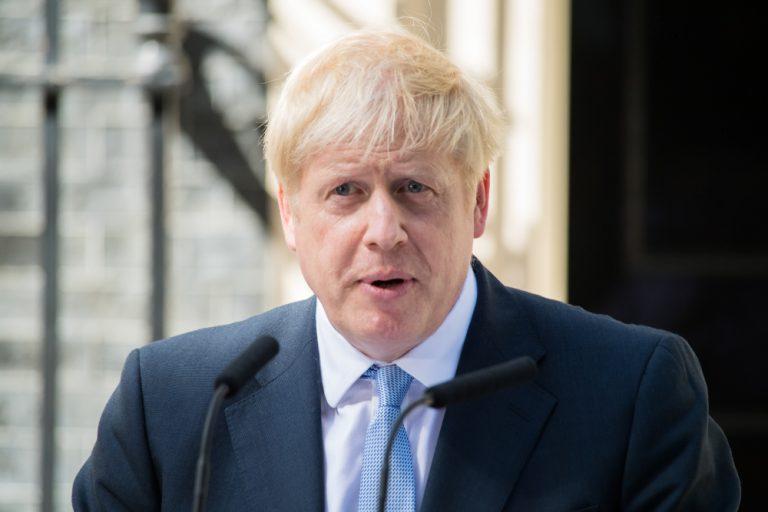
UK prime minister Boris Johnson spoke on Times Radio on Monday, and stated that the UK would face “bumpy times” and that Coronavirus had been an “absolute nightmare” for the country. Aside from the inevitable discussion about the government’s handling of the pandemic, there was also talk about whether Mr Johnson would stay true to his big-spend budget announced in February.
On this matter, the prime minister said that returning to austerity “would be a mistake”, and said his government would instead opt for “doubling down” on its existing plans to ‘level-up’ the economy and infrastructure. As part of this “bounce forward”, Boris has now committed £1 billion to 50 school projects and £560 million for school repairs, over the next decade.
In order to recover from the economic shock of the virus, Johnson said that the UK requires a similar effort to the one seen in the US under President F.D. Roosevelt, with the New Deal reigniting the economy following the Great Depression in the 1930s.
In the interview, the PM commented:
“This is the time to invest in infrastructure, this is the time to make those long-term decisions for the good of the country,”
“You have to be careful and the chancellor will be setting out our plans in the spending review in the autumn.”
“But in the end what you can’t do at this moment is go back to what people called austerity, it wasn’t actually austerity but people called it austerity, and I think that would be a mistake.”
“I think this is the moment for a Rooseveltian approach to the UK.”
Speaking during his announcement of schools reopening, Boris Johnson said the recovery would be driven by an “activist, interventionist approach”.
He continued, saying that this approach would “get businesses to be confident, to start investing, to start taking people back on and start creating new jobs and driving new growth”.
Fiscally and monetarily prudent commentators will no doubt have many words of wisdom for the PM, and add that while throwing money at a problem may make it hurt less today, it could cause additional and very real problems down the road.
That being said, if the PM’s plan is to reopen the economy in earnest, then a commitment to spending is certainly the right way to double down on rapid recovery. Mr Johnson’s plan is not so much slow and steady, as boost confidence and hope for a rapid return to strong liquidity.
Aside from anything else, a commitment to spending is probably the right move politically. Not only does it take the cards out of Labour’s hands (they can hardly promise to spend more) but it will also satisfy key areas of support such as the former ‘red wall’, who voted for Boris’s vision of national potential, opportunity and rebuilding.
Mortgage approvals reach record low

The number of UK mortgage approvals has slumped to the lowest level since records began in October 1997.
As the economy continues to be hit by the Coronavirus pandemic, new Bank of England figures showed UK mortgage approvals fell from 15,800 in April to 9,300 in the month of May. The new levels are around 90% less than the February levels.
Figures are unlikely to improve in the coming months as the government’s furlough scheme is coming to an end and unemployment figures are expected to spike.
The Bank of England data also highlighted people’s decisions to make less credit card borrowings over the course of the pandemic.
“Household’s consumer credit borrowing remained lower than usual in May, as Covid-19 continued weighing on spending. On net, people repaid £4.6 billion of consumer credit in May following repayments of £7.4 billion in April and £3.8 billion in March,” it said.
“The extremely weak net flows of consumer credit meant that the annual growth rate was -3.0%, the weakest since the series began in 1994.”
The government instructed those planning to move houses to delay whilst in lockdown. The restriction was eased on May 13, however new data shows there was not a pent-up demand.
BP share price bounces amid petrochemicals sale to INEOS
BP plc (LON: BP) has announced the sale of its global petrochemicals business to London-based chemical producers INEOS. The $5 billion transaction of BP’s aromatics, acetyls and related commodities represents the “next strategic step” in reinventing BP’s portfolio.
BP’s share price bounced a modest 2.57% or 7.82p to 312.42p at BST 10:41 in response to the company’s news.
The company’s petrochemicals business is focused on two main products – aromatics and acetyls – which each boast industry-leading manufacturing and technology plants. BP’s petrochemicals projects have a “strong presence” in the growth market in Asia.
In total, the business has interests in 14 manufacturing plants across Asia, Europe and the USA. In 2019, BP produced 9.7 million tonnes of petrochemicals.
INEOS is a leading global chemicals company, with a vast network spanning over 180 sites across 26 countries. The company employs over 22,000 staff worldwide.
The acquisition of BP’s petrochemicals projects is not the first transaction between the two companies; INEOS has acquired a number of businesses from BP, notably $9 billion purchase of Innovene – a subsidiary which made up the majority of BP’s chemicals assets and refineries at the time – in 2005.
Two weeks ago, BP announced that it was going to slash a total of $17.5 billion off the value of its gas and oil assets in response to swelling stockpiles and a drop in demand caused by lockdown restrictions.
The industry has been hit hard by the coronavirus pandemic, as oil prices plummeted to record lows in April and analysts expressed concern for “dragging” crude prices if the global economy does not make a swift recovery.
Commenting on BP’s sale, chief executive Bernard Looney said:
“This is another significant step as we steadily work to reinvent bp. These businesses are leaders in their sectors, with world-class technologies, plants and people. In recent years they have improved performance to produce highly competitive returns and now have the potential for growth and expansion into the circular economy.
“As we work to build a more focused, more integrated bp, we have other opportunities that are more aligned with our future direction. Today’s agreement is another deliberate step in building a bp that can compete and succeed through the energy transition”.
The company’s chief financial officer Brian Gilvary added:
“With today’s announcement we have met our $15 billion target for agreed divestments a full year ahead of schedule, demonstrating the range and quality of options available to us. bp has had a long relationship with INEOS and this agreement reflects the mutual respect and trust that exists between us. It is a strategic deal for both parties that recognises both the high quality of the businesses and that INEOS is in many ways a natural owner for them”.
The number of staff employed across BP’s petrochemicals projects stands at around 1,700, all of whom are expected to transfer to INEOS on the completion of the sale.
Despite today’s encouraging rise, the BP share price is down 34% across 2020 so far.
Boris pledges billions to rescue economy – but is it destined to be yet another broken promise?
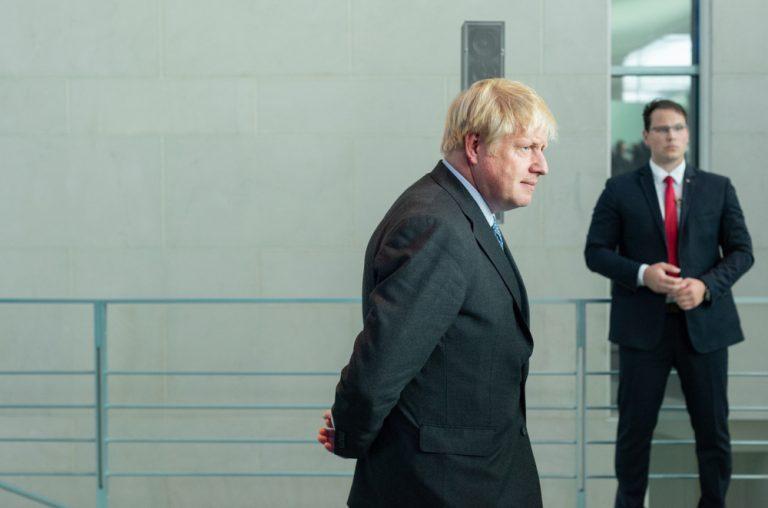
UK Prime Minister Boris Johnson has vowed to spend billions of pounds to rescue the economy, as the country fast approaches a looming economic fallout in the wake of the coronavirus pandemic.
Early on Sunday, Johnson took to Twitter to announce his plans to build the country’s way “back to health”. In an interview with the Mail on Sunday, he reinforced his election-era commitments to ‘levelling-up’ British infrastructure – pledging new homes, schools and hospitals – as well as providing thousands of new jobs in the process.
A storm of epic proportions
The PM’s promise could not have arrived at a time of more desperate need. Just last Friday, Chancellor of the Exchequer Rishi Sunak warned of “tragic projections” for UK unemployment when the government’s furlough scheme comes to an end in October. Strict lockdown measures implemented in March to stem the spread of coronavirus also hit the construction industry hard, with all non-essential projects put on hold until the end of April. In his typically bombastic style, Johnson compared the pandemic and its repercussions to a storm of epic proportions, stating: “If Covid was a lightning flash, we’re about to have the thunderclap of economic consequences”.Responding to questions about how the government intends to fund his ‘levelling-up’ agenda, Johnson was swift to shut down rumours that he might follow in the footsteps of former Conservative PM David Cameron: “We are absolutely not going back to the austerity of 10 years ago”.We want to build our way back to health. If Covid was a lightning flash, we’re about to have the thunderclap of the economic consequences.
We’re going to be ready. Read my full interview with The Mail on Sunday here: https://t.co/DX9tIURqKI pic.twitter.com/y0mUpgCJru — Boris Johnson #StayAlert (@BorisJohnson) June 28, 2020
Project Speed to the rescue
A new task force named Project Speed – led by right-hand man Sunak – is set to be unveiled in one of the PM’s speeches in the Midlands on Tuesday. The group’s aim is to deliver key projects faster, with one of the first proposals being a number of new prisons to help address issues with overcrowding and coronavirus infections. Explaining the details of his plan to reverse soaring unemployment rates and inject a shot of optimism into the economy, Johnson said: “We’re going to need a very committed, dynamic plan. Not just for infrastructure, not just for investment, but making sure that young people have the confidence they need that we are going to help them get into a place of work, to keep their skills up, to keep learning on the job and get a highly paid, highly skilled job that will stand them in good stead for a long time to come. “We are going to have plans for work placements, supporting young people in jobs, apprenticeships, getting people into the workplace, making sure that their skills don’t just fall into disuse and we’re going to give an opportunity guarantee for all young people”.Priti weighs in
Home Secretary Priti Patel backed the PM’s plans in an interview with Sky News on Sunday, stating: “As we move out of this awful period of coronavirus, this dreadful disease, we want to get Britain moving again. We’re building now very much a road to recovery, a road map focusing on infrastructure right now, levelling up across the country, focusing on roads, broadband – the type of things that effectively help to create jobs but also provide services and economic growth and opportunity across the country”.A lukewarm reception
Johnson’s pledge comes after the Bank of England injected £100 billion into the UK economy to stop the UK slipping into insolvency. Last week, Governor Andrew Bailey revealed that the government would have faced a “market meltdown” had it not been for the Bank’s historic intervention, but was quick to warn that businesses should not rely on bail-outs and boosts in the future. Nevertheless, mounting fears that a recession is on the horizon mean that Johnson’s promise has been welcomed with open arms – for some at least. Notoriously argumentative Piers Morgan was one of the most high-profile critics of the PM’s announcement, posting his thoughts on Johnson’s leadership so far on Twitter:The irony of @BorisJohnson winning an election on a pledge to ‘take back control’ when he’s now completely lost control of this country through his mind-blowing dithering & incompetence… is amazing. pic.twitter.com/qFDTllRb87
— Piers Morgan (@piersmorgan) June 10, 2020
More broken promises?
Johnson’s government faces a test of its mettle in the months ahead. Time will tell if vows to implement “shovel-ready” road and rail infrastructure will come to fruition, and if the government can provide an “opportunity guarantee” for the millions of workers expected to join the unemployment line this autumn. Based on past examples, Johnson is not exactly known for keeping to his word – lest we forget his ill-conceived “£350 million for the NHS every week” Brexit campaign poster, which is still yet to be delivered. He famously built an election campaign on the promise to “get Brexit done” by Halloween 2019, but of course, the UK has yet to formally leave the European Union, and the deadline has been moved to October 2020 to leave room for further negotiations. So, one would be forgiven for having little faith in the PM to deliver on his promises. Perhaps the pandemic and his own brush with death has changed Johnson’s attitude, however, and we may be eating our words in a few months when the government does what it says it will do. But once again, time will tell.


Sunak warns “tragic projections” for unemployment

The UK’s Chancellor of the Exchequer Rishi Sunak has warned that there are “tragic projections” for unemployment in the months ahead in a dire reflection on the impact of the coronavirus pandemic on the UK economy.
Scrambling to recover
Despite the success of the government’s furlough scheme and the much-needed boost from the Bank of England’s £100 million stimulus package, the economy contracted a record 20.4% in April and continues to face unprecedented challenges to recover to pre-crisis levels. Earlier this week, Bank of England Governor Andrew Bailey revealed that the UK economy had been on the brink of a “market meltdown” during the early stages of the pandemic and faced insolvency for the first time in its 325-year long history. As businesses across the UK begin to reopen, it is hoped that the economy will be stirred into action, buoyed by increased demand from consumers that have been unable to spend because of nationwide store closures. Already high street stores have been met by long queues and a surge in sales since the government announced that non-essential shops could open on the 15th of June.Significant strings attached
However, the economy’s path to recovery is looking all but smooth. Sunak told Bloomberg that he intends to set “an exceptionally high bar” for businesses applying for additional support after the furlough scheme ends in October, adding that it should be “extremely rare” for the government to bail out firms facing financial struggles. He insisted: “Support like that would come with significant strings attached. All of that would be to protect the taxpayer. One would expect financial investors and creditors to significantly share in the burden of that, and all other venues explored”. “This is not my money,” Sunak told Bloomberg on Friday. “It’s not government’s money. This is taxpayers’ money. I shouldn’t be sitting here trying to pick winners.” Playing down rumours of imminent VAT cuts, Sunak claimed that most Brits’ finances were “reasonably robust” due to the success of the furlough scheme, and that the real challenge for getting the economy back on track was challenging consumers’ “psychology”. “The number one thing is confidence to return to doing the things they were doing three months ago”.Bail-outs ruled out
The Chancellor’s announcements come as a dire warning to UK businesses that they will not be able to rely on government loans to help weather the Covid-induced storm. Instead, the impetus lays in firms’ ability to convince lenders, shareholders and new investors to provide help in the absence of taxpayer-funded bail outs. A number of corporate giants have already made headlines pleading the UK government for help, but it appears that the threshold for further financial aid is to be moved out of most companies’ reach. The government already faces a mountain of debt of its own, after a record £55.2 billion of borrowing in May pushed UK debt to 100.09% of GDP.Unemployment storm brewing
With unemployment expected to soar to 3.4 million during this quarter, Sunak has stated that his main priority is to prevent further job losses and that the best way to achieve this aim is to reopen the economy as swiftly and smoothly as possible. “There are very tragic projections for what might happen to employment, there’s enormous dislocation in the labor market. My priority absolutely is to try and protect and preserve as many of those jobs as possible”.UK car production down 95% as Covid “decimates” industry
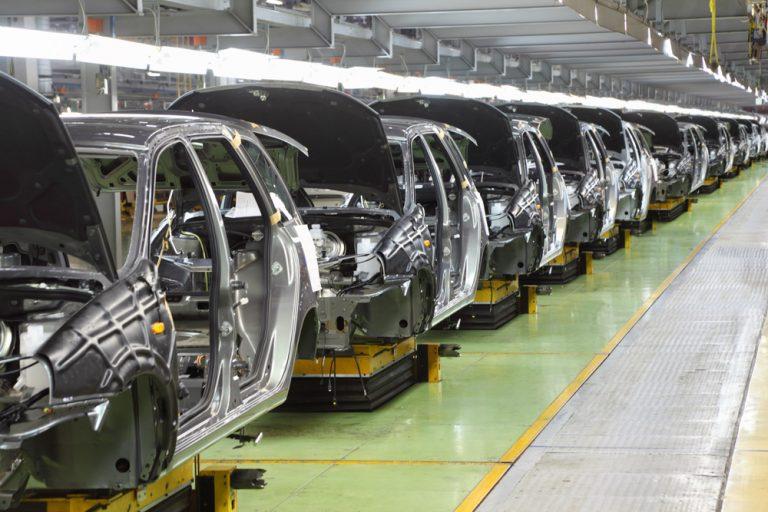
A set of newly-released figures by the Society of Motor Manufacturers and Traders Ltd (SMMT) demonstrate the devastating impact that the coronavirus pandemic has had on the automotive manufacturing industry.
Car production was down 95.4% in May 2020 on the previous year, with just 5,314 cars produced compared to 116,035 during the same month in 2019. Exports have also taken a hard hit, down 95.5% to just 4,260 from last year’s 93,860.
The report emerges in the wake of The UK in a Changing Europe’s analysis from earlier this week, predicting that Brexit will have a “negative and significant” impact on the manufacturing sector – which is still scrambling to recover from the market paralysis due to lockdown restrictions and social distancing measures.
The coronavirus crunch
Strict lockdown measures during the peak of the pandemic left the manufacturing industry at a stand-still with millions of workers on furlough and production mostly on hold between March and May. The SMMT previously warned that up to 1 in 6 jobs may be at risk when the government’s furlough scheme wraps up in October, if the industry does not receive any additional financial support during the weaning process. Many automotive factories across the UK have reopened in June with reduced output. But 6,000 job cuts have been announced this month already, and with 1 in 3 staff from the industry still on furlough, the SMMT is calling for the government to reduce VAT as the sector falls into “critical need” of extra funds to prevent further job losses.Brexit’s long shadow
Beyond coronavirus, the looming threat of Brexit casts a long shadow over the automotive sector. The SMMT’s figures show that the EU makes up a 54.8% market share of UK car exports. With swirling rumours that PM Boris Johnson is leaning towards a no-deal scenario, the manufacturing industry is preparing itself for more hardship down the line once the metaphorical rug is swept out from beneath its feet. Peter Barnes, Insurance Partner and Head of Automotive at global legal business DWF, commented on today’s SMMT’s manufacturing figures for May 2020: “While the world has quite correctly been focused on the impact of the pandemic, which has consumed every inch of capability and capacity in the automotive market, the issues which would be created by a hard Brexit in the automotive sector remain extremely real in these unprecedented times”. He joins the chorus of professionals in the automotive industry urging the government to implement further measures after the furlough scheme terminates later this year. “Given that the UK automotive sector is fundamentally stable with a skill set admired globally, the unprecedented vital government assistance which has been provided to keep many businesses afloat needs to go further. “There remains hope that a car scrappage scheme enticing those with older vehicles back to car showrooms combined with a cut in VAT could make all the difference”. However, the industry’s future very much depends on the outcome of UK-EU negotiations, as the deadline for a Brexit deal approaches on the 31st of October. The ideal scenario for manufacturers would involve a free trade agreement with the EU, extending the current “no friction” trade with the continent and enabling a full recovery with output back to pre-crisis levels by 2025. “It is hoped that the results of such negotiations will secure a comprehensive free trade agreement with the EU that maintains tariff and quota-free trade”.A world-class industry
It is not all doom and gloom though, as Barnes emphasises that the the industry has every chance to make a full recovery given the right aids. “The automotive sector in the UK has been hit with extreme uncertainty over the last few years as a result of both the withdrawal from the European Union and the global pandemic of COVID-19. However, the sector is truly world-class. It is hoped that, with appropriate support and financing from the government, the figures released today from the SMMT will continue to demonstrate a rise month on month as output levels and demand increases”.Intu shares dive 55% on administration fears – 17 shopping centres at risk
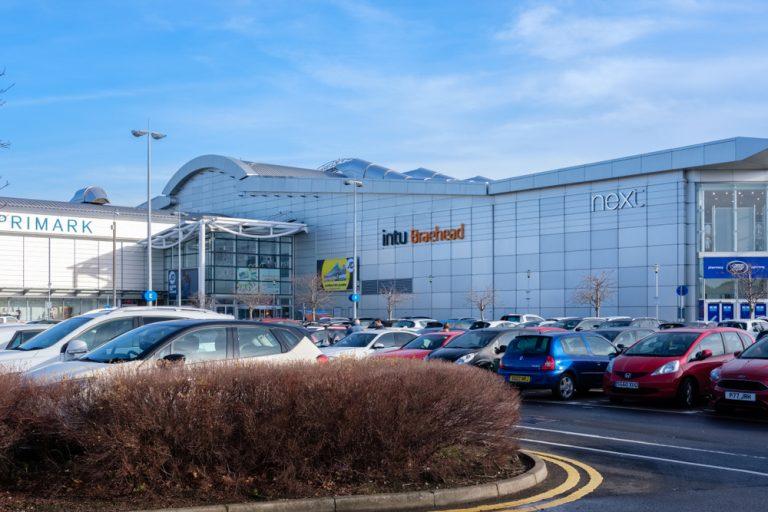
Shopping centre landlord Intu (LON:INTU) saw its shares go into free-fall as it announced on Friday that it had put KPMG administrators on standby. It follows the company’s failure to reach a ‘standstill’ agreement with its lenders, which it had hoped to have achieved by Wednesday.
The company operates 17 major shopping centres around the UK – including the Trafford Centre in Manchester, the Lakeside complex in Essex, and Braehead in Glasgow – but sees itself at risk of losing parts of its portfolio in something of a perfect storm.
The company has accrued £4.5 billion of debt from its lenders, and has struggled to pay off that sum, let alone the backlog of interest payments. The ‘standstill’ agreement would have seen these interest payments temporarily halted, however the proposal of such an agreement was denied by the lenders.
The impact of Coronavirus, though very real in its effects, should not be seen as the catalyst of the group’s current woes. The declining popularity of high street shopping – or at least the shift in market share to online transactions – has been on ongoing trend. While the effects of Coronavirus have not only sped up this process, but nullified high streets, the rejection of the ‘standstill’ agreement by lenders would suggest that they think the decline of shopping centres will be less of a temporary hold-up, and more of a perpetual trend.
As retail expert Katie Hardcastle told BBC Breakfast, Intu’s debt isn’t proportional to their portfolio’s potential returns. The value they have put into their estate simply won’t be reciprocated, as shopping centres continue to lose value.
Shopping centres, “just aren’t worth the value they once were”, said Harcastle.
That being said, another very real impact of Coronavirus has been a loss on rent payments. While only a handful of essential shops were allowed to remain open, the majority of its estate saw rent freezes for outlets such as Topshop and Debenhams. In March, the company received only 29% of its anticipated rent revenue, as most companies opted for payment holidays to withstand the effects of lockdown.
The likelihood of administration proceedings also puts an estimated 132,000 jobs at risk, including 3,000 in-house workers and thousands more hired by shopping centre tenants. Intu warned that administration could see entire sites close, though until proceedings begin, it is expected that centres will remain open.
The full list of at-risk shopping centre sites include:
- intu Braehead Glasgow
- intu Broadmarsh, Nottingham
- intu Chapelfield, Norwich
- intu Derby
- intu Eldon Square, Newcastle
- intu Lakeside, Essex
- intu Merry Hill, West Midlands
- intu Metrocentre, Gateshead
- intu Milton Keynes
- intu Potteries, Stoke on Trent
- intu Trafford Centre, Manchester
- intu Uxbridge
- intu Victoria Centre, Nottingham
- intu Watford
- Manchester Arndale
- St David’s, Cardiff
- The Mall, Cribbs Causeway
Responding to Intu and the plight of shopping centres
Discussing Friday’s announcement and the challenges high street shopping will face going forwards, Adrian Palmer, professor at Henley Business School, commented: “Intu’s troubles are indicative of problems affecting the retail property sector which has been having a bad time during the COVID-19 pandemic. Similar to other troubled sectors, many of its current problems were firmly trending before the pandemic.” “It is not just High Streets that have been suffering, but the owners of the biggest out-of-town shopping centres have seen the value of their property valuations and share prices tumble. The share price of Intu, has fallen by nearly 90% in the past year,” Palmer added. “COVID-19 exacerbated cash-flow problems for retailers of non-essential products whose store-based sales came almost to a halt, while they still had to pay for arriving stock. Consequently, the process of retailers closing stores and setting up CVAs has accelerated. To make matters worse for retail property companies’ cash flow, the number of retailers deferring payment of their quarterly rent rose sharply.”Investor insights
Following the update, the company’s shares fell 54.96% or 2.15p, to 1.76p per share 26/06/20 13:06 BST. This is below the company’s consensus target share price of 5.00p per share, and far below the 34.00p share price seen in December 2019. The majority of brokers hold either a ‘Sell’ or ‘Strong Sell’ stance on the company’s stock. The group’s p/e ratio is 13.03, its dividend yield stands at 256.27%.Tesco books 8% sales growth as Coronavirus leads online shopping boom
British supermarket chain Tesco plc (LON:TSCO) announced on Friday that it had booked impressive first quarter financials, led by significant growth in online activity and deliveries.
The company said that first quarter sales rose 8.2% across the UK and Ireland, and up 7.9% across all of its operations, up to £13.38 million. It added that food sales had increased by 12%, while its clothing sales dropped by a fifth.
The real headline, though, was the progress made by its online business and deliveries services. Its UK sales saw the most modest increase, up 48.5% during the quarter and 90% during May. Meanwhile in the Republic of Ireland, the company saw online sales rise 50.9% across the quarter, and in Central Europe, online sales spiked by a notable 106.3% across the first quarter.
The latter figure, however, shows that the transitions to online shopping have been far from plain sailing. While online sales in Central Europe bounced over 100%, total sales were only up by 3.9% during the quarter, which would suggest that other areas of the businesses regressed heavily as online sales grew.
One sector of its business which faced challenges was its banking arm, as stated by Edison Group Research Director, Neil Shah,
Further, Tesco Chief Executive, David Lewis, admitted that the cost of adapting to new ways of life had borne a “very significant” cost. Between 47,000 staff needed to cope with increased demand, safety measures and sick pay, the cost of adaptation was toward the company’s upper expectations, at £920 million.
“On the banking side however, the company’s results weren’t as positive, announcing they had increased its position for bad debts at Tesco Bank, and now expect a loss of around £200m.”
The challenges posed by a transition to more online shopping, have nonetheless proven fruitful for Tesco. During the quarter, the company’s delivery slot capacity more than doubled from 600,000 to 1.3 million per week. It added that 590,000 vulnerable customers had added to its customer base, and its online shopping now accounts for 16% of its total supermarket sales, up from 9%. Tesco said it expected to see its full-year online sales bounce from £3.3 million, to £5.5 billion, year-on-year.
Tesco response to strong sales
In a mixed but ultimately positive set of quarterly results, soon-outgoing Chief Executive David Lewis stated:“Through a very challenging period for everyone, Tesco colleagues have gone above and beyond, and I’m extremely proud of what they’ve achieved. Their selfless efforts, combined with our embedded strategic advantages in stores and online, have helped to ensure that everyone can get the food they need in a safe environment.”
“In just five weeks, we doubled our online capacity to help support our most vulnerable customers and transformed our stores with extensive social distancing measures so that everyone who was able to shop in store could do so safely.”
“The costs of doing this have been significant and only partly offset by business rates relief and increased volume. We see the balance as an investment in supporting our customers at a time when they need it most.”
Investor insights
Following the update, Tesco shares rallied 0.98% or 2.21p, to 228.61p per share 26/06/20 12:08 BST. This is comfortably below the company’s consensus target share price of 280.00p, with the majority of brokers opting for a ‘Buy’ rating on the stock. The company’s p/e ratio is 12.34, its dividend yield stands at 4.00%. Friday’s update is certainly a positive one, however Neil Shah still questions whether Tesco is a safe bet for wary investors:“Investors will have clearly noted the improvement in recent results, and considering their relevance during these uncertain times, could start looking at the retailer as a defensive stock. However, investors should keep a close eye on the company, since the group operates in a crowded market with retailers Aldi and Lidl continuing to gain market share and current results might not be replicated when the UK is lifted from lockdown.”
It should be noted, though, that Tesco’s loss of market share has slowed down since it committed to price-matching with its German competitor, Aldi.