FTSE 100 rebounds from worst day in over 30 years

The FTSE 100 has rallied to provide mild positivity at the end of one the of worst weeks in the indices’ history. London’s leading the index had a strong start to the day, rebounding from the worst day since Black Monday in 1987 and reacting to cues from Asian easing overnight. “Having suffered its worst day of trading in more than 30 years the FTSE 100 at least started Friday 13th in positive territory,” said AJ Bell investment director Russ Mould. The FTSE 100 closed up 2.4% or 128 points in what was a volatility session with the market making wild swings that saw the market up over 450 points before giving up nearly all the gains by the close of play. News that the US would declare a state of emergency sucked the optimism out of markets after central banks had sparked a rally by unveiling a raft of monetary policy easing measures. China cut the amount of capital banks had to keep in reserve which would flood the economy with an additional $79 billion while Australia said it planned to pump $17 billion into the economy. There were also hopes of further easing from the US who are set to make a decision on rates next week having already made a 50 bps rate cut. There has been a wave of easing by central bank action in the last week to soften the blow of coronavirus, including a emergency cut by the Bank of England. However, some may label today’s rally a ‘dead cat bounce’ that fools investors into thinking the selloff is over. Shares were in heavily oversold territory today and were due a rebound but the economic impact of COVID-19 is still to be properly accessed and many analysts see sharp declines in corporate earnings. This may have already been priced into markets and due to the clear path to recovery when infection subside, there is a strong chance of a V-shaped recovery in markets and the economy as activity picks up. The FTSE 100 closed at 5,366 having given up more than 1,000 points in the last week.  

Trackwise deal increases production capacity

Trackwise Designs (LON: TWD) is using the relative strength of its share price to acquire a business that will enable it to increase its production capacity.
The share price of the AIM-quoted flexible pcb manufacturer has fallen from 94.5p to 82.5p since the end of February, but it remains just below the level at which it started the year.
The purchase of Stevenage Circuits for up to £2.457m is accompanies by a £5.87m fundraising at 80p a share. The rest of the cash will go towards increasing capacity and further development of technology.
Stevenage
Stevenage manufactures short flex and rigid...

Coronavirus crash continues: FTSE books worst session since 1987

Buckle up! Normally we dole out quaint titles like ‘Black Monday’ to mark the pinnacle of a market peak or trough, before some sort of consolidation. Well, in that case, we’ve thrown out convention. Thursday marked the most drastic losses for the FTSE since 1987, bringing it down 9.3%. The index now clings on for dear life at 5,300 points, a level last seen in mid-2012. Some 2,000 points shy of its February highs, the index has been crippled by a complete collapse of consumer interest in non-essential items, and a capitulation of its commodities equities such as Tullow Oil (LON:TLW), which booked a $1.7 billion full-year loss. The shocking start to the session was only compounded by the US open, whose equally brutal start was led by maniacal Trump’s Europe travel ban.

As the ECB extended its programme of QE and dug itself deeper into its monetary hole, investors desperately searched for any safe haven willing to offer them shelter, with many opting for the ‘ ‘good ol’ reliable’ dollar.

Speaking on the Coronavirus led collapse of equities and quivering investor sentiment, Spreadex Financial Analyst Connor Campbell stated,

“The Dow Jones, already down close to 1500 points on Wednesday night, shed 1850 points as the bell rang on Wall Street, tanking all the way to 21700. This following Donald Trump’s bungled, widely derided and potentially economically catastrophic decision to ban travel from the 26 states that make up Europe’s Schengen Area.”

“The ECB’s stimulus package seemingly only made matters worse. Withstanding the pressure to cut rates to a fresh record low, the central bank announced an €120 billion expansion to its ongoing quantitative easing program, alongside new longer-term refinancing operations and cheap loans for banks to encourage lending to ’those affected most by the spread of the coronavirus’.”

“Firmly on the leash of the US indices, the European markets practically doubled their losses once trading got underway across the pond – and when you’re already down as much as 5% that takes you into pretty scary territory.”

“The CAC shed 10.2% as it tumbled to 4130, while the DAX plunged almost 1000 points to sink towards 9400, leaving it 4400 points off the all-time high struck exactly 3-weeks ago.”

“Trying to find something worth buying, investors seemingly settled on the dollar. This left cable down 1.6%, forcing it back to a 5-month low $1.2607. Against the euro, meanwhile, the greenback rose 1.2%, forcing the single currency to a 10-day nadir of €1.1135.”

Boris & Sunak big-spend budget: 3 missed opportunities

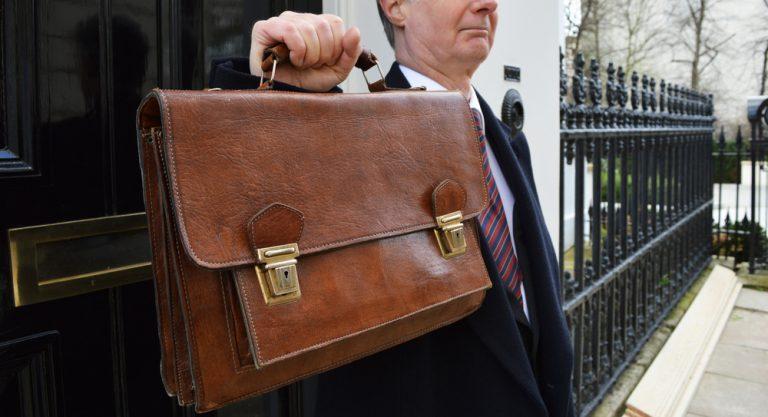
Few would venture to deny the momentous nature of the new government’s maiden budget. Boris Johnson and Rishi Sunak employed an undeniably Keynesian approach to spending, with handouts to increase business cash flows and infrastructure investment emblematic of an ambitious vision for the future. Some questions that we need to ask ourselves now: is this the end of the monetarist era of tight spending and fiscal retrenchment? With plans to take back some economic control from market forces, and to ‘rearrange the economic geography’ of the UK, will this Conservative budget incur an identity crisis within the Labour party? To the latter, the answer doesn’t necessarily have to be a ‘yes’. Though promises were kept on infrastructure spending, Coronavirus received the requisite attention and there was sufficient virtue signalling towards hot topics such as the NHS, there were certainly a number of notable omissions. In a somewhat shaky performance on the Andrew Neil show, John McDonnell pointed to the social care crisis and climate change as major issues which had been snubbed by the Boris-Sunak budget. Others also criticised the unsophisticated handling of business rates, as well as unsuitably low sick pay for workers told to self-isolate, and perhaps most notably, a backtrack on Boris’s 2016 promise to pump an additional £350 million into the NHS every week. So, while Labour may opt to stand firm on some of the territory it now shares with the Johnson agenda, there are certainly openings for it to set itself apart. What I found most interesting, though, is that in a budget designed to invest big in the Britain of tomorrow, there were a few missed chances to lay good foundations for the future.

The rainy-day-funds quid quo pro

First, there was a chance to encourage more prudent business practices. Though the government should be praised for targeting emergency relief towards SMEs affected by the Coronavirus, we should lament the missed opportunity to table a quid quo pro. After public money was used to bail out businesses in 2008, and with a similar – smaller scale – approach being employed in Wednesday’s budget, these handouts to companies should come with some form of conditionality, based on better planning for future crises. If the government hands out free money to companies, we should regard this as money taken away from public services. As such, we should demand something in return for this short-term support. Appreciating of course that market liquidity is essential for a healthy economy (and in turn that bailouts are sometimes necessary), something that could be imposed is a system which places some percentage of a company’s earnings into a rainy day fund, to be deployed as and when necessary.

More stringent duties on overseas buyers

Second, the budget announced a new stamp duty surcharge for foreign buyers of properties in England and Ireland, levied at 2% from 2021. This policy is well overdue. While the SNP has quite rightly led the way in imposing more stringent controls on overseas buy-ups, the rest of the UK has lagged behind. The effects this has had include; vast appreciations in property prices in urban areas, over the past two decades; the supply of new properties being well outstripped by demand; and an increasing number of empty properties, as overseas investors take advantage of the UK’s unregulated market, and tuck their money away in an asset which is likely to grow in value. In short, the pernicious growth of property ownership by overseas investors has made urban properties inaccessible to most UK citizens, so Wednesday’s policy indicates a sentiment that moves toward the direction – to discourage foreign ownership of British assets. The problem, I think, is that it doesn’t go far enough. To revive communities, and create realistic aspirations of property ownership within an engaged and aspirational populace, the government needs to do more to keep property in the hands of UK residents, and away from overseas oligarchs. As such, I think an opportunity was missed to more substantively reverse the tide of foreign ownership. In particular, a more effective levy on overseas investors would have gone hand-in-hand with the new points-based immigration system – but instead, the impression Wednesday’s policy gives is that overseas elites will still get a free pass.

Renewable energy: many birds, one stone

Once again looking to Scotland – in 2018 renewables made up some 74% of the country’s demand for electricity, and by the end of 2020 it hopes to be 100% dependent on renewables for its supply of electricity. Beyond that, Scotland sells its power to other countries and will be soon be able to challenge companies such as E.ON (ETR:EOAN) within its borders, by offering lower and less volatile energy prices. While signing off a budget that increases spending by over £90 billion, it seems odd that Boris’s coterie overlooked such a prime opportunity that would’ve ticked so many boxes. First, of course a commitment to expanding the government’s commitment to renewable energy would’ve turned down the volume on Boris’s Green critics, who were out in full force on Wednesday. Despite a decent set of offerings by way of carbon levies etc, I think a morbid reality hit home for many – if there was ever a likely moment for a government to spend big on renewable infrastructure, it was this budget. Perhaps their moment has passed, for the foreseeable future. With that realisation, we can also assume the UK won’t be at the forefront of any climate change prevention initiatives for the next 5 years, at least. Second, we are in the midst of a Russia-OPEC conflict which reminds us of the volatility of oil prices. Similarly, Vladimir Putin’s willingness to strangle our gas supply should be fresh in the memories of many. What renewables would offer, by contrast, is a means of achieving greater energy autonomy. With all this talk of taking back sovereignty with Brexit, perhaps we should opt for less bluster and more action. If we’re serious about taking back control, we should be in charge of our energy supplies. Third, it just makes sense, financially. There is the point made by the Scottish government that we can more effectively control energy prices if we resort to renewables (and use storage batteries to stow away energy during periods of surplus), which would have a positive knock-on effect for consumers. Similarly, as renewables gain scale, the cost of implementing new infrastructure falls, and correspondingly, the cost of the product it produces will also fall. Additionally, and stealing a thought from the eminent economist Paul Collier – we could establish a renewables fund. Countless asset management companies have moved into the renewables space with some success over the course of the last decade, so why should we leave that prosperity to the private sector alone? It makes sense, surely, to emulate some of the success stories and implement a commercial renewable infrastructure fund structure that makes healthy returns for the public purse. As stated by Collier in ‘The Plundered Planet’ countries should capture some share of resource revenues to spend on the development of other industries. While his analysis focuses on finite natural resources, I don’t see why we couldn’t use the profits from renewable infrastructure to power other parts of public life.

So, was it all bad?

Not at all. I was pleasantly surprised by Wednesday’s budget, and for many I think it will be the winning ticket. The policy proposals I offered above would probably be seen by some as uncomfortably innovative or radical, and that’s precisely why I’m disappointed such ideas weren’t seen in the budget. It was a rare glimpse of the politics of aspiration, one of belief in the future and the potential of a country to thrive. It certainly wasn’t a perfect budget, but its message was one of hope and the sense of anticipation it created was sorely needed in a society so mired by division and pessimism. Regarding Labour’s future, short of major reinvention or some masterstroke of narrative creation, Rishi Sunak may have sounded the death knell for the party for the next few years. Wednesday’s budget went down a treat with many, and could mean team Boris are here to stay.  

Computacenter see strong 2019 as revenues and profits grow

0
Computacenter PLC (LON:CCC) have dipped following a trading update published today. Shares in Computacenter trade at 1,388p (-5.06%). 12/3/20 16:44BST. Mike Norris, Chief Executive of Computacenter plc, commented: ‘As we stated back in January, the results for 2019 set a high bar for the business in 2020. It is too early to predict the outcome for the year as a whole and there is still much work to be done, particularly as we have not yet completed our first quarter. Our Services pipeline is the strongest we have seen for some time in both Professional and Managed Services. While we still believe customers will continue to invest in product, particularly in the areas of Security, Networking and Cloud, it may well be difficult to achieve the same growth rates we have seen in recent years. Our current focus is on maintaining continuity for our customers for the services and products we supply as well as doing whatever we can to protect the health of our employees, customers and the wider community.’ Across 2019, the firm reported that revenue had risen by 16% to £5.05 billion – which the firm said was largely down to new acquisitions and merger deals. Notably, Computacenter also noted that pretax profit surged 30% to £141 million – while the adjusted pretax profit figure was 24% higher at £146.3 million. The firm added that its’ performance in France was particularly strong. In this sector, revenue growth of 16% was recorded totaling €644.9 million. Germany also performed strongly – seeing revenue growth of 5.2% to €2.23 billion. Looking at UK performance – this market saw revenue fall 1.8% to £1.58 billion, whilst revenue in America surged to $986.6 million due to an acquisition at the end of 2018. The firm also said that trading going forward will be more tough, with the recent outbreak of the coronavirus. Computacenter commented: ‘The current COVID-19 outbreak makes forecasting the future even more challenging. In the short term, we are urgently supporting our customers focused on their business continuity plans which involves the need for a greater degree of remote working. We have seen a surge in demand for laptop computers for this purpose. To-date, supply constraints from our Technology Providers have been minimal, although there are some concerns going forward. We do however have some concerns that in the medium-term, customers may postpone significant IT infrastructure projects while the current uncertainty remains’.

Third quarter shows strong gains for Computacenter

In October, the firm saw its’ shares in green following a confident third quarter update. The FTSE 250 listed firm said that their outlook remains in line with its existing expectations, which were upgraded back in July. “While the fourth quarter is always the most critical to the year’s performance, the board’s confidence with its current expectations continues to strengthen as we progress through the year.” Additionally, the group saw ‘pleasing’ revenue growth over the comparative quarter within technology sourcing in the UK. In Germany and Europe, it continued to perform strongly throughout the quarter, with shortfalls from its international sector customers significantly exceeded by increases from the public sector, it said. Following the challenging first-half comparison, the group has, as expected, comfortably beaten its prior year third quarter comparative with the positive momentum seen in the first six months of the year continuing throughout the quarter,” the company said.

Expectations pay off

A few weeks on, the firm once again saw their shares in green as they remained confident to deliver a strong set of full year results. Profitability and earnings per share are on track to beat full year expectations, the IT supplier said, which spiked shares. “The strong 2019 performance is coming from Computacenter’s established businesses and, in the second half of the year, from the acquired business in the US which is now performing in line with our expectations following a difficult start to the year,” the board said. The firm said that it has not suffered a blow from existing difficult contracts, that bruised performance in the second half of 2018. “The group has not seen a repeat of the negative impact that occurred in the second half of 2018 due to contract provisions and these existing difficult contracts continue to perform in line with, or slightly ahead of, our expectations,” said Computacenter. In fact, they “continue to perform in line with, or slightly ahead of our expectations”, the company said. “Computacenter’s board acknowledge, as is the case every year, that there is still a significant amount to do in December, which is always our busiest month of the year,” it added. The cyber security firm said revenue rose 9% year on year for the quarter ending in September. Revenues were totaled at £170 million.

Tullow Oil swing to $1.7 billion loss in 2019

0
Shares in Tullow Oil plc (LON:TLW) have nosedived on Thursday afternoon as the firm revealed that it had swung to a loss across 2019. Tullow Oil have seen a tough few weeks of trading, and the share price has seen a downward trend. The firm revealed today that following the publishing of their annual results – it will cut the size of its’ workforce by over a third. The oil and gas exploration firm reported a $1.7 billion pretax loss in 2019 – which showed a massive slump from the $85 million profit figure recorded in 2018. Notably, turbulence in the macroeconomic environment and volatile oil prices saw their free cash flow fall 13% to $355 million in 2019 from $411 in 2018. Notably, Tullow added that their cash flow may only reach between $50m to $75m this year based on an oil price of $50 per barrel. Total revenue figures also took a bruising, as this fell from $1.8 billion to $1.6 billion over the same period – representing a fall of almost 10%. Net debt did reduce on a better note from $3 billion to $2.8 billion – however the firm have suspended their $100m dividend. Production figures also fell by 3.6% – with the 2019 average totaling 86,800 barrels of oil per day equivalent. Notably, Tullow were also relegated from the FTSE 250 following a tough few months for the firm. Dorothy Thompson, Executive Chair, Tullow Oil plc, commented today: “This has been an intense period for Tullow as we have worked hard on a thorough review of the business which has led to clear conclusions and decisive actions. We are focused on delivering reliable production, lowering our cost base and managing our portfolio to reduce our debt and strengthen our balance sheet. Even with recent events in oil markets, Tullow’s assets remain robust: we are a low-cost African oil producer, with a strong hedging position, substantial reserves that underpin our business and a high potential exploration portfolio.”

Tullow’s shares crash in November

In November, the firm saw their shares crash following a warning on their 2019 production figures. During 2019, London-based oil producer Tullow sees production averaging 87,000 barrels of oil per day, but 2019 guidance was in November. In July, Tullow had warned production was likely to be between 89,000 barrels and 93,000 barrels, lower than the 90,000 barrels to 98,000 barrels initially guided, which caused shares to dive.

Chief Executive departs

A few weeks on, the Chief Executive of the firm announced that he would be departing. Pat McDade, along with exploration director Angus McCoss, said they had quit the firm. The board said it was “disappointed by the performance of Tullow’s business”. Tullow Oil saw more than £1.05 billion wiped off their market value at 9am this morning, which left the company only valued at £801.7 million. The firm has suspended its dividend to shareholders, and “now needs time to complete its thorough review of operations”. The company said it expects full-year net production to average around 87,000 barrels of oil per day, reiterating its guidance from Novembers’ trading statement. However, Tullow said that after a review of “production performance issues” this year, and the impact this could have on its fields’ performance in the coming years, it had changed its guidance. Next year’s production is predicted to average between 70,000 and 80,000 barrels of oil per day (bopd), while over the next three years it expects an average of 70,000 bopd, which may leave a bitter sweet taste in the mouths of shareholders. Tullow said it had picked out “a number of factors” that have caused the reduction in guidance. Shares in Tullow Oil trade at 12p (-30.22%). 12/3/20 16:39BST.

Intu struggle across 2019, as annual revenues slip by £38 million

0
Intu Properties (LON:INTU) have seen their shares slump on Thursday afternoon on the back of the releasing of their annual results. “Our results are evidence of the challenges in our market, in particular structural changes ongoing in the retail sector, with some weaker retailers struggling to remain relevant in a multichannel environment. This has led to a higher level of administrations and CVAs and has been exacerbated by the continued weak consumer confidence from the political and economic uncertainty in the UK. The impact of this can be seen in the reduction in revenue. Like-for-like net rental income reduced by 9.1 per cent in 2019, with over half the change coming from CVA and administration processes which were predominantly agreed in the first half of the year. This has also impacted the investment market where 2019 saw the lowest level of shopping centre transactions since 1993. This weak sentiment has weighed heavily on valuations. We have seen reductions in the year of 23 per cent and around 33 per cent from the peak in December 2017. This property valuation deficit was the main contributor to the £2.0 billion loss for 2019”. Looking at the figures, Intu reported 2019 revenue to be £542.3 million, which sees a £38 million decline on the 2018 figure of £581.1 million. On a worrying note for shareholders, the firm reported that their loss had massively widened from £1.173 billion to £2.021 billion – and the firm alluded this to further property revolution deficit and a change in the value of financial instruments. Net rental income also fell by £48.9 million from £450.5 million to £401.6 million – and a like for like reduction of 9.1% which was driven by impact of administrations and CVAs. Intu also told the market that they had seen an impact disposals of £10.5 million, with the main contributor being Intu Derby. Underlying earnings fell by £65.9 million from £193.1 million to £127.2 million. The Chief Executive commented: “In addition to having been a challenging year, 2019 has been a year of change for intu. I took over as Chief Executive in April and in the summer I introduced our five-year strategy. With the pace of change accelerating in our sector, radical transformation was required, so we carried out a comprehensive review of the business and tested our findings to develop the strategy. Our review of the business looked at the risks and opportunities of the evolving retail market, and along with an assessment of our underlying strengths, helped formulate our strategy for the next five years. This will reshape the business by way of four strategic objectives, detailed below. I am pleased to say we have already taken steps to deliver this strategy. However, there are challenges. In the year, we made a loss of £2.0 billion, predominantly due to a property value deficit of 23 per cent, which is now 33 per cent down from the peak in December 2017. This results in our debt to assets ratio increasing to 65 per cent (adjusted for the Spanish disposals), highlighting the importance of fixing the balance sheet in our strategy. Although we were unable to proceed with an equity raise, we have a range of options including alternative capital structures and asset disposals”. Going forward the firm note the they expect like for like net rental income to be down, and the current coronavirus situation is rapidly evolving. The firm concluded by saying: “We are focusing all our energies on moving the business forward. We own many of the best shopping centre locations in the UK, with dedicated staff looking after our visitors who are coming to our centres in the same numbers and like intu more than ever. In a world where it is harder for retailers to increase profits, our centres offer them the best opportunity and many, such as Next, Primark and JD Sports, are thriving. But we cannot stand still, and as we have always done, we will focus on placemaking, curating our space to ensure it remains the place visitors love to be”. Intu shares trade at 5p (-9.65%). 12/3/20 12:49BST.

Cineworld shares crash 44% as 2019 profits suffer

1
Cineworld Group plc (LON:CINE) shares have descended into free fall on Thursday, as the firm gave shareholders a disappointing update. Shares in Cineworld trade at 49p (-44.13%). 12/3/20 11:41BST. The firm noted that it had successfully launched its’ Unlimited Program in the US – which had generated positive impact on cash flow, market share and box office performance. On a better note, Cineworld said that they managed to reduce their net debt to $3.5 billion from $3.7 billion at 31 December 2018. The firm also reported that group revenue had reached $4.3 billion, which was softer as expected compared to 2018. Admissions slipped from 275 million to 308.4 million – which will worry shareholders. Adjusted EBITDA also fell to $1.03 billion from, $1.07 billion – representing a 3.7% drop. Profit before tax was recorded at $432.6 million, whilst adjusted profit before tax was $474.5 million. Cineworld noted that revenue decreased by 6.2% on a pro-forma basis from 2018 – the firm alluded this to ‘strong comparative film slate and closure of loss making sites in the US’. On a better note, Rest of the World constant currency revenue rose 10% whilst UK & Ireland constant currency revenue decreased 2.7%. Anthony Bloom, Chairman of Cineworld Group plc, said: “2019 was a solid year for Cineworld, a year in which over 275 million customers watched movies on our screens, adjusted EBITDA exceeded a billion dollars, the synergy expectations in the Regal acquisition were virtually doubled in a well handled integration exercise, net debt was reduced and the dividend increased. I consider that to be a successful year. In the future, the Group will be well positioned to capitalise on our scale as the second largest cinema chain in the world, our deep experience and wide geographic diversification. It is thus ironic that these achievements should be overshadowed by the negative impact of the global COVID-19 crisis, even though that at the time of writing the Group’s operations have not been affected to a material degree. I am of course conscious of the possibility that events could develop adversely very quickly and change this position in the short term, but I remain confident that the crisis will ultimately pass and that the cinema exhibition industry will continue to play a major role in providing fun, laughter, happiness and joy to millions of dedicated movie fans, just as it has for over a century”. Going forward the firm said that it is expecting solid box office performance year to date with compelling film slate scheduled for 2020. CIneworld have not fully assessed the impact of the coronavirus, however the firm have said that they are taking measure to ensure they prepare business for all possibilities. Mooky Greidinger, Chief Executive Officer of Cineworld Group plc, said: “Cineworld has delivered a solid set of full year 2019 results despite 2018 being a very strong comparative period. In particular, I am proud of our integration with Regal which continues to progress well. The refurbishment plan is on track, our “Unlimited” subscription plan was successfully launched in July 2019, we’ve upgraded our synergy target to $190 million from $100 million and Union Square in New York is due to open in the coming weeks. This gives us confidence in our ability to achieve our synergy target for the proposed transaction with Cineplex Inc, which we expect to complete in the first half of this year having received overwhelming universal support from shareholders. We remain committed to our long-term strategy and vision to be “The Best Place to Watch a Movie”. Throughout our global estate, our cinemas offer cutting edge formats and technologies, such as ScreenX and 4DX; products from the likes of Starbucks and PepsiCo that are favoured by consumers; and staff that are amongst the most experienced and loyal in the industry. Our strong cash generation also allows us to focus on deleveraging whilst delivering returns to shareholders. We are closely monitoring the evolution of COVID-19 and so far, we have seen minimal impact on our business. However, there can be no certainty on its future impact on our activities, hence we are taking measures to ensure that we are prepared for all possible eventualities”.

Cineworld announce Canadian acquisition

Just before Christmas, Cineworld announced that they had made a new acquisition. The firm said that it had agreed to buy Cineplex Inc (TSE: CGX), the largest cinema operator in Canada, for CAD2.8 billion. The FTSE 250 said that the deal was supported unanimously by its board, but remains subject to Cineworld and Cineplex shareholder approvals and various regulatory consents. Cineworld believes the deal represents an “exciting” opportunity to enter the “stable and attractive” Canadian market. The transaction will add 165 cinemas and 1,695 screens to Cineworld, it said.

Galliford Try successfully dispose of Linden Homes but H1 revenues fall

1
Galliford Try plc (LON:GFRD) have seen their shares in red as the firm published its’ half year results this morning. The firm said that it had successfully disposed of its’ Linden Homes and Partnerships division – which was completed on January 3. Looking at the figures for Galliford Try – the firm said that its’ revenues had fallen across the first half of 2020 from £728 million to £636 million. Additionally, the firm noted that it had swung to a loss of £6.7 million in the half period from a profit of £2.9 million in 2019. The firms’ order book remained flat – totaling £3.2 billion across both periods. Bill Hocking, Chief Executive, commented: “This has been a period of significant change with the successful strategic disposal of the Group’s housebuilding divisions transforming Galliford Try into a well-capitalised, UK construction-focused business. The restructured Group is performing well with a number of recent significant project wins, and I’m pleased to report the results for the first half of the year. Galliford Try has continued to maintain a strong pipeline of work in its chosen sectors, with excellent positions on several key frameworks in the public and regulated sectors. We are encouraged by the demand in our sectors and look to further enhance this position through the continued disciplined approach to project selection and rigorous risk management. The Group’s focus remains on safe and efficient project delivery and disciplined bottom line growth. We have a strong executive board and management team who are focused on a values-driven, people-orientated, progressive company, working together to deliver for our clients and stakeholders. I am confident that our clear strategy will deliver sustainable results.” Going forward, Galliford Try have said that they intend to maintain a high quality order book. In their current financial year, 96% of projected revenue is secured and 72% secured for the next financial year. The firm also noted that it is wary and assessing the current situation with the coronavirus outbreak, and is taking measures to mitigate harm. Galliford Try declared an interim dividend of 1.0p per share which will be paid on 17 April 2020.

Galliford Try agree deal with Bovis Homes

In November, the firm told the market that it had agreed a substantial home building deal, for Bovis Homes (LON:BVS) to takeover two Galliford housebuilding business units. The deal was valued at £1.4 billion, and the firm said that this deal was close to being completed today. The agreement comes after Galliford rejected a £1.05 billion bid from rival Bovis for its Linden Homes and Partnerships & Regeneration businesses back in May. In September the two confirmed they had resumed talks. Bovis was to issue shares worth £675 million and pay £300 million in cash, combined with £100 million of Galliford debt. The two firms announced that the terms from the September agreement were unchanged, and will see will see Bovis issue 63.8 million new shares to Galliford, valued at £675 million, pay £300 million in cash, and take over Galliford’s £100 million debt. The transaction values the two Galliford businesses at a combined £1.14 billion, and gives Galliford a 29% stake in the expanded Bovis group. It leaves Galliford with its’ construction business intact. Shares in Galliford Try trade at 123p (-12.66%). 12/3/20 11:22BST.

Go-Ahead shares dive 20% as first half challenges take a toll

0
Go-Ahead Group plc (LON:GOG) shares have dived on Thursday, as the firm updated the market with its’ interim results. David Brown, Group Chief Executive, commented: “Our London & International bus business is performing well and in line with expectations for the full year, while our expectations for our regional bus business have slightly reduced, reflecting cost pressures and adverse weather on passenger travel. “In rail, while we await the outcome of the Williams review, our current UK operations are performing well and we are in the final stages of discussions with the Department for Transport regarding a potential direct award contract for Southeastern. The stronger than expected UK rail performance has offset the impact of operational challenges in the first six months of running our German rail contracts. We began running rail services in Norway in December and are delivering high levels of operational performance. “In the second half of the year our focus will be on continued management of our regional bus cost base, integrating new contracts and recent acquisitions, and improving our German rail operations.” The travel operating firm noted that group operating profit within the first half was £60 million, this sees a slight fall from the same figure one year ago of £54.5 million. As a results, Go-Ahead have added that their full year expectations have reduced, which reflects cost pressures and adverser weather in regional bus travel routes. The firm added that bus operating profit fell 3.4% to £45.3 million, again this saw a fall from £46.9 million in the first half of financial 19. On a better note, Go-Ahead said that strong performance in London and International Divisions mitigated the weaker regional performance. Looking at rail operating profit, this figure totaled at £14.7 million – seeing another drop from £17.6 million on a like for like basis. The firm maintained its’ interim dividend at 30.17p which should give some consistency for shareholders – despite the disappointing update. The firm also noted that the impact of the coronavirus is yet to be fully assessed, however ‘travel patterns are likely to be impacted in the second half of the year’. Brown concluded by adding: “While it is unclear how the coronavirus situation will evolve in the coming weeks, travel patterns are likely to be impacted in the second half of the year. “I’m pleased with the progress we’re making towards our vision of a world where every journey is taken care of, with industry leading customer satisfaction scores in regional bus of 92% and our improving scores of 82% and 81% in GTR and Southeastern respectively. We’re also helping drive up customer satisfaction and performance in bus markets in Singapore and Ireland where tendering authorities have opened up to commercial operators. “We have long been campaigning for a national bus strategy to maximise the benefits that buses bring to local communities and society as a whole. I’m pleased with the Government’s decision to move forward with such a strategy and its commitment to invest £5bn in bus and cycle networks in the coming years. This commitment recognises the part public transport can play in protecting our environment, supporting our communities, improving our health and wellbeing, and growing our economy.” Shares in Go-Ahead trade at 1,313p (-21.94%). 12/3/20 10:53BST.