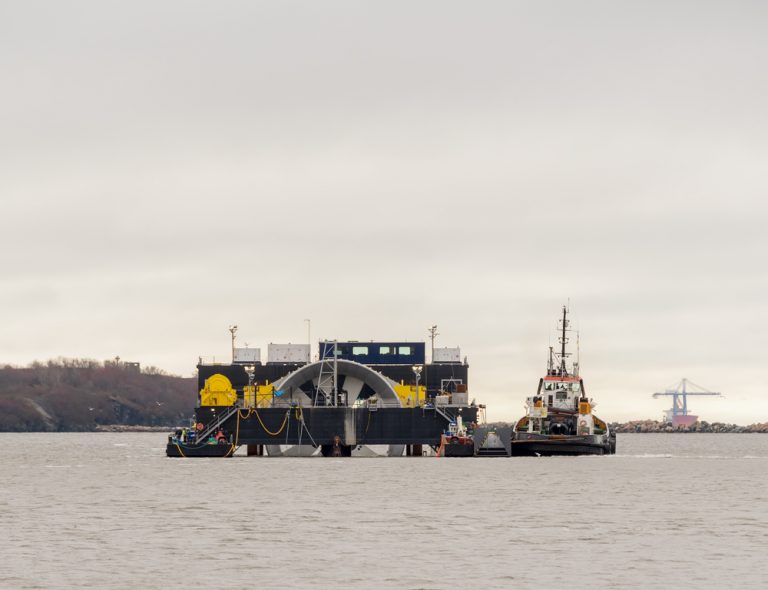
SIMEC Atlantis soars with acquisition and contracts

Vertically integrated turbine supplier and tidal power project operator SIMEC Atlantis Energy (LON: SAE) saw its share price rocket on Thursday, following a series a series of promising operational updates. Elsewhere in the sector, there have been developments and operational progress from SIMEC’s counterparts. JLEN (LON: JLEN) continues to gain momentum, Active Energy Group (LON: AEG) an acquisition in North Carolina, Velocys PLC (LON: VLS) commercialised alternative fuels and AFC Energy plc (LON: AFC) developed a hydro-electric vehicle charger.

Highland Green Renewables acquisition

This morning, SIMEC Atlantis began the day by announcing its acquisition of Highland Green Renewables, from SIMEC Energy. HGR has consented over 65 hydro schemes, built more than 45 hydro schemes and provides operation and maintenance services to more than 45 UK hydro schemes. The Company was acquired by SIMEC Atlantis for a nominal fee of £1.00. It will continue its regular operations, while its senior management team will be integrated into the Atlantis senior management team, and will provide the Company with “immediate, positive cash flow”. Commenting on the acquisition, Atlantis CEO Tim Cornelius,

“We are delighted to welcome the GHR team to Atlantis. We are building a highly experienced energy development and asset management team within Atlantis and GHR brings vast experience in project feasibility analysis, design, consenting, construction management, operations and maintenance and asset enhancement and optimisation.”

“This restructured transaction is the right outcome for Atlantis. It provides us with more near-term cash to deploy on our flagship Uskmouth and MeyGen projects which will deliver the largest possible returns for investors. We have acquired a world class, cash flow positive, profitable hydro development, consulting and O&M business which we will integrate with our existing engineering services business in Scotland to create one of the most experienced project development teams in the UK. It will allow us to focus on high margin, development opportunities such as the Uskmouth conversion project where we can deliver enhanced shareholder returns.”

“We will retain all the key staff, IP and know how that has made the GHR business the first-class business it is today. The restructured transaction validates the commitment SIMEC is making to building a world leading project development company with the Atlantis management team and we are very grateful for their continued financial, commercial and supply chain support.”

Kyuden Mirai Energy supply contract

Following its first update, SIMEC continued its lively morning by announcing that it had been awarded a contract to supply tidal generation equipment and offshore construction services to Kyuden Mirai Energy in Japan. The project has a budget of 1.8 billion Yen and the system will be deployed at site in the Nagasaki Prefecture. The delivery and installation of the generator is expected by Q3 2020, with completion and demonstration forecast for Q1 2021.

Offering insight on the update, Tim Cornelius stated,

“SIMEC Atlantis has been at the forefront of marine energy for the past decade, building a strong portfolio of projects across Europe and around the world. Japan’s decarbonisation ambitions and world-leading tidal resource combine to create huge potential for Atlantis’ tidal generation systems in the future.”

“This is our largest awarded export contract to date and our partnership with Kyuden Mirai Energy is representative of the leadership position SIMEC Atlantis has taken in exporting Scottish know how and expertise into new international markets.”

Uskmouth Power Station combustion system design contract

After a ‘competitive’ deliberation, SIMEC awarded Mitsubishi Hitachi Power Systems Europe GmbH a contract to conduct the design and development of the combustion system for its Uskmouth Power Station conversion project. The contract covers the completion of industrial scale milling tests on the fuel pellets, completion of industrial scale combustion tests on the fuel and completion of Uskmouth furnace burner system design. Providing input for the Company’s third announcement of the morning, David Taaffe, Director of Projects of SIMEC Atlantis, commented,

“After investing more than £2m over the past 12 months in development of the fuel specification required for combustion at Uskmouth and the conversion project’s design and consents, we are now very excited to enter into this important partnership with Mitsubishi Hitachi Power Systems, one of the world’s largest and most experienced thermal generation solution and equipment providers. The project is well on track to contract the conversion works on an EPC basis with terms and conditions suitable for project finance. Completion of this contract with MHPS will be a key enabling step towards that goal. The Atlantis project team at Uskmouth and our fuel partners SSF are looking forward to working closely with MHPS on the final industrial scale tests of the fuel.”

Investor notes

Following the updates, the Company’s shares rallied 14.98% or 1.52p to 11.67p per share 31/10/19 12:26 GMT. Neither a p/e ratio nor a dividend yield are available for SIMEC Atlantis Energy stock.

Cambridge Analytica scandal costs Facebook £500k

1
Following the Cambridge Analytica scandal in 2015, Facebook went through an investigation into the use of private data.

The Cambridge Analytica Scandal

The Cambridge Analytica scandal caused fear over social media firms’ ability to influence political campaigns by using personal data.

Facebook

The Information Commissioner’s Office imposed a £500k fine on Facebook (NASDAQ: FB) for violating data privacy rules. Facebook did not admit liability for violating data privacy rules. Facebook appealed the fine in order to avoid the cost. However, the firm dropped its appeal later on during the appeal process. As a result, Facebook agreed to pay the fine.

Concerns

The deputy commissioner for the Information Commissioner’s Office raised concerns regarding exposing citizens’s private data to influence public opinion as well as political campaigns. Fear of social media influence on political campaigns increase amid expectations of an early general election in the United Kingdom. The £500k fine imposed on Facebook serves as an example for other social media companies.

Data Protection

The cost of violating the privacy of personal data disincentivizes social media companies who breach data privacy rules. In a time of advanced technological development, protection of data privacy is crucial to democracy. Breach of personal data protection does not only violate customer rights but also threatens democratic governance.

Improvements

Facebook pledges to strengthen its measures to restrict the access political advertisers and app developers have to customers’ personal information. However, the measures taken by Facebook does not solve certain problems. For example, app developers who accessed private data without permission before 2015 retained the private data they accessed. According to Sky News, app developers accessed the personal data of more than 87 million Facebook users.

Political Implications

As the Cambridge Analytica scandal revealed, Donald Trump’s election campaign used these data to help President Donald Trump in the 2016 presidential election.

Future of Data Protection

As the United Kingdom general election gets closer, social media companies are likely to approach issues of data protection carefully. Social media companies such as Twitter (NYSE: TWTR) and Snapchat (NYSE: SNAP) work on improving their data protection systems. Following Facebook’s experience of paying £500k for violating data privacy, more social media companies are likely to tighten their data protection systems to avoid fines.  

IAG Q3 profits hit by BA strike

1
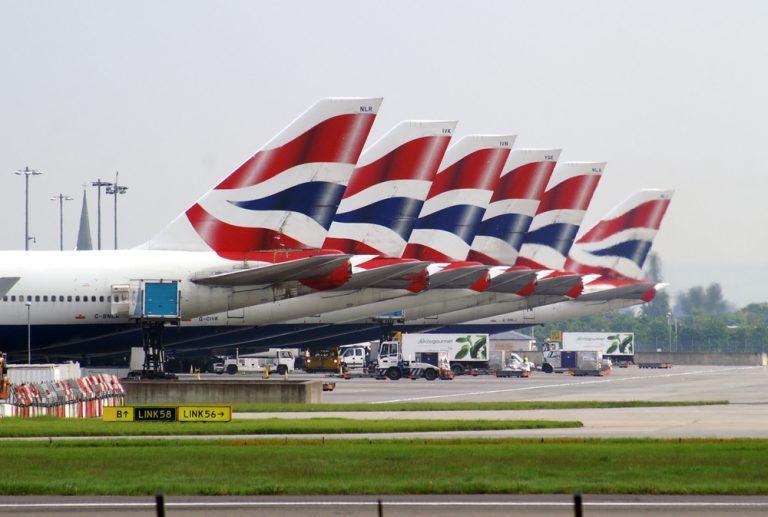
International Airlines Group (LON:IAG) took a hit on Thursday after industrial action from pilots “heavily impacted” its third quarter. Shares in the owner of British Airways were up during trading on Thursday. Representing over 10,000 pilots, the British Airline Pilots’ Association (BALPA) went ahead with strikes in September and caused a large amount of flights to be cancelled. International Airlines Group said on Thursday that the industrial action by the pilots, in addition to other disruption, impacted operating profit by €155 million during the quarter. International Airlines Group, which recently announced that it would commit to achieving net zero carbon emissions by 2050, said that third quarter operating profit amounted to €1.4 billion. International Airlines Group added that it expects 2019 operating profit before exceptional items to be €215 million lower than 2018. “Passenger unit revenue is expected to be slightly down at constant currency and non-fuel unit costs are expected to improve at constant currency,” International Airlines Group added. Indeed, at the end of September, the company reconsidered its guidance for the full year following the British Airways industrial action and the additional costs incurred. “In quarter 3 we’re reporting an operating profit of €1,425 million before exceptional items, down from €1,530 million last year,” Willie Walsh, IAG Chief Executive Officer, said in a company statement. “These are good underlying results. As we said in September, our performance has been affected by industrial action by pilots’ union BALPA and other disruption including threatened strikes by Heathrow airport employees,” the Chief Executive Officer continued. “In addition, our fuel bill increased by €136 million during the quarter with fuel unit costs up 4.2 per cent at constant currency.” The Chief Executive Officer said: “At constant currency, passenger unit revenue decreased by 1.1 per cent while non-fuel unit costs were up 1.1 per cent”. Shares in International Airlines Group (LON:IAG) were trading at +1.00% as of 12:53 GMT.

Indivior report third quarter profit drop

1
Indivior PLC (LON: INDV) have reported a third quarter profit fall, after their third quarter trading update was released Thursday morning. Revenue was hurt by the launch of a generic competitor to its opioid addiction treatment drug Suboxone Film. British based Reckitt Benckiser Group Plc (LON: RB) have seen similar struggles to Indvior after they cut their full year forecast earlier this month. The firm reported that net revenue had dropped 19% to $199 million from $245 million. Additionally, the company posted a $56 million pretax profit for the three months ended September 30, 18% lower than the $68 million profit posted the year before. Selling, General & Administrative expenses fell 21%, while research & development expenses fell 31% to $11 million from $16 million. For the nine months ending September 30th, pretax profit fell 14% to $222 million, versus $257 million. Net revenue was down 15% at $652 million from $768 million, which creates worries for investors and shareholders. The US based firm have their operating headquarters in Virginia, and 2019 has represented a tough period for the medical supplier outside of trading figures. The Federal Grand Jury in Virginia, charged Indivior for the for a number of charges including “” health care fraud, wire fraud, mail fraud, and conspiracy”. The charges related to Indivior’s marketing, promotion, and safety claims around its addiction drug Suboxone – as well as overprescription of the drug by doctors. At present, the US Department of Justice intends to recover $3 billion worth of forfeitures from Indivior. “The company believes it has strong defences to the government’s charges and will vigorously defend itself. It is not possible to predict with any certainty the potential impact of this litigation on the group or to quantify the ultimate cost of a verdict or resolution,” said Indivior. Net income is predicted to be $160 million to $190 million, a huge increase compared to the $80 million to $130 million prior forecast. Chief Executive Shaun Thaxter said: “Indivior has delivered solid results ahead of plan this year and this momentum has continued through the third quarter. Despite the pressure from buprenorphine/naloxone film generics, Suboxone Film share remained above observed analogues and exceeded our plans. Thaxter added “”This, combined with Sublocade net revenue growth, initial contribution from Perseris and our ongoing expense discipline, has allowed us to raise our 2019 financial guidance and to further build our cash position to over USD1 billion. More positively, our year-to-date performance has put Indivior in a position to reinvest some of the upside to further support the future growth of Sublocadeand Perseris.” He concluded “We remain acutely aware of the challenges in the marketplace and the legal uncertainties. We are proactively managing these risks, where possible, as evidenced by our decision to discontinue production of the authorized generic buprenorphine/naloxone film. This followed the recent passage of legislation that, while we believe unintended, would have resulted in the unsustainable position of Indivior selling Suboxone Film at a negative gross profit through most US government channels.” Shares of Indivior are trading at 42p per share, crashing 7.3%. 31/10/19 12:43BST

Hong Kong expects negative growth amid protests

1
Hong Kong’s leader announces expectations of recession following violent protests.

History

Britain governed Hong Kong until 1997. Following the end of colonial rule, Hong Kong returned to Chinese governance. China and Hong Kong agreed to implement a “one country, two systems” arrangement. Under the “one country, two systems” arrangement, Hong Kong has autonomy. Furthermore, citizens of Hong Kong have more rights and civil liberties compared to citizens of China.

Hong Kong vs Mainland China

Hong Kong protects civil liberties such as freedom of speech, freedom of expression and freedom of religion. Moreover, Hong Kong believes that personal liberties cannot be abridged without due process. China frequently censors speech and expression. Furthermore, it does not protect freedom of religion. For instance, China has been detaining Uyghur Muslims, and sending them to re-education camps since 2014. In comparison with China, Hong Kong provides a larger sphere of freedom to its citizens.

Extradition Bill

China introduced an extradition bill in April. The bill proposed to allow the extradition of Hong Kong to mainland China. Among other critical implications, the bill requested criminal suspects in Hong Kong to be sent to mainland China for investigation. Due to its history of governance, Hong Kong has a different political and social culture than China. Consequently, the proposal to allow extradition led to civil disobedience in Hong Kong.

Protests

Protests started in June. They continue as of today. The bill threatens Hong Kong’s judicial independence. Protesters oppose the extradition bill. They believe it is unacceptable to bring undemocratic processes implemented in mainland China to Hong Kong. The bill risks exposing citizens of Hong Kong to unfair trials, violent punishment and oppression in mainland China. Protesters believe that China will use the bill to target activists, writers and academics. Protesters commit to protecting civil liberties in Hong Kong under any circumstances. If the extradition bill passes, Hong Kongers face the risk of losing their autonomy.

Extradition Bill Suspended

Hong Kong’s leader officially suspended the extradition bill in September with the hope of putting an end to protests. Nevertheless, protests continue. Concerned about the vulnerability of Hong Kong’s democracy, protestors ask for a system of full democracy and transparency. Many believe that current civil liberties allowed in Hong Kong are not extensive enough. Furthermore, protestors seek a comprehensive investigation into police actions in Hong Kong.

Recession

As protests grow larger every day, tourists stay away from Hong Kong due to safety concerns. Five months of protests caused a devastating blow to businesses in Hong Kong. Foreign businesses and investors are pulling away due to political and economic instability caused by protests. Retailers fear unemployment amid a drop in sales across different sectors. Employees shorten trading hours as protests get violent. Workers in central areas of Hong Kong fear for their safety. Furthermore, corporations report incidents of vandalism. Angry protestors target Hong Kong headquarters of big Chinese firms. For instance, the tech giant Xiaomi (HKG: 1810) reported that its branches have been vandalised. Moreover, protestors targeted Bank of China (SHA: 601988) branches across Hong Kong. It will take time and money for Hong Kong to recover from the damage caused by protests. Hong Kong’s economy is likely to experience negative growth this year. Consequently, Hong Kong’s leader warns that she expects recession.  

Carpetright ponder takeover bid as shares collapse

1
Carpetright plc (LON: CPR) shares fell sharply after the company said it is considering a acquisition offer from its lender Meditor European Master Fund Ltd. Carpetright have been subject to slowing revenues, slowing profits and poor business performance after tough market conditions. This comes as no surprise for the UK retailer, and many firms have alluded to tough political and economic conditions in hindering business opportunities. High street retailers such as Dunelm (LON: DNLM) and Laura Ashley (LON: ALY) are the notable names who have seen their shares sink as a result of poor trading performance within the last three months. The company added that it needed an £80 million injection to pay its debts, with net debt standing at £27 million. Additionally, this cash injection will allow the chance to ‘meet its working capital needs and execute its growth strategy’. Meditor’s potential cash offer would value Carpetright shares at 5.00p per share, amounting to £15.2 million in total, a 45% discount to its closing price of 9.12p. Carpetright said: “The company has been actively exploring various long-term financing solutions including standard “high street” refinancing, asset-backed lending, strategic asset sales and equity financing.” “Having now explored the viability of all of these possible options, the board announces that it is in discussions with Meditor in relation to a possible offer to acquire all of the issued and to be issued shares of the company, expected to be by way of a Scheme of Arrangement,” the firm added. Investment management firm Aberforth Partners LLP, which has f a 13% stake, has backed Meditor’s potential takeover bid. Chair Bob Ivell said: “Shareholders will be aware that we have been engaged in comprehensive refinancing discussions to replace existing facilities which expire at the end of this calendar year. The possible offer being announced today would put in place a new financing structure for Carpetright which would enable us to continue our recovery and make necessary investments in improving our business.” Carpetright were quick to add that there is no certainty that a bid from Meditor will be made, speculating about where Carpetright will be able to raise these funds. Seniority at the firm mentioned the positive trading figures amidst Brexit market conditions saying “”In the first half, like-for-like sales growth has been achieved in all territories, however the ongoing impact of negative consumer confidence and Brexit on the current retail environment could present a challenge in the balance of the financial year,”. Shares of Carpetright are trading at 4.76p per share, falling 47.81% during Thursday trading. 31/10/19 12:08BST.

Brexit and Labour’s missed opportunity

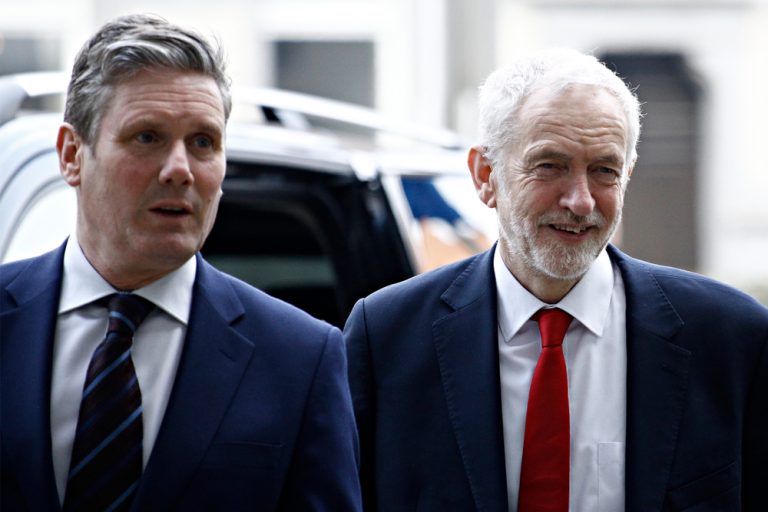
The views expressed in this article are entirely my own, and do not reflect the views of my colleagues or the UK Investor Magazine. I was going to title this piece ‘Brexit and what Labour has done wrong’ but it didn’t seem entirely appropriate. Sure, they have been accused of acting undemocratically or contrary to what many continue to haphazardly describe as ‘the will of the people’, but relying on this reasoning alone is lazy logic. At best, it relies on an over-simplistic definition of democracy. Either we can argue back by saying that acting ostensibly in the interest of the majority – by trying to safeguard workers’ rights and the NHS as a publicly owned institution – is democratic in its very essence, or that as elected representatives, their opposition to the government is performed with tacit consent (I find the former more compelling). At worst, it tells us that highly educated individuals have found a simple but effective rallying cry to sway the public. Weaponizing the word ‘democracy’ isn’t a moral victory for the Conservatives; it is quintessential political gameplaying and entirely counter-productive in the process of trying to achieve either compromise or fruitful discourse. Harking back to 2017 – and following the birth of the cymbal-clapping monkey we affectionately named ‘Brexit’ – we were presented with a surprising opportunity: Theresa May with a disappointing number of MPs and Jeremy Corbyn with a surprisingly large coterie. What I called for at the time, in complete futility, was a grand coalition. An unholy union of actors with different visions and mistrust of one another’s agendas and good intentions. What it would have done, perhaps, is forced a degree of compromise, or at the very least the joint accountability might have lessened the blame game within a governmental structure that reflected the importance of the task at hand (the last grand coalition being convened during WW2). Alas, what we now have is a Parliament at emotional loggerheads and a government boasting a ‘hit ‘em where it hurts’ mantra. They’ve dubbed Labour the ‘enemy of the people’, and that’s got to sting if, as a party, your unique selling point relies on convincing the electorate that you’re for ‘the many’. So, fighting the urge to dedicate his rhetoric master-stroke to his plutocrat compadre Donald Trump, Boris found himself a slogan to fit his populist facade.

How Labour should have responded

Thursday, 17th of October: the day most well-known for Boris bringing back a new deal proposal from the EU, but also the day I reported that “Labour will likely make any deal-passing conditional”. … ‘Super’ Saturday, 19th of October: the day the Letwin amendment was passed, triggering the Benn Act. That small window of opportunity was crucial, but ultimately an opportunity missed. The Deal was blocked by a coalition largely made up of Labour MPs, many of whom were pushing for a confirmatory Brexit vote. Instead, with a spirit of greater compromise, what Labour could have done was offer to support the deal, with their backing contingent on a series of conditions being met. Such conditions could have included, but not limited to, the enshrinement of worker’s rights and preservation of centralised public services such as the NHS (perhaps within a new British Bill of Rights), and perhaps even a confirmatory vote which would be based on the new, conditional deal. I appreciate this wouldn’t have been a perfect fix. Not only would it be a legislative nightmare to enshrine and protect any conditions from future amendment (corrosion), but even with a conditional deal, there would still be sizeable support within both Commons and the general public for Remain, or a deregulation-focused Brexit. In response, I’d say that the legislative and political legwork would’ve been far more manageable than what we now have to prepare ourselves for, and the conditions would have offered a more palatable means to bringing the withdrawal phase of Brexit to a close – and I think such an idea becomes more inviting by the day. As for Labour, their offer of conditional support would have knocked the ball back into the Conservative’s proverbial court. And as far as the political gameplaying is concerned, any hesitation or refusal by the Conservatives would have given them the opportunity to fire off one of the following cathartic retaliations: ‘now they’re the ones stopping Brexit!’, ‘they don’t want a deal that guarantees a decent quality of life’ or something equally pointed and inflammatory, I’m sure. Instead, bursting our hypothetical bubble, Labour now faces a general election with a Tory majority on the cards. With a few weeks gone by, we now know some of the more moderate ex-Conservative MPs won’t stand or will have to fight for re-election, all the while Boris seems largely unfazed by his Halloween deadline trick, as many still see him as the most suitable conduit for voicing their grievances. My hopes for the prime minister offering more than inflammatory bluster are waning, and I’m disillusioned by the notion that Jeremy Corbyn’s window to effectively shape the Brexit agenda is closing day-by-day. Maybe as a habitual protester, assertive and proactive action only come to him with hindsight. Alternatively, some suggest he has a master plan to push through Brexit on his terms (contingent on him winning the election, of course) and become a hero. If this happened to be the case, his desire to give his ‘once in a generation opportunity’ policy package a go at the ballot box actively risks the possibility of what he views as a damaging Boris-led Brexit coming to pass. It isn’t only a huge gamble, but perhaps only a semi-satisfying reason to have missed a golden opportunity. Alas, if the expected election result comes to pass, he’ll be able to do little more than protest against those who’ll be glad he missed his chance. Elsewhere, I’ve weighed in on Jo Swinson’s direction for the Lib Dems and Scotland’s renewables policy.

Samsung operating profits sink due to challenging economic conditions

1
Samsung Electronics Co Ltd (KRX: 005930) have reported a huge drop in their operating profits in their most recent trading update. In challenging political and economic conditions, the technology giant reported a loss in the three months leading up to September 30th. Operating profit fell 56% versus the same period one year ago, which has caused tensions in senior management and for shareholders. It is the fourth consecutive quarter where Samsung’s operating profit fell year-on-year, However, this was an 18% increase from the second quarter beating company guidance published earlier this month. There still may be a long road to recovery, as analysts suggest. This is due to low prices and demand memory chips. Here’s what the company reported versus what it had reported a year ago:
  • Operating profit: 7.78 trillion Korean won ($6.7 billion) vs. 17.57 trillion won a year ago
  • Net profit: 6.29 trillion Korean won vs. 13.15 trillion won a year ago
  • Consolidated sales: 62 trillion Korean won vs. 65.46 trillion won a year ago
  • Basic earnings per share was 899 Korean won compared to 1,909 won from a year ago.
For the fourth quarter, Samsung said it expects “demand for components to turn sluggish in general amid weak seasonal effects, while marketing expenses are likely to increase to address year-end smartphone sales.” The tech giant added it expects memory chip demand to rise “slightly quarter-on-quarter on the back of inventory building by customers in response to global macroeconomic uncertainties.Memory components used in smartphones and data centers make up Samsung’s main profit-making business. This comes at a vital time for Samsung, as competitors such as Apple (NASDAQ: AAPL) announce their new Airpod product line and Huawei (SHE: 002502) reported strong third quarter trading figures. For 2020, Samsung said it predicted “solid” demand in the memory business but cautioned against lingering uncertainties in the external environment. It also expects growing sales for 5G products and foldable devices next year. Samsung seem optimistic which gives investors and shareholders something to look forward to. The development of their phone and mobile technology is becoming more and more popular as they look to encapsulate some of Apple’s customers. Analysts have said that 5G deployment should help spur the recovery in the semiconductor space starting next year. Samsung said its mobile earnings for the quarter improved due to “robust shipments of the flagship Galaxy Note 10, a better product mix and higher profitability in the mass-market segment.” Shares of Samsung are trading at 50,400KRW. 31/10/19 11:47BST.

Halloween morning review: Lloyds spook and Fed rate cut treat

Doing little more than soothing uneasiness, last night’s Fed rate cuts was less of a tidal wave and more of a tide-over. J. Powell has already opposed what he views as overly exuberant accommodation, but the latest cut did enough to satisfy indices on Thursday. Phase one of tariff tension resolution will soon be underway, and markets seemed happy to largely ignore Lloyds Banking Group’s (LON: LLOY) disappointing update and China’s underwhelming PMI results. Speaking on market opening movements in his usual humorous manner, Spreadex Financial Analyst Connor Campbell stated,

“As expected Jerome Powell and his FOMC buddies slashed interest rates by another 25 basis points on Wednesday.”

“However, it seems like that’ll be it for the foreseeable future. The Fed chair even went as far to say that monetary policy is now in a ‘good place’ after his trio of historic cuts, downplaying the likelihood of any further move lower while also stating the US would need a ‘really significant’ rise in inflation before a hike was considered.”

“The great unknown hanging over all this, of course, is the US-China trade situation. ‘Phase one’ of a deal may be nearing completion, but that’s only the first baby steps towards properly ending the war.”

“Nevertheless, the Fed sufficiently pleased the markets without doing too much to excite them, leading to a broadly, blandly positive open on Thursday. One, admittedly, that required investors to ignore the pair of worse than forecast PMIs out of China overnight (the manufacturing reading was particularly alarming, hence the red start for commodity stocks).”

“With the Dow Jones looking to cross 27200 this afternoon, the DAX and CAC added 0.3% apiece. The FTSE, meanwhile, quickly managed to reduce its early 0.6% decline to a milder 0.1% dip in the early moments of the session.”

Other causes for concern and excitement in commodities in recent weeks, have included; a general election on the horizon, a new Brexit deal being agreed and the UK economy looking likely to avoid recession.

“It was another rough morning for its banking sector, with Lloyds the latest firm to disappoint. The horsiest finance firm around revealed a 97% plunge in underlying pre-tax profit, after setting aside another £1.8 billion to cover PPI claims – that takes its total payouts related to the scandal to more than £20 million.”

“Despite Goldman Sachs (NYSE: GS) advising forex traders to steer well clear of sterling in the coming months, the pound continued its post-election confirmation gains on Thursday. Rising 0.4%, cable struck a 9-day high of $1.2946, while a 0.2% increase against the euro lifted the currency above €1.16.”

Elsewhere in the banking sector, Deutsche Bank (ETR: DBK) reported losses during the third quarter.  

Shell profits sink amid oil low prices

17
Royal Dutch Shell plc (NYSE: RDS.A) saw their profits slide 15% due to lowering oil prices globally, noted in a statement released this morning. Shell did see their profits sink during this time, however they comfortably beat market and analyst expectations posting earnings of $4.8 billion (£3.7 billion), well ahead of the $3.91 billion anticipated. This is the second time that this has happened during 2019 trading after second quarter results saw profits slow but the consensus beating. Royal Dutch Shell became the third oil titan after SABIC (TADAWUL: 2010) reported an impairment loss of $400 million, and Total SA (LON: TTA) to report slower profits as profits fell 15% in the third quarter update. The oil giant have a boost in oil and liquefied natural gas compensating for offset in oil prices, which have fallen 17% year on year. Oil and Gas production for Shell fell by 1% from the same period last year to 3.6m barrels of oil equivalent per day. In a statement, chief executive Ben van Beurden said: “This quarter we continued to deliver strong cash flow and earnings, despite sustained lower oil and gas prices, and chemicals margins.” “Our earnings reflect the resilience of our market-facing businesses and their ability to capitalise on market conditions, including very strong trading and optimisation results this quarter.” However, he went on to say that prevailing macroeconomic conditions would cause uncertainty over the pace of Shell’s proposed buyback of $25 billion worth of shares a year. Morgan Stanley (NYSE: MS) analyst Martijn Rats said: “The lack of a dividend hike at BP and Shell management hinting at a possibly slower pace of share buybacks are suggesting companies are taking a more sober view on the outlook for oil and gas prices.” Chief financial officer Jessica Uhl said that although conditions had been tough, reshaping Shell’s business had improved the company’s resilience. Uhl pointed out that the companies strongest performances had come from its ‘transition business’, which the company is continually evolving its strategy around. Uhl commented, “The returns from these businesses give us confidence that we can thrive in the energy transition. The fact that many of the big oil titans have announced profit slowdowns will reassure investors, and recovery can be expected in the short term. Michael Hewson, chief market analyst at CMC Markets, said: I’m struck by the similarity with BP – both companies have seen very positive developments in the downstream, but big declines in the upstream. They will face the same challenge in 2020 – getting the level of net debt down.” “The renewable transition will also be a challenge, although European oil is much better placed than their American counterparts to do so.” Shares of Shell are trading at $60 per share (+0.23%), 31/10/19 11:27BST.