
Student start-ups and social enterprises on the rise

New data revealed on Tuesday that almost 14,000 student start-ups and social enterprises generated £821 million in turnover in 2018.
Pareto Law’s report shows that the estimated total turnover of the graduate start-ups was more that HelloFresh and Boohoo (LON:BOO), which totalled £802 million and £603 million respectively.
The estimated total turnover of graduate founded businesses and social enterprises, which currently employ more than 25,000 people, has surged 26% over the course of four academic years.
The report, which is an analysis of data provided by the Higher Education Statistics Agency, shows that the Royal College of Art is the university to have created the largest amount of start-ups and social enterprises in 2017 to 2018 with 251 new businesses started.
“In uncertain economic times it is great to see that student-founded businesses have found a way to grow and thrive,” Jonathan Fitchew, CEO of Pareto Law, commented on the research.
“The challenges faced by any graduate who has started a business over the past few years are significant and those who manage to make the grade should be proud of everything they’ve achieved,” the CEO of Pareto Law continued.
“It just goes to show that stereotypes that are often associated with graduates and students are tired and outdated. They’re hardworking and ambitious creators of wealth and jobs, and a vibrant part of the wider UK economy that we’re proud to serve.”
Jake Butler, Operation Director at Save the Student, added that “the idea of students starting their own ventures, big or small, is not only excellent for the students themselves but also the wider economy. You don’t need £1000s to start and there’s not even a need to set the world alight and going it alone can be a great experience.”
Elsewhere on Tuesday, news emerged from the Office for National Statistics that the UK unemployment rate increased to 3.9% from June to August, an unexpected rise given that the market was expecting the rate to remain at 3.8%.
Michel Barnier says Brexit deal is still possible, Sterling happy to chase the story
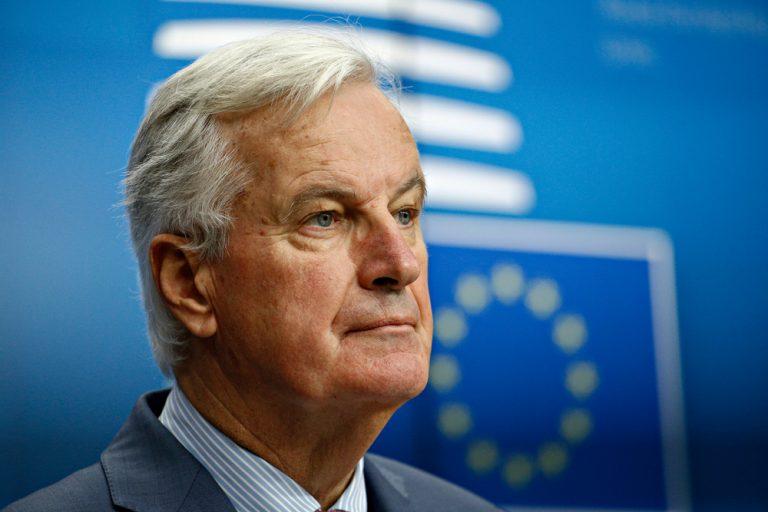
Chief EU negotiator Michel Barnier has said that a Brexit deal could still be reached between the EU and the UK. He said that the proposals currently on offer were not good enough, but that he was ready for Boris Johnson’s good intentions to turn into a legal document before the EU summit, which begins on Thursday.
Speaking to Bloomberg, Barnier said, “Not all that U.K. has been saying in the last days is totally unacceptable.”
“They have moved in our direction on key points and that’s why I think we still can make significant progress today.”
Speaking on the prospect of a deal, he said, “Because even if an agreement will be difficult, more and more difficult to be frank, it is still possible this week.”
He continued, “Reaching an agreement is still possible. Obviously any agreement must work for everyone, the whole of the United Kingdom and the whole of the European Union.
“Let me add also that it is high time to turn good intentions into a legal text.”
Brexit Secretary Stephen Barclay echoed the optimistic sentiment, stating a deal was still,I have just debriefed EU27 Ministers in Luxembourg. 🇪🇺 unity remains strong. We want an agreement that works for everybody: the whole #UK & whole #EU. On route back to Brussels to take stock w/ my colleagues. Talks are difficult but I believe an agreement is still possible. pic.twitter.com/FxQHCajg5b
— Michel Barnier (@MichelBarnier) October 15, 2019
“very possible”.
He said, “The talks are ongoing. We need to give them space to proceed. But detailed conversations are under way and a deal is still very possible.”
Meanwhile, Secretary of State for Scotland, Alistair Jack, foresees Boris Johnson pushing for a No-Deal scenario at the end of the month, which he believes will be supported by some sympathetic EU27 leaders,
“He can make it very clear that he doesn’t want to ask for that extension, that he’s being forced to ask for that extension and some European leaders may sympathise with him on that and feel that it’s unfair that he should have to do something he doesn’t want to do.”
Speaking on market movements after the bell this morning, Spreadex Financial Analyst Connor Campbell commented on developments towards a deal,
“Sterling very much chose to focus on the positives. While Michel Barnier was keen to stress it has become ‘more difficult’ to reach an agreement this week, stating that it is ‘time to turn good intentions into legal texts’, his claim that it is ‘still possible’ for the UK and EU to come together on a deal was enough to restore the pound’s faith in proceedings, even if other members of the bloc were less convinced.”
“Cable climbed 0.6%, returning to the $1.265-levels struck last Friday, while a 0.7% increase against the euro actually sent sterling to a fresh 5-month high of around €1.1487.”
“Of course, this had the side effect of inhibiting the FTSE while its peers were charging forth. Though the European markets weren’t particularly receptive to the ‘partial trade deal’ reports from over the weekend on Monday, a strong Asian session greenlit some substantial growth this Tuesday.”
“Looking forward to the rest of the day, and the market’s resolve may be tested by a few key bits of data. For the UK, the latest jobs report is expected to see wage growth (including bonuses) and the unemployment rate hold at 4.0% and 3.8%. For the Eurozone things could be trickier: the region-wide and German ZEW economic sentiment readings are set to worsen month-on-month, sinking to -26.7 and -27.0 respectively.”
It will be difficult to reconcile the appetite for a deal and Boris Johnson’s personal vision for the UK, which it is plausible to believe differs from any kind of view the EU has for the UK going forwards. For me, the UK has struggled with the realisation that its government has been asked to make a change in national direction, and to-date it has found that job too difficult. Some have said its inability to execute this task had been based on a lack of willpower, and while this may be true to an extent, King’s College Professor David Edgerton also highlighted a problem recent Conservative governments have faced: that they no longer have a strong stake in UK business. Whereas once, Conservative top guns would have strong ties – or ownership – of industry in fields such as UK manufacturing (and could thus adjust national direction with greater ease), the saturation of overseas ownership of key UK businesses and assets since the 1970s and 1980s means that in the present day, Boris Johnson is trying to rekindle some kind of British business boom from a bygone era, and some of the UK’s largest employers (many not British companies) are shaking their heads. Maybe Boris’s vision will come to life; only time shall tell. For now, Barnier has told the prime minister he has until midnight tonight to table new proposals. Elsewhere in political and macro economic news, there have been updates from; UK economy looks likely to avoid recession, Hong Kong protester shooting and China’s strategy, the Supreme Court’s ruling, the collapse of Thomas Cook (LON: TCP), ECB stimulus, the bid for the London Stock Exchange (LON: LSE), Lloyds Banking Group PLC (LON: LLOY), Barclays (LON: BARC) and Deutsche Bank (ETR: DBK).UK unemployment at 3.9%

The UK unemployment rate increased to 3.9% from June to August, new data from the Office for National Statistics revealed on Tuesday.
This was an unexpected rise as the market was expecting the rate to remain at 3.8%.
The Office for National Statistics said that in the three months to August 2019, the level of employment fell by 56,000 to 32.69 million, the first quarterly decline since the three months to October 2017.
“The fall in employment was caused by changes in the numbers of men and women,” the Office for National Statistics said.
“The number of women entering employment has been a strong contributing factor to the current high employment levels, so a fall in their number in employment has had a larger impact on the current level of employment,” the report continued.
The data also showed that average weekly earnings continued to increase. Total average weekly pay (including bonuses) grew by 3.8% in the year to August to £542.
“There’s been a little bit of softness in the most recent job data with the unemployment rate ticking higher,” David Cheetham, Market Analyst at XTB UK, commented on the figures.
“Overall there is a hint of weakness here but it should be remembered that the labour market remains strong by historical standards. In terms of market reaction there was a small dip lower in the pound but it has since shrugged of the release with the markets far more concerned with the latest Brexit developments,” David Cheetham added.
Indeed, as the Brexit deadline approaches, uncertainty over the nation’s future prevails. Elsewhere on Tuesday, news emerged from Kantar that consumers are preparing more so for Halloween than they are the Brexit deadline day, with new grocery market figures revealing a year-on-year increase in supermarket sales of 1.3%
More preparations for Halloween than Brexit, Kantar

Consumers are preparing more so for Halloween than they are the Brexit deadline day, new grocery market figures from Kantar revealed on Tuesday.
Kantar said on Tuesday that year-on-year supermarket sales increased by 1.3% over the past 12 weeks.
Halloween and the Brexit deadline will occur on the same date – 31 October.
Kantar said that consumers are already planning for Halloween, spending a total of £1.5 million on pumpkins over the past 12 weeks.
Brexit uncertainty may prevail, but the data shows that while a quarter of British consumers say they are considering stockpiling, they are waiting to see how the next few weeks pan out.
“If they take any action it will be closer to the deadline, if a chaotic trading situation looks increasingly likely,” Kantar added.
“But well-documented concerns about the availability of popular products in the event of a no-deal Brexit have not yet translated into a consistent increase in purchasing,” Kantar continued in its report.
“Sales of dry pasta and healthcare products over the past four weeks were 9% and 7% higher than the same time last year, but those of canned products fell by 2% and frozen food by 1%.”
Sainsbury’s (LON:SBRY) increased its sales at the fastest rate since last October, making it the only big four retailer to achieve growth. At the end of September the supermarket chain announced that it will be closing many stores and opening new ones.
Sales at Asda (NYSE:WMT) dropped by 0.9% over the period, Morrisons (LON:MRW) saw a decline of 1.8% and Tesco (LON:TSCO) fell 0.2%.
Shares in J Sainsbury plc (LON:SBRY) were trading at +0.28% as of 10:32 BST Tuesday. Meanwhile, shares in WM Morrison Supermarkets plc (LON:MRW) were down trading at -0.54% as of 10:34 BST and shares in Tesco plc (LON:TSCO) were up trading at +1.34%.


DAG Global – hoping to give ‘Blockchain Britain’ a respectable face

With no overstatement, the ascendancy of cryptocurrencies is one of the most intriguing ripples in the financial scene in recent times – if as much theoretically as practically. However, the hype seems to have somewhat dampened in the last year or so following the Bitcoin crash, which saw its value fall from £14,748 to £2,529 per unit between the end of 2017 and the beginning of 2019, alongside a track record of facilitating money laundering activities for criminal clientele. So, what is the next step in rekindling the buzz surrounding crypto currencies, and perhaps more importantly, how can the crypto landscape become reputable?
That’s where DAG Global are hoping to come in, led by Sean Kiernan. Kiernan has a background in established finance, having worked for both Zurich Financial Services and Credit Suisse, his aim is to harness what he sees as the true potential of the crypto landscape, by exposing it to regulation and central bank space normally dominated by fiat currencies. After leaving Falcon Private Bank – the first bank in the world to offer crypto products to its clients – Kiernan is seeking a banking licence for DAG Global, and believes blockchain-led finance could act as a conduit for future business growth in the UK.
Lunch with a merchant bank for the 21st century
Having met Kiernan at The Reform Club to discuss his new venture, it was ironic how aptly the venue acted as a metaphor for his vision for DAG Global. The building’s aesthetic was something between masonic and Italian palazzo, but despite the setting’s well-kept antiquity, behind the scenes its cerebral core was an office with computers side-by-side. Much like that building, Kiernan wants DAG to offer time-tested services with an innovative twist; a modern backroom for traditional practices. Being less obtuse, one of the core tenets of the Company is to use cryptocurrency and block-chain to provide loans to SMEs, who may otherwise not be able to access the same facilities as larger enterprises. This is where the prospective bank gains its innovative edge. After saying our goodbyes to Kiernan, one of DAG’s representatives, Henry Gewanter, and I reflected on the meeting as we walked down Pall Mall. He was clear about how much potential he saw in Kiernan’s vision for the UK’s first digital asset merchant bank. As we crossed Trafalgar Square, he noted that Blockchain Britain led by this kind of venture could be:The UK’s next financial revolution: The City’s next Eurobond.Whether this will transpire or not is something only time will tell. What we can say is that the combination of tried and tested methods with cryptocurrencies, is something which makes the digital asset merchant bank concept innovative. DAG Global currently offers a range of ongoing operations, which it hopes to expand if it is successful in securing a banking licence.
Signs of impending success
Since our discussion, DAG has gone on to commence a £15 million Series A fundraiser, aided by Herax Partners. In its statement, the Company said the funds raised would be put towards ‘further development’ and ‘provide the capital it will require for regulatory approval’. Speaking on the update, Kiernan stated, “This fundraising marks a key milestone in our development of a merchant bank for the modern age and will allow us to achieve a number of important strategic goals, including building out our systems and team as well as providing regulatory capital to expand our business beyond our current activities.” Wolfgang Menig, Partner at Herax Partners, continued, “We’re excited to be helping raise capital for such a ground-breaking and innovative company. We believe the potential market opportunity for DAG is huge and we are delighted to support them in raising the funds required at this stage of their development.” Whether DAG Global proves successful or not, the trajectory they are setting in the UK market is worth noting. In the past. integration of financial and technological spaces is what led the advent of knowledge economics. Our job going forwards is to monitor future developments. If digital asset merchant banks do become a cornerstone of the UK’s financial sector, we can thank DAG Global for setting a precedent. Elsewhere in the banking and tech sectors, there have been updates from; Lloyds Banking Group PLC (LON: LLOY), Royal Bank of Scotland(LON: RBS), Arbuthnot Banking Group Plc (LON: ARBB), Microsaic Systems PLC (LON: MSYS), Petards Group plc (LON: PEG), SCISYS Group PLC (LON: SSY) and Pebble Beach Systems Group PLC (LON: PEB).Facebook’s Libra currency faces stiff scrutiny

The plans for Facebook (NASDAQ: FB) to introduce their digital currency Libra have faltered. In the last few days, an majority of major supporters withdrew over security concerns
The G7 voted unanimously that Libra, Facebook’s cryptocurrency will not go ahead until it is safe and secure for use.
The social media giant faced tough scrutiny as the worlds superpowers claimed that Libra would pose risks to the global financial system. Nine major risks were identified by the introduction of Libra.
Whilst Facebook may try and appease global economies, the tougher test may be battling with regulators for implementation.
Many of the worries spawned from loopholes, where Libra was not ‘legally sound’ as it failed to protect consumers, and ensure that coins are not used for money laundering or funding terrorism.
The French Government has already stated they would block Libra use in Europe. The draft report says “The G7 believe that no stablecoin project should begin operation until the legal, regulatory and oversight challenges and risks are adequately addressed”.
Stablecoins like Libra differentiate from other cryptocurrencies such as Bitcoin (ETR: ADE) as they are pegged to global currencies such as the Euro or Pound.
The future of Libra was put into question over the weekend, when many supporters withdrew over security concerns.
On Monday, both Mastercard (NYSE: MA) and Visa (NYSE: V) withdrew their support, hampering the likelihood of Libra being implemented.
This follows the longlist of firms who have lost faith in the new Stablecoin currency, other firms of note include Paypal (NASDAQ: PYPL), Ebay (NASDAQ: EBAY) and Stripe.
However, Ebay have said they respect the Libra project “However, eBay has made the decision to not move forward as a founding member. At this time, we are focused on rolling out eBay’s managed payments experience for our customers.”
Whilst Visa added “We will continue to evaluate and our ultimate decision will be determined by a number of factors, including the Association’s ability to fully satisfy all requisite regulatory expectations.”
A spokesperson from the Libra Association said ““We appreciate their support for the goals and mission of the Libra project. Although the makeup of the Association members may grow and change over time, the design principle of Libra’s governance and technology, along with the open nature of this project ensures the Libra payment network will remain resilient.”
Many have put into question whether they would trust Facebook with their money, with the bad reputation of Facebook being highlighted recently.
The original intention of Libra was to allow people reduced transaction costs, and aid people without bank accounts.
The problems with Facebook’s libra have attracted high profile US Politicians following the commencement of 2020 election campaign.
Senator Elizabeth Warren, has said “What would really ‘suck’ is if we don’t fix a corrupt system that lets giant companies like Facebook engage in illegal anti-competitive practices, stomp on consumer privacy rights, and repeatedly fumble their responsibility to protect our democracy,”
Senator Schatz and Brown also added “Facebook appears to want the benefits of engaging in financial activities without the responsibility of being regulated as a financial services company,” showing the concerns that Libra could be used for illegal activity.
When Libra was announced back in June, plans were stated to grow from 27 member companies to over 100 in 2020. After recent events, membership has fallen to 22.
In a public statement, head of Policy and Communication Dante Disparte commented ““We are focused on moving forward and continuing to build a strong association of some of the world’s leading enterprises, social impact organizations and other stakeholders to achieve a safe, transparent, and consumer-friendly implementation of a global payment system that breaks down financial barriers for billions of people. We look forward to the inaugural Libra Association Council meeting in just 3 days and announcing the initial members of the Libra Association.”
Mark Zuckerberg, Facebook’s Chief Executive is due to appear in front of the House Committee on Financial Services on 23rd October to discuss concerns of Libra, where the future of Libra will be discussed.
It is clear that Facebook and the G7 are miles apart in the support of Libra, there is still much work to do, much research to gather and much evidence to present.
Certainly the withdrawal of Visa and Mastercard will not help the cause and may deter the global economies in the support of Libra.
With many US Politicians also coming out stating resentment for the newly found cryptocurrency, for once the tables have turned with Facebook on the underside.
In the technology sector, updates have been provided for Facebook, Castleton Trading and Blue Star Capital.
Blue Star Capital shares soar as Tech Investor shifts into Esports

Blue Star Capital (LON: BLU) have changed their business direction into the Esports arena, causing shares to rocket.
Shareholders have enjoyed a 45.73% rise during Monday trading after a £900,000 pledge to diversify into Esports.
Blue Star currently has a market cap of £2.34 million, and will only continue to grow if this Esports diversification is successful.
Jonathon Bixby, one of the original founders of bitcoin miner Argo Blockchain Plc (LON: ARB) encouraged six installments of £150,000 into different Esport fields.
Blue Star have aimed to go global with this shift, having stated the intent to start operations in UK, USA, Canada, Australia and Singapore.
In a recent statement, Blue Star stated the interest to build up franchises in each of these countries.
“Each of the companies will create or acquire a competitive esports franchise to generate revenue from tournament winnings, digital marketing opportunities, sponsorship, membership, merchandise and promotional tours and events,” the company stated.
Blue Star’s Chief Executive, Tony Fabrizi has committed £20,000 in the first placing, giving him a 2.3% stake.
Additionally, the new Chairman to be, Derek Law has invested £100,000.
The company’s main investment is SatoshiPay, where it owns 27.9% of total capital. In Satoshipay’s most recent fund raise in March 2019, this valued BlueStar’s investment at £4.6 million.
Satoshipay have plans for vertical movement into the cross border B2B payments which is estimated at £160 billion, giving investors reason to expect future revenue growth.
Fabrizi added, “We have been watching the development of the esports sector of gaming closely and the rate of growth in popularity and, importantly, associated revenue being generated presents a significant investment opportunity. We are investing at an early stage and not restricting our focus to a particular region or jurisdiction as we consider this to be the best opportunity to capture value for all shareholders.”
In the technology sector, there have been updates to Facebook (NASDAQ: FB), Castleton (LON: CTP), Xeros Technology (LON: XSG).
Yourgene set to hit ambitious growth target in half year update

Yourgene Health Plc (LON:YGEN) have released their half year update today, and look on track to reach ambitious growth targets.
In a recent update, revenue had doubled in the first half of its financial year keeping in lines with management expectations.
“Yourgene Health is an international molecular diagnostics group which develops and commercialises genetic products and services. The group works in partnership with global leaders in DNA technology to advance diagnostic science.”
For the six months, leading up to September revenue tallied at £7.8 million, an increase by 98% from £3.9 million before.
The international molecular diagnostics group stated ambitions to diversify their markets, expanding internationally and increasing market presence.
This has been a successful target, where revenue growth came from Yourgene’s International Operations, which increased by over 200% rising to £5.1 million.
With this success, the acquisition of Elucigene Diagnostics in April was agreed for an £8.8 million fee.
Lyn Rees, Chief Executive Officer said “”I am delighted with the performance in the first half, both in terms of the organic growth delivered but also the contribution from the Elucigene acquisition and the launch of our American business.”
Rees added, “We are executing on our strategy to broaden our product portfolio and to drive growth across wider international markets. We remain on track to hit our ambitious growth targets for the enlarged group and to meet market expectations for the full year”
Shares in Yourgene Health Plc have increased by 5.22% during Monday trading.
Revenues show positive trends with greater diversity with 20% revenues coming from reproductive health products sold by Elucigene Diagnostics. Another 17% was derived from research and oncology services situated in Asia.
Non-Invasive Prenatal Testing (NIPT) products expanded significantly at 34% despite tense EU-UK relations, plans for new products are expected to reach the markets in 2020.
Figures continue to impress for shareholders of Yourgene, if they sustain strong revenues and growth, shareholders could have found a company with ambitious targets, and strong business models to meet them.
In the health sector, there have been updates on Ra Pharmaceuticals Inc (NASDAQ: RARX), OptiBiotix Health Plc (LON: OPTI) and NMC Health (LON: NMC).
Laura Ashley shares plunge as Finance Chief leaves
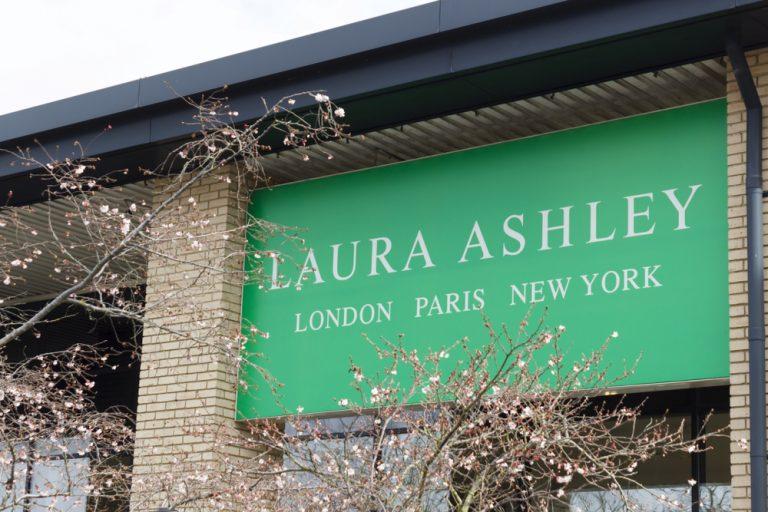
The share price for Laura Ashley (FRA: ASH) plunged over 26% as a result of director Sean Anglim stepping down after 20 years at the British Textile firm.
Laura Ashley announced that Anglim would be replaced by Sagar Mavani.
In a public statement, Laura Ashely said “The board would like to take this opportunity to thank Mr Anglim for his contribution during his tenure with the company and to wish him the very best for the future,”
The stock price was discounted by 27% at 1.37p per share listed by the London Stock Exchange (LON: LSE)
Mavani was appointed as group financial controller last year, and steps into the role in a tough economic and political climate.
Investors have noticed fragilities in the shares of Laura Ashley following a tough sales period.
Earlier this year, the high street store accounted a full year pretax loss of £10 million this year showing poor growth, poor sales and poor performance.
There has also been a decline in home furnishing business sales as well as online sales. This poor performance which also showed a fall of 10.53% in revenue added to Anglim’s worries.
Earlier in August, Andrew Khoo company chair said “The last twelve months have proved to be a difficult trading period for the group and indeed for the retail sector as a whole”
Khoo added, “We have focused on the reasons why home furnishings have underperformed and have taken necessary steps to mitigate this, including adding new contemporary product to our ranges. We have taken active steps to listen to our customers and now believe that we are on an appropriate recovery path”
g was made in August however with a new line of fashion wear with more design choice, which led to a 9.2% growth in like for like sales.
Having had a historic legacy in the British fashion market being a favorite of Princess Diana in its 1980’s prime time, Laura Ashley is facing a tough test.
Following the announcement that Anglim was set to depart the company, the market has had its say.
Investors and shareholders alike seem that this could be a period of decline for Laura Ashley.
This follows the annual report for 2019 showing a statutory loss of £14.3 million before tax.
It seems following this departure that times are only set to be tougher.
In the retail sector, there have been updates to Superdry Plc (LON: SDRY), Dunelm Group Plc (LON: DNLM) and Boohoo Group Plc (LON: BOO).