
Hong Kong expects negative growth amid protests

Hong Kong’s leader announces expectations of recession following violent protests.
Carpetright ponder takeover bid as shares collapse
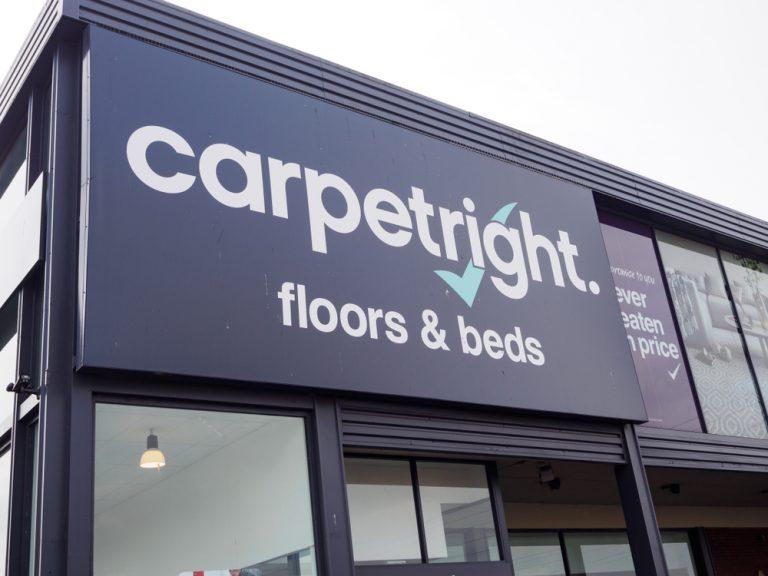
Carpetright plc (LON: CPR) shares fell sharply after the company said it is considering a acquisition offer from its lender Meditor European Master Fund Ltd.
Carpetright have been subject to slowing revenues, slowing profits and poor business performance after tough market conditions.
This comes as no surprise for the UK retailer, and many firms have alluded to tough political and economic conditions in hindering business opportunities.
High street retailers such as Dunelm (LON: DNLM) and Laura Ashley (LON: ALY) are the notable names who have seen their shares sink as a result of poor trading performance within the last three months.
The company added that it needed an £80 million injection to pay its debts, with net debt standing at £27 million.
Additionally, this cash injection will allow the chance to ‘meet its working capital needs and execute its growth strategy’.
Meditor’s potential cash offer would value Carpetright shares at 5.00p per share, amounting to £15.2 million in total, a 45% discount to its closing price of 9.12p.
Carpetright said: “The company has been actively exploring various long-term financing solutions including standard “high street” refinancing, asset-backed lending, strategic asset sales and equity financing.”
“Having now explored the viability of all of these possible options, the board announces that it is in discussions with Meditor in relation to a possible offer to acquire all of the issued and to be issued shares of the company, expected to be by way of a Scheme of Arrangement,” the firm added.
Investment management firm Aberforth Partners LLP, which has f a 13% stake, has backed Meditor’s potential takeover bid.
Chair Bob Ivell said: “Shareholders will be aware that we have been engaged in comprehensive refinancing discussions to replace existing facilities which expire at the end of this calendar year. The possible offer being announced today would put in place a new financing structure for Carpetright which would enable us to continue our recovery and make necessary investments in improving our business.”
Carpetright were quick to add that there is no certainty that a bid from Meditor will be made, speculating about where Carpetright will be able to raise these funds.
Seniority at the firm mentioned the positive trading figures amidst Brexit market conditions saying “”In the first half, like-for-like sales growth has been achieved in all territories, however the ongoing impact of negative consumer confidence and Brexit on the current retail environment could present a challenge in the balance of the financial year,”.
Shares of Carpetright are trading at 4.76p per share, falling 47.81% during Thursday trading. 31/10/19 12:08BST.
Brexit and Labour’s missed opportunity
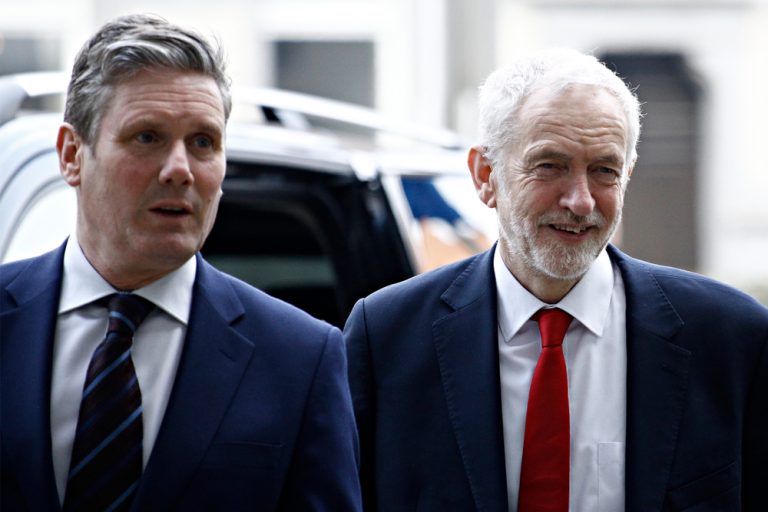
The views expressed in this article are entirely my own, and do not reflect the views of my colleagues or the UK Investor Magazine.
I was going to title this piece ‘Brexit and what Labour has done wrong’ but it didn’t seem entirely appropriate. Sure, they have been accused of acting undemocratically or contrary to what many continue to haphazardly describe as ‘the will of the people’, but relying on this reasoning alone is lazy logic.
At best, it relies on an over-simplistic definition of democracy. Either we can argue back by saying that acting ostensibly in the interest of the majority – by trying to safeguard workers’ rights and the NHS as a publicly owned institution – is democratic in its very essence, or that as elected representatives, their opposition to the government is performed with tacit consent (I find the former more compelling).
At worst, it tells us that highly educated individuals have found a simple but effective rallying cry to sway the public. Weaponizing the word ‘democracy’ isn’t a moral victory for the Conservatives; it is quintessential political gameplaying and entirely counter-productive in the process of trying to achieve either compromise or fruitful discourse.
Harking back to 2017 – and following the birth of the cymbal-clapping monkey we affectionately named ‘Brexit’ – we were presented with a surprising opportunity: Theresa May with a disappointing number of MPs and Jeremy Corbyn with a surprisingly large coterie. What I called for at the time, in complete futility, was a grand coalition. An unholy union of actors with different visions and mistrust of one another’s agendas and good intentions. What it would have done, perhaps, is forced a degree of compromise, or at the very least the joint accountability might have lessened the blame game within a governmental structure that reflected the importance of the task at hand (the last grand coalition being convened during WW2).
Alas, what we now have is a Parliament at emotional loggerheads and a government boasting a ‘hit ‘em where it hurts’ mantra. They’ve dubbed Labour the ‘enemy of the people’, and that’s got to sting if, as a party, your unique selling point relies on convincing the electorate that you’re for ‘the many’. So, fighting the urge to dedicate his rhetoric master-stroke to his plutocrat compadre Donald Trump, Boris found himself a slogan to fit his populist facade.
How Labour should have responded
Thursday, 17th of October: the day most well-known for Boris bringing back a new deal proposal from the EU, but also the day I reported that “Labour will likely make any deal-passing conditional”. … ‘Super’ Saturday, 19th of October: the day the Letwin amendment was passed, triggering the Benn Act. That small window of opportunity was crucial, but ultimately an opportunity missed. The Deal was blocked by a coalition largely made up of Labour MPs, many of whom were pushing for a confirmatory Brexit vote. Instead, with a spirit of greater compromise, what Labour could have done was offer to support the deal, with their backing contingent on a series of conditions being met. Such conditions could have included, but not limited to, the enshrinement of worker’s rights and preservation of centralised public services such as the NHS (perhaps within a new British Bill of Rights), and perhaps even a confirmatory vote which would be based on the new, conditional deal. I appreciate this wouldn’t have been a perfect fix. Not only would it be a legislative nightmare to enshrine and protect any conditions from future amendment (corrosion), but even with a conditional deal, there would still be sizeable support within both Commons and the general public for Remain, or a deregulation-focused Brexit. In response, I’d say that the legislative and political legwork would’ve been far more manageable than what we now have to prepare ourselves for, and the conditions would have offered a more palatable means to bringing the withdrawal phase of Brexit to a close – and I think such an idea becomes more inviting by the day. As for Labour, their offer of conditional support would have knocked the ball back into the Conservative’s proverbial court. And as far as the political gameplaying is concerned, any hesitation or refusal by the Conservatives would have given them the opportunity to fire off one of the following cathartic retaliations: ‘now they’re the ones stopping Brexit!’, ‘they don’t want a deal that guarantees a decent quality of life’ or something equally pointed and inflammatory, I’m sure. Instead, bursting our hypothetical bubble, Labour now faces a general election with a Tory majority on the cards. With a few weeks gone by, we now know some of the more moderate ex-Conservative MPs won’t stand or will have to fight for re-election, all the while Boris seems largely unfazed by his Halloween deadline trick, as many still see him as the most suitable conduit for voicing their grievances. My hopes for the prime minister offering more than inflammatory bluster are waning, and I’m disillusioned by the notion that Jeremy Corbyn’s window to effectively shape the Brexit agenda is closing day-by-day. Maybe as a habitual protester, assertive and proactive action only come to him with hindsight. Alternatively, some suggest he has a master plan to push through Brexit on his terms (contingent on him winning the election, of course) and become a hero. If this happened to be the case, his desire to give his ‘once in a generation opportunity’ policy package a go at the ballot box actively risks the possibility of what he views as a damaging Boris-led Brexit coming to pass. It isn’t only a huge gamble, but perhaps only a semi-satisfying reason to have missed a golden opportunity. Alas, if the expected election result comes to pass, he’ll be able to do little more than protest against those who’ll be glad he missed his chance. Elsewhere, I’ve weighed in on Jo Swinson’s direction for the Lib Dems and Scotland’s renewables policy.Samsung operating profits sink due to challenging economic conditions

Samsung Electronics Co Ltd (KRX: 005930) have reported a huge drop in their operating profits in their most recent trading update.
In challenging political and economic conditions, the technology giant reported a loss in the three months leading up to September 30th.
Operating profit fell 56% versus the same period one year ago, which has caused tensions in senior management and for shareholders.
It is the fourth consecutive quarter where Samsung’s operating profit fell year-on-year,
However, this was an 18% increase from the second quarter beating company guidance published earlier this month.
There still may be a long road to recovery, as analysts suggest. This is due to low prices and demand memory chips.
Here’s what the company reported versus what it had reported a year ago:
- Operating profit: 7.78 trillion Korean won ($6.7 billion) vs. 17.57 trillion won a year ago
- Net profit: 6.29 trillion Korean won vs. 13.15 trillion won a year ago
- Consolidated sales: 62 trillion Korean won vs. 65.46 trillion won a year ago
- Basic earnings per share was 899 Korean won compared to 1,909 won from a year ago.
Halloween morning review: Lloyds spook and Fed rate cut treat
Doing little more than soothing uneasiness, last night’s Fed rate cuts was less of a tidal wave and more of a tide-over. J. Powell has already opposed what he views as overly exuberant accommodation, but the latest cut did enough to satisfy indices on Thursday. Phase one of tariff tension resolution will soon be underway, and markets seemed happy to largely ignore Lloyds Banking Group’s (LON: LLOY) disappointing update and China’s underwhelming PMI results.
Speaking on market opening movements in his usual humorous manner, Spreadex Financial Analyst Connor Campbell stated,
“As expected Jerome Powell and his FOMC buddies slashed interest rates by another 25 basis points on Wednesday.”
“However, it seems like that’ll be it for the foreseeable future. The Fed chair even went as far to say that monetary policy is now in a ‘good place’ after his trio of historic cuts, downplaying the likelihood of any further move lower while also stating the US would need a ‘really significant’ rise in inflation before a hike was considered.”
“The great unknown hanging over all this, of course, is the US-China trade situation. ‘Phase one’ of a deal may be nearing completion, but that’s only the first baby steps towards properly ending the war.”
“Nevertheless, the Fed sufficiently pleased the markets without doing too much to excite them, leading to a broadly, blandly positive open on Thursday. One, admittedly, that required investors to ignore the pair of worse than forecast PMIs out of China overnight (the manufacturing reading was particularly alarming, hence the red start for commodity stocks).”
“With the Dow Jones looking to cross 27200 this afternoon, the DAX and CAC added 0.3% apiece. The FTSE, meanwhile, quickly managed to reduce its early 0.6% decline to a milder 0.1% dip in the early moments of the session.”
Other causes for concern and excitement in commodities in recent weeks, have included; a general election on the horizon, a new Brexit deal being agreed and the UK economy looking likely to avoid recession.“It was another rough morning for its banking sector, with Lloyds the latest firm to disappoint. The horsiest finance firm around revealed a 97% plunge in underlying pre-tax profit, after setting aside another £1.8 billion to cover PPI claims – that takes its total payouts related to the scandal to more than £20 million.”
“Despite Goldman Sachs (NYSE: GS) advising forex traders to steer well clear of sterling in the coming months, the pound continued its post-election confirmation gains on Thursday. Rising 0.4%, cable struck a 9-day high of $1.2946, while a 0.2% increase against the euro lifted the currency above €1.16.”
Elsewhere in the banking sector, Deutsche Bank (ETR: DBK) reported losses during the third quarter.Shell profits sink amid oil low prices
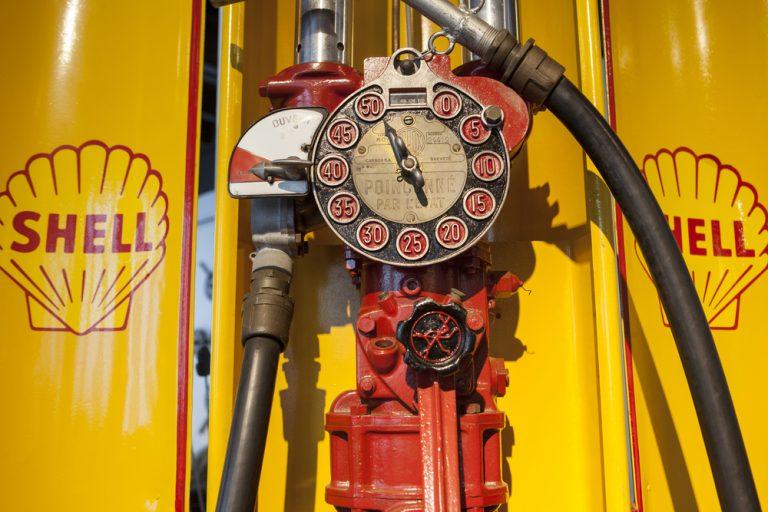
Royal Dutch Shell plc (NYSE: RDS.A) saw their profits slide 15% due to lowering oil prices globally, noted in a statement released this morning.
Shell did see their profits sink during this time, however they comfortably beat market and analyst expectations posting earnings of $4.8 billion (£3.7 billion), well ahead of the $3.91 billion anticipated.
This is the second time that this has happened during 2019 trading after second quarter results saw profits slow but the consensus beating.
Royal Dutch Shell became the third oil titan after SABIC (TADAWUL: 2010) reported an impairment loss of $400 million, and Total SA (LON: TTA) to report slower profits as profits fell 15% in the third quarter update.
The oil giant have a boost in oil and liquefied natural gas compensating for offset in oil prices, which have fallen 17% year on year.
Oil and Gas production for Shell fell by 1% from the same period last year to 3.6m barrels of oil equivalent per day.
In a statement, chief executive Ben van Beurden said: “This quarter we continued to deliver strong cash flow and earnings, despite sustained lower oil and gas prices, and chemicals margins.”
“Our earnings reflect the resilience of our market-facing businesses and their ability to capitalise on market conditions, including very strong trading and optimisation results this quarter.”
However, he went on to say that prevailing macroeconomic conditions would cause uncertainty over the pace of Shell’s proposed buyback of $25 billion worth of shares a year.
Morgan Stanley (NYSE: MS) analyst Martijn Rats said: “The lack of a dividend hike at BP and Shell management hinting at a possibly slower pace of share buybacks are suggesting companies are taking a more sober view on the outlook for oil and gas prices.”
Chief financial officer Jessica Uhl said that although conditions had been tough, reshaping Shell’s business had improved the company’s resilience.
Uhl pointed out that the companies strongest performances had come from its ‘transition business’, which the company is continually evolving its strategy around.
Uhl commented, “The returns from these businesses give us confidence that we can thrive in the energy transition.
The fact that many of the big oil titans have announced profit slowdowns will reassure investors, and recovery can be expected in the short term.
Michael Hewson, chief market analyst at CMC Markets, said: I’m struck by the similarity with BP – both companies have seen very positive developments in the downstream, but big declines in the upstream. They will face the same challenge in 2020 – getting the level of net debt down.”
“The renewable transition will also be a challenge, although European oil is much better placed than their American counterparts to do so.”
Shares of Shell are trading at $60 per share (+0.23%), 31/10/19 11:27BST.
Sanofi boasts sales growth but cannot salve its IFRS fundamentals

French multinational pharmaceuticals company Sanofi SA (EPA: SAN) booked strong sales performance during the third quarter of FY19, but was marred by drop offs in some of its fundamentals.
Elsewhere, Deltex Medical Group plc (LON: DEMG) also posted a drop in revenues, while Curetis NC (AMS: CURE) and Integumen PLC (LON: SKIN) both boasted revenue growth.
Regarding its sales performance, Sanofi posted sales of €9.5 billion, up 1.1%. Its notable highlights included; a 19.5% jump in sales from Sanofi Genzyme, driven by the ‘strong’ uptake of its Dupixent product; emerging markets sales growth of 9.7% and CHC sales growth of 0.4%.
However, its sales were somewhat weighed down by a 9.8% fall in sales from its Vaccine offerings, and Primary Care sales fell 12.7%.
The Company’s business income and EPS were both up by 4.3% apiece, though this was countered by its IFRS reported net income and EPS down by 22.3% and 18.6% to €1.766 billion and €1.49 respectively.
Sanofi comments
Giving insight on the Company’s third quarter update, CEO Paul Hudson said, “Since joining Sanofi only two months ago, I am increasingly excited about the strength of our businesses, our ability to develop transformative medicines and the diverse talent of our teams across the organisation. Building on this foundation, Sanofi delivered a resilient underlying performance in the third quarter with strong sales in Specialty Care, largely driven by the continued outstanding performance of Dupixent. I am encouraged by the organisation’s early achievements in our efficiency initiatives, which will allow us to further drive innovation in our business. I’m looking forward to discussing Sanofi‘s strategic priorities at our Capital Markets Day in Cambridge, MA on December 10.”Investor notes
Following the update, the Company’s shares are down 0.082% or 0.070p to 84.91p per share 31/10/19 11:52 CET. The Group’s dividend yield stands at 3.61%, their market cap is €106.47 billion.Lloyds Banking report drop in Q3 pre-tax profits
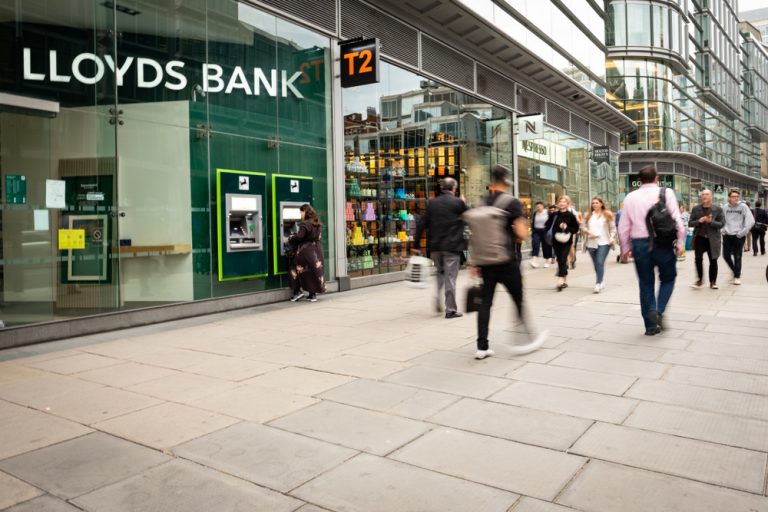
Lloyds Banking Group PLC (LON: LLOY) have announced results of their most recent trading update, in this statement pre-tax profits fell amidst a slump in the global finance industry.
Lloyds reported a a 97% fall in pre-tax profit for the third quarter from last year.
The company’s profit before tax for the third quarter fell 97 percent to 50 million pounds from £1.82 billion last year.
Statutory loss after tax for the quarter was £238 million or 0.5 pence per share, compared to profit of £1.42 billion or 1.8 pence per share in 2018.
The third quarter results, were significantly impacted by a £1.8 billion payment protection insurance or PPI charge, driven by a high levels of PPI information requests received in August.
Additionally, net income for the quarter declined 6% to £4.19 billion from £4.45 billion pounds a year ago.
The news comes at a time where there has been mixed updates from competitors.
HSBC (LON: HSBA) have reported a fall in revenues and a restructuring change may lead to job cuts, and Deutsche Bank (ETR: DBK) appear to be in further crisis as they report a third quarter loss.
Gains have been made by Standard Chartered (LON: STAN) and Bank of Ireland (LON: BIRG), as they third quarter trading updates show strong performance and revenue growth.
Lloyds banking forecasts net interest margin of 2.88%, in line with previous guidance of about 2.9% which does give shareholders something to hold onto amidst this poor quarterly performance.
The bank’s chief executive, Antonio Horta-Osorio, said: “I am disappointed that our statutory result was significantly impacted by the additional PPI charge in the third quarter, driven by an unprecedented level of PPI information requests received in August”.
We will maintain our prudent approach to growth and risk whilst continuing to focus on reducing costs and investing in the business to transform the group for success in a digital world,” he said.
The fact that COO Juan is departing after eight years at the company also is a worry as no potential successor has been lined up.
Lloyds have said however that the appointment will be announced in the near future, as and when candidates are shortlisted.
António Horta-Osório, Group Chief Executive, said “Juan has made a very substantial contribution to helping to turn Lloyds around. His work in Risk was outstanding and led to his invitation to join the Board. Throughout the Group, and externally too, Juan is respected for his exceptional judgement and insight. Juan has made a tremendous impact on the Group and we shall be sorry to see him go.”
Catherine Woods will join the Board on 1 March 2020 after retiring as Deputy Chairman and Senior Independent Director of Allied Irish Bank in October 2019.
Nevertheless, Mr Horta-Osorio said the bank’s financial performance had been solid despite a “challenging external environment”.
Currently, shares of Lloyds are trading at 56.55p per share, slipping 1.82% during Thursday trading. 31/10/19 11:08BST.
Peugeot and Fiat finalize merger

Peugeot (EPA: UG) and Fiat Chrysler (NYSE: FCAU) have completed their merger deal, after negotiations commenced yesterday.
After reports during Wednesday trading, the two automobile giants formalized the move which stampedes authority into the global car market.
This creates a new trans-Atlantic automaking giant with roughly 410,000 employees and combined revenues of $190 billion.
Shareholders of each company will have an equal stake in the newly formed titan, as the companies said in a statement released on Thursday morning.
The combined company would be based in the Netherlands, which is the current headquarters of Fiat Chrysler.
John Elkann, the current chairman of Fiat Chrysler would perform the same role at the combined company, while PSA Group chief executive Carlos Tavares would be CEO.
The merger comes at an interesting time, where the automobile market saw a global slow down.
The deal shows the willingness of both firms to expand their global client base and cross fertilize to form a supergiant in the automotive industry.
“We view the combination of these two companies as reasonable given global competition, high capital intensity, and industry disruption from electrified powertrain as well as autonomous technologies,” Richard Hilgert, a senior equity analyst at Morningstar, said in a research note on Wednesday.
After this deal was formalized in the early hours of Thursday trading, firms such as Volkswagen (ETR: VOW3) have been stunned into fear about the potential of this new company to dominate the market.
A combined Fiat Chrysler-PSA will have a market value of about $50 billion (£39.9 billion) with annual sales of 8.7 million vehicles.
There have been no plans to shut operations in the UK, however unions have expressed worries about the impact this will have on firms such as Vauxhall.
“Merger talks combined with Brexit uncertainty is deeply unsettling for Vauxhall’s UK workforce which is one of the most efficient in Europe,” said Unite national officer Des Quinn.
“The fact remains, merger or not, if PSA wants to use a great British brand like Vauxhall to sell cars and vans in the UK, then it has to make them here in the UK.”
Prof David Bailey, from the Birmingham Business School said “I have a real fear that if this merger goes ahead the likes of Ellesmere Port, which is a very efficient plant, could be sacrificed to get the sort of savings the company is looking for, especially in all the uncertainty over Brexit.”
He added: “The government will be particularly vigilant over preserving (the group’s) industrial footprint in France.”
Regulators have given the green light for this deal to happen, and this may allow a transition in market share for the newly made firm, it will be interesting to see how firms such as Renault (EPA: RNO) and Nissan (TYO: 7201) respond after operations commence.
UK car production down 3.8% in September

UK car production fell 3.8% in September, new data revealed on Thursday.
The Society of Motor Manufacturers and Traders said that UK car output dropped 3.8% to 122,256 units, rounding off a “turbulent” first nine months.
Almost 5,000 fewer units were built compared to September last year.
The data marks a 15-month period of decline for the sector, the Society of Motor Manufacturers and Traders said.
In the month of September, production for the UK dropped 5.1%, with political and economic uncertainty dampening the domestic market.
Additionally, exports fell 3.4%.
“Another bitterly disappointing month reflects domestic and international market contraction,” Mike Hawes, the Society of Motor Manufacturers and Traders’ Chief Executive, commented on the data.
“Most worrying of all though is the continued threat of a ‘no deal’ Brexit, something which has caused international investment to stall and cost UK operations hundreds of millions of pounds, money that would have better been spent in meeting the technological challenges facing the global industry,” the Chief Executive continued.
The Chief Executive said: “A general election may ultimately provide some certainty, but does not yet remove the spectre of no deal which will continue to inhibit the UK industry’s prospects unless we can agree and implement a new, ambitious and permanent relationship that safeguards free and frictionless trade.”
With the deadline for the nation’s departure from the European Union postponed yet again, political and economic uncertainty continues to prevail.
The UK was supposed to to exit the European Union today, on the 31st October.
Brexit has now been delayed until the 31 January 2020.
Meanwhile, MPs have supported a bill to hold a general election on the 12 December, later this year.
https://platform.twitter.com/widgets.js“Most worrying of all though is the continued threat of a ‘no deal’ Brexit, something which has caused international investment to stall and cost UK operations hundreds of millions of pounds” CEO @MikeHawesSMMT responds to UK car production figures https://t.co/H2gKAe9sNL pic.twitter.com/Cc3XtCVyms
— SMMT (@SMMT) October 31, 2019