UK manufacturing PMI down as political uncertainty weighs

0
UK manufacturing PMI remained trapped at a six-and-a-half year low in July as global trade tensions prevail and Brexit uncertainty weighs, new data on Thursday reveals. The IHS Markit UK Manufacturing PMI (Purchasing Managers’ Index) was at 48.0 for July, below the neutral 50.0 mark for the third consecutive month and unchanged from the figure given for the month of June. The data shows that last time that the PMI was below its current level was almost six-and-a-half years ago in February 2013. Manufacturing production saw its sharpest drop in seven years and demand was weaker from domestic and overseas markets, according to the data. Employment decreased for the fourth month in a row and the pace of decline accelerated to one of the highest over the past six-and-a-half years. Ongoing uncertainties such as global trade tensions and Brexit have been cited as factors contributing to lower order intakes and production. Businesses also said that clients have been directing supply chains away from the UK ahead of Brexit.
“July saw the UK manufacturing sector suffocating under the choke-hold of slower global economic growth, political uncertainty and the unwinding of earlier Brexit stockpiling activity,” Rob Dobson, Director at IHS Markit, commented. “Production volumes fell at the fastest pace in seven years as clients delayed, cancelled or re-routed orders away from the UK, leading to a further decline in new work intakes from both domestic and overseas markets,” Rob Dobson continued.
Duncan Brock, Group Director at the Chartered Institute of Procurement & Supply said that the “killer combination of economic uncertainty and the weakest production levels for seven years, battered the manufacturing sector into contraction for the third consecutive month in July.” “New orders fell as businesses used up stockpiled materials, EU businesses moved supply chains out of the UK and weakness in the global economy stifled demand from both domestic and export markets,” Duncan Brock added. “Unsurprisingly the decline in employment levels followed suit with one of the sharpest cuts to jobs for more than six years as businesses hesitated to keep calm and carry on and build staff levels.” Last week, Boris Johnson won the Conservative leadership contest, becoming the new Prime Minister of the UK. But will he be able to secure a deal before the Halloween extension date that ensures the nation leaves the European Union in a way that causes as little damage as possible?

Barclays half year profits rise 82%

11
Barclays posted an 82% increase in profit before tax in its half year results on Thursday. Shares in Barclays (LON:BARC) were trading over 2% higher on Thursday morning following the announcement. Barclays group profit before tax amounted to £3 billion for the half year ended 30 June, up 82% on the £1.7 billion figure from the year before. Meanwhile at Barclays UK, profit before tax for the period was £1.1 billion, compared to the £0.8 billion recorded for the first half of 2018. The British multinational investment bank and financial services company added that, given the challenging income environment experienced in the first half, management expects to reduce 2019 costs below £13.6 billion. Barclays also said that it would pay a half year dividend per share of 3.0p.
“This was another resilient quarter of performance. For the second quarter in succession Barclays generated an attributable profit of over £1 billion, and delivered EPS of 12.6p for the first half of 2019,” James E Staley, Group Chief Executive Officer, commented on the results. “Barclays UK continued to build its mortgage and deposit balances, with stable credit metrics. This has partially offset the reduction in net interest margin from increased levels of customer refinancing, and lower interest earnings from UK cards balances. Digital engagement with our UK customers is at an all time high, with just under 8 million customers now digitally active on the Barclays App,” James E Staley continued. “Management focus on cost control remains a priority, and we expect to reduce expenses to below £13.6 billion for 2019.” “This all puts us in a position to continue to increase the return of capital to shareholders by declaring a half year dividend of 3 pence. The half year dividend is around a third of what we expect to pay in total in a given year under normal circumstances. This increase in ordinary dividend reflects the confidence that the Board and management have in the sustainable earnings generation of our business.” Earlier this year, Barclays reported a 10% fall in its first quarter profits, sending shares downwards. In June, its former chief executive John Varley was acquitted of conspiracy to commit fraud. Shares in Barclays plc (LON:BARC) were trading at 2.33% as of 09:34 BST Thursday.

Devro retains outlook with flat revenues and volumes

Food industry focused collagen producer Devro plc (LON: DVO) reported a fairly flat first half to FY19, with production and revenue remaining almost level and profits either marginally improving or falling, depending on the metric of measurement. Production volumes of collagen products were down 1% for the first half, and the Company said revenues dropped by £1 million, due to what the Group described as ‘lower revenues from other products’. Devro underlying profit before non-recurring items was down by £1 million to £17.8 million, while underlying profit was up 4% and statutory profit was up 25% to £14.9 million and £13.6 million respectively. The Group’s cash flow generation improved notably, however, up from negative £0.2 million for H1 2018 to £4.3 million for H1 2019. Operationally, the Company stated that it was progressing well on; plant speed improvement in the US, the rollout of its Fine Ultra product platform and its pilot project for phased capacity increases in North America.

Devro comments

Company CEO Rutger Helbing, stated,

We continued to make good progress on our strategic priorities in the first half. We delivered manufacturing efficiency improvements, in particular with increased speeds at our US plant. Our commercial and product development teams continue to establish the building blocks to accelerate future growth through the rollout of our new Fine Ultra product platform and developing new categories in China.”

“For the full year, we continue to expect volume and revenue growth to be weighted towards the second half, supported by a number of commercial initiatives to accelerate growth and the continued rollout of our Fine Ultra product platform. We also now expect our total cost savings programme to exceed our previously stated target. At current FX rates operating profit will benefit from foreign exchange gains in the second half.”

“Despite weaker market sentiment in some mature markets and ongoing pressures from input cost inflation, the Board believes that Devro continues to be well placed to make good progress in 2019 and the full year outlook remains unchanged.”

Investor notes

Following today’s update, the Company’s shares dipped 1.90% or 4.00p to 206.00p a share 31/07/19 15:15 BST. Peel Hunt analysts have reiterated their ‘Hold’ stance on Devro stock. The Group’s p/e ratio stands at 14.38 and their dividend yield is 4.34%. Elsewhere, there have been updates from other food and drink retailers; Greencore Group plc (LON: GNC), NWF Group plc (LON: NWF), Cranswick plc (LON: CWK), Nestle SA (SWX: NESN) and Fuller, Smith and Turner plc (LON: FSTA).

Intu announces five year plan as shares plummet

Real estate investment trust company Intu Properties plc (LON: INTU) admitted today that something had to change in the Company’s strategy, with an on-year comparison of 2018 and 2019 first halves revealing a bleak downward trend in operational and financial performance. Regarding its financials, the Company’s underlying earnings fell by a third from £98.5 million to £66.4 million. Additionally, its net rental income fell 7.7% on a year-on-year basis for the first half, down to £205.2 million from £223.1 million. The dividend paid per share also fell, from 4.60p per share for H1 2018, to a dividend not being paid to shareholders for the first half 2019. In respect to Intu operational performance, the Group’s new leasing numbers were down from 116 to 109 for the first half, with new rent income dropping by £2 million on-year. Similarly, on an EPRA basis, occupancy rates dropped from 96.6% to 95.1%.

Intu Five Year Plan

In the Company’s statement, Company Chief Executive Matthew Roberts, commented,

“The first half of 2019 has been challenging for intu. We have experienced further downward pressure on like-for-like net rental income and property values resulting from a higher level of administrations and CVAs as some retailers struggle to remain relevant in a multichannel world.”

“These challenges, facing intu and the whole sector, have been well-documented and, while there are no quick fixes, I am confident that we can address them head on. Over the past nine months we have carried out the most comprehensive review of the business that intu has ever undertaken.”

“We know radical transformation is required and have developed a new, ambitious five year strategy to reshape our business and address the challenges we face, with a priority to fix our balance sheet. With the people changes we have made, we now have the right leadership team in place with the appropriate skill sets to deliver this plan and drive the business forward.”

“Regardless of current sentiment, one thing is clear: the physical store is not dying, it is evolving. The right store in the right location still plays a vital role in retailers’ multichannel strategies and we are starting to work with them as partners sharing the risks and rewards.”

“Our centres will also transform as we turn them into thriving communities – places where people want to live, work and have fun, as well as shop.”

“Change will not happen overnight, but I am confident we have the right plan in place and an energised, dynamic team to deliver it.”

Investor notes

After a modest recovery, the Company’s shares have continued their free fall, down 28.35% or 19.92p to 50.34p a share 31/07/19. Peel Hunt analysts have reiterated their ‘Hold’ rating, while Liberum Capital reiterated their ‘Sell’ stance on Intu Properties stock. The Group’s p/e ratio is currently 4.88 and their dividend yield is 9.03%. Elsewhere in property development and estate agency news, there have been updates from; LSL Property Services plc (LON: LSL), Countryside Properties PLC (LON: CSP), Ashley House Plc (LON: ASH) and Persimmon plc (LON: PSN).

Next Q2 full price sales beat expectations, profit guidance raised

1
Next (LON:NXT) raised its profit guidance in a trading statement on Wednesday as second quarter full price sales came in ahead of expectations. Shares in the retailer were trading over 8% higher on Wednesday following the announcement. Full price sales in the second quarter were better than anticipated, Next said, up 4% on last year. This result is 4.5% better than the guidance of -0.5% given in a trading statement earlier this year in May. Following the better than expected results in the second quarter, Next increased its full price sales guidance for the second half from +1.7% to +3.0%. “The increase in our full price sales guidance is £70m and, after accounting for associated costs, is expected to add £20m to profit. Lower clearance rates to date, along with anticipated lower clearance rates in the second half, are forecast to cost an additional £10m. As a result, we are increasing our guidance for full year Group profit by £10m to £725m, marginally up on last year. We now expect Earnings Per Share to grow by +5.2%,” Next said in a company statement. “However, some of July’s over-performance in full price sales came as a result of lower markdown sales in our end-of-season Sale,” the fashion retailer added. In May, Next announced that the unusually warm weather over the Easter holiday period had boosted its full price sales. The retailer had said, however, that it was too early to revise its full year sales and profit guidance, leaving the figures unchanged. The news from Next comes as Intu (LON:INTU) shares plummeted on Wednesday as the tough retail environment weighs. The shopping centre landlord said that loss before tax deepened to £856.4 million during the six months ended 30 June, down even further from the £506.5 million figure for the same period in 2018. In order to reduce net external debt, Intu was forced to cut its dividend for 2019. Retailers across the country are battling with gloomy trading conditions, with companies such as Debenhams among some of the most well-known names struggling lately. Shares in Next plc (LON:NXT) were trading at +8.12% as of 14:28 BST Wednesday.

Nektan announces new sites and revenues up 14.8% during FY19

Gaming technology platform Nektan PLC (LON: NKTN) have seen their full year revenues growth in its B2C and B2B segments, and a record number of partners live in the fourth quarter. Despite the impact of UK taxation and player verification – which affected the Company in Q3 and Q4 – the Group’s full-year revenue still grew 14.8% on a year-on-year basis. The Company attributed this to strong growth in the sales pipeline of its B2C and B2B sectors. B2C announced the launch of 13 new white label casino sites during the fourth quarter, along with its first mobile bingo offering. B2B noted 12 live partners, up from 10 for Q3. The segment also announced the release of Volt Casino and MoPlay, as well as entry into the African continent with betting companies Betika and BetLion. The number of game providers in Netkan casino platforms has increased to 42 in Q4, from 38 in Q3. Four new games have been developed with partners Rocksalt Interactive and ReelFeel.

Nektan comments

Lucy Buckley, Chief Executive Officer, said,

“With an established proprietary technology platform and growing sales pipeline, Q4 has seen us go live with more B2C and B2B partners putting us in a strong position to accelerate our growth and increase revenues further over the course of FY20.”

“In the B2B division, we continue to make exciting progress; our pipeline of opportunities is continuing to develop and has seen engagement with an increasing number of larger market participants globally. We expect a number of these to go live during the remainder of 2019, which has the scope to have a transformational impact on our business.”

“Whilst Q4 saw a continuation of the B2C trading conditions we experienced in Q3, we have taken decisive action to structure the Company in response to the changing gaming environment and to provide the strategic platform for expansion and growth in international markets. Furthermore, a number of steps to enhance our product offering, including the launch of bingo and improved player journeys, have been completed in Q4 and we look forward to the new financial year with optimism.”

Investor notes

Perhaps led by recent regulatory conditions, Nektan shares struggled today, down 3.41% or 0.35p to 9.90p a share 31/07/19 13:34 BST. The Group’s p/e ratio and dividend yield are currently unavailable, their market cap is £10.91 million. Elsewhere in the tech sector, there were updates from; Keywords Studios PLC (LON: KWS), Biome Technologies plc (LON: BIOM), Midwich Group PLC (LON: MIDW) and Boku Inc (LON: BOKU).

SMMT: UK car productions drops over a fifth and Brexit costs grow

0
British car manufacturing output fell by over a fifth in the first half of 2019, according to new data revealed on Wednesday by the Society of Motor Manufacturers and Traders (SMMT). Car manufacturing output declined by 15.2% in June, making it the 13th consecutive month of negative growth. Additionally, the industry body said that at least £330 million has already been spent by the sector on Brexit contingency plans. The money has been spent on stockpiling materials and components, securing warehousing capacity and investing in new logistics solutions, additional insurance and training in new customs procedures, said the SMMT. Equally, inward investment into the sector practically stopped in the first half of the year, as newly pledged investment was down over 70% to £90 million. “Today’s figures are the result of global instability compounded by ongoing fear of ‘no deal’. This fear is causing investment to stall, as hundreds of millions of pounds are diverted to Brexit cliff-edge mitigation – money that would be better spent tackling technological and environmental challenges,” Mike Hawes, SMMT Chief Executive, commented on the data. “The industry’s foundations are fundamentally strong, however, and we’re ready to work with the new government to build on these through the industrial strategy. We need an internationally competitive business environment to encourage more investment, more innovation and more growth,” Mike Hawes continued. “That starts with an ambitious Brexit deal that maintains frictionless trade and we look to the new administration to get a deal done quickly so manufacturers can get back to the business of building cars and helping deliver a brighter future for Britain.” In June, the Chief Executive of SMMT said that a no-deal Brexit is “not an option” now for the automobile sector. Automotive manufacturing delivers £18.6 billion to the UK economy each year, making it one of the nation’s most important economic assets. The success of the sector, however, is dependant on a free and frictionless trade with the European Union. Leaving the union without a deal will lead to the imposition of tariffs, the SMMT added, costing roughly £4.5 billion a year. Just last week Boris Johnson won the Conservative leadership race, becoming the new Prime Minister. But will he be able to agree on a deal before the nation’s Halloween departure date?

Pound takes breather as backstop impasse continues

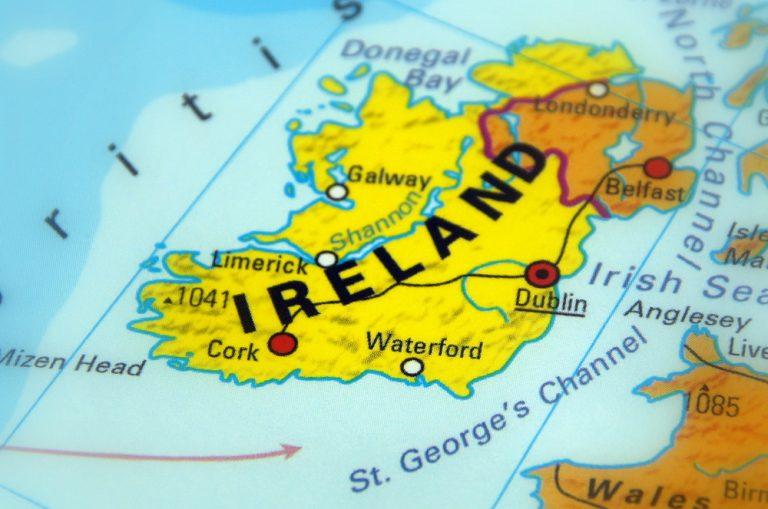
After falling 2.78% against the Euro and 2.63% against the Dollar in the past week, the Pound appears likely to continue its slide with persisting political uncertainty between the UK and EU, as well as domestically in the UK. Despite rising slightly today, any rally is likely fleeting; with Sterling dropping to a two-year low against the Euro at 1.0888 yesterday, and a two-year low against the Dollar at 1.2164. This forward looking pessimism is corroborated by market analysts today, after a phone call between incumbent UK prime minister Boris Johnson and Ireland’s Taoiseach Leo Varadkar, which did little but confirm a lack of progress in discussions on the Irish backstop and ultimately on the Withdrawal Agreement. In a statement, a Downing Street official stated the following, “The prime minister made clear that the UK will be leaving the EU on October 31, no matter what,” The prime minister told his Irish counterpart that any deal would hinge on the removal of the Irish backstop, and that the UK would not impose any physical restrictions on Irish goods. “The prime minister made clear that the government will approach any negotiations which take place with determination and energy and in a spirit of friendship, and that his clear preference is to leave the EU with a deal, but it must be one that abolishes the backstop,” Downing Street said. “The Taoiseach explained that the EU was united in its view that the Withdrawal Agreement could not be reopened,” the Irish government said. “Alternative arrangements could replace the backstop in the future… but thus far satisfactory options have yet to be identified and demonstrated,” the Irish government said.

The Pound Forex outlook

Based on today’s correspondence, the macro, and micro political climate, the market’s outlook on the Pound is bleak. Responding to the news and looking ahead, CEO of financial advisory service de Vere, Nigel Green, said the following, “The pummelled Pound is going to continue to be battered either way in the short to medium-term under Boris Johnson or Jeremy Corbyn, says the CEO of one of the world’s leading financial advisory organisations […] There is no end in sight to the embattled British pound’s plight with both the current Prime Minister Boris Johnson and the leader of the official opposition Labour Leader Jeremy Corbyn promoting policies that will deliver fresh – and serious – blows to the currency.” “Should the UK leave with no-deal, the Pound can be expected to remain weak for several years until the country and the bloc readjusts […] In addition, many observers predict that there will be a general election before the end of the year. All by itself this too will create uncertainty and therefore turbulence for Sterling.” He finished his statement with the following declaration, “should a Corbyn-led Labour party win that election, there will be even more bad news for the Pound. His anti-business rhetoric, and high tax and low-profit policies would lead to considerable and sustained selling of the Pound.” So, the focus is not solely on Brexit. Markets are fearful of Johnson’s do-or-die approach and are equally, if not more afraid, of the potential realisation of Corbyn’s seeming lack of interest for preserving the market status quo. Any movement in the Sterling will dependent on Boris’s progress in negotiating a deal – or lack thereof. Should a no-deal scenario become a reality, the UK can only hope to emulate the rally in exports witnessed in 2016, and hope more is done by small business to make the necessary preparations for uncertain market conditions.  

Keywords Studios H1 performance weighed down by investment

International video gaming technical and creative services provider Keywords Studios PLC (LON: KWS) saw revenue growth of up to 33% across all seven sectors of its business; however its end of period results in H1 were weighed down by investment in testing operations and four acquisitions. The Group’s revenues were up c.39% on a year-on-year basis, up from €110.0 million for H1 2018 to €153.1 million for H1 2019.

The Company’s two largest sectors witnessed the best performance. The Functional Testing and Game Development service lines represented a total of 39% of pro forma Group revenues. Profit before tax increased 15% on-year, from €16.0 million for H1 2018 to €18.4 million for H1 2019.

This performance was offset by expansion costs and investement in early stage businesses acquired in 2018, which are now approaching commercial launch. Keywords Studios also established Functional Testing operations in Katowice, Tokyo and Mexico City, as well as Localization Testing in Katowice and Player Support in Mexico City. The Company’s net debt was up from €0.1 million at 31 December 2018, to €9.0 million at 30 June 2019. This was led by its four acquisitions which totalled €7.0 million. Keywords Studios comments

Andrew Day, Chief Executive, stated,

We were pleased by the strong performance of the Group in the first half, incorporating as it does the anticipated lower growth VMC business acquired in October 2017. Particularly steep increases in activity of some of our service lines in the first half required us to invest rapidly in expanding capacity to meet that demand. As we move into the second half, we expect to be able to leverage that investment to the benefit of margins in the second half.”

“Demand from new game streaming services has continued to drive volume increases for us, and we continue to benefit from clients increasing the number of services acquired from Keywords with 113 clients now taking 3 or more services (99 as at 31 December 2018). I’m particularly pleased with the progress in building our Game Development services which we first entered only two years ago and, with further acquisitions still to come, is well set to become our largest service line by revenue.”

“We continue to review a healthy pipeline of acquisition candidates in line with our strategy to build our business both organically and through acquisition. The new, enlarged banking facility will give us the flexibility and headroom to deliver that strategy and further enhance shareholder value.”

Investor notes

With a warning that the Company’s profits would be weighed towards the second half, their shares dipped 2.74% or 47.00p to 1,669.00p a share 31/07/19 12:25 BST. Liberum Capital analysts downgraded its stance from ‘Buy’ to ‘Hold’, and Peel Hunt reiterated their ‘Sell’ rating on Keywords Studios stock, having previously downgraded it from ‘Hold’. The Company’s p/e ratio is currently 39.17 and their dividend yield stands at 0.10%. Elsewhere in the tech sector, there were updates from; Biome Technologies plc (LON: BIOM), Midwich Group PLC (LON: MIDW), Boku Inc (LON: BOKU) and Telit Communications Plc (LON: TCM).

Intu shares plummet as tough retail environment weighs

2
Intu posted a deeper loss before tax on Wednesday in its half year results as changes to the retail environment weigh. Shares in the business were trading over 23% lower following the announcement. The shopping centre landlord said that loss before tax deepened to £856.4 million during the six months ended 30 June, down even further from the £506.5 million figure for the same period in 2018. Net rental income decreased by 17.9% to £205.2 million, and 7.7% on a like-for-like basis. Intu added that it expects this decline to run at a similar level through the remainder of the year as the impact of recent administrations and CVAs are resolved. In order to reduce net external debt, the company has been forced to cut its dividend for 2019. “The first half of 2019 has been challenging for intu. We have experienced further downward pressure on like-for-like net rental income and property values resulting from a higher level of administrations and CVAs as some retailers struggle to remain relevant in a multichannel world,” Matthew Roberts, Intu Chief Executive, commented on the results. “These challenges, facing intu and the whole sector, have been well-documented and, while there are no quick fixes, I am confident that we can address them head on. Over the past nine months we have carried out the most comprehensive review of the business that intu has ever undertaken,” Intu’s Chief Executive continued. The shopping centre landlord drew upon recent concerns surrounding the “death of the store” as consumers seek online shopping alternatives to brick-and-mortar shops. Intu affirmed “the right stores in the right locations still play a vital role for retailers” as 85% of all retail transactions still touch a physical store. Indeed, the challenging retail environment to have hit the UK high street has been well documented by several retailers as they see staff cuts and store closures. “We know radical transformation is required and have developed a new, ambitious five year strategy to reshape our business and address the challenges we face, with a priority to fix our balance sheet. With the people changes we have made, we now have the right leadership team in place with the appropriate skill sets to deliver this plan and drive the business forward,” Intu’s Chief Executive added. Shares in Intu Properties plc (LON:INTU) were trading at -23.46% as of 11:56 BST.