Grainger intend to raise £185 million to fund acquisitions and new projects

0
Grainger PLC (LON:GRI) have told shareholders that they intend to raise £185 million to fund company expansion. The residential property firm said that the funds raised would allow the firm to pursue new acquisitions and develop projects currently in the planning and legal phase. Grainger said that they expect to place 61.2 million new ordinary shares through an accelerated book build. The firm has yet to fully disclose the price of these additional shares and formalities have not been revealed. The share placing will also happen alongside a £120 million debt financing, which is estimated to raise aggregate funds of £305 million for the firm. Helen Gordon, Chief Executive commented: “We have real momentum in the business and now is the right time to invest for the future and increase our investment in our secured pipeline. Over the last four years, we have transformed Grainger into the UK’s leading provider of private rental homes, with c.9,000 operational rental homes and an attractive and growing pipeline of opportunities for over 9,000 more new private rental homes. Today’s placing will enable us to bring forward £246 million of investment for four new schemes, three of which are in strong regional cities, delivering 1,160 new homes, as well as expand our planning and legal pipeline, accelerating the delivery of net rental income and earnings growth.” The UK property market is looking to bounce back from previous setbacks. Both Brexit and wider political complications have taken their toll on the property market, however some clearance has been given. Following this, Grainger have remained confident to now captivate a recovering property market and accelerate their growth through new acquisitions and organic growth. Gordon concluded: “The outlook for the UK’s private rented sector is positive, with growing customer demand and structural undersupply supporting the investment case. With our deep knowledge and experience in the market, we are able to deliver long-term, sustainable returns through our targeted investment strategy, coupled with our strong operational platform.” “Grainger’s integrated owner-operator business model delivers enhanced returns at scale, and today’s placing will allow us to further grow our business in high-quality rental homes and deliver great service to our customers, which in turn will drive long-term shareholder value.”

Grainger’s business in Wales

In December, Grainger announced that they had completed an acquisition deal in Wales. Grainger alluded to the new acquisition of a capital quarter in Cardiff Wales for a reported £57 million. The terms agreed include a forward funding and the acquisition of a 307 home project in the capital of Wales. Grainger alluded to the growing nature of the Welsh property market due to its strong economic prospects and growth potential. The home is currently being developed by IM Properties, with Winvic Construction Ltd acting as contractor. Grainger said it expects this investment to generate a gross yield on cost approaching 7% once stabilised, with completion anticipated in mid-2022.

Strong performance within private rental sector

A fortnight ago, Grainger updated the market by praising their private rental sector growth. The firm praised the strong performance of its private rented sector portfolio, at a time where the property market has been hit by external shocks and political complications. In the four month period, which ended on January 31 Grainger said that overall like-for-like rental growth was 3.5%, with a 3.0% rise on a like-for-like basis on the residential landlord’s PRS homes. The property investment firm said that its private rental sector had continued to perform well, with occupancy at 97.5% and a strong sales performance in the period, with pricing 0.8% ahead of valuations. Grainger’s PRS development pipeline as at January 31 stands at 24 schemes, representing 9,104 homes and around £2.00 billion in investment, an impressive stat for shareholders to note within today’s update. From the total portfolio, £845 million is related to internal company investment, £600 million from a joint venture deal with Transport for London and £570 million from opportunities in the planning and legal stages. Shares in Grainger trade at 312p (+0.13%). 13/2/20 15:13BST.

Filta shares rally over 19% on strong European and North American trading

0
Filta Group Holdings PLC (LON:FLTA) have seen their shares rally 19% following strong expectations from the firm. The firm said that they expect to deliver a better performance in 2020, following progress made in the final quarter of 2019. Filta Group Holdings plc is a provider of fryer management and other services to commercial kitchens. Shares in Filta trade at 167p (+19.29%). 13/2/20 12:57BST. The company remained confident in their expectations, as they forecasted to report adjusted earnings before interest, tax, depreciation and amortization of £3.2 million on turnover of approximately £25 million. Filta praised the strong performance of the North American and European business sectors. Both these divisions delivered results in line with expectations. Notably, the UK company too actions to deliver costs savings of around £100,000 per month. Filta told shareholders that they made strong progress in the final quarter of 2019, with “strong interest” from potential business in North America. Jason Sayers, Chief Executive Officer, commented: “The acquisition of Watbio in December 2018 was a significant transaction for the Group, given that it is a well-established company with a high-quality customer base and was almost twice the size of Filta’s existing UK business. The rationale and opportunities presented by the acquisition remain compelling but, as previously reported, we did encounter some challenges in 2019 as we sought to integrate Watbio with our existing FOG and Seal business. However, following a number of management changes, new hires and investment in software systems, it is pleasing to report that these difficulties have now been addressed, and we look forward to delivering the higher margins of which we know the business is capable. At the same time, Filta’s North America business continues to grow through our focus on helping franchisees to improve and expand their own operations, which is increasing the level of reoccurring royalty revenues flowing to the Company”.

Filta’s second half expectations

In November, the firm gave a confident update to shareholders. The filtration-focused engineering firm expected adjusted earnings before interest, taxes, depreciation & amortisation to be “similar” to the £1.7 million reported for the first six months of the year. Filta alluded to the fact that order books continued to remain strong, and new franchisees continue to show interest and the firm remains confident of delivering further growth. Management decided to divert resources to catch up on an order backlog in its UK Fat, Oils & Grease unit. In addition, a small installation operation is also expected to be delayed, until early 2020. Filta have seen an excellent update today, and the firm should hope that shareholders can remain optimistic for future trading.

Can Lloyds Banking shares hit 70 pence?

2
Lloyd’s Banking Group PLC (LON:LLOY) have seen an interesting few weeks, as the shares faced a setback since the December election, where shares initially rallied. Shares in Lloyds Bank trade at 57p (-0.44%). 13/2/20 12:26BST. The share price of Lloyds has hovered around the late 50p and early 60p ball park over the last few months, however is yet to hit 70p. The 52 week high has hit 73.66p, but has also seen lows of 48.16p showing its volatile nature. Combined with this, the 50 day moving average has flirted with the 60p but has just remained shy at 59.53p. Whilst the 200 day moving average has been slightly lower at 56.75p. Could Lloyds shares hit 70p?

Lloyd’s face tough media scrutiny

Lloyds have been put in bad media spot light over the last few weeks, and this has hindered the upwards movement of its price. In December, the British bank was faced with much public scrutiny as it failed the Bank of England Stress Test. Lloyds initially did pass the Bank of Englands annual assessment in the balance sheet department. However, plans to double a 100 basis point capital buffer designed to protect lenders in depressed economic conditions could put both bank’s 2020 share buyback plans in jeopardy, analysts said. In addition to this, Lloyds also received criticism for mistreating victims of major fraud. The fraud at Halifax Bank of Scotland’s Reading branch led to six people being jailed in 2017 for a combined 47 years. The scam involved small business customers being referred to consultancy for bribes which included watches, holidays and sex with prostitutes. The bank’s compensation scheme for victims had ‘serious shortcomings’, retired judge Ross Cranston said in a review. The bank has paid £102 million in compensation to 71 businesses and 191 directors over the fraud. Additionally Lloyds said it would offer all victims the option to have their cases independently reviewed. The Financial Conduct Authority said it would consider ‘further action’ against Lloyds over the failings, adding that they needed to be addressed quickly. Certainly, Lloyds will have to face their public image issues if they are to fill their shareholders with any confidence.

Third Quarter slump

Aside from the bad news coverage, Lloyds have also seen their profits and performance slump over the last few months. At the end of October, the firm reported a a 97% fall in pre-tax profit for the third quarter from last year. The company’s profit before tax for the third quarter fell 97 percent to £50 million from £1.82 billion last year. Statutory loss after tax for the quarter was £238 million or 0.5p per share, compared to profit of £1.42 billion or 1.8p per share in 2018. The third quarter results, received a bruising from a £1.8 billion payment protection insurance or PPI charge, driven by a high levels of PPI information requests received in August. Additionally, net income for the quarter declined 6% to £4.19 billion from £4.45 billion pounds a year ago. The earnings of Lloyds have been bruised, as Brexit complications and political landscape of the United Kingdom weigh down on not just Lloyds but all British banks. Credit Suisse issued a target of 60p for Lloyds on 11/2/20, whilst Jefferies International took a more bullish stance recommending a buy rating with a 78p target on 22/1/20. One thing that Lloyds can fix however is their reputation within the market, and the firm will have to bounce back from a tough few months of trading if shares are to be lifted in excess of 60p.

MJ Gleeson see falling interim revenue from slow Strategic Land division

0
MJ Gleeson (LON:GLE) have reported a fall in interim revenue on Thursday but have remained confident to meet internal expectations. The land development firm left its full year expectations unchanged, however a decline in revenue may concern shareholders. In the six month period, which ended on December 31 the firm saw its revenue drop 19% to £105 million from £118.3 million on year go. Additionally, pretax profit also crashed 40% from £22.3 million to £13.3 million. MJ Gleeson said that its Strategic Land division hampered results, and this sector recorded no revenue in the half. However, in the year prior it generated £30.3 million. The urban generator also said that a number of land sales, which were expected to be closed in the first half are now estimated to be closed in the second half. Following the December election and progress within Brexit negations, the firm added that greater certainty had surfaced the market. In their homes division, Gleeson said that revenue rose 14% during the firs half to £15.9 million from £14 million a year ago. On a better note, this sectors saw sales rise 17% to 811 units from 691 units. Shareholders would have been further impressed, as the firm increased its first half dividend by 4.3% to 12 pence per share. Dermot Gleeson, Chairman commented: “We are delighted with the performance of our Homes division, with completions up 17.4% at 811 units. Demand remains strong, with January reservations per site up 5% on last year. We see no signs of this abating. Land remains available at sensible prices and we will be opening a significant number of new sites shortly. “As previously announced, Strategic Land, which saw an exceptionally strong result for the comparator period, did not complete any sales in the first half. However, the anticipated deal flow in the second half is now materialising with three sites sold, of which one was sold unconditionally and legally completed in January. We have a substantial pipeline in place and demand for consented sites, from both large and medium-sized developers, remains very high. “The strong performance of Gleeson Homes and anticipated deal flow in Strategic Land for the second half underpin the Board’s confidence that the Group’s results for the full year will be in line with expectations.”

Gleeson’s January update

The firm saw its shares in red in January, however remained confident to deliver expectations. The land developer said that its Homes unit had sold 811 units during the half year period to end 2019, which saw a 17% climb year on year from the 691 figure. Additionally, Gleeson said that the demand for its low cost homes remains strong and is on track to deliver full-year unit completions in line with expectations. In its Strategic Land division, the company said that due to a number of land sales which will be closed in the first half, these have shifted to the second half For financial 2019, the firm reported pretax profit of £41.2 million, which showed growth by 11% from the £37 million a year ago. Shares in MJ Gleeson trade at 976p (+0.41%). 13/2/20 12:15BST.

Boris says no to dissenters and the dispirited – big hitters axed in reshuffle

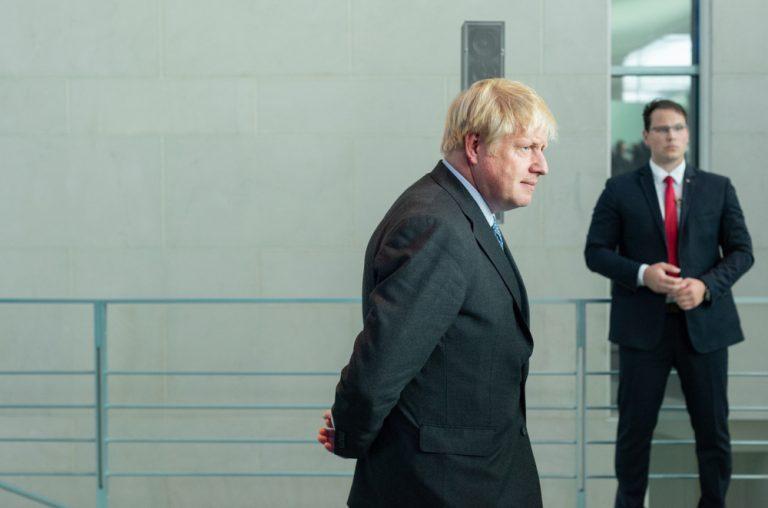
PM Boris Johnson has continued his programme of Boris-Cummings-politik, by carrying out a drastic cabinet reshuffle on Thursday. This latest move comes after complaints of selective media shut-outs and an over-involvement in the selection process of the incoming BBC top brass, alongside tensions surrounding Heathrow expansion and HS2 dissenters drumming up support. Today, the prime minister has called ministers into 10 Downing Street and has sounded the death knell for the following (former) ministers in the early knockings:
  • Julian Smith as Northern Ireland secretary
  • Andrea Leadsom as business secretary
  • Theresa Villiers as environment secretary
  • Esther McVey as housing minister
  • Nusrat Ghani as transport minister
  • Chris Skidmore as education minister
  • George Freeman as transport minister
Alongside this list – which features some considerable big-hitters – Geoffrey Cox resigned upon request as Attorney General, and we were already aware that Nicky Morgan was standing down as culture secretary. The reshuffle comes as PM Boris attempts to tailor his cabinet towards being a team more in line with his (somewhat unclear) vision for the UK.

Shock resignation

The most recent – and perhaps most surprising – resignation was that of Sajid Javid, after being ordered to sack his advisors. This latest move could prove seismic for the Johnson administration, though it has already been confirmed Rishi Sunak will replace Javid as Chancellor, and will likely deliver the budget in four weeks’ time. Dominic Raab will stay on as Foreign Secretary, Priti Patel remains Secretary of State and Michael Gove retains his position as Chancellor of the Duchy of Lancaster. At the very least, the PM will continue to be comforted by his confidante and master of ceremonies, Dominic Cummings. You’ll also be pleased to hear, Larry kept his post as Downing Street cat. Since the Thursday session began, Sterling went up from 1.19 to 1.20 against the Euro.

British house prices rise in January

0
Prices of British houses have risen at their fastest pace in nearly three months, as the property market looks to stabilize following a turbulent few months. The last three months have given some reassurance for the British people and British house prices, and a reflection in rising house prices may mean that some consumer confidence is being restored. Since the December election, where Boris Johnson wiped the floor clean of the Labour party, there have been developments in British Politics and Brexit. As I am writing now, my colleague to seats to the right of me is typing away updates on the cabinet reshuffle, as Boris Johnson looks to freshen his advisory committee in an attempt to restore British confidence in the government. The Royal Institution of Chartered Surveyors (RICS) said that house price index surged to +17 in January, from the -2 figure in December. “It remains to be seen how long this newfound market momentum is sustained for, and political uncertainty may resurface towards the end of the year. But at this point in time contributors are optimistic,” RICS chief economist, Simon Rubinsohn, said. Notably, the January reading was the highest reading since May 2017 and beat the forecast from both analysts and the market. Market traders and property experts praised the strong growth in London and South East, which had been previously facing troubles as Brexit took its weigh on the British property market. More properties were being listed for sale, and a steady rate of purchases also led to house prices increasing across the United Kingdom, and on these two metrics showed the fastest rise since August 2013. Halifax also reported a 4.1% rise in house prices annually, which was the biggest increase since February 2018. Notably, the Bank of England also said that lenders approved the most new portages since July 2017. Certainly, the outcomes of the election and the formal severance of British ties with the European Union has given some stability on the property market. There is still a long way to go and many clauses in Brexit will be unfolded, however this is a good sign that the property market has bounced back over the last few months.

Coca Cola European Partners 2019 revenue climbs following strong UK performance

1
Coca Cola European Partners PLC (LON:CCEP) have reported a rise in 2019 revenue on Thursday morning. The drinks retailer and producer said that it expects single digit revenue growth in 2020, however performance in 2019 had been strong. Coca Cola reported that revenue had rose 4.5% to €12.02 billion in 2019, compared to the 2018 figure of €11.52 billion. The multinational said that this reflected solid execution and innovation led growth which will please shareholders. Notably, pretax profit also rose €1.45 billion from €1.21 billion, whilst operating profit also rose from €1.30 billion in 2018 to €1.55 billion. On a sweet note for shareholders, Coca Cola also declared a full year dividend of €1.24 per share, which shows a 17% appreciation from last year. Coca Cola across all business have looked to maintain its annualized dividend payout ratio of 50%. The CEO commented “It is a fantastic time to be leading CCEP. Our 2020 guidance is firmly in line with our mid-term growth objectives, which when combined with a new €1 billion share buyback programme and a 50% dividend payout ratio, collectively demonstrate our commitment to driving sustainable value for our shareholders.” Coca-Cola also announced that they will be commencing a 2020 share buyback program of up to €1 billion, as the firm concluded its update. The drinks firm praised the strong performance in the British markets, as revenue grew by 2% in Coca-Cola Zero Sugar, Fanta & Monster drinks. French revenue also jumped 4.5%, and European performance was steady with strong consistent performance in the Netherlands. Damian Gammell, Chief Executive Officer said: “2019 saw our business deliver another solid full-year demonstrating our continued focus on driving profitable revenue growth through managing price and mix across our portfolio, delivering solid in-market execution and a step up in innovation, collectively reflected in market value share gains across all our geographies. 2019 was a great year for our customers too; joint value creation remains a key priority, so it has been great to see that once again we were by far the largest FMCG value creator in the retail channel[6]. And all of this alongside the successful closure of our merger commitments. Coca Cola are one of the world’s most established brands. Following strong European and British performance, there is every reason for the drinks firm to remain confident as the market for Coca Cola remains strong. “Looking ahead to 2020 and beyond, our journey continues to be built on three pillars: great people, great service and great beverages. We continue to build our core business alongside scaling up recent innovations and enhancing our commercial capabilities, by investing to better serve our customers and further improve in-market execution”, the CEO concluded. Shares in Coca Cola European Partners PLC trade at €49. (+1.86%). 13/2/20 11:24BST.

Coronavirus fatalities and secrecy drive down commodities and equities

With the Chinese Communist Party ousting its provincial leader in Hubei, and the Coronavirus death toll going past 1,350 on Wednesday evening, equities recoiled once again. Markets were seemingly getting used to the idea of the virus, despite some experts predicting that 60% of the world will have contracted the illness before its day is done. Now, however, markets have doubled back on their tentative optimism, with Hubei adding 15,150 cases to its projected total and taking the global number to over 60,000 cases. Even with the increase, there is little faith in these figures – only a gnawing understanding that the reality is likely worse than what we’re being told. We can choose whether or not to question the virus’s potency, what cannot be questioned is its reach, and the strain this puts on the movement of people and products. Speaking on the strain put on equities by the virus, Spreadex Financial Analyst Connor Campbell stated,

“Just as the markets seemed to break free of their coronavirus fears, an alarming spike in the number of deaths and new cases sent Europe lower.”

“Arguably the main driver of Wednesday’s growth was the hopes that the outbreak in China was being contained. Well, changes to the way in which authorities calculate figures surrounding the illness revealed a worse situation than first thought, with a 242 person jump in the number of deaths and a 15,000 surge in total cases.”

Largely acting as a barometer of market sentiment towards the illness, oil prices have fallen sharply since the virus’s ascendancy. Today, the commodity-laden FTSE suffered as oil companies felt the heat.

“Understandably this spooked investors. The commodity-heavy FTSE was the worst hit, which was an extra blow for the index as it was already left out of the market’s record peak party on Wednesday. With BP (LON:BP) and Shell (LON:RDSB) down 2.4% and 2.1% respectively, and its miners all falling at least 1%, the FTSE shed 80 points, sinking back towards 7460.”

“The Eurozone indices were comparatively unfussed by the latest coronavirus news. The DAX and CAC only slipped 0.3% apiece, leaving the former on a smidge under its recent all-time highs. The reason for this muted reaction could be partially due to the euro hitting its worst price since May 2017 against the dollar.”

“Similarly, investors may be waiting to see whether the sharp increase in deaths and new cases is a one-off, as Chinese officials adjusts their methods of calculation.”

“Looking ahead to the US session and the Dow Jones is currently pencilling in drop more in line with that seen in the Eurozone, the futures promising a 0.5% fall.”

Indivior shares crash 18% as profits drop by over a third

0
Shares of Indivior PLC (LON:INDV) have crashed on Thursday morning as the firm has given shareholders a worrying update. Indivior said that future legal costs could bruise the company following a mixed few weeks for the pharmaceuticals firm. Shares in Indivior trade at 39p (-18.92%). 13/2/20 10:58BST. Shaun Thaxter, CEO commented: “2019 was a challenging year for Indivior but I am proud that it brought out the very best in our people as we focused our efforts on improving the lives of patients suffering from addiction and its co-occurring disorders … At the same time, we were able to lay the foundations for the future success of our key growth drivers, SUBLOCADE® (buprenorphine extended-release) injection and PERSERIS® (risperidone) extended-release injection, while also further extending our scientific leadership in opioid use disorder (OUD).” To make matters worse, the firm reported that profits had dived by over a third in 2019 which reflected the movement in their share price. Indivior said that net revenue had fallen 22% to $785 million in 2019, whilst pretax profit also plummeted 35% to $180 million. The firm gave these disappointing figures, but did note that costs did fall across 2019 which may make the results feel worse than they are. Selling, general & administrative expenses was 16% lower than 2018, totaling $414 million. In addition, research and development costs dropped 42% to $53 million. The company further warned shareholders by saying that it expects to swing to a net loss within the $20 million and $50 million ball park. Going forward, Indivior said that they expect net revenue to lie within the range of $525 million and $585 million which could represent a huge year on year drop. Thaxter concluded by adding “Looking to 2020, I am inspired by the opportunity we have in front of us to profoundly impact patient lives in a more meaningful way.” “Although we are optimistic about delivering on our strategic priorities in 2020, we of course recognise the legal uncertainties we face. We are proactively working to manage these risks while our teams remain focused on leveraging the strategic and operational accomplishments of the past year to further our leadership position in addiction science and diversification into behavioral health.”

Indivior stumble following turbulent few weeks

In December, the firm told the market that they had made progress with their Sublocade Injection analysis. The firm said that new analysis from a year long investigation of monthly Sublocade injection showed either improved or stable patient-centred outcomes versus placebo. The 12-month study looked at a number of outcome measures, including treatment effectiveness and improvement in the severity of addition as measured by a patient reported Addiction Severity Index.

Third quarter profit drop

In the third quarter, the results were not as positive for Indivior. The firm reported that net revenue had dropped 19% to $199 million from $245 million. Additionally, the company posted a $56 million pretax profit for the three months ended September 30, 18% lower than the $68 million profit posted the year before. Selling, General & Administrative expenses fell 21%, while research & development expenses fell 31% to $11 million from $16 million. For the nine months ending September 30th, pretax profit fell 14% to $222 million, versus $257 million. Net revenue was down 15% at $652 million from $768 million, which creates worries for investors and shareholders. Indivior are going through a tough time of trading at the moment, and there are some changes that need to be made to allow growth in a highly contested pharmaceuticals market.

Domino’s Pizza UK confirm plans to exit from Norway

1
Dominos Pizza Group (LON:DOM) have said that they will exit all operations from their Norwegian business on Thursday morning. The pizza and takeaway firm have recently announced their intentions to depart from Norway, in order to focus their business plans in the United Kingdom and Ireland. Dominos have agreed to sell their 71% stake in DP Norway AS to minority shareholders including Pizza Holding AS and EYJA Fjarfestingafelag III EHF. Eirik Bergh of Pizza Holding AS said: “This is great news for our hard working store colleagues, our loyal pizza fans and our supply chain partners. We believe Domino’s is the best pizza in the world and we’re delighted to ensure this brand will remain in Norway. I’m confident our in depth knowledge of Norwegian consumers is key to unlocking the potential of Domino’s in this important market. The management team and I have lots of exciting plans and innovations we’re looking forward to sharing.” The firm have said that it will need to make a cash outlay of around £7 million as part of the sale. This will cover marketing campaign costs, future liabilities and cash retained within the disposed business. The deal is expected to be completed by the end of May, Dominos said. The full disposition is subject to shareholder and US brand owner Dominos Pizza International Inc clearance. Norway operations led to an underlying operating pretax £6.6 million for 2018, and the UK branch arm has agreed to cover further losses until the completion of the deal in May. David Wild said: “We are today announcing the disposal of our Norwegian business to its minority shareholders, subject to shareholder approval. This transaction is positive for all stakeholders and also provides DPG with a clean exit from Norway following operating losses and high levels of capital expenditure over a number of years. The new owners have exciting plans for the business and importantly, the Domino’s brand will retain its presence in Norway. “Now we have agreed the transaction for Norway, we will focus on progressing transactions for our businesses in Sweden, Switzerland and Iceland. We are focused on securing the best possible terms for shareholders and are working closely with Domino’s International throughout. We will update the market in due course.”

Dominos plan to quit international operations

Dominos already gave shareholders a pre-warning on their intentions to quit operations overseas. In October, the firm said that It said that though the financial results have stabilised, international system sales remain “disappointing”. “Although the financial results have stabilised, the performance of our international business remains disappointing,” David Wild, Chief Executive Officer, commented in a third quarter trading update.

Fourth quarter update

Last week, the firm gave an update on its fourth quarter trading. In the UK and Ireland, sales jumped 4.4% from £312.9 million to £326.7 million, on organic measures this also showed a 4.5% rise. Like-for-like sales in the UK alone were 3.9% higher during the quarter, though in Ireland, they were down 1.0%. Internationally, Domino’s have struggled and business has slumped. Once again this sentiment was reflected in the figures from today’s update. Looking at international business, sales were down 4.9% to £25.3 million from £26.6 million. Domino’s said its disposal program is “progressing” and added that it is focusing on offloading its Norway operations. Dominos should remain optimistic that their plans to dispose of business in Norway are underway. The strong performance of the firm in both the UK and Ireland will allow a focus following this disposition and should lead to stronger trading in the future. Shares in Dominos trade at 311p (+1.34%). 13/2/20 10:50BST.