
Wirecard shares dive 76% as payments giant files for insolvency
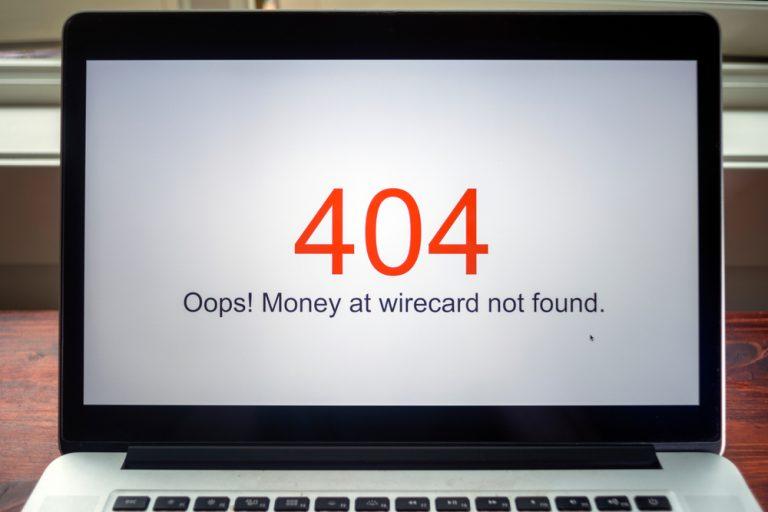
German payment processing and financial services company Wirecard (ETR:WDI) saw their shares plummet over 95% so far during trading this week, with the company announcing on Thursday that it had filed for insolvency.
The move comes as the company finds itself in the midst of an accounting scandal, with a €1.9bn hole in its finances. It follows the arrest of Wirecard’s former Chief Executive Markus Braun on suspicion of falsifying accounts at the company, which processes tens of billions of euros-worth of credit and debit transactions each year.
German media stated that Braun was arrested after presenting himself to police. He has since been bailed from custody after posting a €5m deposit on Tuesday.
Briefly speaking on its insolvency on Thursday, a Wirecard statement read:
“The management board of Wirecard AG has decided today to file an application for the opening of insolvency proceedings for Wirecard AG with the competent district court of Munich (Amtsgericht München) due to impending insolvency and over-indebtedness.”
Since the update, Wirecard shares nosedived by 75.96% or €9.34, down to €2.96 per share 25/06/20 12:50 CEST. This comes just over a week after the group’s shares hit €104.50 per share on the 17th of June. Trading in the company’s shares have since been suspended from trading in Frankfurt.
Royal Mail to slash 2,000 jobs
Royal Mail (LON: RMG) is the latest company to announce a series of job cuts in response to the Coronavirus pandemic.
The group said on Thursday that it will cut one in five management roles in IT, finance, marketing, and sales. The decision to cut the roles will save up to £130mn.
The changes, accelerated by the pandemic, are due to shift towards a 2% increase in parcels and 8% fewer letters that are being sent across the UK.
Keith Williams, the group’s interim chief executive, said: “Covid-19 has accelerated those trends, presenting additional challenges.”
“We are committed to conducting the upcoming consultation process carefully and sensitively. We will work closely with our managers and their representatives during this difficult period, including supporting them as they transition into the next stage in their careers,” he added.
“We are going to continue to tackle the challenges posed by Covid-19. We are implementing a range of immediate cost control activities and reducing capital expenditure in a measured way. Regrettably, one of these measures could see around 2,000 of our managers leave our business.”
Williams is stepping in for Rico Back, who left the group in a surprise move last month.
In the year to March 2020, pre-tax profits fell by 25.3% to £180m.
It is the latest in a string of companies to announce job cuts amid the Coronavirus pandemic. Earlier this week, Swissport announced plans to cut 53% of its UK workforce.
Royal Mail shares were down 6.6% in Thursday morning trading.
IMF says coronavirus crunch worse than predicted
The International Monetary Fund (IMF) has announced that the global economy will suffer a $12 trillion hit as a result of the coronavirus pandemic, according to new analysis released as part of the organisation’s June 2020 World Economic Outlook update.
Some of the report’s grim projections include a 4.9% shrink in the global economy over the course of the year and a prediction that it will take 2 years before world output returns to the levels sustained towards the end of 2019. Earlier this year in April, the IMF projected a 3% decline in global growth – notably less than the June update – and warned that the slump in output could rival that of the infamous Great Depression.
The new figures demonstrate that the IMF’s predictions significantly undershot. Governments around the world have been forced to step in with unprecedented measures to keep their economies afloat as lockdown measures caused businesses to shut and record numbers of people fell into unemployment.
Recovery is also expected to be a disappointingly slow process. The UK government’s furlough scheme is scheduled to come to an end in October, but the IMF has warned governments to think twice before removing financial support as economies are expected to continue to struggle at least until the end of the year. Global growth is forecast to sink to 5.4% in 2021 – down from 5.8% in April – but could even plummet to zero in the event of a second wave of the pandemic.
The UK economy is predicted to shrink by 10.2% this year, with an 8% slide in GDP. Almost 1 in 3 British workers have already been furloughed in the first half of 2020, but criticism of the government is beginning to mount as the scheme’s deadline fast approaches in the autumn and a number of businesses face the awkward reality of not being able to afford to pay wages at normal levels.
IMF chief economist Gita Gopinath said that coronavirus was an unprecedented and indiscriminate crisis: “No country has been spared. Emerging market [and] developing economies and advanced economies have all been very badly hit”.
That being said, the UK appears to have emerged worse off from the pandemic than other comparable countries. The UK economy’s 10.2% shrinkage is considerably more than Germany’s 7.8%, Japan’s 5.8% and the USA’s 8% – even though the USA has counted the greatest number of coronavirus infections and experienced a record amount of unemployment benefit applications.
The (sort of) good news is that the UK has not been the worst-hit nation. France, Spain and Italy have all suffered immensely as a result of coronavirus, both in terms of the pressure on their healthcare systems and on their economies. The IMF has predicted France’s economy will slip by 12.5%, while Italy and Spain are set to plummet by 12.8%.
So the UK economy may not struggle as much as its European neighbours’, but the path towards recovery is still looking rather steep. The IMF’s 10.2% projection is way beyond its initial forecast of 6.5% from April, in the same month that the UK economy saw a record 20.4% drop.
In order for the global economy to get back on track, the IMF has urged for “multilateral cooperation on multiple fronts”. Economies the world over will need liquidity assistance as consumer demand looks set to be slow for the rest of the year and advanced countries reconsider their foreign aid programmes in light of financial difficulties at home.
According to the IMF, the world faces a unique opportunity to capitalise on the record drop in greenhouse gas emissions during the lockdown, and policymakers should “implement their climate change mitigation commitments and work together to scale up equitably designed carbon taxation or equivalent schemes”.
Despite the hardship caused by the pandemic, the IMF is insistent that there are lessons to be learned in the event that a second wave of the virus emerges in the coming months.
“The global community must act now to avoid a repeat of this catastrophe by building global stockpiles of essential supplies and protective equipment, funding research and supporting public health systems, and putting in place effective modalities for delivering relief to the neediest”.
Brexit poised to wreak havoc on manufacturing

A new report, Manufacturing and Brexit, published by UK-EU think tank UK in a Changing Europe has outlined the extraordinary impact that Brexit is expected to have on the manufacturing sector, just as the industry fights to overcome the challenges posed by the coronavirus pandemic.
The research, collated by the Economic and Social Research Council and based at King’s College London, predicts that Brexit will have significant adverse effects on the UK manufacturing sector. Highly integrated into the EU single market, the disruption to the industry posed by the process of exiting the EU is expected to have a sizeable impact on the wider UK economy.
Already this month, the Confederation of British Industry (CBI) revealed that UK factory output had fallen at its fastest rate since records began in 1975 with a shocking 57% dip in production due to lack of consumer demand and restrictive social distancing measures during the coronavirus pandemic.
Following a disruptive start to the year, the manufacturing sector faces Brexit and the “worst-case scenario” of a no trade deal between the UK and the EU. The report outlines that a no deal Brexit would lead to considerable delays at the UK-EU border, adding costs and disturbing tightly interwoven supply chains that have remained in place since the UK first joined the EU in 1973.
The impact of Brexit on the industry naturally depends on the outcome of UK-EU negotiations. A “softer” deal might not disrupt UK manufacturing to the same extent as a no deal scenario, although there are mounting suspicions that PM Boris Johnson personally favours a “hard” approach to severing ties with the EU altogether. The final deadline to reach a deal sits on the horizon on the 31st of October this year.
Already few manufacturers have found any benefits to be gained from Brexit. Even if a deal is agreed, the disruption to the sector is expected to be significant and costly. Changes to health and safety regulations are a matter of particular concern, as the EU currently lays out the rules to keep employees safe while working with dangerous machinery. There is also worry that manufacturers might have to change their products to meet new specifications for markets in the UK and the EU respectively.
Financial costs could increase, with the risk of additional tariffs, customs declarations, certification costs, audits, border delays, EU customers switching to other suppliers, visa costs for EU workers, and many more. The costs could begin to pile up, with no discernible benefit to an industry where nearly half of all its exports currently go to and from the EU. UK manufacturers have grown accustomed to the “no friction” trade with the EU, but Brexit is destined to uproot that ease with the introduction of entirely new legislation and a myriad of additional costs.
The importance of manufacturing to the UK is often understated, given it makes up a mere 10% of the entire British economy, which has become decidedly more service-based over the past few decades. However, manufacturing makes up a whopping 45% of total exports and 65% of private sector spending, and EU workers are crucial to plugging skills gaps – such as engineering – in the UK. With new immigration laws imminent, the manufacturing sector is especially vulnerable to the impact of a fall in foreign-born workers.
The uncertainty surrounding the outcome of Brexit has left the industry in a difficult spot, with no clear path to prepare itself for the October deadline. Still recovering from the negative impact of the coronavirus pandemic, the future of manufacturing remains murky. The industry still does not know how data protection will work, whether and how they will still be able to employ EU staff, how state support for manufacturers will function, and so on. This choking uncertainty has already been cited as a major factor in Nissan pulling its XTrail model from Sunderland and a fall in investment in the automotive sector.
However, the report outlines some mitigative moves that the UK government could take to minimise the impact of Brexit on manufacturing, including:
- Investing much more in an industrial policy, bringing the UK in-line with other advanced economies.
- Targeting specific sectors or regions.
- Particular firms can be helped to take advantage of new technologies that are part of the fourth industrial revolution.
- Introducing new policies on: skills, R&D, financial support, wage subsides, tax deferrals, taking equity stakes in companies.
- Transferring more power to UK’s regions and devolved institutions to develop more place-based industrial policies.
“A no trade-deal scenario is seen as the worst-case scenario for sectors like automotive given the impact of tariffs. But even a minimal Free Trade Agreement could bring disruption for manufacturers, for example via its impact on supply chains and in terms of regulatory divergence.
“Whatever the form of Brexit at the end of the transition period, manufacturing faces multiple challenges in terms of recovering from the impact of Covid-19, transforming towards carbon net-zero, and embracing Industry 4.0. A more place-based and devolved industrial policy could be one way of helping manufacturing meet such challenges”.
Earlier this week, the Society of Motor Manufacturers and Traders stated that the industry was in “critical need” as it predicted 1 in 6 jobs could be lost once the government’s furlough scheme comes to an end in October. Manufacturing remains one of the hardest-hit sectors of the economy, both from coronavirus and from the looming threat of a no-deal Brexit. Professor Anand Menon, director of UK in a Changing Europe, added: “Deal or no deal, Brexit will impact on the UK and its economy. It is important to understand just what form that impact might take. As this report shows all too clearly, for manufacturing it is likely to be negative and significant”.Coutts commits to 25% carbon reduction across its assets by the end of 2021

Wealth management and private banking firm Coutts announced on Wednesday that it was targeting a 25% reduction in carbon emissions emitted from its funds and portfolios by the end of 2021.
The pledge was made in the company’s 2020 Sustainability Report, which also found that the firm had achieved a 23% reduction in carbon emissions from its Coutts Invest funds so far this year. It added that the company were aiming for a 50% carbon reduction across its overall holdings by 2030.
Commenting on the company’s steps towards increasing its sustainable operations, Leslie Gent, Coutts’ Head of Responsible Investing, stated:
“It is vital that we have a goal to work towards and that we hold ourselves accountable. Accountability for driving change towards a more sustainable planet is something we think is missing from society. To date, there has been a lot of carrot and not much stick and we believe that regulators should harden their stance to help drive real change.”
The company stated that its approach was different to much of the wealth management sector, in that it incorporates ‘ESG-thinking’ across its investment process and business model. To implement its sustainability plan in earnest, the group stated that it would exclude thermal coal extraction, thermal coal energy generation, tar sands and arctic oil and gas exploration from its direct investments. Additionally, it said it would exclude any company which derives more than 5% of its revenue from thermal coal extraction, tar sands involvement or Arctic oil and gas exploration, and any company deriving more than 25% of its revenues from thermal coal energy generation. Coutts’ Head of Asset Management, Mohammad Kamal Syed, stated that by launching the report, the company had demonstrated that “inaction is not an option”.He added that, “We invest with purpose and integrity, and with a keen focus on sustainability. It’s extremely important that we do this well. It’s not enough to simply sit back and do nothing to make it worse. We all have to do something tangible. Defeating climate change, for example, isn’t about what we believe, it’s about what we do.”
Though today certainly marks a step in the right direction, there is certainly a lot more the company can do. Regarding climate change, the company must continue to shift more of its resources towards supporting the fast-growing renewable energy sector, and may even branch into impact investing as Citi Group (NYSE:C) did earlier in the year. Further, concerning issues of justice, Coutts could display the sincerity of its good will by investing in fossil fuel companies based in democratic countries with high standards of accountability. In taking such steps, the company would ensure it wasn’t supporting political leaders who perpetuate suffering, and could illustrate that despite being three centuries old, it has the potential to be a bank of the future.Everyman cinemas back in July with big titles and new flagship venue
Everyman Media Group (LON:EMAN) announced that it would be reopening its venues from the 4th of July, in line with the government’s permitted reopening of restaurants, bars and cinemas.
The company said that it will reopen the entirety of its venues throughout the month. The relaunch will begin on July 4th, but the group said that all of its 33 sites would be open by the 24th July, and in line with recommended safety guidelines and social distancing.
Among these venues opening in July, Everyman is staging something of a post-pandemic resurgence by opening an ‘all-new’ flagship cinema on the King’s Road in Chelsea. The new venue will open on the 24th of July, and not only positions the group well for additional trading but also cements the company’s status as a premium cinema group, by establishing itself in such an iconic location.
Speaking on the reopening plans, Everyman Media Group CEO, Crispin Lilly, stated:
“We are very much looking forward to welcoming back an audience who are excited to return to Everyman. Whilst supporting and implementing the Government’s safeguarding guidelines, we will steadily reopen from the 4 July onwards, leading into an amazing line up of new content such as Mulan, Tenet, The French Dispatch, Black Widow, No Time To Die, West Side Story and Top Gun Maverick. Delivering not only great content but also a fantastic experience has always been, and will continue to be, our goal.” Following the update, Everyman shares rallied 1.48% or 2.00p to 137.00p per share 24/06/20 11:55 BST. This is up on the 79.00p nadir suffered in mid-March, but still has a way to go to recover the 228.00p highs seen at the start of February.Swissport to axe 53pc of UK workforce
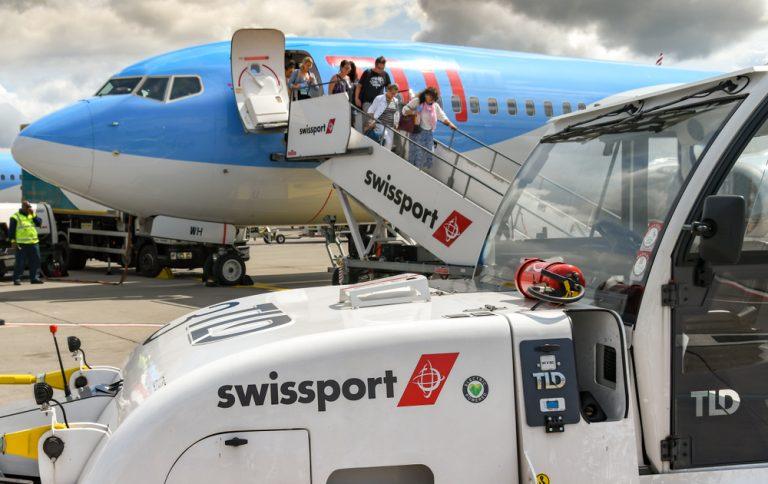
Swissport has announced plans to cut as many as 4,175 job UK jobs.
The airport baggage handler said that the staff was informed of the cuts it planned to make to over 50% of its workforce on Wednesday morning.
Swissport’s chief executive for western Europe, Jason Holt, said in a memo sent to its workforce: “The unfortunate fact is that there simply aren’t enough aircraft flying for our business to continue running as it did before the COVID-19 outbreak, and there won’t be again for some time to come. We must adapt to this new reality.”
“We are now facing a long period of uncertainty and reduced flight numbers, along with significant changes taking place to the way people travel and the way goods move around the world. There is no escaping the fact that the industry is now smaller than it was, and it will remain so for some time to come,” he added.
Airports are suffering a huge amount during the pandemic due to because of lower passenger numbers and grounded flights. According to the Airport Operators Association (AOA), up to 20,000 jobs at UK airports are at risk.
Due to the range of jobs at risk, GMB and Unite, which represent Swissport employees, have urged the government to take action and protect the workforce across the whole sector.
“With Swissport now considering job cuts on this scale we have deep concerns about the viability of many of our regional airports and the benefits for regional connectivity that they bring,” said Nadine Houghton, GMB’s national officer.
Across the airline industry, British Airways, Virgin Atlantic and jet engine maker Rolls-Royce are cutting 12,000, 3,000, and 9,000 jobs respectively.
Swissport employs around 8,500 people in the UK and Ireland. The number of jobs will represent 53% of the total workforce.
Avacta well-positioned with positive data from COVID-19 test strips

Biotherapeutics developer Avacta Group (AIM:AVCT) announced on Wednesday that its partner Cytiva had reported positive initial performance data on the its COVID-19 rapid test strips.
The company said that in mid-May it had provided Cytiva with ‘Affirmer’ reagents which are specific to the SARS-COV-2 spike protein, and that its partner had now developed the first lateral flow test strips using these reagents.
The data from these tests show that the test strips detected spike protein in model samples within the range of concentration one would expect to find within the saliva of patients with COVID-19. Avacta said that they would now continue to refine the test strip define and optimise the product’s performance, in order to generate the highest possible sensitivity in the finalised rapid test strip.
Following optimisations of the test by Cytiva, the design will be passed on to UK manufacturing partners selected by Avacta. The company will work closely with manufacturers to minimise the time frame of manufacturing, clinical validation and regulatory timelines, as time is very much of the essence regarding the utility and potential profitability of the test strips.
Avacta has both short and long-term potential
Speaking on today’s news, and how it adds to the pipeline of opportunities which could make the company attractive to investors, Turner Pope Research Analyst, Barry Gibb, commented:“Having recently put the necessary financial resources in place, Avacta now appears positioned to reach a major inflection point. Timing of course is of the essence for all COVID-19 product developments. Today’s news confirms rapid progress with the Group’s key POC antigen test, which offers significant commercial opportunity given its potential to limit global progression of the disease. Having partnered with a major international distribution agent and with advanced talks with suitable manufacturers underway, TPI considers the potential for the Group to claim a good part of this prospectively huge international opportunity to be high.”
“Combined with development of its potential ‘neutralising’ therapy for COVID-19 infection and its BAMS diagnostic test being developed with its partner Adeptrix, along with the Group’s core novel cancer immunotherapies that incorporate its two proprietary platforms, Affimer biotherapeutics and pre|CISION tumour targeted chemotherapy, Avacta appears to be ideally placed for the creation of significant short and long term value for shareholders.”
Despite the seemingly positive update, however, Avacta shares dipped 3.55% to 136.00p per share 24/06/20 12:29 BST.
Naked Wine shares up 5pc as demand soars in lockdown

Sales in Naked Wine soared 81% during April and May compared to the same period last year as orders during the lockdown surged.
The Naked Wine share price grew 5% on Wednesday morning as the group released its first annual results since selling off Majestic Wines.
The wine retailer is still making a loss, however, sales grew 14% to £203 million in the year to the end of March.
The company said in a statement: “We entered the new financial year with good momentum as COVID-19 has influenced customer shopping behaviour and driven increased demand for the Naked Wines offer.”
Naked Wine share price has surged 70% this year alone.
Chief financial officer, James Crawford, will soon become the group’s managing director of the UK arm.
Chief executive officer, Nick Devlin, said: “In his long-standing role as CFO of Naked, James has guided the business through start-up challenges and along its rapid growth trajectory. Under his tenure the Naked business has grown 4x in size, demonstrated its potential in the US market and navigated the challenges of transition to a listed environment.”
The company has not provided a full-year outlook. As pubs and restaurants are set to open on 4 July, the demand for online alcohol sales could see a fall in demand.
“Whilst predictions are harder than ever this year, I am excited about our plans for growth and confident that the mission of Naked to connect everyday wine drinkers to the world’s best winemakers is more relevant than ever. I believe the enduring impact of COVID-19 will be to accelerate trends towards direct, online models in categories like wine and that Naked is well positioned to deliver the combination of quality, value and community customers are looking for,” said Devlin.
Naked Wine shares (LON: WINE) are up 5.76% at 389.20 (1034GMT).
Internet use reaches record levels during lockdown

According to a new Ofcom report, the UK population is spending a quarter of their waking day on the internet during the lockdown.
During the height of the UK’s lockdown in April, Britons were spending an average of four hours and two minutes online every day.
The number of people using video-calling apps was seen to double during the pandemic as workplaces and families are commonly using videocalls to hold events.
“Lockdown may leave a lasting digital legacy,” said Yih-Choung Teh, Ofcom’s director of strategy and research. “Coronavirus has radically changed the way we live, work and communicate online, with millions of people using online video services for the first time.”
The report found that those aged between 18 and 24 spent the longest time daily online, averaging five hours and four minutes. However, the highest increase was for over-54s.
According to the report, the three apps that grew most during the quarantine were TikTok, Houseparty, and Zoom as people are finding more creative ways to stay in touch, entertained, and keep fit.
Mobile phone use has also grown during this period as Britons are making calls more often and for longer.
Despite the growth in internet use, the report found that one in eight people continue to not go online at all – a figure that has remained high for many years.
Poorer households are often left behind, which has caused issues for children during the lockdown who were not able to access educational resources and online lessons.