
Northern Women Angel Investment Forum to be held today

The Northern Women Angel Investment Forum is set to be held on Wednesday in Manchester to drive more investment in women and neutralise investment disparities with men.
Figures show that 63% of venture capital firms in the UK do not have any women in senior investment positions.
Equally, at the start of October, it was revealed that female entrepreneurs in the UK experience the highest levels of gender bias across the globe.
Hosted by the UK Business Angels Association, the Northern Women Angel Investment Forum aims to connect entrepreneurs and investors.
The forum offers women an important opportunity to unite and address the current landscape for women investors, learn about the latest developments and examine how to encourage women to get involved in investing in UK start-ups.
“Companies with female founders were only five per cent of total venture capital deals in 2018 and only two per cent of total investment value,” Jenny Tooth OBE, CEO of the UK Business Angels Association, said in a statement.
“With such media coverage regarding women in business and tech, statistics highlight the gargantuan challenge for female-founded businesses to access sufficient investment to scale up,” the CEO of the UK Business Angels Association continued.
“Furthermore, female founders are more likely to get funded at seed stage with 24% of all seed stage deals being in companies with at least one female founder. This reveals the challenge that women founders have in accessing growth stage capital. The magnitude of the task to get women their fair proportion of equity is vast.”
“Events like our Northern Women Angel Investment Forum are pivotal for inspiring women to invest in each other, and start to level the playing field. Statistics have shown a worrying decline overall in the level of equity investments overall in female founders in 2018. We take pride in the fact that angel investments in women founders represent 22% of seed stage deals, highlighting that angel investors are a significant source of investment for companies with at least one female founder.”
Last year, the UK government said it would launch a review into the barriers female entrepreneurs face and assess the obstacles impeding women from starting a business.
Panther Metals secures lucrative Australian exploration licence

Metals exploration and development company Panther Metals Plc (NEX: PALM) today announced that it had secured its first exploration licence in the Northern Territory, Australia.
Its Exploration Licence Application regarded it Marrakai Project, which is located in Pine Creek Orogen.
The ELA covers an area of 10.1 square kilometres, which has been the recorded source of some 500 ounces of gold nuggets (the largest of which was 30 ounces) and other ‘geochemical anomalies’.
The Company added that previous drilling of the area had yielded 9.32 g/t and 5.74 g/t of gold at different two metre intercepts.
Panther Metals comments
Speaking on the update, CEO Darren Hazelwood remarked, “The granting of the Marrakai licence cements Panther’s entry into the Australian exploration space. Our stated aim was to target the commodity rich jurisdictions of Australia and North America. I’m delighted to confirm to the market Panther Metals has, once again, achieved its goals.” Speaking on Pine Creek Orogen, the Company’s statement read, “Several gold prospects, including Chins Gully, Johns Flat and Jasons Rise, occur within the Project along a topographically low ridge which trends NE-SW across and outside the licence over an area of 7 x 1km. Coarse gold has been identified in surface outcrop and subcrop occurring over at least 3km of strike within the licence, with a peak rock-chip grade of 50.1 g/t Au recorded from the Johns Flat prospect, located 1km to the SW of Steves Hill. Several anomalous stream-sediment samples were returned from 2 to 3km to the SW of Steves Hill in the area of Chins Gully. Significantly anomalous rock-chip samples (some showing visible gold after milling/panning) were identified in several other areas across the licence area.”Investor notes
The Company currently has no shares in issue and in turn no market cap. Over the last year, the Group’s shares have traded at a range of 0.55p, hitting highs of 1.00p. Today, the valuation of Panther Metal shares increased by 6.67% or 0.05p following the update, to 0.80p per share. Elsewhere in the mining and minerals sector, recent updates have come from; Shanta Gold Limited (LON: SHG), Capital Mining Ltd (LON: CAPD), Griffin Mining Ltd (LON: GFM), Alien Metals Ltd (LON: UFO), Highland Gold Mining Ltd (LON: HGM), Kavango Resources PLC (LON: KAV) and URU Metals Ltd (LON: URU).Pound flutters as Boris Johnson rekindles election chatter
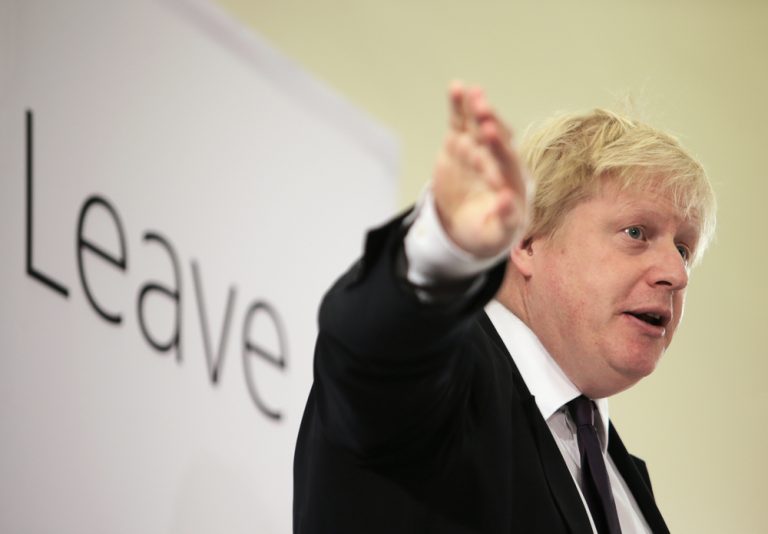
The Pound Sterling gave up its resolute opening as the political regular suspects locked horns once again. After a strong start, Sterling got another dose of Sajid Javid’s lamented Brexit uncertainty, as prime minister Boris Johnson threatened to pull the Withdrawal Agreement Bill, and force Parliament into election mode in the run-up to the festive period.
Speaking on the currency’s movements and the political loggerheads, Spreadex Financial Analyst Connor Campbell stated,
“As tensions builds ahead of this evening’s votes on the Brexit withdrawal agreement bill, the pound lost its step on Tuesday afternoon.”
“The currency’s stoic open was gradually chipped away at as the day went on. Now sterling is down 0.4% against the dollar and 0.3% against the euro, tripping away from Monday’s fresh 5-month highs. Not only is it feeling nervy pre-vote, it is also dealing with the re-raised spectre of a general election. Boris Johnson has threatened to pull the WAB if MPs decline his timetable in Tuesday’s second vote, and instead seek to send the public to the polls pre-Christmas (this is as long as the EU would grant a 3-month extension as requested by the Benn act).”
“Sterling’s jitters meant that the FTSE managed to push forth while its peers stalled. In contrast to the DAX and Dow Jones’ respective 0.1% dips, the UK index added more than half a percent, crossing 7200 once again in the process.”
The issue of Brexit remains so divisive that it would be an act of folly to tell either side to back down. Whether the political process concludes soon or the whole process ends up being scrapped completely, I think the only weighty majority we can find across the country is a common will to stop talking about Brexit. We have given ourselves another source of tension and another thing to worry ourselves with – as if policymakers didn’t have enough leaks (or torrents) to patch up already. Unfortunately, having been raised, it must now see conclusion. It is truly a Scylla and Charybdis scenario: neither option is immediately preferred by a large majority, and inaction or abandonment also serves the end goal of one side of the debate (Remain). Rationally, the only way to achieve a decisive mandate, now that both factions have laid their cards on the table, is to have a second referendum. While Boris Johnson would argue that this only serves the Remain cause, a general election conflates partisan political preference and Brexit, the latter being an issue which should transcend partisan game-playing, and should be approached by trying to achieve what individuals see as ostensibly in the national interest. Elsewhere in political and macro economic news, there have been updates from; new Brexit deal agreed, UK economy looks likely to avoid recession, Hong Kong protester shooting and China’s strategy, the Supreme Court rules against Boris, the collapse of Thomas Cook (LON: TCP), the bid for the London Stock Exchange (LON: LSE), Lloyds Banking Group PLC (LON: LLOY), Barclays (LON: BARC) and Deutsche Bank (ETR: DBK).Facebook tightens rules on political advertisement before UK general election

Facebook announces tighter rules on political advertisement before the expected UK general election.
The company extends advertising checks in order to reduce the impact of political advertisement on election results.
Legality of Political Advertisements
Advertisers target individuals by sending them tailored messages. These tailored messages influence voting decisions. Furthermore, Facebook does not have a system to test the accuracy of what is included in political advertisements. The lack of an accuracy test raises the risk of spreading fake news to influence public opinion. The UK has clear rules on news and political advertisements during election campaigns. However, popularity of Facebook challenges these rules by creating a legal gap. While the UK laws on political advertisement are strict, these laws do not apply to social media platforms. The legal gap between UK legislation and social media raises concerns about the outcome of the upcoming UK general election. The company hopes that newly introduced change in rules will help close this legal gap. Facebook Verification System Facebook created a verification system amid allegations that Facebook facilitated a Russian interference in the US presidential election campaign. Donald Trump faced allegations that he received help from Facebook to collude with the Russian government. Consequently, Facebook decided to require political advertisers to go through a verification process to prove their identity and residence. This verification process was insufficient as it did not provide a precise definition for political advertisement. The introduced change requires anyone who runs a social or political advertisement in the UK to go through this verification process. As a result, individuals running advertisements about social issues such as immigration, health and the environment will need to be verified. The change widens the scope of what constitutes political advertisement. The newly introduced rule will apply starting next week. Those who run social or political advertisements in the UK will have to go through a much stricter process of verification.TUI reveals new routes for Summer 2020
TUI AG (LON: TUI) have announced plans for Summer 2020, these include expanding new routes whilst airport capacity has also increased in Glasgow and Manchester of note
Additionally, extra services and destinations have been added to a number of UK airports.
An extra 194,000 seats have been posed increasing Birmingham Airport’s capacity for TUI customers.
Flights from Glasgow airport have also been announced from 2020.
TUI have expanded their services to more destinations in Spain and Turkey, supplemeting the addition of long haul flights.
New flights from Glasgow Airport have gone on sale today with Bodrum Flights operating on Mondays and Fuerteventura on Sundays.
TUI expanded the length for inclusive holidays, by now offering 10 or 11 day packages to eight destinations including Orlando, Antalya and Zakynthos.
TUI’s Director of Aviation Planning, Karen Switzer said: “Earlier this month TUI announced an additional two million seats to many holiday destination favourites and today the majority of these seats go on sale for summer 2020.
Switzer added “We are delighted that our new additions launched today provide holidaymakers departing from our regional airports with even more choice when deciding where to go next summer on holiday. The customer is at the heart of everything we do and this additional growth to some of our customer’s favourite holiday hotspots demonstrates our continued commitment for people to discover their smile with us”.
TUI have been quick to respond after the demise of Thomas Cook, only a few weeks ago (LON: TCP). This move looks to fill the void made by Thomas Cook in oder to establish market dominance.
Airport management boards seem to be excited by this expansion, as this will create business and drum up footfall.
Paul White, Head of Aviation at Glasgow Airport, said: “TUI’s announcement today is fantastic news for Glasgow Airport and is to be commended. Given the events of recent weeks, there was clearly a need to meet the huge demand out there for some of our most popular destinations.TUI has stepped in with the introduction of a phenomenal number of seats and even more choice to a wide range of destinations, which will be welcome news for our passengers planning their 2020 holidays.”
Julian Carr, aviation director at Manchester Airport, said: “We’re delighted that TUI is expanding its operation here from Manchester for summer 2020. By adding more frequencies to lots of its popular destinations, our passengers will have even more choice when it comes to booking their holidays for next year.”
Shares of TUI are trading at 1,008p per share following a 5.44% fall during Tuesday trading. 22/10/19 14:19BST.
Brexit uncertainty holds back investment in Northern Ireland
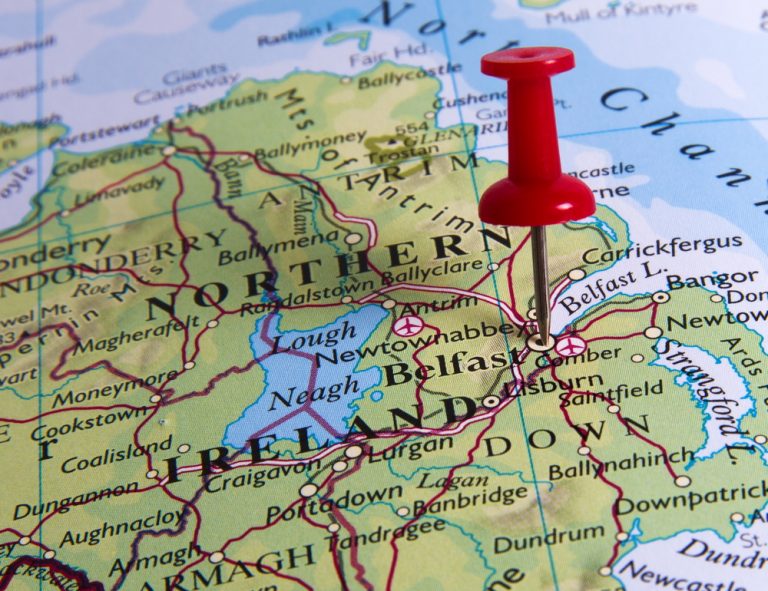
Boris Johnson launches a final effort to get the Brexit deal done as Brexit uncertainty impacts economic growth.
The Brexit deal suggested has critical implications on the economy of Northern Ireland.
Both the UK and the EU hopes to avoid a hard border between Northern Ireland and the Republic of Ireland.
However, the alternative proposed by Prime Minister Johnson risks economic recession in Northern Ireland.
Consequently, Brexit uncertainty holds back investment in Northern Ireland.
Customs
Increasing uncertainty in Northern Ireland worries investors. Prime Minister Boris Johnson’s Brexit deal proposes extra regulations for businesses. Businesses in Northern Ireland ordering goods from the rest of the UK will need to go through a screening process. Businesses in Northern Ireland will request to order goods from the rest of the UK. Furthermore, customs officers will examine whether ordered goods are at risk of entering the Republic of Ireland. Businesses in Northern Ireland will need to pay an export tax for goods that are at risk of entering the Republic of Ireland. When businesses prove that goods they ordered from the rest of the UK stayed in Northern Ireland, they will get a tax refund. Moreover, businesses in Northern Ireland will declare goods exiting Northern Ireland to enter the Republic of Ireland. If businesses export goods they ordered from the rest of the UK, they will not get a tax refund. The export tax creates a sunk cost for businesses who send goods to the Republic of Ireland.Who will be affected?
The initial cost of the suggested export tax will affect small businesses that cannot afford the cost. The deal increases the opportunity cost incurred by businesses in Northern Ireland. As a consequence, small businesses who depend on goods coming from the rest of the UK will struggle to survive after Brexit. As a result, Danske Bank predicts a rise in unemployment rate in Northern Ireland. Northern Ireland predicts a 0.5% growth next year compared to 1.3% this year. If the government does not introduce a way to help small businesses, employees in small businesses risk losing jobs.Forecast
Northern Ireland expects strong growth in various sectors such as information and communication. Further regulations after Brexit might disappoint expectations of growth in these sectors due to a weaker external environment in Northern Ireland. Danske Bank economist Conor Lambe stated they have revised their economic growth forecast in Northern Ireland downwards for 2020. The change in forecast for economic growth reflects increasing Brexit uncertainty. The UK is also feeling in impact of Brexit uncertainty as business in the manufacturing sector slow the flow of investment.Thor Mining plans to raise £510,000 through share placing

Metals exploring and resourcing firm Thor Mining (LON: THR) have said they intend to raise £510,000 through share placing.
The raised funds will go towards funding activities in the companies tungsten and copper projects.
Thor Mining are planning to increase funds by issuing 255 million shares, at a price of 0.2p per share.
The share issue was undertaken by Hybridian LLP as lead broker, alongside SI Capital Ltd.
The placing price reflected a 38% discount to Thor’s latest closing trade price of 0.32p
Metals explorer Thor Mining PLC said Tuesday it intends to raise GBP510,000 through a placing of shares, which will go towards funding activities in the company’s tungsten and copper projects.
Thor Mining will raise the funds through the issue of 255.0 million shares at a price of 0.2 pence per share.
The placing price reflects a 38% discount to Thor last closing price at 0.32p.
Of the shares raised, 113.3 million shares will be issued shortly, while the remaining 141.7 million shares are subject to shareholder approval at Thor’s annual general meeting on November 28th.
London listed firm Metal Tiger Plc (LON: MTR) said it had bought shares in Thor, buying 22.5 million shares valued at £45,000.
Metal Tiger were specific about their approach to invest in Thor Mining, by saying that they wanted 10.5 million shares in unconditional placing, while the rest in the conditional placing.
If the proposed 141.7 million shares are issued, Metal Tiger would own 96.6 million shares in Thor Mining, equating to a 9% stake hold.
Thor Executive Chair Mick Billing said “”The use of proceeds will be directed towards continuing to develop, primarily, our flagship Molyhil project, including drilling, scoping, and permitting studies at nearby Bonya, and field pump and recovery trials at EnviroCopper. This is expected to advance both projects materially, as well as giving Thor an increased runway to develop its ongoing discussions regarding securing project finance for Molyhil, about which we look forward to updating investors in due course.,”
“We are deeply disappointed with the performance of Thor and have maintained our pro-rata holding in order to protect our investment. We see Thor management (excluding Mark Potter who was only recently appointed) as having failed to deliver on their targets and believe that it is essential that cost cutting measures are taken urgently in order to reduce Thor’s ongoing administrative costs,” said Metal Tiger Chief Executive Officer Michael McNeilly.
If all goes as per plan, this will mean Thor Mining will have 1.08 billion shares overall.
Shares of Thor Mining are trading at 0.26p per share, whilst Metal Tiger Shares are valued at 1.31p per share seeing a 21.54% and 3.3% decline respectively. 22/10/19 13:56BST.
UK manufacturing outlook looks weakest since 2009
British Manufacturing companies are planning their lowest investment levels since the financial crisis, as outlooks for 2020 look glum.
The UK manufacturing sector has been hit hard, as Brexit uncertainty continues to dominate the news headlines as PM Johnson toils to get a deal passed through Parliament.
Additionally, the ongoing trade war between the United States and China has temporarily slowed supply chains to import resources.
The global economic outlook does not look promising in the moment, Britain are struggling to secure a deal with the EU, Donald Trump continues to slap tariffs on UK firms for issues over illegal subsidies given (EPA: AIR) and Boeing (NYSE: BA).
Additionally, political unrest in Hong Kong has led it to be declared in technical recession as tensions mount upon the Chinese Government to part ways with both political and geographical sovereignty.
This has affected firms such as InterContinental Hotels Group (LON: IHG) and Starbucks (NASDAQ: SBUX).
Combining all these issues, UK manufacturers have faced the toughest period of business since the financial crash, with low investment rates and low consumer confidence.
The sector slowed down at its quickest rate in the three months leading into October, with orders for supplies slumping to its lowest point in almost a decade.
Tom Crotty, group director of chemicals firm Ineos and chair of the CBI manufacturing council said “Each day of Brexit uncertainty sees firms forced to withhold key investment and recruitment decisions that make a huge difference to communities across the country,”.
Firms seem very reluctant to invest until Britain’s relations with the EU are set in stone, slowing investment and business.
Investment is 20% lower than the Brexit referendum in June 2016, if it were to continue its trend pre-Brexit.
The CBI added “he proportion of firms citing political and economic conditions abroad as a factor limiting exports over the next quarter hit a survey record high”
A lack of business and lack of confidence led to firms firing workers at the fastest rate since April 2010.
Businesses have speculated saying that they expect this rate to accelerate in the months leading up to January 2020.
Collagen Solutions sees consistent periods of revenue growth

Collagen Solutions PLC (LON: COS) have unveiled their third consecutive half of double digit revenue growth.
Sales in the six months ending in September rose 14.4% to £2.23 million, showing strong revenue growth leaving stakeholders impressed.
The biomaterials manufacturer has a focus on regenerative medicine. Seniors announced they had won four new customer contracts and gained ten customers in the period accounted for.
The progress was further boosted by a fundraiser held in June, which added £6 million investment before fees applied. These funds allowed Collagen to further product development, manufacturing capacity and repay a financial debt to healthcare investor Norgine Ventures Management Ltd.
Chief executive Jamal Rushdy said: “We are pleased to report the third consecutive six-month period of double-digit sales growth demonstrating consistent performance to our expectations by the Collagen Solutions global team.
Rushdy added ““Our core business remains strong and our initiative to increase capacity is on track to meet the anticipated higher demand for both collagen and tissue products”
In the trading update, Collagen Solutions discussed plans to talk to regulatory authorities as it bids to get a European health and safety sign off for its ChondroMimetic cartilage repair technology.
Collagen added: “The company continues to execute on its customer product development milestones, having signed new development customers, which represent additional future contract manufacturing opportunities, once these products are approved and launched.”
The exploitation of further revenues in this market is something which will stimulate shareholders.
ResarchandMarkets.com reported that the Collagen market is set to be worth $5.6 Billion by 2025. The use of collagen and gelatin products are diversifying the food market, along with increasing applications in healthcare and biomaterials.
The company is set to announce its interim results for the six month period up to 30th September on 3rd December 2019.
Here it will be proven whether Collagen Solutions can tap into a highly growing and evolving market whilst competitors such as Devro (LON: DVO) evolve.
Shares of Collagen Solutions are trading at 3.45p per share 22/10/19 12:28BST.
Pound fluctuates as the Parliament battles to get Brexit deal done
Members of Parliament start debating Prime Minister Boris Johnson’s Brexit deal this afternoon.