
Rathbone Brothers see rise in funds under management across 2019

Rathbone Brothers plc (LON:RAT) have reported a rise in funds under management in their annual results today.
The firm praised the strong growth of both their businesses, which has led to a successful 2019.
Shares in Rathbone Brother trade at 1,990p (+1.63%). 20/2/20 11:37BST.
The wealth management firm said that total funds under management & administration was £50.4 billion, which shows a 14% appreciation from the £44.1 billion seen at the end of 2018.
Rathbone noted that in 2019, the FTSE 100 Index rose 12.1% and the MSCI PIMFA Private Investor Balanced Index increased 13.1%.
On the back of these strong results, the firm increased its final dividend by 7.1% to 45 pence, which means its total dividend for 2019 amounts to 70p – notably this shows a 6.1% climb from the 66 pence dividend awarded in 2018.
Rathbone’s total funds in its Investment Management unit grew 12% over 2019 to £43.0 billion, whilst its Unit Trusts unit recorded 32% growth in funds to £7.4 billion.
Their Investment Management unit also saw net outflows of £400 million, but Rathbone said that this was offset by market performance which added £4.9 billion.
Within Unit Trusts, the rise in funds was driven by its Global Opportunities Fund growing 38% over 2019 to £1.86 billion.
Additionally, the The Unit Trusts business recorded £900 million in net inflows, which Rathbone praised and said was an outstanding performance in a tough operating market.
Across 2019, Rathbone noted that their pretax profit fell 35% to £39.7 million from £61.3 million. Operating income, however, rose 12% to £348.1 million from £312.0 million.
Mark Nicholls, Chairman commented:
“2019 may well be remembered for political reasons more than any other, but investment markets finished the end of the year strongly. Our own funds under management and administration increased 14.3% to £50.4 billion, up from £44.1 billion on 31 December 2018, as we continued to focus on providing a quality service to our clients and worked hard to bring Speirs & Jeffrey fully into Rathbones.
Following the appointment of Paul Stockton as chief executive in May, we took the opportunity to refocus our strategic direction. Our updated strategy both recognises a need to invest in our business in the shorter term and also builds upon our strengths as we look to grow and develop over the coming years.
Reflecting our confidence in the future, strong capital position and in line with our dividend policy, the board is recommending a final dividend of 45p per share. This brings the total dividend for the year to 70p per share, an increase of 6.1% over last year. The record date for the dividend is 24 April 2020, with the payment date on 12 May 2020.”
US Election: Democrat candidates go head to head
The US Election is transitioning very quickly – new stories, developments and pledges are changing everyday as candidates look to rally up support.
The Democratic Party – who are challengers for the 2020 election to Donald Trump’s establishment are in a tough spot at the moment.
Partisan divisions continue to surface around the blue party, with factions such as the Blue Dog’s wanting to advocate a right wing natured hybrid version of liberalism.
Last night, Democratic Party candidates took their next step in the US Election cycle as internal candidates battled to drum up support from the American people.
Billionaire Michael Bloomberg took to the stage for the first time – as an American business man, in similar fashion to Donald Trump looking to win the White House.
The caucuses in Nevada, and Super Tuesday is fast approaching. This is when another 14 states will be able to vote for the candidate which they align with most – however the fragmented nature of last nights debate will pose a quick question for voters.
Attacks were recorded on underdog Bloomberg for his previous comments on race, sex and ethnicity.
Bloomberg, the multi billionaire was quick to defend his stance and reason for running against Donald Trump this election. He said that he had the best chance of winning the White House on November 3rd, as his public speaking, soundbites and confidence were all put to the test.
The Democratic party are in a unique position – with such a breadth of different candidates, it seems that voters will have an interesting selection to pick from.
However – this could be a problem. If no one candidate does win total support across all Democratic voters, then there could be speculation that Donald Trump will get another four years in office.
The election is in quite an unpredictable position, before candidates would be considered favorites based on the amount of money that they had raised, through PAC’s and Super PAC’s.
However, there seems to be a shift in the type of candidates that are winning the support of voters, which makes the US Election an interesting one.
Moneysupermarket bounce back with impressive update, shares spike 12%

Moneysupermarket.com Group PLC (LON:MONY) have seen their shares spike on Thursday on the back of an impressive update.
Shares in the firm trade at 348p (+12.33%). 20/2/20 11:02BST.
The FTSE 250 listed firm reported profit growth and as a result lifted its dividend.
Moneysupermarket said that it had seen a ‘standout’ year for its MoneySavingExpert energy UK price site.
Across 2019, the firm saw its revenue surge 9.2% from £355.6 millions to £388.4 million. Notably, pretax profit also jumped 8.5% to £116 million from £106.9 million.
Estimated customer savings, fell 4.8% to £2.0 billion from £2.1 billion in 2018.
Notably, active users, which rose 1.6% to 13.1 million from 12.9 million. This measure is one of the key performance indicators for the firm.
Mark Lewis, Chief Executive Officer of Moneysupermarket Group, said:
“It’s good to report the Group returned to profit growth and once again helped UK households save over £2bn on their bills.
“Innovation will continue in 2020 as MoneySavingExpert, the most trusted brand for finding energy deals, launches a new energy autoswitching service.”
Going forward, the firm has reinstated its confidence to deliver results in 2020.
The company said – “Overall trading dynamics have improved in the first six weeks of 2020. Home Services has traded in line with the prior year, despite the strong comparative. The Board is confident of delivering market expectations for the year.”
The firm also announced a change to their board of directors on Thursday.
Supriya Uchil will be appointed as Non-Executive Director with effect from 1 March 2020 and James Bilefield as Non-Executive Director with effect from 1 May 2020.
They will also be appointed as members of the Audit, Nomination, Risk and Remuneration Committees of the Board with effect from the same dates.
Announcing the appointments, Robin Freestone, Chair of the Company, said:
“I am very pleased that Supriya and James have agreed to join our Board as Non-Executive Directors. With Supriya and James’ product and digital experience, they will be valuable additions and complement the diverse backgrounds and experience of our Board.”
Moneysupermarket bounce back
In October, the firm saw its shares in red following a slow sales report. In the second quarter, the price comparison firm showed steady progress with 4% higher revenues of £100.9 million in the three months leading into September, but this was modest compared to 15% and 19% growth in Q1 and Q2 respectively. The decrease was seen in its Money division, representing a fifth of the firms total revenues. Additionally, Money Division revenues fell by 5% to £20.6 million. The energy saving division gave solid returns, due to the variety of retailers and large customer savings. Moneysupermarket have showed that they can bounce back from a slow period of trading, which will certainly impress shareholders.Anglo American see earnings rise across 2019 as shares jump almost 2%

Anglo American PLC (LON:AAL) have seen their earnings improve in their preliminary 2019 annual results.
The mining titan told the market that earnings had risen across 2019, however warned shareholders that trading could be hampered by tense US-China relations and the current coronavirus outbreak.
Anglo American said that revenues had jumped 10% to $29.87 billion, as underlying earnings before interest, tax, depreciation and amortisation up 9.2% to $10.01 billion.
Profit attributable to equity shareholders was lower at $3.55 billion, but Anglo American decided to increase their dividend by 9% to 1.09 cents from 1.00 cents per share.
In the production realm, this is where Anglo American saw a mixed bag of results.
The firm noted that De Beers’ rough diamond production fell by 13% to 30.8 million carats, with copper production falling by 4.5% to 638,000 tonnes.
For 2020, production guidance is 32 million to 34 million carats, which means that the firm is expected a 10% jump in 2020. The miner cited an “expected increase in ore from the final open-pit cut at Venetia”.
Metallurgical coal production rose by 5.0% to 22.9 million tonnes but at thermal coal, total export production decreased by 7.7% to 26.4 million tonnes. Additionally, platinum group metals output fell 1.5% lower to 2.1 million ounces.
At their Minas-Rio operations in Brazil, production recommenced in December 2018, meaning output rose sharply to 23.1 million tonnes from 3.4 million tonnes.
However, in Kumba production slowed down. At this site, iron ore production decreased by 1.6% to 42.4 million tonnes – which may come as a disappointment for shareholders.
Mark Cutifani, Chief Executive of Anglo American, said:
“We continue building on the fundamental structural and operational improvements we have embedded across our business. The result is founded on high quality, low cost, world class assets. We have also benefited from product and market diversification, with strong precious metals and iron ore prices offsetting weakness in diamonds and coal, generating a 9% increase in underlying EBITDA to $10.0 billion, a 19% ROCE and a Total Shareholder Return of 31% for the year.
“We continue to invest in high quality, value-adding growth projects across the business, including in copper, diamonds and metallurgical coal, which will drive our volume, margin and cash flow growth over the medium and longer term. Combined with our share buyback of $0.8 billion during the second half of the year, net debt at year end was less than 0.5x EBITDA and we continue to maintain a strong balance sheet through the cycle.”
The firm has been quick to reinstate its position to be a market leader, and the firm has looked to grow.
Cutifani concluded:
“Consistent delivery of underlying improvements continues to enhance Anglo American’s competitive position. We have transformed our operations and delivered significant financial uplift, while building our broad sustainability performance. Guided by our Purpose, we are continuing to reposition our business responsibly for a cleaner, greener, more sustainable world.”
New Anglo American Platinum Ltd CEO appointed
On another note, Anglo American also announced that Chief Executive Officer of Anglo American Platinum Ltd would be stepping down. The firm said that Natascha Viljoen will be taking over with effect April 16 from Chris Griffith. Norman Mbazima, Chairman of Anglo American Platinum, said: “I am delighted to welcome Natascha Viljoen as CEO of Anglo American Platinum. Natascha is a seasoned senior executive, bringing 28 years of operational experience from across our mining industry, spanning many different countries, metals and minerals including, of course, the PGMs. She knows us and our business well, having worked with our executive team over the last five years in leading the changes required to transform the performance of – and commercial value from – our processing operations.”Anglo American’s deal with Sirius Minerals
In January, Anglo American expressed their intentions to agree an acquisition deal for Sirius Minerals (LON:SXX). Anglo said that they will offer 5.5p per shares for Sirius, which shows a 34% rise to the closing price of Sirius on Friday which was 4.1p. Sirius Minerals itself said its directors consider the acquisition to be “fair and reasonable”, and have recommended that shareholders vote in approval of the offer. The offer is conditional on whether 75% of Sirius shareholders decide to vote in favor for the merger deal, which will be done at an upcoming court meeting. The share price offer values Sirius at £404.9 million, and is a deal which Anglo American will be thoroughly excited with. The upcoming court hearing is over the next few weeks – and shareholders will be keen to get their voices and opinions heard. The results for Anglo American are pleasing, and the firm is undergoing a busy few weeks. The production has slipped, however the acquisition deal with Sirius Minerals should be something that shareholders and the firm remain confident for. Anglo American will hope that 2020 is a good stable year for the firm, and once tensions in China clear up – then trading should recommence in full flow. Shares in Anglo American trade at 2,124p (+1.72%). 20/2/20 10:53BST.AVEVA’s results hit by coronavirus, as trading in China stumbles

AVEVA Group PLC (LON:AVV) have seen their shares dip as the firm warned shareholders about trading performance following the outbreak of the coronavirus.
Many global business have seen their performances hindered by the breakout of the coronavirus – as global governments and health organizations look to battle and contain the lethal disease.
AVEVA are the latest in line to be affected by the coronavirus – and the firm has issued a warning today.
The engineering firm noted that revenue has grown within its financial year, however said that the coronavirus is hurting operations in China.
AVEVA noted that the firm has achieved high singly digit organic constancy currency revenue growth in the ten month period to January 31.
The firm told the market that it had seen a high number of orders in its Rental and Subscription division, however this saw offset by “significantly” lower Initial & Perpetual licenses.
AVEVA added that ongoing health issues in China are hurting sales and trading in that country due to office closures, legislation and travel restriction. China has accounted for 5% of AVEVA’s revenues – which shows a big bruising for the firm.
The firm concluded by adding: “At a Group level AVEVA had a good start to the fourth quarter and the order pipeline for the remaining weeks of the financial year is solid.”
AVEVA’s mixed results
Last year, AVECA reported that it had seen a 11.9% rise in revenue to £775.2 million, alongside a 19.8% growth in adjusted earnings to £184.5 million. Meanwhile, recurring revenue as a percentage of overall grew to 54.3% up 51.6% the year before. This was attributed to the move towards digitalisation which had in turn boosted demand for industrial software. Certainly, AVEVA are not the only firm which have been hurt by the coronavirus outbreak. The firm will hope that the battle can continue to stop the spread and contain cases so that China – an industrial heartland can continue trading in strong fashion. Shares in AVEVA trade at 5,160p (-2.46%). 20/2/20 10:35BST.BAE Systems post bullish annual results, as sales and revenue climb

BAE Systems plc (LON:BA) have reported a rise in sales and revenue across 2019, within an impressive update from the firm.
The aerospace technology and defense company said that 2019 revenue was reported at £18.3 billion, which sees an 8.9% spike from £16.8 million in 2018.
The revenue figure was slightly below Bloomberg consensus, which was predicted to be £19.8 billion – however the spike from last year will please the defense titan.
Pretax profit also surged, this time by 33% from £1.2 billion in 2018 to £1.6 billion this year. Notably, underlying earnings before interest, tax, depreciation and amortization was £2.2 billion compared to £1.9 billion a year ago.
BAE noted that their Electronic Systems sector grew well, from £3.9 billion in 2019 to £4.4 billion.
The Cyber and Intelligence Division also grew to £1.7 billion from £11.6 billion – which will please both the firm and shareholders.
BAE proposed a final dividend of 13.8p, which gives a total of 23.p per share for 2019. This sees an increase from 22.2 pence in 2018.
The firm also noted that the business is expanding geographically, with strong performance recorded in both the British and Saudi Arabian markets.
Charles Woodburn, Chief Executive, said:
“2019 has been a year of significant progress for BAE Systems. We delivered a good set of financial results in line with guidance, growing sales and earnings, with improved operational performance and increased investment in the business to underpin our growth outlook. Strategically we took a number of actions to strengthen the portfolio and the pensions agreement announced today is good for all stakeholders. These will help to accelerate our strategy and further our growth outlook. We have a large order backlog and remain focused on strong programme performance to deliver a sustainable business model with enhanced financial performance.”
The firm also told the market that it had seen an order intake of £18.4 billion, whilst order backlogs were recorded at £45.4 billion.
BAE finally noted that they had a one-off tax benefit, as the company noted: “A one-off tax benefit of £161m was recognised in the year, arising from agreements reached in respect of overseas tax matters, net of a provision taken in respect of the estimated exposure arising from the EU’s decision regarding the UK’s Controlled Foreign Company regime.”
BAE’s new acquisitions
In January, BAE announced that they had acquired two new American businesses. The firm said that they have purchased the military global positioning system from United Technologies Corp unit and Raytheon Co’s Airborne Tactical Radios business. BAE also announced that they would be buying US based Raytheon’s Airborne Tactical Radios business for $275 million in a cash only deal. The results from BAE are certainly bullish in nature – and the firm has really stampeded their influence on the market with the annual results published today. Shares in BAE Systems trade at 662p (+3.53%). 20/2/20 10:20BST.Lloyds report mixed 2019, as profit falls due to rise in PPI payments
Lloyds Banking Group PLC (LON:LLOY) have given the market an update on their annual trading for 2019 on Thursday morning.
The British Bank reported a fall in profit across 2019 trading, which the firm said was due to a rise in PPI payments.
Lloyds remained confident with its general underlying performance, as shares have stayed in green on Thursday morning.
Across 2019, Lloyds said that they had recorded pretax profit of £4.39 billion – which sees a 26% slump from the 2018 figure of £5.96 billion.
Notably, 2019 profit also fell 1.8% short of the £4.47 billion consensus off market forecasts predicted by the firm.
Statuary net income for 2019 totaled £10.18 billion, which again slumped 24$ from £13.4 billion the year before.
On a better note, total income rose from £22.09 billion to £42.36 billion, where net trading income was reported of £18.29 billion against total expenses of £3.88 billion in 2018.
Insurance claims also rose for Lloyds, as the firm saw a sharp rise from £3.47 billion in 2018 to £24 billion.
On an underlying metric, net interest income was £12.38 billion which remained constant with market and analyst predictions. However, this was 2.6% lower from a year go which was reported at £12.71 billion.
Net income stayed inline with forecasts which was £17.14 billion, but saw a similar slip of 3.5% from £17.77 billion in 2018.
Lloyds reported that their total costs also fell, which would have been a pleasing take from this morning’s update.
Costs fell 5.1% to £8.32 billion, but PPI provisions rose again from £750 million to £2.45 billion.
Looking at Lloyds Retail, net interest income fell 2.8% year on year to £8.81 billion, whilst the commercial unit reported income drops of 3% to £2.92 billion.
Lloyds decided to increase their total dividend for 2019 to 3.37p, which sees a 5% appreciation from the 2018 figure of 3.21.
The British bank ended 2019 with a loan book total of £440.4 billion, which sees a slight fall from the £444.4 billion recorded at the end of 2018.
Net interest margin across 2019 trading also worsen to 2.88%, however this did remain consistent with market forecasts. This was a slight fall from 2.93% in 2018.
Notably, customer deposits fell 1.1% to £411.8 billion from £416.3 billion.
Going forward, Lloyds have said that they are guiding for a net interest margin between 2.75% and 2.80%
“The Group faces the future with confidence. As a result, we will continue to target a progressive and sustainable ordinary dividend. In 2020, the Group will also commence paying dividends quarterly, accelerating payments to shareholders, with the first dividend being paid in June 2020.”
Operating costs are expected to fall below £7.7 billion, which will please shareholders and give confidence for the future.
António Horta-Osório, Group Chief Executive commented:
“In 2019 the Group has continued to make significant strategic progress while delivering solid financial results in a challenging external market. The Group’s statutory performance was impacted by a substantial PPI charge related to the deadline for claims submission. Underlying performance was resilient, reflecting the health of our customer franchise and the strength of the business model.
Given our clear UK focus, our performance is inextricably linked to the health of the UK economy. Throughout 2019, UK economic performance has remained resilient in the face of significant political and economic uncertainty, supported by record employment, low interest rates and rising real wages. Although uncertainty remains given the ongoing negotiation of international trade agreements, there is now a clearer sense of direction and some signs of an improving outlook.”
Lloyds mentioned the diversity and inclusive nature of their employees – which is an aspect of business which has never been so important.
The Chief Executive concluded:
“The Group was the first FTSE100 company to establish targets for championing diversity within its business and we now have 36.8 per cent of senior roles held by women, up almost 8 percentage points since 2014 and we continue to aim to meet our target of 40 per cent by the end of 2020. With 10.2 per cent of roles across the Group held by Black, Asian and Minority Ethnic (BAME) colleagues, we have exceeded our 2020 target of 10 per cent.”
Lloyd’s receive criticism over HBOS fraud victim treatment
In December, Lloyds faced criticism for mistreating victims of major fraud. The fraud at Halifax Bank of Scotland’s Reading branch led to six people being jailed in 2017 for a combined 47 years. The scam involved small business customers being referred to consultancy for bribes which included watches, holidays and sex with prostitutes. The bank’s compensation scheme for victims had ‘serious shortcomings’, retired judge Ross Cranston said in a review. The bank has paid £102 million in compensation to 71 businesses and 191 directors over the fraud. Additionally Lloyds said it would offer all victims the option to have their cases independently reviewed. Watchdog the Financial Conduct Authority said it would consider ‘further action’ against Lloyds over the failings, adding that they needed to be addressed quickly. Speaking today, the Chief Executive added: “Historic conduct issues remain disappointing but we continue to be focused on doing the right thing for our customers. The Group is fully committed to implementing all of the recommendations contained within Sir Ross Cranston’s report relating to HBOS Reading and ensuring that victims of the HBOS Reading fraud have their claims assessed in an open and transparent manner. We have apologised to those impacted and are determined to put things right.”Third quarter blues
At the end of October, Lloyds reported that they third quarter pretax profit had slipped. The company’s profit before tax for the third quarter fell 97 percent to 50 million pounds from £1.82 billion last year. Statutory loss after tax for the quarter was £238 million or 0.5 pence per share, compared to profit of £1.42 billion or 1.8 pence per share in 2018. The third quarter results, were significantly impacted by a £1.8 billion payment protection insurance or PPI charge, driven by a high levels of PPI information requests received in August. Additionally, net income for the quarter declined 6% to £4.19 billion from £4.45 billion pounds a year ago. Lloyds banking forecasted net interest margin of 2.88%, in line with previous guidance of about 2.9% which does give shareholders something to hold onto amidst this poor quarterly performance. Market analysts have reinforced the current PPI issues that Lloyds are facing, and have said that this was the main factor which dented their results today. However, there has been commendation for the firm. John Woolfitt, Director of Trading at Atlantic Capital Markets commented: “It looks like Lloyd’s still can’t get away from the shadow of PPI pay-outs and so the “people’s cash machine” is still paying out. Despite this weight on the headline results, profitability was still fairly robust and I feel that investors will at least take some comfort from the increased dividend and the executive pay structure cuts taken by Horta-Osario. At least he is sharing the pain. Considering Lloyd’s are the most domestic facing bank, and the uncertainty the UK economy has seen over the last year, overall the numbers show resilience. Investors and the markets are in agreement with shares up 3% on the day.” Lloyds have seen a mixed time across 2019, with a spread of results. The firm is looking to correct their public media imagine following a couple of incidents which have dented the reputation of the firm – however this should be fixable over time. The British bank will remain confident across 2020 – when more market clarity is given as both consumers and investors find confidence. Shares in Lloyds trade at 57p (+2.88%). 20/2/20 9:57BST.

A small guide to Copenhagen

I started the new decade with a long weekend trip to Copenhagen. Having heard nothing but positive talk about the city, I was ready to go and explore the Scandinavian dream for myself.
Thanks to Ryanair’s (LON:RYA) Black Friday sale, me and my partner snapped up flights for a ridiculously cheap £14 return. We found an equally good deal on our hotel, securing roughly 50% off in yet another Black Friday sale.
This brings me onto my first point – when to book. Like many places in Scandinavia, Copenhagen is a stunning little winter getaway. Granted day light is limited, but the city is the perfect place to wrap up warm and explore in the cold wintery months.
Visiting during the second week of January was a great thing to look forward to in the New Year after the Christmas festivities. Regardless of whether you’re visiting Copenhagen or not, I recommend you take advantage of Black Friday travel sales and book just a few months ahead for some fantastic deals on flights and hotels.
Where to stay:
We stayed in Hotel Ottilia; a quirky 4-star hotel located in the vibrant Carlsberg City District. The hotel is surrounded by quirky cafés and urban restaurants, and it is just a metro ride away from the touristy city centre. Hotel Ottilia is part of a chain of luxury boutique hotels named Brøchner Hotels. These hotels are scattered around Copenhagen and provide both quality and comfort. My favourite feature of these hotels was wine hour! Between 17.00-18.00 every day guests can have a few glasses of wine on the house. Red, white or port wine, take your pick! The best part? You don’t have to be at your specific hotel for the wine hour; you can pop into any one of the Brøchner Hotels.Where to eat:
Our stay in Copenhagen was only short, but two restaurants stood out in particular. The first of these was recommended to us by reception, as we were after typical Danish cuisine. We were recommended to try Carl’s Beer & Eatery, which was just a stone’s throw from our hotel. The restaurant offers a social dining concept where you pick and share several plates between you. We went for the veal shoulder braised in dark beer, creamy pearl barley with mushrooms and walnuts and potatoes caramelised in cream. The food was exquisite and reasonably priced; I highly recommend this restaurant for an understated yet elegant dining experience. The second which stood out is a rooftop restaurant located on the top of Hotel Ottilia; Tramonto Rooftop. The restaurant is designed as a combination of industrial and classical modernism, boasting 360° views over Copenhagen and Carlsberg. Guests can roam along the outdoor terrace and enjoy Italian cuisine, all in a chic and sophisticated atmosphere. As a starter I enjoyed a dish made up of fried scallops, cream of celeriac, salmon roe, bottarga and Jerusalem artichoke chips, whilst my partner had the burrata with cauliflower cream, malt crumble and chervil oil. Next, we ordered the homemade pappardelle pasta in a beef tenderloin sauce with truffle flakes and porcini. Being Italian myself, I can confidently say that this was one of the best pasta dishes I have ever eaten. Often, cooking with truffle runs the risk of overpowering the rest of the flavours, but this plate of pasta used the perfect amount, complementing every aspect of the dish. We finished with a small dessert made of hazelnuts, salted caramel and 70% valrhona guanaja chocolate cream. The evening was enjoyed alongside a bottle of red wine, and it was perhaps one of the best dining experiences I have ever had. Like most cities, I suggest avoiding touristy restaurants in the centre. These are often very overpriced and do not offer the best quality food. The two restaurants I have mentioned are both located outside of the centre and were extremely delightful experiences. If you are after more relaxed dining options, I recommend one of Copenhagen’s food markets. There are a few dotted around the city and they offer a wide range of different street food. We often popped into these food markets for lunch as they were very convenient and offered food on the go. The Tivoli Food Hall was my favourite and, if you visit, I recommend trying a traditional Scandinavian open sandwich. Please note that I have not been paid to write about any of the companies mentioned above, nor were any of these experiences “gifted” to me.FTSE ruled the roost: finishing on top of Tuesday’s equity rebound
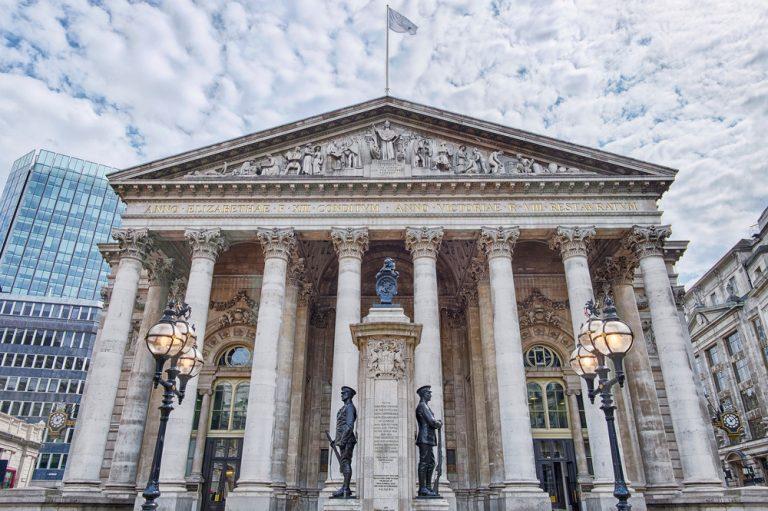
Despite the potential for a wobble being brought on by inflation figures and the sluggish Dow Jones open, the FTSE crossed the finish line of the Wednesday session at the head of the pack.
Falling just short of a one-week high, the FTSE finished the session at 7450, following a 1.2% bounce.
The index’s success was partially led by a Bloomberg report, which said that China would help airlines suffering as a result of the Coronavirus. It was also boosted by the inflation figures, which allowed Sterling a short rally before the currency fell and turbocharged the FTSE’s afternoon rally.
Speaking on the afternoon’s movements in global equities, Spreadex Financial Analyst Connor Campbell stated,
“Though the Dow Jones was reticent to join in, the European markets took back yesterday’s losses and then some on Wednesday.”
“The FTSE was well ahead of its peers as the session went on, climbing to a near one-week peak of 7450 – remember at one point on Monday it touched 7350 – thanks to a 1.2% increase. Not only did the UK index benefit from a Bloomberg report claiming Beijing will help out airlines struck by the coronavirus, further adding to the idea that China is set to try and money its way of out of a crisis, but also the pound’s afternoon downturn.”
“Sterling quickly giving up its post-inflation reading gains – the latest UK CPI number came in at 1.8% against the 1.6% forecast – to fall 0.4% and 0.3% against the dollar and euro respectively. This as the currency perhaps expressed its anxieties over the UK-EU trade situation.”
“Elsewhere the DAX and CAC both shot up by 0.8%. That left the German index only a handful of points away from a record high close, and its French cousin back above 6100 for the first time in a week.”
“In comparison the Dow wasn’t feeling quite as up for it. The US index added a paltry 0.3%, just about pushing it across 29300, but keeping it away from its 29500-tickling peak.”