
The British Retail Consortium announced earlier this week that retail sales dropped in November. However, the figures do not include the Black Friday shopping period, and last year’s do.
Trading has been strong over the Black Friday promotional week, as retailer have beaten forecasts of a gloomy shopping period. Shares in Quiz plc (LON:QUIZ) were down on Wednesday, trading at -11.21% as of 09:24 GMT.Quiz shares plunge on half year loss

Quiz (LON:QUIZ) shares plunged on Wednesday after it posted a half year loss and a decline in group revenue.
Shares in the fast fashion brand were down over 11% during trading on Wednesday.
The retailer said that, for the six months ended 30 September, loss before tax amounted to £6.8 million, down from a profit of £3.8 million recorded for the same period a year prior.
Meanwhile, group revenue declined 5% to £63.3 million, down from last year’s £66.7 million figure.
The company highlighted that the pressures surrounding the UK retail sector have hit its results.
“Much of the UK retail sector has remained under pressure during the period impacted by macro-economic uncertainty well as the accelerating structural shift to online retailing,” Quiz said in its results.
Indeed, Quiz is not alone to feel the woes of the tough retail climate – the difficult trading conditions have been well publicised as of late.
“Whilst it is disappointing to report a decline of profits year-on-year, management are focused on implementing the actions identified further to the Group’s business review conducted earlier in 2019,” Tarak Ramzan, Founder and Chief Executive Officer, commented on the results.
“We are pleased to report progress improving gross margins and reducing costs across the business, and will look for further improvements to develop our omni-channel offering,” the Founder and Chief Executive Officer continued.
“QUIZ has continued to achieve sales growth in its international business and, in particular, online despite the challenging trading conditions. This has been supported by effective marketing investment including a successful collaboration with TV star Samantha Faiers.”
Reacting to scattergun Donald Trump at NATO summit

After attempting to recoup some sense of hope after Monday’s painful start to December, markets lost their footing during afternoon trade, following a procession of threats and condemnations issued by Donald Trump at the NATO summit in London.
Just as soon as the POTUS issued words of cooperation and partnership, he just as soon condemned fellow leaders for working to serve their own – or common – interests, which are at odds with what he sees as best for the US.
You might’ve thought that tensions with China would be enough to keep Donald Trump occupied. However, this week’s threats issued to Argentina, Brazil and France show just how little the president cares about shaking up the US’s peers to serve his own ends.
Some have commended his protectionist stance, but anyone in touch with the modern world would be right to condemn it. Mutual self-interest insures cooperation and stability, isolationism promotes a myopic race to the bottom, zero-sum positionality, and ultimately, conflict. The US may be the biggest fish, but it only retains its hegemony by appearing more favourable to its peers than the other large alternative.
Reacting to Trump’s bluster today, Spreadex Financial Analyst Connor Campbell commented,
“Donald Trump continued to play havoc with the markets on Tuesday, following Monday’s trade scramble with some more disheartening comments regarding any ‘phase one’ agreement between the US and China.”
“The biggest takeaway from a series of Trump headlines – the President is currently mouthing off at the NATO summit in London – was that a he thinks ‘it’s better to wait until after the election for the China deal’. Though he did go onto state that Beijing wants to ‘make a deal now’, investors immediately started to fret that this could mean any agreement is delayed for another 12 months – a massive can-kick given the two superpowers were meant to sign a deal at the cancelled APEC summit in mid-November.”
“That wasn’t all. Trump followed up his overnight tariff threat to France, where he floated penalties on $2.4 billion in luxury goods from the country in retaliation to its digital services tax, with a tense press conference with Emmanuel Macron. In it the US President warned of ‘substantial’ taxes to French goods, despite also claiming the two nations could work out their issues.”
“On a real roll, Donald also took a side-swipe at the EU in general, bemoaning an ‘unfair trade situation’ with the bloc, potentially teeing up further conflicts down the road.”
“The markets, still woozy from yesterday’s losses, suffered another freefall in the aftermath of these provocations. The FTSE struck 7160 for the first time in 6-weeks as it lost 120 points, while the CAC plunged 1.1%. The Dow Jones, which on Monday had hit 28200, sank to a one-month nadir of 27400, shedding an eye-watering 400 points. Oddly, the DAX was immune from all this, the German index actually adding 0.2% in the face of its peers’ losses.”
“The FTSE’s day was made that bit worse by the pound’s own gains. The latest Kantar poll put the Tories 12 points ahead of Labour, contrary to many other surveys showing a shrinking Conservative lead. This news allowed sterling to pop 0.3% higher against dollar and euro alike, taking it to $1.2984 and €1.172 respectively.”
Elsewhere this morning; Nokia Corporation (HEL: NOKIA) announced it would transform Finland’s national grid to support renewables, Tekmar Group plc (AIM: TGP) booked bumper financials, Moody’s Corporation (NYSE: MCO) lowered their outlook on UK banking from stable to negative and Centamin PLC (LON: CEY) rejected a merger approach.Tekmar Group reports record order book and swings to positive earnings

Technology provider of subsea protection systems for the global offshore energy markets, Tekmar Group plc (AIM: TGP) booked bumper financials during the first half of FY20.
The Company began its latest update by telling shareholders that revenues were up across all divisions, and that the latest round of results were in line with management expectations.
The Group’s posted a ‘Record Order Book’ of £15.9 million, which was up 23.26% year-on-year for the same period.
Its headline status was earned, however, with its fundamentals. Its revenues widened from £7.1 million to £17.1 million on-year for the six month period, while its EBITDA swung from a £0.8 million loss, to a £2.0 million profit.
Tekmar Group continued and said that the long term global outlook for its key markets was improving, with forecasts fro future wind generation up 43.5% year-on-year. The Group also stated that it remains debt-free, with a positive cash balance of £3.9 million.
It continued, stating that it had been awarded the London Stock Exchange’s Green Economy Mark, and that its diversification strategy was ‘on track’. Its acquisitions – Subsea Innovation and Ryder Geotechnical – had both delivered ‘strong results’.
Elsewhere in renewables news, Nokia Corporation (HEL: NOKIA) helps transform Finland’s national grid to support renewables, SIMEC Atlantis Energy (LON: SAE) made a series of operational announcements, JLEN (LON: JLEN) continues to gain momentum. and Active Energy Group (LON: AEG) made an acquisition in North Carolina.
Tekmar Group comments
Alasdair MacDonald, Non-executive Chairman of the Group, said,
“We have made great progress in the first half of the year, delivering record revenue growth and securing the Company’s largest ever Order Book. All our businesses performed well, the outlook remains very positive with our core market, offshore wind, forecast to grow substantially in the long term and the integration of our acquisitions and long-term strategy have progressed well. We believe that the Group is firmly on track to meet our expectations in the current year with positive market indications for the future.”
Investor notes
Following the update, the Company’s shares rallied 1.61% or 2.50p, to 157.50p per share 03/12/19 14:50 GMT. Analysts from Berenberg reiterates its ‘Buy’ stance on Tekmar Group stock. The Group’s dividend yield is unavailable, their p/e ratio is 25.83.
Power Metals shares spike following Alamo project update

Power Metal Resources PLC (LON: POW) have seen their shares spike on Tuesday afternoon, after the firm made a development in its Alamo project.
Power Metal Resources plc is a London listed, African focused metal exploration and development company. Their principal strategic objective is the discovery of large scale metal deposits and we are focused on cobalt, copper, lithium and nickel.
Shares in Power Metal resources spiked 7.5% following the announcement, to 0.43p. 3/12/19 15:31BST.
The exploration and development company also said Joe Carrabba, a former board director of Newmont Goldcorp and Murray Nye, chief executive officer of Winston Gold Corp , who on successful completion of project due diligence will join the company on a special advisory committee.
The Alamo project is a package of mining claims covering an area of approximately 340 acres and is situated in west-central Arizona, the company said.
The project is currently 100% owned by Frisco Gold Corp. Carrabba and Nye currently hold the option for the 60% earn in. The right includes property payments over a four-year period and exploration costs over a three-year period.
Power Metal will take over subject to due diligence, this includes nugget verification and geochemical sampling. The firm will pay Carrabba and Nye $25,000 – through the issue of 4.9 million shares – during the due diligence period, which may test shareholder patience.
The period can be extended, which Power Metal will then be forced to issue a further 2.9 million shares, at the same price. The shares have been priced at 0.4p, which reflects a slight undervalue to the current trading price.
If the firm is content with due diligence, then Power Metal will pay Carrabbo and Nye £250,000 which could be payable through the issuance of 38.8 million shares.
It seems that Power Metals have agreed a deal which encourages the investment into the firm, and also raise funds to expand further operations.
Power Metal can then earn the 60% stake in the project by spending $1.1 million on property payments and exploration costs. The company said it would expect to pay a “modest” $150,000 in the first year.
Power Metal CEO Paul Johnson said: “The Alamo project provides access to a package of claims with notable native gold nugget finds at surface, and a geological backdrop that encourages us to search for the source of the nuggets in the bedrock where, its is postulated, the potential for a large gold system exists.”
“The project opportunity appears compelling in itself and will be made more so with Joe Carrabba and Murray Nye working alongside us in an advisory capacity and adding to out confidence,” Johnson said.
“POW is making great progress in Africa across its power metal projects, and shareholders should expect further updates in the near term covering operational and corporate activities,” “As a company we have remained open to the review of new additional opportunities and stated we may move ahead with compelling projects, including new jurisdictions outside Africa and in new commodities.” Johnson concluded.Greatland Gold shares dip despite promising discovery report

Greatland Gold (LON: GGP) have seen their shares dip on Tuesday afternoon, despite updating shareholders with promising results from its Australian operations.
The principal activity of Greatland Gold plc is to explore for and develop natural resources, with a focus on gold. The Company was established in London during 2005 and admitted to AIM in July 2006.
Shares of Greatland Gold (LON: GGP) dipped 2.84% to 1.74p. 3/12/19 15:12BST.
The results “significantly” extend the zones of existing high-grade mineralisation at the licence, Greatland said, to the north. In one hole, it found 107 metres at 2.2 grams of gold per tonne of ore, including 21 metres at 10 grams.
Following this, Newcrest Mining Ltd (ASX:NCM), which carried out the work at Havieron, has finished a $10 million first stage of a farm-in agreement, and a second stage also worth $10 million of expenditure has now begun.
Greatland Chief Executive Gervaise Heddle said: “These outstanding results significantly extend the known limits of high-grade mineralisation, particularly to the north. It has become clear that the size of the mineralised footprint now significantly exceeds our initial expectations.
“We are very pleased by Newcrest’s continued enthusiasm and commitment to the project, and we look forward to providing further updates on Havieron as drilling continues through the Australian summer period.”
Other work being carried out at Havieron includes baseline environmental studies and preliminary work for metallurgical and geotechnical studies.
Interestingly, shareholders did not seem to leap on the results announcement, as shares remained in red on Tuesday afternoon.
However, seniority at Greatland Gold will be pleased with the new discovery in a time of tough market competition. The news today will please Greatland, and allow them to keep with the pack of competition.
Geographical and industry competitor, Rockfire Resources (LON: ROCK) who also operate in Australia, reported today that they had made a new discovery which caused their shares to surge.
Shareholders should remain optimistic despite shares dipping as there could be long term yield rewards if the firm continues its hard work and dedication in their region of exploration,
Moody’s lower UK Banking sector outlook from stable to negative

Moody’s Corporation (NYSE: MCO) have today lowered the UK banking sector’s outlook from stable to negative.
Moody’s Corporation, often referred to as Moody’s, is an American business and financial services company. It is the holding company for Moody’s Investors Service, an American credit rating agency, and Moody’s Analytics, an American provider of financial analysis software and services
The credit ratings agency said the “deteriorating” operating environment will weigh on bank asset quality and profitability.
On top of that, low interest rates – and increased competition in the mortgage market – are “eroding” net interest margins for UK lenders.
Breaking this down by firm, it is clear to see why Moody’s have made this change.
Lloyds Banking Group
At the end of October, Lloyds Banking Group PLC (LON: LLOY) saw their shares crash following a poor quarterly update. The firm saw a 97% fall in pre-tax profit for the third quarter from last year.
Additionally, profit before tax for the third quarter fell 97 percent to 50 million pounds from £1.82 billion last year. Lloyd’s are one of the banks however that have appeared to gain some ground, after posting revenue gains in trading updates after gloomy performance.
The bank’s chief executive, Antonio Horta-Osorio, said: “I am disappointed that our statutory result was significantly impacted by the additional PPI charge in the third quarter, driven by an unprecedented level of PPI information requests received in August”.
HSBC
FTSE100 (INDEXFTSE: UKX) listed HSBC (LON: HSBA) are another household name who have experienced the slump, and have announced changes to their structural organization as well as a strategy to lower costs leading to job cuts.
To make matters worse, HSBC joined a long list of multinational firms who had pledged job cuts. HSBC announced that they would cut the size of their workforce in the UAE in November, and this made gloomy reading for shareholders and seniority at the global bank.
Noel Quinn commented on the banks performance “Parts of our business, especially Asia, held up well in a challenging environment in the third quarter. However, in some parts, performance was not acceptable, principally business activities within continental Europe, the non-ring-fenced bank in the UK, and the US.”
Deutsche Bank
Deutsche Bank (ETR: DBK) have collapsed across 2019, with the firm now fighting to stay afloat in a cutthroat market. Deutsche Bank saw a €3.1 billion loss at the end of July, following a strategy which pledged transformation after they axed 18,000 jobs at the end of June.
It seems that this change did not help the German lender, as the firm once again reported a devastating loss at the end of October, which alarmed shareholders.The German bank reported an $924 million loss in their third quarter, which has caused shares of the German bank to sink after a streak of poor performance reports.
“One has to look very hard to find anything positive in Deutsche Bank’s results this quarter,” said Octavio Marenzi, CEO of capital markets management consultancy Opimas.
Just from these three examples, it is clear as to how and why Moody’s have speculated uncertainty in the UK banking scene, however some firms have gone against this trend and managed to pull a rabbit out of the bag.
Barclays
Barclays (LON: BARC) were a firm which had a positive performance in the second half of this year amid the global decline. In August, the firm saw an 82% rise in its half year profits, which alluded to strong growth and positive trading in testing conditions.
Barclays group profit before tax amounted to £3 billion for the half year ended 30 June, up 82% on the £1.7 billion figure from the year before. Meanwhile at Barclays UK, profit before tax for the period was £1.1 billion, compared to the £0.8 billion recorded for the first half of 2018.
“This was another resilient quarter of performance. For the second quarter in succession Barclays generated an attributable profit of over £1 billion, and delivered EPS of 12.6p for the first half of 2019,” James E Staley, Group Chief Executive Officer, commented on the results.
“Barclays UK continued to build its mortgage and deposit balances, with stable credit metrics. This has partially offset the reduction in net interest margin from increased levels of customer refinancing, and lower interest earnings from UK cards balances. Digital engagement with our UK customers is at an all time high, with just under 8 million customers now digitally active on the Barclays App,” James E Staley continued.
Standard Chartered
A notable performance, however came from Standard Chartered (LON: STAN) who reported strong gains in October. The report published showed pre-tax profit for the three months that ended in September grew 16%.Net profit for the quarter was $772 million, increasing 3% from the $752 million Standard Chartered reported a year ago.
Standard Chartered shareholders got the icing on the cake, when they voted to cut the pension allowance of their CFO and CEO and won the approval of the senior board, which reflected a strong period of trading.
Group CEO Bill Winters said: “Our strategy of the last few years has progressively created a stronger and more resilient business as evidenced by a 16% increase in underlying profits in the third quarter. The continuing execution of that strategy remains our priority, enabling us to face the more challenging external environment confidently.”
Bank of Ireland
Additionally, the Bank of Ireland (LON: BIRG) produced a sound third quarter performance when it reported that it met market expectations. The Irish bank recorded net interest income of €1.07 billion, which pleased shareholders.
“The extension of the group’s longstanding partnership with the Post Office has further enhanced alignment of both parties, to drive mutual benefits, and is consistent with the group’s strategy to improve returns in our UK business,” Bank of Ireland said.
“The group’s market share of new mortgage lending in Ireland averaged about 23% in the first 8 months of 2019 with strong positive momentum in market share of mortgage applications during the quarter. While SME lending demand has been impacted by Brexit uncertainty, we continue to deliver good year on year growth in both application and drawdown activity,” the Irish Bank concluded.
Following, the case studies from the three banks above, it is clear to see why Moody’s have given such a glum outlook. The American credit ratings agency said the following:
Moody’s Comments
“The UK’s economy is weakening, making it more susceptible to shocks, and prolonged uncertainty over Brexit has reduced the country’s growth prospects,” said Laurie Mayers, associate managing director at Moody’s. “Meanwhile, persistently low interest rates and increased mortgage market competition are eroding the net interest margins of most UK lenders. These challenges will outweigh the sector’s strong capital and liquidity buffers, and an expected decline in banks’ conduct costs.”
Moody’s believes “problem loans” will increase moderately on weaker economic growth and higher unemployment.
“Even so, banks’ capital will remain broadly stable as they will likely counterbalance lower organic capital generation by reducing their shareholder distributions,” Moody’s added.
In compliance with EU regulations, UK lenders will continue to issue loss absorbing debt, wheich Moody’s said will create an “additional buffer” to protect depositors and bondholders.
The “persistently” low interest rates and “tough competition” in the mortgage market will lead to a “modest deterioration” in profitability, Moody’s said.
“In addition, banks will continue to reinvest cost savings achieved in enhancement of IT platforms and digitalisation of processes and channels. Some large lenders, however, will likely report higher net profit in 2020, helped by a sharp fall in conduct costs after an August 2019 deadline for compensation claims for mis-sold payment protection insurance,” the credit rater added.
It seems like a long road to recovery for the global banking scene, and on a domestic scale the picture looks even more dull.
Amid the tensions from the Brexit negations, the General Election on December 12th, the ongoing saga between China and the United States and political tensions in Hong Kong, the state of the global finance industry has not looked so gloomy since the financial crash of 2008.
Banks, investors, consumers and governments will have to produce a monumental effort in order to work together and fight this slump in tough trading conditions coupled with both political and economic uncertainty.
“A deteriorating operating environment weighs on banks’ asset quality and profitability, and low interest rates and increased competition in mortgages reduce net interest margins of most UK lenders,” Moody’s said in a report on Tuesday. “The UK’s economy is weakening, making it more susceptible to shocks, and prolonged uncertainty over Brexit has reduced the country’s growth prospects,” said Laurie Mayers, Associate Managing Director at Moody’s Investors Service. “Our base case is that the UK and the EU will ultimately reach a free-trade agreement, but it is increasingly unlikely that any such deal will substantially mitigate the negative economic impact of Brexit,” Moody’s concluded.Falanx Group losses widen following cyber security investment

Global cyber security and intelligence provider, Falanx Group (AIM: FLX), reported improved sales during the first half, however losses widened on significant investment in its cyber security offerings.
The Company’s revenues rose 21% year-on-year for the first six months, up to £2.64 million. This was led by a 31% increase in intelligence business unit H1 sales, which were up to £0.93 million, and cyber business sales up 16% to £1.71 million.
However, the Group’s adjusted EBITDA loss widened from £0.71 million to £0.93 million on-year, after a £0.3 million spend on ‘major Cyber opportunities’.
Falanx Group added that the new Security Operations Centre in Reading is fully operational and ‘ready to support SolarWinds’.
Elsewhere in the tech sector, ULS Technology plc (AIM: ULS) suffered in a challenging market, Solid State plc (LON: SOLI) boasted a strong first half, IMImobile PLC (LON: IMO) posted strong half-year results, and Wirecard AG (ETR:WDI) secured a partnership with Yeepay.
Falanx Group comments
Mike Read, Chief Executive Officer of the Group, stated,
“We are reporting strong revenue growth of 21% for this six-month period during which we have invested to position ourselves for the considerable opportunities for our business. The move to the new premises in Reading has delivered a stronger operational infrastructure for the Group as we prepare to support SolarWinds, and we expect this to deliver benefits in the second half of the current financial year as they rollout their product. The second half has been historically a stronger period in terms of demand and delivery of our services, and we are delighted that it has started well with increased activity for our Cyber business. This combines well with the major increase in recurring revenue for the Assynt division as it has moved into sustainable profitability in recent months.”
“The Board continues its focus on driving top line growth and reducing costs as it targets cashflow breakeven. Demand for our services is increasing as the Company sees strong growth in its sales pipeline. As a result, the Board is confident that the Company will deliver on its growth strategy and continues to view the future with optimism.”
Investor notes
The Company’s share price dipped 5.16% or 0.082p to 1.52p per share 03/12/19 13:48 GMT. Neither a dividend yield nor a p/e ratio are available for Falanx Group stock, their market cap is £6.11 million.Rockfire Resources shares surge for the second time in a few days

Rockfire Resources PLC (LON: ROCK) have seen their shares surge on Tuesday afternoon, following a new discovery announcement.
Rockfire Resources is an Australian focused gold and copper exploration company with mineral assets in Queensland. Rockfire has three medium-grade, near-surface gold prospects, positioned amongst multi-million ounce gold deposits
Last week, Rockfire saw their shares surge on the back of a new discovery and it seems that the firm has managed to pull a rabbit out of the hat for the second time in period of a few days.
The firm said on the 26th November, that it had returned broad consistent gold assays from a geophysical target on its Plateau gold project, which sparked shareholder appetite.
Shares of Rockfire Resources surged 30.37% to 1.76p. 3/12/19 14:05BST.
Today, the firm added to the discovery last week by saying that the drilling of a new Breccia zone at the Plateau Gold deposit in Queensland, Australia has discovered high-grade, near-surface gold.
The good news comes at a good time for Rockfire Resources, as rival Panther Metals had announced it had agreed its first exploration licence in the Northern Territory, Australia at the end of October.
The gold and base-metal explorer said the gold was discovered 120 meters east of drill hole BPL025, which returned 177 meters at 0.5 grams per tonne gold.
The company said the central Breccia was identified from mapping and sampling by Rockfire geologists. The company believes this new mineralised zone forms part of the near-surface expression of the large gold system encountered by the BPL025 drill hole.
The newly identified zone includes an intercept of 1 meter at 21.7 grams per tonne gold, which is the highest gold grade encountered in drilling at plateau, the company said.
David Price, chief executive officer, said: “We are starting to get a better understanding of the geology of this zone and the more we learn from each drill hole, the higher our drilling success rate becomes.”
“These holes are interpreted to represent the near-surface expression of the large gold system encountered at depth in hole BPL025. Importantly, these holes extend the mineralised target zone by another 120m towards the east. It is our expectation that the geophysics recently completed at Plateau may highlight potential for a “sweet spot” with higher average grades at depth,” Price said.
In the gold mining sector, the big names have struggled over the last couple days and shares have been volatile.
ULS Technology revenues dip in ‘difficult’ market

Provider of online B2B platforms for the UK conveyancing and financial intermediary markets ULS Technology plc (AIM: ULS) booked a setback to its financial progress with challenging market conditions during the first half.
The Company’s revenues contracted 8% during a year-on-year comparison for the first half, down to £14.55 million.
This led a dip in the Group’s profits, with underlying profit before tax contracting 4% and IFRS profit before tax falling 3% to £2.78 million and £2.37 million respectively.
While the Company’s gross margin improved from 41.8% to 43.9%, their net debt widened from £3.4 million to £3.8 million-year. Also, while shareholders enjoyed a ULS Technology interim dividend rise of 4%, to 1.25p per share, their adjusted EPS declined 3% to 3.60p.The Company added that the number of brokers using its platforms had increased by 6% to 3,231, and that 46 solictor and conveyancing firms now using its DigitalMove offering on a regular basis. It also noted a ‘number of new introducers won’ including Principality Building Society, and that it would continue investment in DigitalMove after a successful initial roll-out.
Elsewhere in the tech sector, Solid State plc (LON: SOLI) boasted a strong first half, IMImobile PLC (LON: IMO) posted strong half-year results, Wirecard AG (ETR:WDI) secured a partnership with Yeepay and AdEPT Technology Group PLC (LON: ADT) revenues bounced.ULS Technology comments
Steve Goodall, Chief Executive of the Company, said,
“We are pleased with our performance in the first half of the year in a difficult market. Over the past 12 months, and in line with the Company’s growth strategy, our customer base has evolved towards higher margin introducers. As such the loss of certain high-volume low-margin accounts has been partially offset by winning, retaining and growing more medium sized accounts which are already delivering results and will help drive near-term growth.”
“Looking further ahead, we expect to generate significant growth opportunities via DigitalMove and are delighted by the early progress and potentially transformational nature of this product. It has been designed to benefit existing and new customers and to open up new high margin revenue streams for the Company.”
“DigitalMove is currently already available for sale, purchase and remortgage transactions through ‘eConveyancer’ and is available to a wide range of our introducers. Initial feedback has been extremely positive and early statistics point to significant reductions in time in the conveyancing process. We are now entering the next phase where DigitalMove is due to be made available to conveyancing transactions generated outside of ‘eConveyancer’ with the potential for all conveyancers in the country to use it. We believe that this is the right time to increase the rate at which we are investing in this product and to accelerate its development and rollout. While this will initially impact profitability, we are targeting doubling profitability within three years of the investment.“
Investor notes
The Company’s shares dipped by 4.44% or 2.00p to 43.00p per share 03/12/19 13:59 GMT. Analysts from Numis reiterated their ‘Buy’ stance on ULS Technology. The Group’s p/e ratio is p/e ratio, their dividend yield is generous at 5.47%.Danakali shares jump following Africa Finance Corp investment
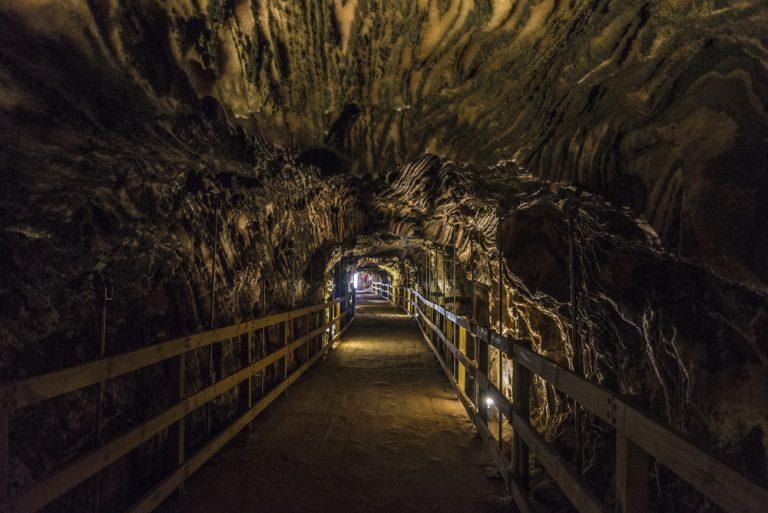
Shares of Danakali Ltd (LON:DNK) have jumped on Tuesday afternoon, following an announcement that the firm received an investment for its Potash Project.
Danakali Limited is focused on the development of the Colluli Potash Project (Colluli or the Project).
The Project is located in the Danakil Depression region of Eritrea, East Africa and is 100% owned by the Colluli Mining Share Company (CMSC).
Shares of Danakali jumped 1.97% to 36p. 3/12/19 13:49BST.
Danakali told shareholders that it had secured a AUD74 million equity investment from Africa Finance Corp.
The investment will be used to part fund the development of the Colluli Sulphate f Potash Project located in Eritrea, east Africa.
The Sydney and London-listed potash explorer said it has entered into a subscription agreement with Africa Finance for issuing new shares.
The share placement will occur in two phases, which follows a similar strategy to Bluejay Mining, who plan to use the funds to develop operations in Greenland.
The first will consist of 53 million new Danakali shares at an issue price for AUD0.60 to per share, in order to raise AUD31.8 million.
The second tranche, which is subject to Danakali shareholder approval and execution of senior debt documentation, will consist of 70 million new shares at the same issue price to raise the remaining AUD42.0 million.
The AUD0.60 per share issue price represents a 6% discount to Danakali’s Monday’s closing price off AUD0.64 in Sydney.
Following the investment, Africa Finance will own a 32% stake in Danakali. The development finance provider will also be granted a right to nominate up to two directors to Danakali’s board.
Danakali Chief Executive Niels Wage said: “I am very pleased to have secured AFC as a strategic equity investment partner. Danakali has made good progress over the past 12 months having secured a large proportion of the development capex for Module I and demonstrated a sustainable approach to the future development of Colluli. We are excited to commence project execution activities and look forward to providing updates to our shareholders and other stakeholders.”