Last year was a good one for furnishings and homewares retailer Dunelm (LON: DNLM) and on Thursday it will reveal how well it has fared in the first quarter of this financial year.
The signs were positive when the full year figures were published. Active customer numbers are growing both in the stores and online. The rate of this growth in the first quarter will be interesting because it will have a strong bearing on growth this year.
First quarter like-for-like growth in store sales is expected to be 3.5%, but it could be even better. The full year comparatives are tough and like-for-like sto...
UK new car market declines, Brexit uncertainty weighs
New data revealed on Friday that the UK new car market declined in the first nine months of the year as Brexit uncertainty weighs on consumer confidence.
Figures from the Society of Motor Manufacturers & Traders show that the new car market declined by 2.5% over the first three quarters of the year.
Registrations in the month of September increased by only 1.3% to 343,255 new vehicles.
September’s yearly growth comes after a significant decline of 20.5% for the same month in 2018 as “new emissions regulations and lack of testing capacity across Europe affected supply,” the Society of Motor Manufacturers & Traders said.
“September’s modest growth belies the ongoing downward trend we’ve seen over the past 30 months,” Mike Hawes, the Society of Motor Manufacturers & Traders’ Chief Executive, commented on the data.
“We expected to see a more significant increase in September, similar to those seen in France, Germany, Italy and Spain, given the negative effect WLTP had on all European markets last year,” Mike Hawes continued.
“Instead, consumer confidence is being undermined by political and economic uncertainty.”
Indeed, as the nation has now entered the month of the Brexit deadline, uncertainty prevails.
The BBC reported today the the European Union is “open but not convinced” by Boris Johnson’s new plans for a departure deal with the EU.
“We need to restore stability to the market which means avoiding a ‘no deal’ Brexit and, moreover, agreeing a future relationship with the EU that avoids tariffs and barriers that could increase prices and reduce buyer choice,” the Society of Motor Manufacturers & Traders’ Chief Executive said.
Many outside of the automobile sector have also warned against the a no deal Brexit. Indeed, at the end of September it was reported that many small business in the UK have either not prepared or are unable to prepare for a no deal scenario.
As for UK retail, household name John Lewis also warned against a no deal as it believes the scenario will have a “significant” impact on the business.
Female entrepreneurs experience highest levels of gender bias
Female entrepreneurs in the UK experience the highest levels of gender bias across the globe, according to the latest data.
New research by HSBC Private Banking revealed that half of female entrepreneurs in the UK experience bias based on their gender when raising capital for their business.
According to the research, the gender bias emerges when female entrepreneurs are asked questions about their family circumstances during the investment process.
Female entrepreneurs must also face questions concerning their credibility as business leaders and loss prevention.
The UK is home to the nation in which female entrepreneurs experience the most gender bias at 54%, with the USA coming in second at 46%.
Data from the Federation of Small Businesses revealed last year that businesses owned and led by women contribute £221 billion to the nation’s economy.
Despite this, women still face obstacles when raising capital. Indeed, 70% of UK female entrepreneurs find raising capital the most difficult part of the process.
Meanwhile, 53% of female founders are denied funding. Even in the cases that funding is secured, women receive 6% less than men.
Last year, the UK government announced that it will launch a review into the barriers female entrepreneurs face, assessing the obstacles impeding women from establishing their own business.
“It is concerning that half of female entrepreneurs in this country have experienced bias when trying to raise capital for their businesses,” Kirsty Moore, Managing Director at HSBC UK Private Banking in the UK, commented on the research.
“HSBC Private Banking has been working with entrepreneurs in the UK for decades, but this research shows how far we have to go to level the playing field for women to fulfil their ambitions,” Kirsty Moore continued.
Victoria Peppiatt, UK entrepreneur and co-founder of Phrasee, added that “it’s important that institutions with the capacity to bring about change, like HSBC, continue to highlight these issues and draw attention to the ways in which gender bias can be overcome.”
“Mixed panels, more access to networking opportunities and a commitment from investors to review their investment choices are just some of the ways we can achieve more parity.”
As for gender equality in the world of work, the Guardian reported earlier this year that only six countries in the world give women and men equal legal working rights.
Shares in HSBC Holdings plc (LON:HSBA) were trading at -0.48% as of 09:43 BST Friday.
Tower Resources pursues joint venture with undisclosed oil major
Oil and gas exploration and development company Tower Resources has seen its share price rally on Thursday, following its announcement that it had begun discussions for potential co-operation on a joint venture.
The Company stated that it had given technical and commercial information to an ‘international oil company’ with a view to spark discussions of a potential joint venture.
The announcement follows preliminary discussions held earlier in the year, and is focused on prospective co-operation on Tower Resources’ Namibian Blocks venture.
Tower Resources comments
Jeremy Asher, CEO, stated,
“This process is at a very early stage, and may not lead to any agreement. However, it does provide a timely reminder that, in addition to our Cameroon appraisal and development project, the Company has two extremely attractive exploration opportunities in Namibia and South Africa.”
“Our Namibian Blocks, in which we have an 80% interest as operator, include two giant four-way dip closures in the West and four large structures in the Dolphin Graben where the 1994 Norsk Hydro well 1911/15-1 encountered three source rock intervals, and recovered oil from Albian carbonate core samples.”
“Our Algoa-Gamtoos license in South Africa, operated by NewAge, where our interest is 50%, adjoins Total’s license where it made its recent 1-billion boe Brulpadda gas-condensate discovery in the Outeniqua basin, and that Algoa-Gamtoos license includes a 364 million boe prospect identified by NewAge in the same Outeniqua basin.”
Investor notes
The Company’s shares settled from a 25% bounce, now up 9.33% or 0.035p, to 0.41p per share 03/10/19 14:25 BST. Neither a dividend yield nor a p/e ratio are available for Tower Resources stock. Elsewhere in oil and gas news, there have been updates from; Anglo African Oil & Gas (LON: AAOG), Chariot Oil and Gas Limited (LON: CHAR), Union Jack Oil PLC (LON: UJO), Prospex Oil and Gas PLC (LON: PXOG), IGAS Energy PLC (LON: IGAS), Trinity Exploration & Production PLC (LON: TRIN) and Baron Oil PLC (LON: BOIL).Alternative backstop reactions: emollience isn’t a salve for open wounds
Worried about betraying the Good Friday Agreement, providing short positions to hedge fund buddies or making empty pledges on workers’ rights and trading standards? I think Boris has a cream for that. Today prime minister Boris Johnson defended his alternative backstop proposal with an approach he described as ‘glutinous emollience’, but it has thus far done little to soothe the sores of either his political opposition or the Northern Irish populace, whose livelihoods this new arrangement is trifling with.
Seemingly not interested in engaging with the awkward and regularly repeated jibes offered by Jeremy Corbyn and Ian Blackford, Boris Johnson instead opted to say he was disappointed in both parties’ responses to the new deal, which Corbyn lamented as being worse than the previous offering.
Without wanting to seem completely unreasonable, the EU have yet to outright reject the new proposal, but something about the EC’s Twitter activity would suggest they’re not all that keen.
.@NatashaBertaud: “@JunckerEU stressed that the Withdrawal Agreement must have a legally operational solution – not arrangements to be developed and agreed in the transition period.”
— Daniel Ferrie (@DanielFerrie) October 3, 2019
“This solution must meet all the objectives of the backstop: preventing a hard border, preserving North-South cooperation and the all-island economy, and protecting the EU’s Single Market and Ireland’s place in it.”
— Daniel Ferrie (@DanielFerrie) October 3, 2019
“President @JunckerEU will speak to Taoiseach @LeoVaradkar this afternoon and will reiterate the EU’s continued unity and solidarity behind Ireland.”
— Daniel Ferrie (@DanielFerrie) October 3, 2019
These updates followed a phone call between Boris Johnson and Jean-Claude Juncker, in which the EC president said he was pleased the UK was making steps toward attempting to find a compromise. Similarly, the Brexit ‘Spartans’ among the Conservative party and some members of the Northern Irish Parliament’s lower house have a positive outlook following Johnson’s latest proposal.“There are problematic points in the UK’s proposal and further work is needed. This work is for the UK to do, not the other way around.”#Brexit
— Daniel Ferrie (@DanielFerrie) October 3, 2019
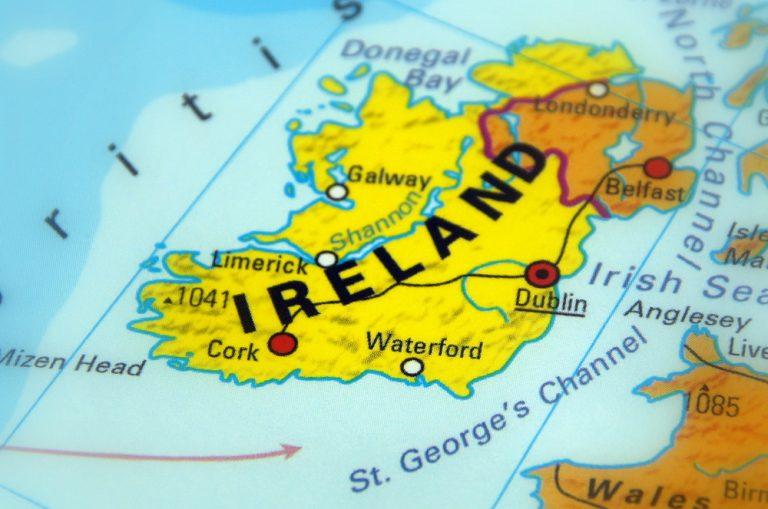
However, Corbyn went on to echo the concerns of Northern Irish businesses, which were bolstered by the reaction of the Irish media. The Irish Times began, “The latest UK proposals on Brexit reflect either an extraordinary ignorance of Northern Ireland or a willingness to risk the Belfast Agreement – and the progress of the last 20 years – to further the Johnson government’s political interests.” “The need to minimise the inevitable problems caused by a customs border on the island of Ireland is presented as a technical issue when, of course, it is so much more. The contortions necessary to keep the [DUP] on side have created proposals which would be disastrous for the North’s economy and bring with it wider dangers to peace …” “While claiming to support the Belfast agreement, the Johnson government is showing a wilful disregard for it and for the commitments the UK made in negotiations with the EU in December 2017. The most credible conclusion is that the prime minister and those around him have anticipated that this offer will be rejected and their primary objective in framing it in such a manner is their own domestic political advantage.” The Irish Independent continued, “Mr Johnson has argued the backstop is “a bridge to nowhere”. Alas, the slight proposals set down yesterday look like a flimsy pontoon that could be washed away in the first tides of trouble.” “They require stronger foundations to either protect the legacy of the Good Friday agreement, or seal the single market. They are more an outline than a detailed plan …” “Commitments cannot be exchanged for vague possibilities. The Brexiteers fear the UK could be trapped indefinitely in limbo, but they have no problem inviting the same plight on the North. Rejection of the latest Brexit plan may lead to the no deal Mr Johnson warned of.” “But acceptance could have the same negative outcomes. The British prime minister claims his plan is reasonable. But the risks appear weighed too heavily on one side.” The latter sentiments were echoed by Leo Varadkar, who made it clear he was unwilling to undermine a legally binding agreement of such political and cultural importance, for the sake of a promise and a set of outlined proposals. Speaking on Boris Johnson’s attempt to sidestep the border-shaped elephant in the room – with designated checkpoints away from the North-Republic border itself – Irish TD Thomas Byrne stated,Irish junior minister Patrick O’Donovan tells RTE the UK proposal is it not the basis of a deal, but is ‘certainly the basis for further discussions’ adding ‘there are some things that we would welcome, but some things we would have issue with.’
— JPCampbellBiz (@JP_Biz) October 3, 2019
“We’re very concerned about whether the proposal is serious. The objectives that I suppose, nationally, we have as a nation are that no border will exist on the island of Ireland and it’s not clear that this does that”
“[The plan] seems to us that it puts in place a border for customs.”
“It doesn’t matter where [customs checks] take place.”
“The problem is that customs checks need to be built, they need support of communities. I don’t think they would have support of communities.”
“Historically they’ve needed to be protected, and those protecting them then become targets and then this leads into a cycle of chaos.”
Like him or not, some degree of admiration is owed to Boris Johnson for his sheer tenacity. Not only because this new Brexit deal is a clearly ham-fisted effort that ignores the nuances of the Irish political situation, but also because – deliverable or not – the fact he has offered the EU, and potentially the opposition, an opportunity to reach an agreement, means he can say ‘I tried to deliver a deal, its their fault we haven’t’. We can hope the end is in sight and that we can leave the putrid miasma of Brexit politics in 2019 – though at the moment that remains unlikely. For now, the palaver and toxicity continues.
Elsewhere in political and macro economic news, there have been updates from; Hong Kong protester shooting and China’s strategy, the Supreme Court’s ruling, the collapse of Thomas Cook (LON: TCP), ECB stimulus, the bid for the London Stock Exchange (LON: LSE), Lloyds Banking Group PLC (LON: LLOY), Hilary Benn’s Brexit delay bill, Barclays (LON: BARC) and Deutsche Bank (ETR: DBK).

Ofgem: greenhouse gas progress slows, Big Six lose market share
Last year saw the smallest reduction in greenhouse gas emissions since 2012, according to a report published by Ofgem on Thursday.
Ofgem said that greenhouse gas emissions have dropped by 42% since 1990 – which is more than any other large advanced economy – driven by government policies and the growth of wind and solar power.
It noted, however, that progress is slowing down.
Meanwhile, the report by Ofgem also shows that the market dominance of the Big Six energy companies continues to weaken. Indeed, they lost 1.3 million customers and saw market share decrease to roughly 70%, down on the approximately 75% recorded the year prior.
The Big Six energy companies are those that supply most of the energy to domestic households in Britain. These are Centrica, E.ON UK, Scottish and Southern Energy, RWE npower, EDF Energy and ScottishPower.
Earlier this year, Ofgem implemented a price cap on default energy tariffs to limit customers from overpaying for energy.
In February, Centrica warned that the energy price cap would weaken its 2019 results.
“Ofgem’s latest state of the market report shows the progress made so far to decarbonise the economy but much more needs to be done,” Joe Perkins, Chief Economist at Ofgem, commented on the report.
“We want the UK to remain a global leader in bringing down greenhouse gas emissions, and our major objective is to help the country rise to the challenge of cutting emissions to net zero by 2050 at the lowest possible price to consumers,” the Chief Economist continued.
“As well as protecting consumers in the future, our duty is also to protect those today.”
“We will continue to enable competition and innovation which benefits consumers, whilst protecting those who need it, as we help build an energy market which works for all consumers.”
Shares in Centrica plc (LON:CNA) were trading at -2.4% as of 12:30 BST Thursday. Shares in E.ON SE (ETR:EOAN) were down trading at -1.28% as of 17:35 CEST Wednesday.
Shares in SSE plc (LON:SSE) were up trading at +0.57% as of 12:29 BST and Electricite de France SA shares (EPA:EDF) were down -0.15% as of 13:15 CEST.
Service sector activity contracts, risk of recession “heightened”
New data revealed on Thursday that UK service sector activity contracted in September, with companies the least optimistic about future growth of activity since after the Brexit referendum in 2016.
The UK is facing a “heightened risk of recession,” said the Chief Business Economist at IHS Markit.
The IHS Markit/CIPS UK Services PMI Business Activity Index dropped to 49.5 in September, down from 50.6 recorded in August.
According to the data, jobs at service sector companies were cut for the first time in five months, occurring at the fastest rate in nine years.
The survey also shows that international clients switched business to other markets following the prevailing worries surrounding a no-deal departure from the European Union.
“At current levels the surveys point to GDP falling by 0.1% in the third quarter which, coming on the heels of a decline in the second quarter, would mean the UK is facing a heightened risk of recession,” Chris Williamson, Chief Business Economist at IHS Markit, said.
“Brexit-related concerns dominated the September survey responses, linked by companies to falling sales, cancelled and postponed projects, a lack of investment and job losses,” Chris Williamson continued.
Duncan Brock, Group Director at the Chartered Institute of Procurement & Supply, said “an exhausted sector’s optimism faded away to July 2016 levels and new export orders fell at their fastest rate since March.”
“Some respondents mentioned overseas customers were putting spending decisions on hold or choosing other European suppliers instead. In this last month before the Brexit deadline, there is little time or vision for a major turnaround in fortunes before the end of the year,” Duncan Brock added.
Indeed, with the Brexit deadline fast approaching, uncertainty prevails over the nation’s future.
Just last week the Supreme Court ruled that Boris Johnson’s prorogation of Parliament was not only unlawful but also ineffective and non-existent.
The Prime Minister is now setting out his proposals for a Brexit deal in Parliament, according to the BBC.
Markets contemplate US tariffs following WTO ruling
Continuing his America first campaign, Donald Trump would’ve no doubt produced one of his memorable facial expressions as the WTO gave the go-ahead for the US to impose a series of tariffs on European goods. Closing in the red on Wednesday, indices would have looked to recover some ground on Thursday morning.
Speaking on their efforts this morning, Spreadex Financial Analyst Connor Campbell described the market opening,
“Halloween came early on Wednesday, the WTO treating the global markets to a nasty trick as they gave the US the green light to impose tariffs on $7.5 billion in European goods.”
“After yesterday’s dizzying losses, the markets attempted to steady on Thursday, with mixed success. The CAC, which was one of the worst hit as French wine made America’s naughty list, managed to eke out a 0.2% rise after the bell, with the IBEX and FTSE MIB also in the green.”
“The FTSE, however, wasn’t so lucky. Certainly not helped by BP and Shell falling around 1% apiece, the UK index lost another 25 points, forcing it back to 7100 and leaving it at a 5-week low. This despite the pound continuing to hold at its own one-month nadir against the dollar; the currency has spent the week treading water against the greenback, almost completely ignoring Boris Johnson’s ham-fisted attempts at a border solution.”
“After the panic caused by the manufacturing PMIs earlier in the week, it’ll be interesting to see whether or not Thursday’s services figures have the same effect. The Eurozone-wide reading is expected to sit at 52.0, while the UK number is set to slip from 50.6 to 50.3; a bit later on, the US ISM PMI is then forecast to drop from 56.4 to 55.1 month-on-month.”
Continued uncertainty, isolationism and adversarial politics, investors and globalists alike will be longing for a return to cooperation and the days where the international community held hands and sang kumbaya. Going forwards, it looks likely that divisions will deepen, as old alliances are broken up and new ones are formed. Elsewhere in political and macro economic news, there have been updates from; Hong Kong protester shooting and China’s strategy, the Supreme Court’s ruling, the collapse of Thomas Cook (LON: TCP), ECB stimulus, the bid for the London Stock Exchange (LON: LSE), Lloyds Banking Group PLC (LON: LLOY), Hilary Benn’s Brexit delay bill, Barclays (LON: BARC) and Deutsche Bank (ETR: DBK).Ted Baker posts half year loss, shares crash
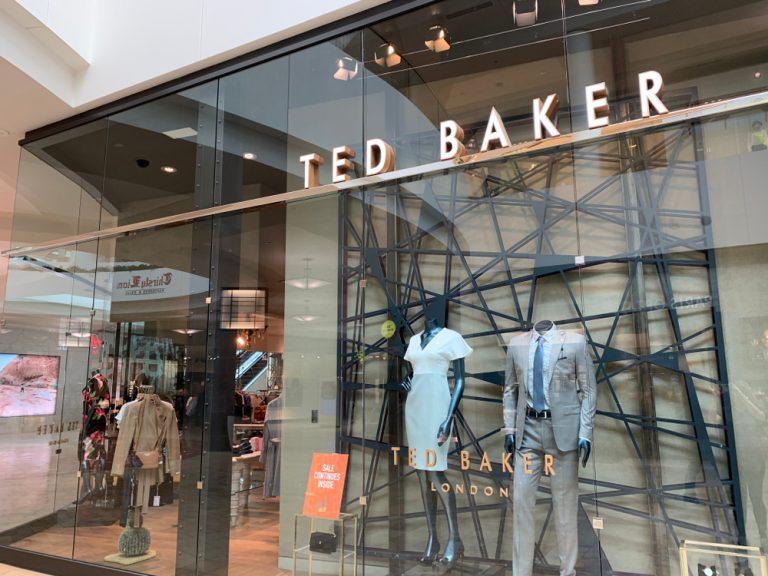
Ted Baker posted posted a pre-tax loss on Thursday as the retailer battles against “unprecedented” trading conditions.
Shares in the British luxury clothing retail business were sent crashing over 35% during trading on Thursday morning.
Ted Baker said that profit before tax decreased to a loss of £23 million over the 28 week period to 10 August, down from the £24.5 million profit recorded in 2018.
The company said that its results for the first half were behind its expectations. It added that trading in the second half has started slow, not helped by the warm weather in September, which it believes will have an impact on the full year.
“If these trends continue, we will achieve a second half result below that of last year,” Ted Baker warned.
“The Group’s performance has been impacted by very difficult trading conditions throughout the period, amplified by heightened levels of consumer uncertainty across many of Ted Baker’s global markets,” the company said in its results.
“This has been exacerbated by the well-publicised challenges that continue to face some of the Group’s UK trading partners against the backdrop of the continuing shift towards an increasingly digital retail landscape.”
Ted Baker warned of the “extremely difficult” trading conditions back in June, and the impacts these continue to have on its performance.
“The sector in which we operate continues to face significant challenges, including weak consumer spending against a backdrop of Brexit and broader political and economic uncertainty,” the company warned.
Indeed, the nation has now entered the month of the Brexit deadline and the only certainty that prevails is additional uncertainty.
“As a result, the trading environment remains highly competitive and promotional with competitor discounting at unprecedented levels. We continue to proactively manage these pressures, but are not immune to the external challenges,” Ted Baker said.
From discounting, the switch to online shopping and the prevailing Brexit uncertainty, UK retailers are struggling amid the gloomy trading conditions to have hit the British high street.
Shares in Ted Baker plc (LON:TED) were trading at -35.82% as of 11:06 BST Thursday.