
Howsy: tech giants raise local rents
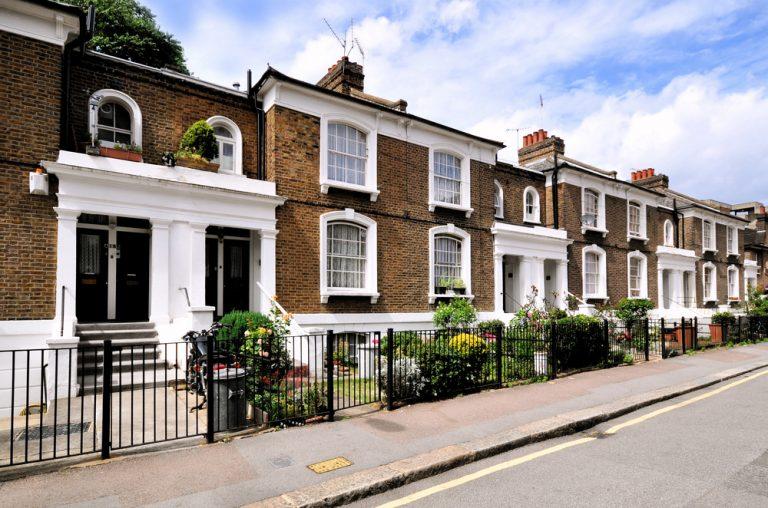
New research revealed on Friday that, on average, boroughs with a tech giant in the neighbourhood have an average rental cost that is 44% higher than the London average.
Howsy, the lettings management platform, looked at the current cost of renting in boroughs that have Google (NASDAQ: GOOGL), Microsoft (NASDAQ: MSFT), Amazon (NASDAQ: AMZN) and Facebook (NASDAQ: FB), in comparison to the London average.
Westminster, which is home to Microsoft and Facebook, is the highest with an average monthly rent of £2,838. This is 64% higher than the London average.
Howsy also said that, on average, rental prices in these boroughs have seen a 4.7% increase since the companies moved there, compared to an increase of 1.7% across London as a whole.
Howsy’s research cites Google’s move to Camden in 2016 as the “most notable” example, where rents in the borough have increased by 9.2% since the company moved there. This compares to an increase of 0.8% across London as a whole.
“It’s great to see such big names committing to London, and the wider economic benefit they bring through the provision of jobs, investing in their workforce and the surrounding area is a big plus,” Calum Brannan, Founder and CEO of Howsy, commented on the research.
“However, the downside of so many additional people being drawn to the rental market is this greater demand causes a spike in rental prices. This creates a further financial obstacle for those living in the area without the benefit of a robust tech-based salary and can see many existing residents drive out,” the Founder and CEO continued.
“This new age of tenant also comes with an evolved level of requirements for UK landlords to deal with and as we become a nation that is connected on a 24/7 basis, tenants expect an agent or platform that can provide such a service.”
Many small businesses have not or cannot prepare for no-deal, study
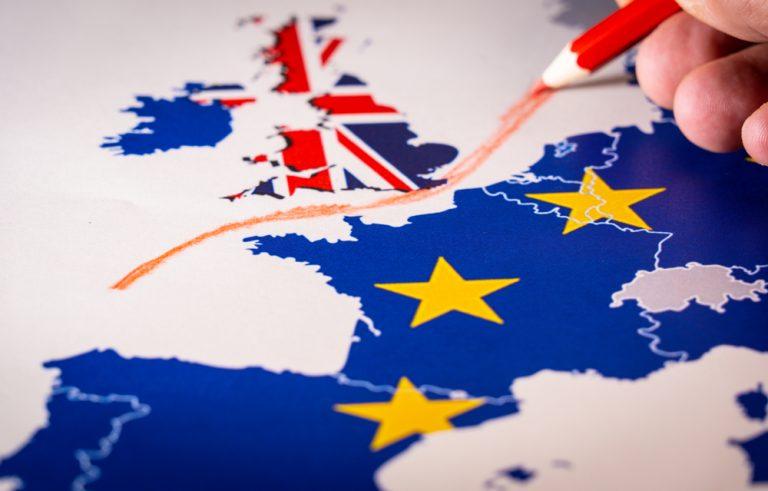
New data revealed on Friday that many small businesses in the UK have either not prepared or are unable to prepare for a no-deal departure from the European Union.
New research from the Federation of Small Businesses shows that 39% of small businesses in the UK believe a no-deal departure from the European Union will have a negative impact on them.
Of these small firms, only 21% have planned or have prepared for the anticipated problems. Meanwhile, 63% do not think they are able to plan.
The Federation of Small Businesses said that, for those that have prepared, the average costs have amounted to roughly £2,000.
For smaller businesses that export and import, the average cost increases to £3,000.
Moreover, 31% of the small businesses that have prepared have stockpiled ahead of the extended Halloween deadline.
“As the risk of a chaotic no-deal Brexit on 31 October remains alive and kicking, it is worrying that many small firms have either not prepared or are finding that they can’t prepare,” Mike Cherry, National Chairman of the Federation of Small Businesses, commented on the data.
“Ongoing uncertainty is to blame for preparations hitting the skids with the picture still not clear as to how the UK will leave the EU on 31 October. Until we get clarity, small firms must prepare for the cliff edge where possible, and make preparations for a no-deal Brexit,” Mike Cherry continued.
“Preparing for this outcome is coming at a high price though with small firms being hit by an unstable pound and having to shell out money on a potential outcome that has been highly disruptive, remains uncertain and is unwanted. Government must use what little time is left before 31 October to provide small firms with the support they need to navigate the uncharted and turbulent waters of a no-deal Brexit.”
As the Brexit deadline approaches, the only certainty that prevails is additional uncertainty.
Earlier this week, the Supreme Court ruled that Boris Johnson’s prorogation of Parliament not only illegal but null and void.



FTSE led the market surge following hollow trade war optimism

On the back of general election jitters, the Pound Sterling maintained its plateau. This, along with yet more empty words on the trade war situation from Donald Trump, saw the FTSE claim the top spot in Thursday’s winners’ circle. Despite being quoted by the NYT as having lied over 10,000 times during his tenure, markets were willing to swallow up whatever hollow hope he was willing to dole out, and the CAC and DAX ended their sombre start to the week.
Speaking on the FTSE’s success and Thursday market movements, Spreadex Financial Analyst Connor Campbell stated,
“The European markets were once again somewhat out of step with the US, still seemingly processing the déjà vu of yesterday’s overly familiarly and cynically-timed trade optimism from Donald Trump.”
“After rising yesterday, the Dow Jones pulled back this Thursday, falling towards 26900 as it dropped 0.2%. In contrast, the DAX and CAC were up 0.5% and 0.9% respectively as they swallowed the President’s claim that a trade deal could be arriving sooner than many think. That allowed the German bourse to hit 12300, with its French cousin crossing 5600.”
“Putting them all to shame was the FTSE, which let rip with a 100 point surge, leaving it at 7380 and near an 8-week peak. This despite some serious casualties amongst its ranks: Pearson fell 14% on problems in its US higher education courseware business; Imperial Brands shed 11% thanks to fears surrounding the crackdown on vaping in America; and IAG lost 3.5% as it took a heavy hit from the month’s pilot strike.”
“Keeping the FTSE buzzing was its commodity sector, obviously influenced by Trump’s trade deal rumours, alongside the continued misery of sterling. The pound failed to make any in roads regarding a recovery of yesterday’s losses; instead the currency spent much of the day flat, paralysed by all the recent talk of a general election.”
Elsewhere in political and macro economic news, there have been updates from; the Supreme Court’s ruling, the collapse of Thomas Cook (LON: TCP), ECB stimulus, the bid for the London Stock Exchange (LON: LSE), Lloyds Banking Group PLC (LON: LLOY), Jo Johnson quitting, Hilary Benn’s Brexit delay bill, Barclays (LON: BARC) and Deutsche Bank (ETR: DBK).IAG British Airways updates guidance following industrial action
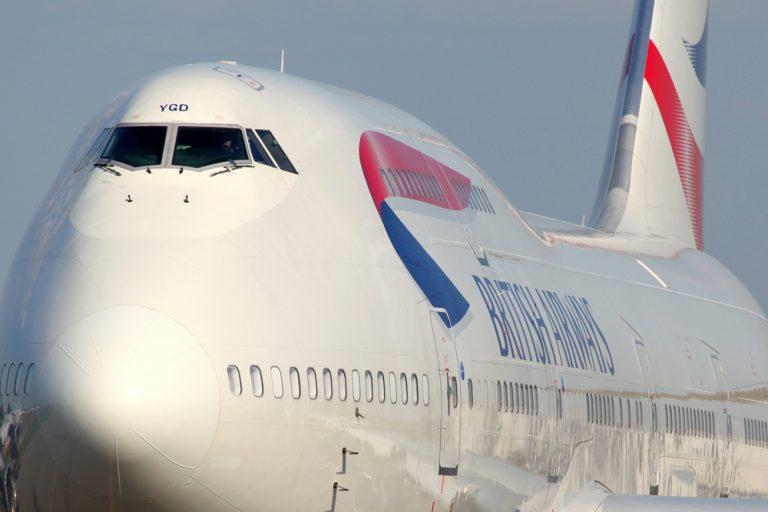
Anglo-Spanish multinational airline holdings company IAG, or International Consolidated Airlines Group (LON: IAG) reconsidered its guidance for the full-year, in light of British Airways industrial action and the additional costs incurred by this year’s events.
The Company said that the impact of industrial action and anticipated strikes by British Airways unions (such as BALPA) totalled around €170 million. Unions other than BALPA – which represent 90% of the Group’s staff – have accepted an 11.5% pay rise over the next three years.
The Group’s low-cost offerings, such as Vueling and LEVEL, will see an impact of €45 million due to booking trends. IAG also downplayed its profit expectations on account of its projections for passenger unit revenue and capacity growth rates.
IAG statement
The Company’s statement read,“During September, BALPA’s (British Airways main pilots’ union) industrial action initially scheduled for the 9, 10 and 27 led to an initial cancellation of 4,521 flights over a period of seven days. Subsequently, 2,196 flights were reinstated leaving 2,325 cancellations. British Airways also introduced flexible commercial policies on 4,070 flights not directly affected by the industrial action. These policies enabled customers to re-book flights or receive a refund. The net financial impact of the industrial action is estimated to be €137 million. In addition, there were further disruption events affecting British Airways in the quarter, including threatened strikes by Heathrow Airport employees, which had a further net financial impact of €33 million.”
“At current fuel prices and exchange rates, IAG therefore expects its 2019 operating profit before exceptional items to be €215 million lower than 2018 pro forma (€3,485 million). Passenger unit revenue is expected to be slightly down at constant currency, compared to flat guidance previously, and non-fuel unit costs are expected to improve at constant currency, unchanged from previous guidance. Capacity growth, measured in ASKs, for the fourth quarter is now expected to be about 2 per cent, which is 1.2 points below previous guidance, and full year capacity growth is expected to be about 4 per cent, compared to 5 per cent previously.”
“Clearly any further industrial action will additionally impact IAG’s full year 2019 operating profit.”
Investor notes
After failing to capitalise on Thomas Cook’s demise in Monday, the Company’s share price dipped 3.36% or 16.14p to 463.96p per share 26/09/19 14:46 BST. Liberum Capital analysts reiterated their ‘Buy’ stance on IAG stock. Elsewhere in travel and aviation, there have been updates from; TUI AG (LON: TUI), Thomas Cook (LON: TCP), Fastjet PLC (LON: FJET), John Menzies plc (LON: MNZS), Wizz Air (LON: WIZZ) and Ryanair Holdings Plc (LON:RYA).Northbridge Industrial Services books first profit in five years

Industrial services and rental company Northbridge Industrial Services plc (LON: NBI) booked its first profit since 2014, alongside bumper revenue growth.
The Group’s revenue and cash generation from operations both bounced 33%, to £16.8 million and £2.6 million respectively. Similarly, improved conditions in the drilling tool market saw year-on-year revenue grow 29% in the sector.
This growth in sales led significant gross profit growth of 50%, up to £7.5 million. Further, the Company’s EBITDA spiked 90% to £3.4 million.
Northbridge Industry Services said the improved trading conditions in the equipment services and rental business was led by recovery in the oil and gas market.
Northbridge Industrial Services comments
Chief Executive Eric Hook stated, “Northbridge is starting to see the benefits from the recovery in activity in the oil and gas markets across both our operating divisions of Tasman and Crestchic. Northbridge’s operational gearing is also now beginning to have a significant beneficial impact on our cash generation.” “There has now been a significant improvement in the group’s performance, as our traditional energy markets begin to improve, and this has benefited both Crestchic and Tasman. In addition, the new markets which Crestchic was able to exploit during the downturn, most noticeably in data centres and North America, remain available to us and will also provide additional future growth,” “We are confident of trading volumes for the remainder of 2019 and with a much-strengthened balance sheet, a growing cash flow and further organic opportunities to grow the business, we look forward to the future with optimism.”Investor notes
The Company’s share price rallied 2.90% or 3.90p, to 138.40p per share 26/09/19 12:46 BST. The Group’s market cap is £38.64 million, their p/e ratio and dividend yield are unavailable. Elsewhere in industrial and construction news, there have been updates from; Billington Holdings PLC (LON: BILN), Epwin Group PLC (LON: EPWIN), Ashtead Group plc (LON: AHT), SIG plc (LON: SHI), Alumasc Group plc (LON: ALU), Somero Enterprises Inc (LON: SOM) and Wincanton plc (LON: WIN).Kaiserwetter talks on its IntelliTech asset management for renewables

Kaiserwetter describes itself as the first ‘IntelliTech’ company, utilising AI, machine learning algorithms and data analytics to help its clients navigate the volatile but growing market of renewable energy assets. The Company’s CEO, Hanno Schoklitsch, told the UK Investor Magazine that it sets itself apart in its field by,
“[Transforming] variable and volatile returns into almost steady income to the investor [and by providing] state of the art digital platforms and analytics”.
By utilising the Internet of Things and a range of AI capabilities, the Company boasted its ability to collate structured data sets from scattered fundamentals. It also noted that its goal of catalysing investments into renewables – by way of offering Data Analytics as a Service – would further efforts to ‘decarbonise’ the energy sector (and in turn increase both traffic and credibility in the ethical investment field).
The tech triad
For readers interested in learning about the triad of platforms that led Kaiserwetter to be named among the Top 10 Asset Management Solution Providers USA 2019, here we will provide a brief overview. Its first two platforms, ARISTOTELES and IRIS, complement one-another by providing analytics using the Internet of Things and historic operational data, to procure due diligence reports with the goal of maximizing investors’ returns while minimizing costs. The two platforms utilise both Smart and Predictive data analytics, alongside machine learning, to not only track and predict the financial performance indicators that affect the majority of assets, but variables specific to the renewables sector, for instance weather, temperature and power curve inefficiencies. Its third and most recent offering, ZULU, enables users to “configure services related to the technical and commercial management of renewable energy assets”, while increasing operational cost-effectiveness and transparency. The Group’s CEO stated that, “ZULU us a very exciting new area for our business where customers can pick and choose any service at any time, and know the specific lowest price of each in real time. As other asset classes such as biomass power and hydroelectric plants will subsequently be integrated into our platforms, the services offered to solar and wind owners will continue to lead the way in innovation and incorporation of the latest analytics we develop.”Positioned for a surge
Both by the very nature of its operations and led by its current strategy, Kaiserwetter looks poised to position itself at the forefront of innovation and as one of the success stories in the renewables asset management sector. At its core is an understanding that like any consumer, the archetypal modern investor is exposed to the increasing convenience and complexities offered by technology. As such, they increasingly come to expect the ‘Amazonization’ of online services, and in turn seek out the swift purveyance of due diligence reports, investment assessments, risk diagnoses and original expectations which Kaiserwetter’s data banks and platforms facilitate. Far from passively relying on their means of operation for growth, Kaiserwetter’s CEO was keen to discuss changes to the Company’s personnel and market positioning. Like any Company seeking to grow, Kaiserwetter has brought in swathes of specialists – data scientists, renewable energy engineering specialists, business developers and strategists – however, their trading strategy details their desire to become ambitious entrants into ‘sophisticated’ and ‘complex’ markets.Why should our readers choose Kaiserwetter and what challenges does it face?
Mr Schoklitsch told us the main obstacles the Company faces are largely in the hands of larger players and market forces. Other than the obvious discussion of macroeconomic uncertainty, Kaiserwetter sees one of the major challenges to not only itself but to society as a whole, as being our ability to drive research and investment into renewable energy and AI sectors. It believes this can only be done with the right cooperation between governments and private entities such as itself, in tackling issues already on the political agenda, such as the need to drastically cut emissions (which is made easier if renewables gain scale and become more of a mainstream route for investment). The Company sees itself as a natural option for difficulties posed by not only market uncertainty but moral challenges, “The UK market, although a very exciting area at the moment, is currently experiencing many challenges with the difficult rupture from the EU market. Only decisive support from the tech sector and massive investment in the renewables sector, will enable the shutting down of most coal plants, reduce the development of fracking and simultaneously comply with the carbon emission reductions that world leaders have already pledged. We believe that our intelligence approach offers investors the best means of addressing these market challenges, while protecting investments from volatile market forces and the wider political instability we have seen in the United Kingdom and London recently.” Granted, much of this piece reads like a promotion, but it is entirely based on what I see as a fair opinion of the Company. Aside from operating at the forefront of some of the most important and growing sectors, and successfully marrying them (renewables and AI), Kaiserwetter appears to offer the best of both worlds in ethical investment. It not only understands the moral challenges facing our society and encourages the growth of a sector which seeks to combat these issues, but does so in a way that is profitable, sophisticated, and will likely only improve as the AI technology it uses becomes more capable. Elsewhere, there have been renewable energy updates from; Active Energy Group PLC (LON: AEG), Velocys PLC (LON: VLS), AFC Energy plc (LON: AFC), John Laing Environmental Assets Group Ltd PLC (LON: JLEN), SIMEC Atlantis Energy (LON: SAE), Aquila European Renewables Income Fund (LON: AERI), PowerHouse Energy Group (LON: PHE) and SIMEC Atlantis Energy (LON: SAE).
General Election chatter make Sterling nervous, European indices continue free-fall
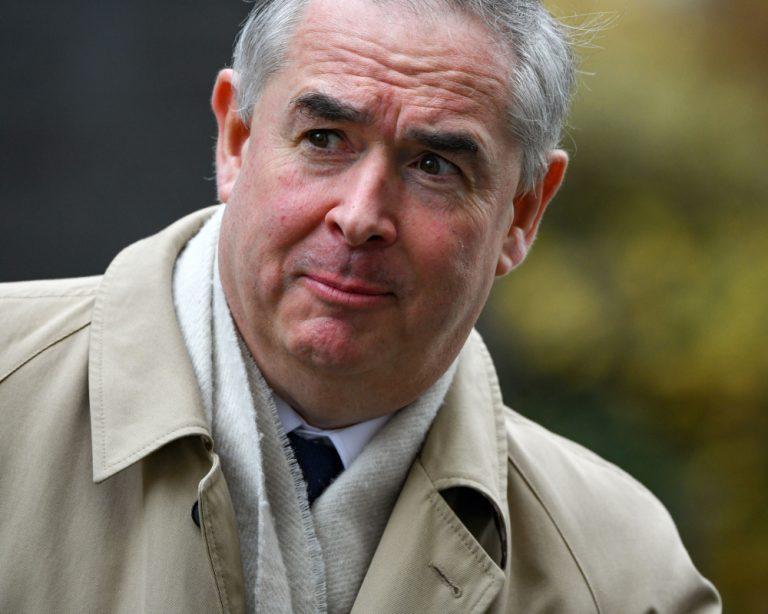
Following the rousing baritone notes of MP Geoffrey Cox, the Pound Sterling halted its post-Supreme Court verdict rally, with the Conservatives making an increasingly concerted effort to pressure the Labour Party into agreeing to a general election. After the release of his phone call transcript, Donald Trump’s infamous tangerine smirk could hardly be contained as the thus far fruitless impeachment campaign saw the DOW Jones climb during Wednesday trading. Aside from these modest rises and falls, the Eurozone can only pray the CAC and DAX have got parachutes to hand.
Speaking on market movements through the day, Spreadex Financial Analyst Connor Campbell stated,
“The markets’ stress headache only intensified as Wednesday went on – all bar the Dow Jones, which managed a remarkably chilled out open.”
“As investors process the recently released transcript of the call between Donald Trump and Ukrainian President Volodymyr Zelensky, attempting to ascertain the implications regarding yesterday’s impeachment announcement, the Dow pushed 0.3% higher. That lifted the US index back towards 26900, a level it tumbled under on Tuesday.”
“In stark contrast, the DAX and CAC were in a terrible mood, plunging 1% and 1.2% respectively, as it all got a bit much. The German index is now below 12200 for the first time in over a fortnight, with its French cousin struggling to hold onto 5550.”
“The FTSE avoided the same kind of losses thanks to the UK’s own political mess. Falling 0.3%, the index was rescued by the comparatively greater suffering of sterling, which dropped 1.1% against the dollar and 0.5% against the euro.”
“Whatever pleasure the currency took in the Supreme Court deciding Boris Johnson’s prorogation of Parliament was unlawful has been replaced with concern over what happens next, especially since there is increased talks of the government trying to force the country towards a general election. And with a busy Commons schedule this afternoon, the drama likely isn’t over for the pound just yet.”
Elsewhere in political and macro economic news, there have been updates from; the Supreme Court’s ruling, the collapse of Thomas Cook (LON: TCP), ECB stimulus, the bid for the London Stock Exchange (LON: LSE), Lloyds Banking Group PLC (LON: LLOY), Jo Johnson quitting, Hilary Benn’s Brexit delay bill, Barclays (LON: BARC) and Deutsche Bank (ETR: DBK).