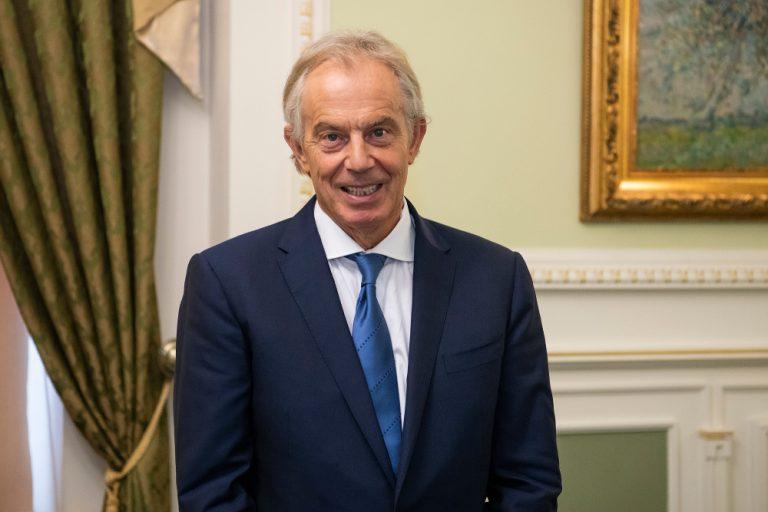
Tony Blair speaks at Westminster as Boris threatens to expel MPs

0
With only a limited window of opportunity left for Parliament to block a No-Deal Brexit scenario, both Leave and Remain sides have upped the ante. The divide within the Conservative Party was made deeper than ever this morning, as Boris Johnson favoured the stick as his means of making MPs toe the party line, threatening to remove the whip of any MP voting against a No-Deal during this week’s session. Doing so would effectively be turning his own party into a minority government, and thus manufacturing the need for an election. On the other side, Labour played the next track on its ‘Best of the Noughties’ record. After Alistair Campbell made several appearances across the media over the last year, their divisive ex-front-man Tony Blair, today showed the current leader how to make a convincing and pragmatic speech.  

Stop representing the people, its what they asked for

  After securing a shutdown of Parliament, Boris has gone further in his pro-democracy crusade to secure a one-minded party (nothing more democratic than everyone agreeing – having to politically assassinate any opposition is only a cursory detail).   https://platform.twitter.com/widgets.js Tory MP Antoinette Sandbach was one of the first to react, saying she would vote against a No-Deal this week. “I will be voting against a no-deal Brexit, this is the very last opportunity for parliament to do that because of the prime minister’s prorogation.” She then spoke to Sky News, in response to the threats delivered to her in regard to her political career. “I’ve voted for the deal [the EU withdrawal agreement] three times, this prime minister didn’t vote for that deal three times. “I find it staggeringly hypocritical that he’s threatening to take the whip away. “If that had happened to him when he voted against Theresa May’s deal, he wouldn’t have had the opportunity to stand to be prime minister of this country.” “I feel so strongly about this that I’m prepared to put my job on the line for my constituents.” Offering neither a suitable alternative, nor willing to fully reach a pragmatic cross-party compromise, she attributes some of the blame for the current situation to Labour. “The Labour Party are very responsible for the fact the deal didn’t go through and we didn’t leave on 29 March, together with the prime minister and a quarter of his cabinet.” She finished her statement by saying, “The prime minister should bring back Theresa May’s deal. We know that 29 Labour MPs signed a letter saying that they would vote for it.” “The prime minister and others acted to try and depose Theresa May before that deal could be brought back again.” “Now that parliament is going to be prorogued, as far as I can see the only advantage to that is the fact that deal could come back.”  

Blair says its a trap

  It gives me no pleasure to say that the most cogent and rousing speech in opposition to Brexit has come from Tony Blair. But it should be of little surprise. Like him or loathe him, he was a different breed of politician to the likes of Jeremy Corbyn. Polished, politically sharp, engaging – he is the epitome of a modern politician, as opposed to a well-intentioned activist who has had to face the stark reality that the game of party leadership is bloodthirsty. He told the Westminster procession at the Institute for Government that he normally likes to open his speeches with a few jokes, but that
“I think Brexit’s gone beyond a joke”
He continued, “In the modern history of Britain there’s never a more important moment for politicians to put country before tribe and national interest before self-interest. “We’re numb to the state of our politics. What is happening is shocking, irresponsible and dangerous.” “Our government is ripping Britain out of the EU – by common acceptance the most important change in this country’s affairs since 1945 – in the most extreme form of Brexit imaginable.” “Without an agreement to replace the complicated network of political and commercial arrangements we have built over decades of European membership.” “And it’s doing so without the consent of parliament, but with a deliberate manouevre to curtail it.” “And without the express consent of the British people, relying instead on a one-off plebiscite now over three years ago in which – not for one moment – was it suggested by those advocating Brexit that no deal would be the outcome.” Putting his political acumen on show, Blair told his Labour successor to avoid the ‘trap’ of a general election. “Should the government seeks an election, it should be refused in favour of a referendum.” “I know it’s counter-intuitive for opposition parties to refuse an election, but in this exceptional case it’s vital they do so – as a matter of principle – until Brexit is resolved.” “Brexit is an issue which stands on its own, was originally decided on its own and should be reconsidered on its own.” “The Brexiteers are laying a trap – to seem as if pushed into an election while actively preparing for one.” So, in a move that some would have hoped would bolster the righteousness of the Remain camp, I would wager it made them look weaker by having one of their best showings not from their current leadership, but from a controversial figurehead from a bygone epoch. After Michael Gove hinted that the Cummings-led ultras would simply ignore legislation to block a No-Deal Brexit, today’s discussions help us to realise; the dystopian reality where the man who once boasted we make every Hob-Nob in the world would be our de facto Chancellor, seems ever-closer. https://platform.twitter.com/widgets.js   Other news and macro financial updates have come from; Parliament being prorogued, No-Deal Brexit preparations, UK GDP during the second quarter, the London Stock Exchange Group (LON: LSE), the US-China currency manipulation debacle, and analysts’ outlook for markets and currencies.

Tyman needs to improve efficiency

Problems in the US have led to forecast downgrades for Tyman (LON: TYMN) and new management needs to sort this out. A strategic review should be completed next year.
Production problems are exacerbating the tougher trading conditions in the construction sector in the US and UK. Trading for some parts of the business could get tougher in the second half.
The shares are trading on a low profit multiple and a high yield, but growth will be hard to come by over the next couple of years.
Interims
North American performance was hit by production inefficiencies and this also hampered customer ser...

Sterling finished strongly against the Euro, No-Deal resistance mounts

As trading closed for the week, sterling finished more confidently than the euro, as hopes remained for the prevention of a No-Deal Brexit outcome. The FTSE’s gains remained fairly subdued and the Dow Jones rose healthily. Spreadex Financial Analyst Connor Campbell had the following to say about the week’s market close, “Sterling appeared eager to end to week – and month – on a positive note, pinning its hopes on a no-deal Brexit being averted.”

“There are a few things the pound could point to this Friday as the catalyst for Friday’s rebound, however unconvincing. Gordon Brown has claimed that the EU will shift the October 31 deadline. There’s a judicial review against the suspension of parliament set to be heard in the High Court next Thursday. And cross-party MPs believe they have the numbers to block Boris Johnson’s plans.”

“So, nothing exactly concrete. However, it was enough – alongside weakness from its rivals – to allow sterling to climb 0.4% against the dollar and 0.5% against the euro. That pushes cable above $.1.222, while leaving it knocking on the door of €1.107 against the single currency.”

“The pound’s rebound had the side-effect of keeping the FTSE’s own gains on the lower-end of what was seen elsewhere. The UK index added 0.4%, sending it to a 2-week peak of 7210; in comparison, the DAX and CAC were up 1% and 0.6% respectively, buoyed by a 3-year low Eurozone inflation reading, one that arguably forces the ECB down a more dovish route.”

“Working with the leftovers of yesterday’s hard-to-justify trade optimism, the Dow Jones rose 100 points, an increase that took it within touching distance of 26500. A good rally from the 26000-nearing lows seen at the start of August, but still a fair way away from the 27300-eyeing prices it was hitting this time last month.”

Boris Johnson, despite reiterating his commitment to reaching a deal, still appears prepared for a no-deal scenario. Despite the efforts of his UK peers from the Remain faction, hope of preventing a No-Deal will likely come from the EU ranks cracking and offering concessions to the Johnson-Cummings-Rees-Mogg trifecta. Other news regarding sterling and macro financial updates have come from; Parliament being prorogued, No-Deal Brexit preparations, UK GDP during the second quarter, the London Stock Exchange Group (LON: LSE), the US-China currency manipulation debacle, and analysts’ outlook for markets and currencies.

URU Metals rallies on mining application acceptance

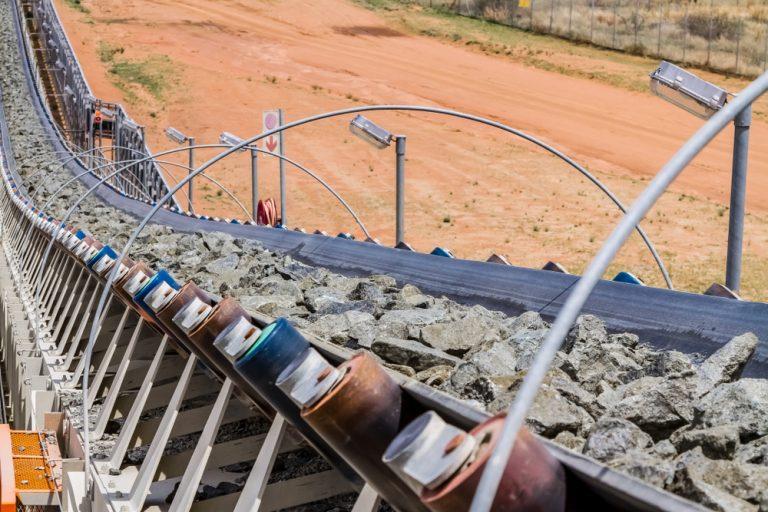
Investor in mineral exploration and development projects, URU Metals Ltd (LON: URU) has seen its share price rally following the acceptance of a Mining Right application submitted by its South African subsidiary, Lesego Platinum Uitloop Ltd. The application pertains to the three prospecting rights that make up the Zebediela Project, and was accepted by the South African Department of Mineral Resources. LPU submitted the application over portions of the farms Uitloop 3 KS, Amatava 41 KS, Bloemhof 4 KS, and Piet Potgietersrust Town and Townlands 44 KS, based in the Mogalakwena local and Waterberg district Municipalities of the Limpopo Province.

Following the decision, the South African DMR will now process the application and the Company must now fulfil the regulatory requirements it has been set.

URU Metals comments

Mr. John Zorbas, CEO, stated,

“[The] acceptance of the mining right application by the DMR significantly moves the project forward in three ways: by consolidating the 3 prospecting rights that made up the Zebediela Project into one right; securing the mineral tenure of the project for a further 30 years and lastly, advances the project one step closer towards development. We remain extremely excited by the highly prospective Zebediela Project, and the acceptance of the mining right application grants us the flexibility to develop the existing nickel resource into a mine, and to continue developing the newly discovered Ni-PGE resource found adjacent to and in the footwall of the existing nickel resource.”

Investor notes

After an impressive rally, the Company’s share price dipped slightly, up 8.20% or 20.50p to 270.50p per share 30/08/19 14:38 BST. Neither a dividend yield, nor a p/e ratio are available for the Group. Elsewhere in the mining and minerals sector, recent updates have come from; Resolute Mining Limited (LON: RSG), Bisichi Mining PLC (LON: BISI), Polymetal International Plc (LON: POLY) Cora Gold Ltd (LON: CORA), Glencore PLC (LON: GLEN), Ariana Resources plc (LON: AUU) and Bushveld Minerals Limited (LON: BMN).

Resolute Mining rides precious metals rally, H1 EBITDA jumps 171%

Precious metals mining company Resolute Mining Limited (LON: RSG) posted bumper fundamentals during the first half of full-year 2019, with impressive production and financial results. This is only one of many success stories in the precious metals sector this year, with market uncertainty feeding the increased popularity of inverted risk assets. The Company posted headline-grabbing EBITDA of AUS $78 million, booming 171% on H1 2018 EBITDA of AUS $29 million. This was led by gold and silver sales revenue of AUS $324 million, spiking 33% from AUS $243 million. Resolute gross profit from operations bounced AUS $30 million on a year-on-year basis, up to AUS $69 million for H1 2019.

The Group’s net operating cash flow also jumped on-year, up from AUS $53 million to AUS $95 million. Gold production grew by around 35,000oz, up to 176,237oz during H1 FY19. This allowed gold sales to jump by a similar level, up to 176,294oz.

Shareholders reaped some of the benefit, with EPS rising from 4.40 to 4.71 Australian cents per share. Regarding its operations, the Company said its Syama prospect achieved commercial production rates, the Ravenswood Expansion Project optimisation study progressed and the Group said there were ‘major gold inventory updates’ at its Tabakoroni project.

Resolute Mining comments

Managing Director and CEO, Mr John Welborn, lauded,

“Delivering 176,237 ounces at an All-In Sustaining Cost of US$828 per ounce generated revenues of A$324 million and EBITDA of A$78 million which is an exceptional result during a period of significant investment in our business.”

“The ramp up of the Syama Underground Mine to full production will further increase Resolute’s production base, margins, and cash flows. The acquisition of Toro Gold is a further boost to the profitability and cash generating capacity of our business.”

“Our investment in exploration enabled us to deliver material growth in our gold inventory. At Tabakoroni, we now have a Mineral Resource comprising over one million ounces of gold at a grade above five grams per tonne which will underpin a potential underground mine, while at Ravenswood we added one million ounces of gold in Ore Reserves. Mineral Resources at Ravenswood are now almost six million ounces of gold with our ongoing study work focused on delivering a project which can produce 200,000 ounces annually over a 15 year mine life.”

“We are delighted to have delivered as promised on important strategic goals for 2019 with our listing on the London Stock Exchange, the ramp-up of Syama, and the acquisition of Toro Gold. Gold production for 2019 is now forecast to be 400,000 ounces at an All-In Sustaining Cost of US$960 per ounce with further growth and upside to come in 2020.”

Investor notes

Despite today’s seemingly positive update, the Company’s share price dipped 0.67% or 0.63p to 93.98p a share 30/08/19 11:06 BST. The Group’s p/e ratio isn’t available, their market cap is £821.61 million. Elsewhere in the mining and minerals sector, recent updates have come from; Bisichi Mining PLC (LON: BISI), Polymetal International Plc (LON: POLY) Cora Gold Ltd (LON: CORA), Glencore PLC (LON: GLEN), Jubilee Metals Group PLC (LON: JLP), Ariana Resources plc (LON: AUU) and Bushveld Minerals Limited (LON: BMN).

EMIS Group revenue and profit growth pull up dividends and EPS

Healthcare software company EMIS Group booked impressive fundamentals for the first half of 2019. The Group’s total revenue grew 7% on a year-on-year comparison, up to £79.8 million. While reported operating profit dipped 3%, adjusted operating profit grew 8%, from £16.8 million to £18.2 million. The Company had a positive set of results to report to its shareholders, with adjusted and reported earnings per share up by 12% and 3% respectively. The Group reported an interim dividend of 15.6p a share, up 10% on H1 2018. The downfalls in EMIS Group’s results were regarding its cash flow, its adjusted cash from operations dipped 18% on-year to £27.5 million, and its net cash dropped 17% to £26.7 million.

EMIS Group comments

Andy Thorburn, Chief Executive Officer, said,

“We have continued to demonstrate good progress in the first half of 2019, delivering positive results in line with the Board’s expectations, with both revenue and adjusted operating profit ahead of the comparative period.”

“We are well positioned to secure our place on the GP IT Futures framework for GP software in England and continue to invest in patient-facing technology and the next generation EMIS-X platform. With our balance of technology, clinical standards and a continuously improving technical environment, the Group is well placed to deliver on its growth and margin targets.”

Investor notes

The Company’s shares have so far rallied 1.26% or 14.00p to 1,126.00p 30/08/19 11:38 BST. The Group’s p/e ratio is 23.46 and its dividend yield stands at 2.53%. Elsewhere in health and medical news, there have been updates from; OptiBiotix Health PLC (LON: OPTI) NMC Health (LON: NMC), Astrazeneca plc (LON: AZN) and ValiRx Plc (LON:VAL).

Avangardco Investments losses widen despite revenue growth

Ukrainian egg and egg-product producer Avangardco Investments Public Limited (LON: AVGR) reported impressive operational results and revenue growth, at the expense of deepened on-year losses. The Company noted that consolidated revenue came to $84.8 million, up 25% on a year-on-year comparison; this was driven by a 57% in export revenue.

Avangardco production and sales results were mixed. Production of shell eggs increased 44% compared with H1 2018, while dry egg products dips 34%. Sales and exports of shell eggs spiked 92% and 164% respectively. However, sales and exports of dry egg products dived 34% and 46% respectively.

Subsequently, the Group posted greater gross losses on-year, deepening from $4.6 million for H1 2018, to $65.0 million for H1 2019. For the same period comparison, net losses widened from $36.3 million to $110.9 million.

Avangardco Investments comments

Nataliya Vasylyuk, Chief Executive Officer, said,

“At the same time, lower prices for fuel and the key feed components (grain and oil crops) allowed the Company to reduce its costs per unit of output but failed to offset the adverse impact of highly fluctuating shell egg prices on the Company’s profitability.”

“Despite of the challenges facing the industry, the Company has continued to execute its export growth strategy. As a result, its export sales grew by 57% YoY to US$44.8 million and were largely attributed to a continued solid growth in the shell egg export sales (up by 164% YoY to 785 million eggs). The share of export revenue in the consolidated revenue reached the target of 53%.”

“Looking ahead, the Company expects the overall market conditions to remain challenging, although anticipates less pressure on market prices due to seasonal factor. In H2 2019, AVANGARDCO will continue to pursue its sales growth strategy while maintaining the utmost quality of products and working with overseas partners. The Company’s focus remains on restoring its profitability and completing the debt restructuring process in 2019.”

Investor notes

The Company’s shares closed at 0.25p 29/08/19, continuing their trajectory of decline from 1.00p a share as of May 2017. The Company are currently not paying a dividend and their p/e ratio is not available. Elsewhere, there have been updates from other food and drink retailers; Loungers PLC (LON: LGRS), The Coca-Cola Co (NYSE: KO), Devro plc (LON: DVO), Greencore Group plc(LON: GNC), NWF Group plc (LON: NWF), Cranswick plc (LON: CWK) and Nestle SA (SWX: NESN).

July net lending to consumers rises by £0.9 billion

0
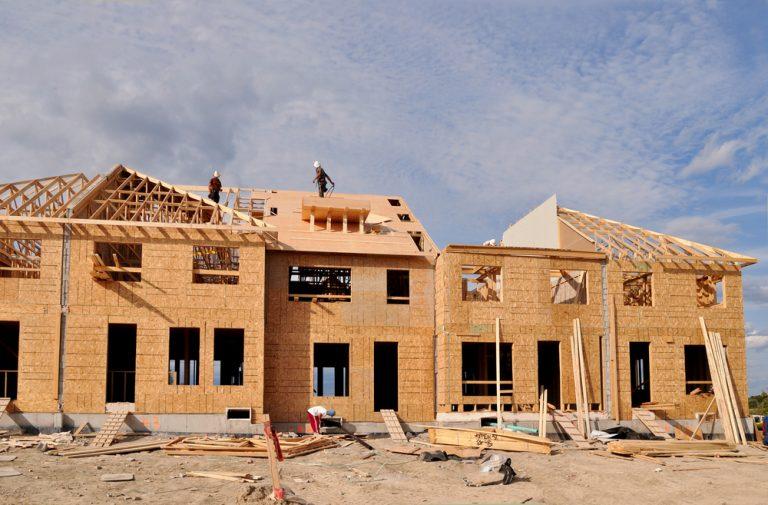
Net consumer credit increased by £0.9 billion in July, new data by the Bank of England revealed on Friday. Data from the Bank of England showed that, for the month of July, the additional amount borrowed by consumers to purchase goods and services was £0.9 billion. This figure remains broadly in line with the £1.0 billion average over the past year, the Bank of England added. However, the amount is below the £1.5 billion average from January 2016 to June 2018. “Within the July figure, the extra amount borrowed for other loans and advances fell on the month to £0.6 billion, while net credit card borrowing remained stable,” the Bank of England said. “The annual growth rate of consumer credit remained at 5.5% in July, markedly lower than its peak of 10.9% in November 2016. This slowing reflects the weaker monthly lending flows over most of the past year,” it added. Additionally, the data shows that net mortgage borrowing by households increased in July to £4.6 billion. The Bank of England said, however, that though this is the strongest since March 2016, it reflects a fall in repayments instead of an increase in new lending. The annual growth rate remained at 3.2%, which is close to the level seen since 2016. Mortgage approvals for house purchase grew in July to 67,300 – the strongest since July 2017. Earlier on Friday, Nationwide’s House Price Index revealed that annual house price growth in the UK has remained below 1% for the ninth month in a row, rising 0.6% in August year-on-year. The figure follows a 0.3% annual increase recorded just a month before in July.

Brickability builds on track record

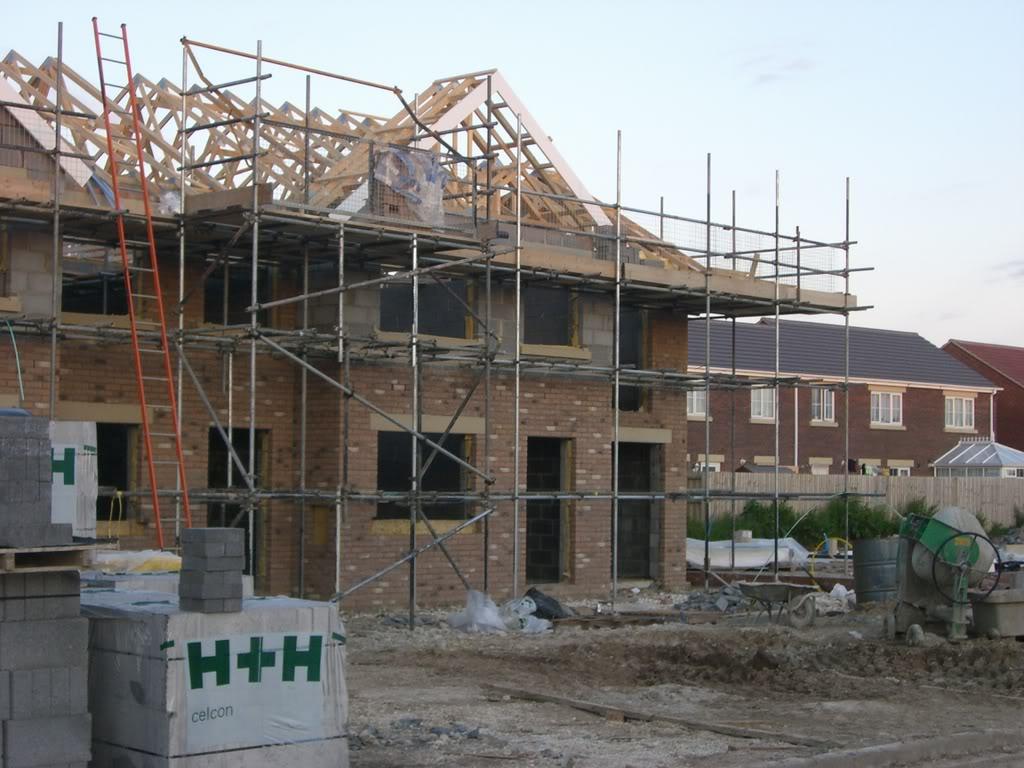
It is always difficult to assess the true progress of a business when it is highly acquisitive and that is true of bricks and construction products supplier Brickability Group (LON: BRCK). The company is a consolidator. Four acquisitions since the end of the previous financial year have boosted the company’s performance so far this year, although management does say this is only part of the growth achieved.
There are 2.4 billion bricks sold in a year and sales are growing at around 2% a year. Brickability distributes the same volume of bricks as its two main competitors combined. That scale he...

Annual house price growth below 1% for ninth month in a row

Annual house price growth in the UK has remained below 1% for the ninth consecutive month, new data revealed on Friday. According to Nationwide’s House Price Index, house prices in August rose 0.6% year-on-year. This follows a 0.3% annual increase recorded just a month before in July. Prices remain unchanged month-on-month after taking account of seasonal factors, Nationwide said. “While house price growth has remained fairly stable, there have been mixed signals from the property market in recent months,” Robert Gardner, Nationwide’s Chief Economist, commented on the data. “Surveyors report that new buyer enquiries have increased a little, though key consumer confidence indicators remain subdued. Data on the number of property transactions points to a slowdown in activity, though the number of mortgages approved for house purchase has remained broadly stable,” Nationwide’s Chief Economist continued. “Housing market trends will remain heavily dependent on developments in the broader economy. In the near term, healthy labour market conditions and low borrowing costs will provide underlying support, though uncertainty is likely to continue to exert a drag on sentiment and activity.” The data comes just days after the pound took a hit earlier this week after news broke that Boris Johnson had asked the Queen to suspend parliament ahead of the extended Brexit date, preventing MPs from blocking a no-deal exit. “We recently updated our research on how the proximity to either a tube, tram or railway station impacted property prices in London, Manchester and Glasgow, after taking account of other property characteristics, such as property type, number of bedrooms and local neighbourhood type,” Nationwide’s Chief Economist continued. “Perhaps unsurprisingly, London homebuyers appear willing to pay a greater premium for being close to a station, compared with those in Greater Manchester and Glasgow.”