
Update: Just Eat takeover deal

The ongoing saga to finalize the takeover deal of Just Eat (LON: JE) continues to head lines, as Prosus (JSE: PRX) have maintained their bid on Monday morning.
Last week, it was reported that rival Takeaway.com (AMS: TKWY) was set to formalize a deal, however similar to the first approach Prosus have appeared to hamper the plans.
Prosus held their ground on the $6.3 billion bid that they submitted, as it argued the merits of its bid versus one from Takeaway.com for the British online takeaway delivery firm.
The one change in the offer published on Monday by the Dutch arm of South African internet giant Naspers (JSE: NPN) was an acceptance threshold lowered to 75% from 90%, which could swing the deal in favor of Prosus.
“We actually believe that financial markets are under- estimating the cost of implementing the transformation Just Eat requires to protect its market position and to capitalise on its long-term opportunity,” Prosus CEO Bob Van Dijk said.
Prosus has offered an unsolicited cash offer of $6.3 billion, or 710 pence per share, for Just Eat.
Even if this bid were to be accepted, regulators may seem skeptical about the deal following investigations into rival Deliveroo being taken over by Amazon (NASDAQ: AMZN).
Additionally, the bid that was submitted by Prosus was higher than £4.7 pound all-share deal that Just Eat’s board has agreed with Takeaway.com whose shares have fallen since it made its initial bid in July.
Just Eat on Monday said the unchanged Prosus offer “significantly undervalued” it, both as a standalone company and in combination with Takeaway, and it continued to recommend shareholders to reject it.
Prosus CEO van Dijk told journalists on a conference call that Takeaway’s modest investment in delivery capacity might be a viable strategy for now in the Netherlands and Germany, but it would not work in London and many other markets, as reported by Reuters.
Takeaway CEO Jitse Groen said his bid offered superior future growth opportunities to both groups of shareholders.
As the ongoing saga continues in the three way saga, shares of Just Eat have been volatile.
After the Prosus negotiation this morning, Just Eat shares dipped 0.3% to 735p. 11/11/19 11:55BST.
HSBC and RBS set to launch new digital banking platforms
HSBC (LON: HSBA) and RBS (LON: RBS) have told customers and shareholders that they plan to launch a new digital banking platform amid stiff competition and a period of tough trading in the global banking scene.
HSBC rolled out a new app-based business banking service – previously known internally as ‘Project Iceberg’ and now named ‘HSBC Kinetic’ – in beta testing mode on Monday, while RBS is putting the finishing touches to its new digital bank Bo ahead of a public roll-out later this month.
Both HSBC and RBS have seen a tough period of trading, as HSBC undertake a series of structural and operational changes as highlighted in their poor third quarter trading update.
Whilst competitors such as Standard Chartered (LON: STAN) and Bank of Ireland (LON: BIRG) have posted bullish updates, HSBC and RBS have felt the need to address the slump in trading.
HSBC Kinetic will offer small businesses mobile-managed current accounts, overdrafts and spending and cashflow insights generated by the app crunching data on a company’s spending habits.
Peter McIntyre, head of UK small business banking for HSBC, said the bank hoped to sign up hundreds of thousands of customers to Kinetic and to roll it out to other countries where HSBC operates.
McIntyre alluded to the tough political and economic conditions, however was not put off in releasing HSBC Kinetic, with recent official data showing company insolvencies hit a five and a half-year high in the third quarter this year.
“I think this is the best time to do it, to bring more financial insight to customers at a difficult time,” he added.
RBS’s standalone bank Bo is preparing for a public launch this month from offices in London’s West End.
The Bo app is designed to encourage customers to budget and save better, alerting them if they overspend.
Both the British banking titans will have to find ways to stimulate demand despite tough trading conditions, otherwise they could see a crash as Deutsche Bank (ETR: DBK) are currently facing.
AFC Energy shares rally after smashing internal expectations
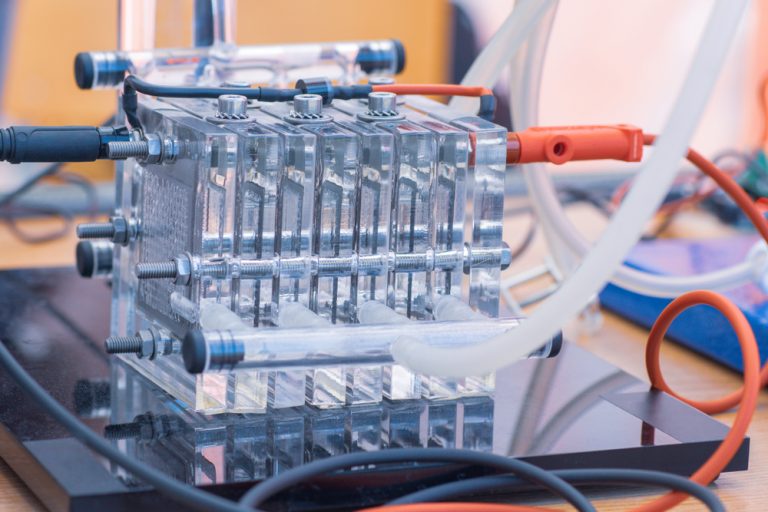
Shares of AFC Energy Plc (LON: AFC) have rallied after internal expectations were smashed on the testing of a new fuel cell, as the company reported on Monday morning.
Shares of AFC energy rallied 28.7% to 9p after the announcement was made. 11/11/19 11:27BST.
The AIM (INDEXFTSE: AXX) listed firm reported positive progress in testing of its alkaline fuel cell product.
During testing of the AlkaMem membrane programme, an enabler of HydroX-Cell fuel cell product, AFC’s partners Industrie De Nora SpA said its performance “exceeded internal expectations”.
FC said: “AlkaMem is set to be a truly disruptive technology in the field of alkaline water electrolysis with evidence supporting a sizable increase in hydrogen production efficiency.”
The company said it has received commercial enquiries about a sale or licensing agreement of AlkaMem.
The energy market continues to become more competitive, as i3 (LON: I3E) made a new discovery a few weeks back and Hurricane Energy (LON: HUR) exceeded their interim expectations.
AFC explained: “The company’s AlkaMem solid membrane acts in the same manner as similar acidic membranes used in proton-exchange membrane fuel cells, albeit with the distinct advantage of utilising a lower grade, and therefore lower cost, Hydrogen source.”
Chief Executive Adam Bond added: “We have been working on the AlkaMem membrane over the past 24 months and have now made significant strides forward in demonstrating the commercial value this technology can bring to AFC Energy.
“From our technology development roadmap, we have been delighted by the number of commercial success criteria the AlkaMem technology has already evidenced both in fuel cell and alternative applications. We have also been encouraged by the early market interest shown in the product and its applications.”
The announcement by AFC Energy will spark shareholder appetite, but this is only the start for the young firm, there will still be future tests and whether AFC can get through them will be seen.
Kainos complete two merger deals and post revenue gains

Kainos Group PLC (LON: KNOS) have completed two new merger deals, as announced on Monday morning to boost its European and UK operations.
The Belfast based firm also reported that it has seen rises in revenue in their most recent quarterly update, which have caused shares to jump.
Shares spiked 3.63% on Monday morning, trading at 530p. 11/11/19 11:10BST.
Kainos said its revenue in the six months to September 30 rose by 29% year-on-year to £86.9 million from £67.2 million.
Pretax profit was 38% higher at £12.0 million from £8.7 million last year. On an adjusted basis, excluding “share-based payments and related costs”, the profit growth was more modest at 27% year-on-year to £12.8 million from £10.1 million.
The FTSE250 (INDEXFTSE: MCX) listed firm boosted its interim dividend by 25% to 3.5 pence per share, from 2.8p last year, which will please investors.
Revenue in its core Digital Services segment grew by 29% to £73.7 million from £57.3 million last year.
The division, which provides “full lifecycle development and support of customised digital services”, has the UK government as one its largest customers. In May, Kainos said the unit could be hampered by Brexit uncertainty and a general election.
Kainos added: “This guidance remains valid, with government departments continuing with existing programmes, serving as a reminder that even in uncertain times, the business of government does not stop. Some departments are opting to defer some new programmes until they obtain greater clarity around spending plans, including those relating to the preparation for European Union exit.”
The company said: “The on-going funding constraints within the NHS continue to create a headwind for Evolve within the UK, although significant new projects are underway in Dublin and Gibraltar.”
Kainos also said that it has acquired Formulate Ltd, a technology consultancy firm based in Worcestershire in the west Midlands, England. It has also bought the Adaptive Insights arm of Implexa GmbH.
Kainos said: “Implexa is the only accredited Adaptive Insights partner in Germany, and adds Hamburg-based software and consulting capabilities to Kainos’ existing Frankfurt presence and capabilities.”
Chief Executive Brendan Mooney added: “I am delighted to welcome the Formulate and Implexa teams to Kainos. The quality and unique expertise of the teams, paired with their complementary values, were integral in our decision to make these acquisitions.
In the industry, Avast (LON: AVST) and Intel (NASDAQ: INTC) have been through a period of strong trading, which will make the results even sweeter for Kainos.
At a time in the software industry where technology is changing daily, this will be pleasing for investors of Kainos.
Informa give confident outlook to shareholders

Informa PLC (LON: INF) have given a confident outlook to shareholders, in their most recent trading update where Informa also confirmed their annual revenue guidance.
Informa alluded to a ten month period of strong trading, and expressed confidence in the “strength and resilience” of future growth.
Shares of Informa were 0.43% to the good on Monday at 803p. 11/11/19 10:53BST.
The FTSE 100-listed (INDEXFTSE: UKX) events and publishing company said it has continued to perform well in the ten months to the end of October, with underlying revenue growth of 2.8%.
Looking forward, Informa reiterated the importance of November and December trading, representing round 20% of annual revenue, with November alone accounting for more than £350 million.
“After ten months trading in 2019, despite an unpredictable economic/geo-political backdrop, the enlarged Informa Group continues to demonstrate resilience and performance, remaining on track for a sixth consecutive year of growth in underlying revenue, profit, adjusted earnings and cashflow,” said Chief Executive Stephen Carter.
Competitors such as EuroMoney (LON: ERM) gave shareholders a positive outlook, and the S&P (INDEXSP: .INX) have had a positive few months of trading, despite epxected volatility.
This will be important for Informa, and certainly appease shareholders where market trading has been tough, with Brexit and the ongoing saga between the US and China is yet to be settled.
On the expansion front, Informa noted the minor investment it had made in Founders Forum, and the launch of a joint venture with Informa Tech, which it said was a combination of strengths to support the next phase of growth in technology innovation and entrepreneurship.
“Furthermore, the breadth and balance of the enlarged group, the quality of our revenue growth and strong visibility of forward bookings and renewals into the first quarter of 2020 gives us confidence in the strength and resilience of future growth,” the board explained.
GDP grows at slowest rate since 2010

New data revealed on Monday that UK gross domestic product grew at the weakest rate year-on-year since 2010.
The GBP/USD is trading around 1.28 on the missed GDP expectations.
The Office for National Statistics said on Monday that UK GDP increased by 0.3% in the third quarter from July to September, following a 0.2% decline in the previous quarter.
When compared to the third quarter of the year prior, the economy grew by 1% – the weakest figure since the first quarter of 2010.
“The underlying momentum in the UK economy shows some signs of slowing,” the Office for National statistics said in its report.
Founder and CEO of REL Capital, Andy Scott, provided a comment on the newly released figures.
“The basket of economic performance indicators just published is a mixed bag but when viewed in context to a political dynamic that is more Carry On film than carry on as usual, the economy is holding up ok,” Andy Scott said.
“GDP, arguably the most important measure of fiscal health, is still hanging on in there in positive territory. Kicking and screaming with it’s head just above the surface, for sure but still breathing nonetheless at a positive 1% up year on year and quarter to quarter,” Andy Scott continued.
“In particular, construction output is better than the forecasters had expected by some way, as is overall business investment which, whilst flat in real terms, provides a further silver-lining versus expectation. Stiff upper lip and all that.”
The quarter was a rather turbulent one, with many uncertain developments in the UK political landscape.
At the end of October, the UK was granted yet another extension to its deadline to leave the European Union.
Parties are now preparing for a general election which will take place at the end of the year.
What will the future hold for the UK’s economy?
Evgen Pharma shares sink on disappointing new product trial

Shares of Evgen Pharma PLC (LON: EVG) have sunk 51.88% on Monday, after an update was provided to investors about the trial of a new SFX-01 product line.
The update provided, informed shareholders of disappointing results with the new product trial, as shares trade at 7.7p 11/11/19 10:38BST.
In the multi-centre, randomised, double-blind, placebo-controlled SAS phase II clinical trial, patients were dosed for a maximum of 28 days following a subarachnoid haemorrhage.
Patients were then monitored for a further five months to assess their recovery by collecting endpoints including cognitive measurements.
The SFX-01 drug produced disappointing results as the trial failed to distinguish between SFX-01 and other placebos.
This comes at a tough time in the pharmaceutical industry for Evgen. Global competitors such as Pfizer (NYSE: PFE) smashed market expectations in their third quarter update.
Additionally, GlaxoSmithKine (LON: GSK) another titan in the industry saw their shares surge after strong profit gains.
We are surprised and disappointed by these findings given the strong preclinical data for sulforaphane in animal models of SAH and other forms of stroke. In March, we reported that SFX-01 had demonstrated positive efficacy and safety data in our STEM trial for metastatic breast cancer, so it is naturally disappointing not to have followed this with another positive result,” said Chief Executive Steve Franklin.
On a positive note, SFX-01 was tested positively with regards to patient safety, and abiding to regulatory criteria.
Speculating for the future, Evgen said it remains well funded and will concentrate its efforts on future partnering.
A concerned effort will be made to develop product formulation for use in STEM II for the treatment of metastatic breast cancer and other investigator-led clinical studies.
“Having achieved our primary endpoints in the metastatic breast cancer phase II trial, and considering our support for investigator-led clinical studies in alternative disease areas, we will continue to pursue attractive commercial opportunities for SFX-01,” added Franklin.
Whilst the big guns are dominating the pharmaceuticals industry, firms such as RA Pharma (NASDAQ: RARX) and UCB (EBR: UCB) have merged to spur product development and innovation.
If Evgen continue to perform within similar trend, shareholders will be worried considering the performance of the bigger players in the industry.
Sirius seek investment for new project

Sirius Minerals PLC (LON: SXX) are seeking for a $600 million investment for a new flagship project from investors after reviewing plans, for financing its North Yorkshire potash mine, the largest project of its type in the world.
Shares of Sirius rallied 15.77% after the Monday morning announcement, and are trading at 3.7p. 11/11/19 10:25BST.
After seniority reviewed the project back in September, the conclusions that were reached meant that a $600 million investment was needed.
In order to achieve a production capacity of 10 million tonnes per annum, the project will require $2.5m in capital expenditure.
Commenting on the update, Neil Wilson, chief markets analyst for Markets.com, said that the plan would “require significantly less capital than the previous incarnation.”
He added: “A possible way out of the mire, but needs to be picked over in more detail.”
The mine will consist of a two 1.5km shafts drilled below the North York Moors National Park to access the world’s largest deposit of polyhalite, which is used in fertilisers.
The minerals and mining sector has been varied by firm, where Serabi (LON: SRB) saw their shares rally after a strong third quarter, London listed Antofagasta (LON: ANTO) have not been so successful after tough political conditions.
Additionally, big time Thor Mining (LON: THR) reported that their shares slipped even after a new discovery, showing the inconsistency in the market.
Group managing director and chief executive Chris Fraser welcomed the approach, saying:“The value of Sirius is unlocked by reaching production and delivering POLY4 to our customers around the world.
“This approach allows us to achieve that with less upfront capital while retaining the significant return opportunity it presents for our shareholders and stakeholders.”
Earlier this year, the project was thrown a curveball when Sirius was forced to scrap a $500m bond sale and pay back $400m from a separate sale to investors.
Chris Fraser said that an uncertain market, including concerns over Brexit, had impacted the company’s ability to raise the money it needed.
Greggs rolls through high street gloom, shares soar
Shares in Greggs (LON:GRG) soared on Monday after it raised its expectations for full year profit following a “very strong” trading performance in the fourth quarter.
Shares in the UK’s largest bakery chain were up 17% during Monday morning trading.
For the six weeks to 9 November, total sales were up 12.4%.
Additionally, company-managed shop like-for-like sales increased 8.3% over the six week period.
The retailer’s strong results beats the gloomy trading conditions to hit the UK high street.
“Trading performance in the fourth quarter to date has continued to be very strong, despite the strengthening comparators seen in 2018,” Greggs said in a trading update on Monday.
“Sales growth continues to be driven by increased customer visits and has been stronger than we had expected given the improving comparative sales pattern that we saw in the fourth quarter last year,” Greggs continued.
“Operational costs remain well controlled and, whilst the comparative sales become stronger still in the balance of the year, the Board now anticipates that full year underlying profit before tax (excluding exceptional charges) will be higher than our previous expectations,” Greggs said.
Greggs has over 2,000 retail outlets across the country.
At the beginning of October, the bakery chain said that it had continued to see very strong trading throughout the third quarter and its autumn menu has now hit the shelves.
Its vegan sausage roll, specifically catering for those following a vegan diet, has been very popular. Greggs said earlier this year in March that the launch of its vegan sausage roll helped boost an exceptional sales performance.
The vegan-friendly product is made from meat substitute quorn and was launched at the start of the year as part of the Veganuary campaign.
Shares in Greggs plc (LON:GRG) were up on Monday morning, trading at +16.32% as of 09:59 GMT.
SNP offer ‘progressive alliance’ with Labour
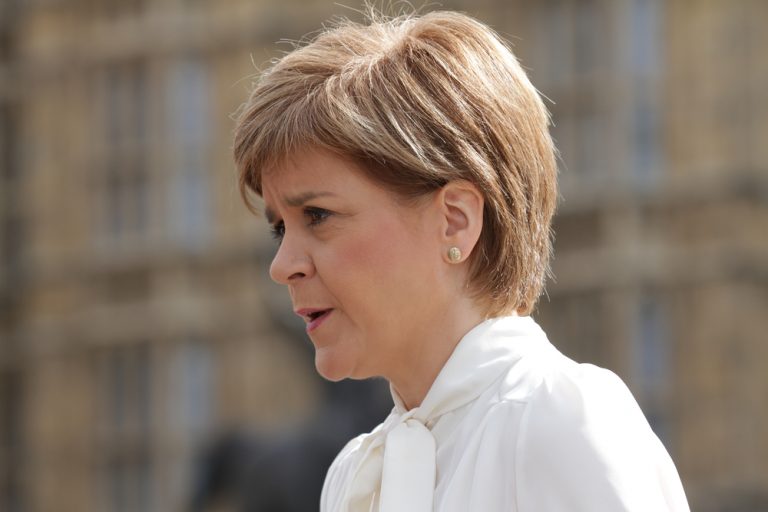
Launching her party’s campaign today in Edinburgh, Nicola Sturgeon said that while the SNP have ruled out the idea of entering into any formal coalition, they would entertain the possibility of a ‘progressive alliance’ with Labour, in the event of a minority government or hung Parliament.
“If there’s a hung parliament … SNP MPs will seek to form a progressive alliance to lock the Tories out of government,” Sturgeon said.
Any alliance however, would be contingent on a long list of conditions to do with anti-austerity economics, environmental issues, and the most difficult one to ameliorate: a second independence referendum.
“The SNP is not going to be giving support to parties that do not recognise the central principle of the right of the people of Scotland to choose their own future,” she said.
She said that in the two decades since the devolution of powers to a Scottish government. However, she claimed that “many of the gains of the last 20 years and the promise of a better future” were being threatened by what she sees as “hardline Brexit ultras” within the Conservative Party.