
Interserve shares open 18% higher amid rescue deal talks
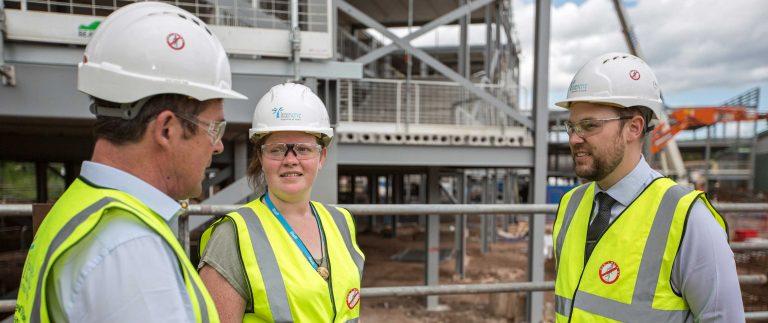
Interserve has agreed on a rescue deal with lenders in attempts to avoid a collapse similar to Carillion.
The outsourcing firm said that it hopes to convert its £500 million debt into equity, where part of this new equity will be offered to shareholders and new investors in a public offering.
“The key question remains as to whether this new restructuring arrangement finally draws a line under the problems that have dogged the company since the collapse of Carillion almost a year ago,” said Michael Hewson, the chief market analyst at CMC Markets.
Interserve is one of the UK’s biggest outsourcing firms and employs 75,000 people worldwide.
Shares in the troubled group opened up more than 18%. The group’s stock market value has plunged over 90% this year.
The week construction market saw the group’s market value fall from a peak of £1 billion in 2014 to just £16.2 million.
Interserve said on Friday that talks with its lenders were “constructive”.
Debbie White, who is the chief executive of Interserve, said: “This progress on the Deleveraging Plan is excellent news for all our employees, customers and suppliers.”
“It will provide us with a strong balance sheet and enable us to move forward with confidence and the ability to improve our business and deliver our long-term strategy.”
The group agreed on changes to its structure as part of its “commitment to growth strategy” earlier this week. Interserve merged its citizen services division with its support services unit.
Shares in the group (LON: IRV) are trading -0.91% at 10.78 (1235GMT).
Ghosn re-arrested on latest charges
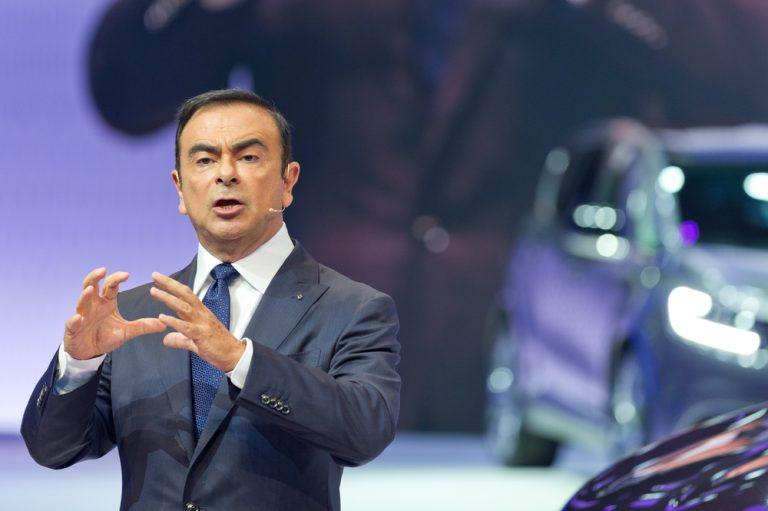
Carlos Ghosn has been re-arrested following new allegations of financial misconduct.
The former Nissan (TYO: 7201) boss, who was arrested a month ago, will be spending a further 10 days in a Tokyo jail.
Ghosn was initially arrested last month after an an investigation into alleged financial misconduct where he failed to report his income.
He allegedly underreported his pay by about 5 billion yen between the years of 2011 and 2015.
He has continued to deny all allegations against him.
“Things as they stand are absolutely unacceptable. I want to have my position heard and restore my honour in court,” he said through his lawyer.
Whilst car manufacturers Nissan and Mitsubishi (TYO: 8058) fired Ghosn as chairman after his arrest, he remains on as the Renault (ETR: RNL) chairman.
Nissan said in a statement that it “takes this situation extremely seriously. Making false disclosures in annual securities reports greatly harms the integrity of Nissan’s public disclosures in the securities markets, and the company expresses its deepest regret.”
“Nissan will continue its efforts to strengthen its governance and compliance, including making accurate disclosures of corporate information,” it added.
If he is found guilty of the charges, Ghosn could face up to 10 years of jail time as well as a fine of up to 700 million yen ($6.2 million; £4.9 million)
Centrica to launch legal challenge to government cap

Centrica is going to challenge the government’s energy price cap.
The British Gas owner has said apply for a judicial review against the review just days before the cap will come into place.
The cap, which will come into effect on January 1, will save households an average of £76 per year.
Centrica said earlier this year that the proposed government cap would cost the group £70 million in operating profits in the first quarter of 2019. The cap has been blamed for some smaller providers losing money.
In a statement, Centrica said: “Centrica plc is seeking judicial review of Ofgem’s decision of 6 November 2018, which relates only to the treatment of wholesale cost transitional arrangements and Ofgem’s decision not to investigate and correct its failure to enable the recovery of the wholesale energy costs that all suppliers incur.”
“Through this action Centrica has no intention to delay implementation of the cap, and does not expect the cap to be deferred in any way.”
“As we have previously said, we do not believe that a price cap will benefit customers but we want to ensure that there is a transparent and rigorous regulatory process to deliver a price cap that allows suppliers, as a minimum, to continue to operate to meet the requirements of all customers.”
The government has not yet commented on the legal challenge from Centrica.
The group is the UK’s biggest energy supplier and has over 12 million customers.
An insider on the matter said: “We want to ensure that the tariff cap being implemented by Ofgem proceeds in a fair and workable way, for all energy suppliers, and that it properly reflects the costs energy suppliers have incurred to supply customers.”
Npower and Scottish Power are said to have offered encouragement to Centrica but are not planning on joining the legal battle.
Shares in the group (LON: CNA) are currently trading -0.26% (1115GMT).
ONS: Economy grows whilst business investment drops

New figures from the Office of National Office of Statistics have shown business investment to fall for the third consecutive month.
The latest ONS figures said that in the three months to the end of September, business investment fell by 1.1% to £46.9 billion.
This is the first time that investment has fallen for three consecutive quarters since the 2009 recession.
ONS statistician Rob Kent-Smith said: “The longer-term picture remains subdued and business investment has now fallen for three consecutive quarters.”
News on Friday also revealed car production to fall for the fifth consecutive month.
The industry’s trade body showed output to tumble by 20% amid Brexit concerns, falling to the lowest point since the 2009 recession. November is the fifth consecutive month for production to fall.
As well as the fall in car production and business investment, the UK deficit widened by £6.6 billion to £25 billion.
“The further, marked rise in the current account deficit is disappointing as an elevated shortfall is a potential source of vulnerability for the UK economy – particularly if there was any major loss of investor confidence in the UK for any reason such as Brexit concerns,” said Howard Archer, an analyst from EY Item Club.
ONS figures also revealed a growth to the economy, where GDP grew by 0.6% in the third quarter.
Growth was helped by the services sector, construction and manufacturing.
“Today’s figures confirm the economy picked up in the third quarter with a solid showing from services and construction,” said Kent-Smith.
“However, the longer-term picture remains subdued and business investment has now fallen for three consecutive quarters. Households continued to spend more than they received, for an unprecedented eight quarters in a row.”
Samuel Tombs, who is the chief UK economist at Pantheon Macroeconmics, said consumers are currently keeping economic growth alive, however this is not sustainable and business investment is necessary.
“The recent deterioration in consumers’ confidence and the pick-up in saving intentions suggests that growth in spending will slow in the near-term, even though real wages should start to rise at a faster rate,” he said.
“Accordingly, the latest national accounts do not inspire confidence that the economy will pull through the current political crisis unscathed.”
Car production falls for fifth consecutive month

A new report from the Society of Motor Manufacturers and Traders (SMMT) revealed UK car production to plummet in November.
The industry’s trade body showed output to tumble by 20% amid Brexit concerns, falling to the lowest point since the 2009 recession.
November is the fifth consecutive month for production to fall.
Mike Hawes, the chief executive of the SMMT, said: “It’s very concerning to see demand for UK built cars decline in November, with output seriously impacted by falling business and consumer confidence in the UK allied to weakening export markets.”
As well as concerns in the car industry, Brexit has also impacted car manufacturers who have issued many warnings on the impacts that a no-deal Brexit could have on production.
“Thousands of jobs in British car factories and supply chains depend on free and frictionless trade with the EU. If the country falls off a cliff-edge next March the consequences would be devastating,” said Hawes.
The SMMT chief executive has called for a no-deal Brexit to be ruled out. He said that thousands of car manufacturer jobs and their suppliers depend on frictionless trade with the EU.
Jaguar Land Rover has announced plans to cut as many as 5,000 job next year amid falling sales in China.
“Jaguar Land Rover notes media speculation about the potential impact of its ongoing charge and accelerate transformation programmes.” said the carmaker.
“As announced when we published our second-quarter results, these programmes aim to deliver £2.5 billion of cost, cash and profit improvements over the next two years. Jaguar Land Rover does not comment on rumours concerning any part of these plans.”
Elon Musk undercuts LA traffic with new tunnel

Pioneer and tycoon Elon Musk has unveiled a new tunnel designed and built by The Boring Company, to tackle the landmark Los Angeles trope – the traffic.
Elon’s new(ish) company
Founded in 2016, The Boring Company was created with the sole purpose of revolutionising the way we do road transport, with Elon’s vision being to implement this system of underground road arteries in cities around the world. Mr Musk has stated, “I am actually going to do this. Defeating traffic is the ultimate boss battle.” “It’s not like you’re going through a whole series of stops. Nope, the main arteries will be going super fast, and it’s only when you want to get off the loop system that you slow down.” Elon has said that after considering a skate-style format, he settled on the concept of fitting the cars with specially designed wheels that would pop out perpendicular to a car’s regular tyres and mount the track. The price is expected to stand at $200-300 per car.From concept to reality
After securing permission to build the tunnels in June, the Tesla (NASDAQ:TSLA) founder has gone on to build a trial ‘loop’ system underneath Los Angeles, which he said would – with time – act more as an underground highway network than a subway, with exit points being distributed throughout the network of tunnels. Since June, the O’Leary Station has been built and within the last day, the first public tests were carried out. A wall-less lowered the electric vehicle thirty feet below surface level, with a Tesla Model S being driven at 40mph through the tunnels, though Elon later said that the vehicle would be capable of travelling at 150mph through the subterranean road. Mr Musk described the first trial as,“Epic” “For me it was a eureka moment. I was like, ‘This thing is going to damn well work’.”Musk later noted that there were a few rough edges, with the speed of his paving machine not keeping pace with the ambitious man’s best-laid plans. However, he vowed that going forward, the future systems would be “smooth as glass” and that, “This is just a prototype, that’s why it’s a little rough around the edges”.
Standard Elon Musk patter
To bolster the merits of his next big project, Mr Musk then pointed out that the tunnels would be the ‘safest’ place to be during earthquakes. He then went on to refute claims that the construction of the tunnels would be at all disruptive, “The footsteps of someone walking past your house will be more noticeable than a tunnel being dug under your house.” Whether just another quaint idea or a vision for the future, history will remember Elon Musk as either an egotist or a genius.The Environment Agency introduces fishing restrictions to target salmon shortages

The Environment Agency announced the implementation of a series of new fishing restrictions to combat declines in salmon and sea trout stocks.
The new regulation is set to come into effect from the January 1st, in a bid to encourage greater prioritisation of sustainability within the UK’s fishing industry.
According to 2017 government figures, the UK’s waters have witnessed a marked decline in returning salmon across the last decade.
In fact, as many as 27 of the total rivers in the UK had been categorised by the findings as ‘probably at risk’, with an additional 9 already considered to be at ‘at risk’.
Kevin Austin, Environment Agency’s Deputy Director for Agriculture, Fisheries and the Natural Environment said of the newly implemented restrictions:
“It is only through continuing to take concerted action, and through the co-operation of others, that we will successfully protect this iconic fish for future generations.
We are not implementing these changes lightly and have consulted widely with those affected. There is no single solution to protecting salmon stocks; reducing the catch of salmon can only partly contribute to the recovery of salmon stocks.”
However, the shortages are not limited to the UK’s waters, with global salmon levels continuing to deplete alongside other marine life. In fact, according to statistics, 90% of world marine fisheries are overfished or fully fished, with numbers only set to decline further, as high levels of plastic continue to pollute the world’s oceans at a remarkably rapid rate. It’s not just government agencies that are ramping up efforts to improve the sustainability of the fishing industry. Recently launched businesses, such as Pure Salmon, are championing a more socially conscious brand of fishing. Specifically, Pure Salmon, a business developed by 8F Asset Management, is set to employ a technology called ‘Recirculating Aquaculture System (RAS)’ across its farms. The business has said that the land-based alternative to fishing is a ‘proven and scalable method of aquaculture’. Alongside promoting a more sustainable approach to fishing, the new technology is also set to ensure that its salmon produce is free of any chemicals, antibiotics, hormones, mercury and microplastic. Moreover, because the fish will be produced closer to consumers, it hopes to achieve lower levels of harmful carbon emissions due to reduced transportation costs. Stephane Farouze, Chairman and Founder of 8F, commented on the launch of the business: “We’re delighted to be launching what is the most exciting global development in land-based Atlantic salmon farming. We believe that RAS technology will be the leading driving force for growing salmon in a resource strained world, where producing sustainable food without further damaging our oceans is paramount.” Whilst businesses such as Pure Salmon are leading the way in revolutionising fishing for the better, there is still some way to go to truly preserve the world’s oceans, amid staggering levels of plastic pollution. Nevertheless, public awareness of the issue is on the rise. In fact, ‘single-use’ was recently named the word of Collins’ Dictionary’s word of the year for 2018. What’s more, government’s too are increasingly beginning to prioritise the issue. Back in October, the European Parliament voted for a complete ban on various single-use plastic goods. The Environment Agency’s latest legislation decision is only a further indication of the strength of the growing momentum behind the cause.GDP 2019 – Britain falls in rankings
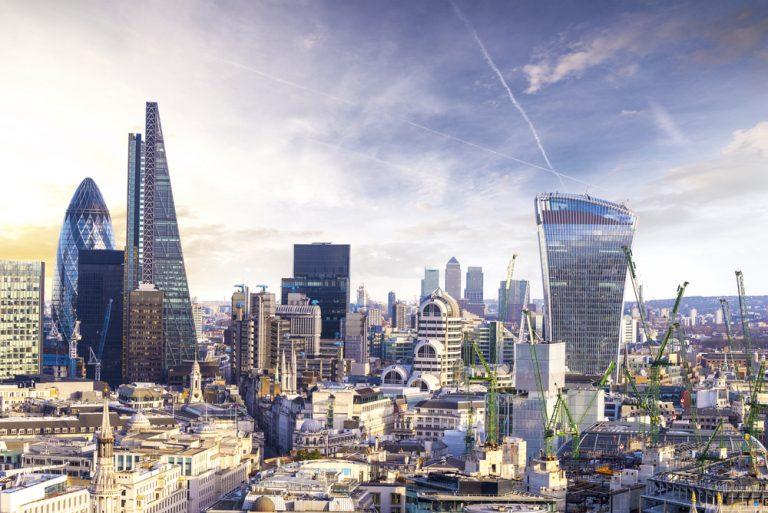
PricewaterhouseCoopers (NYSEARCA:PWC) have released their latest projected GDP rankings for 2019, with these latest rankings dropping the UK from fifth to seventh place.
This follows the announcement that the World Bank dropped the UK to ninth in their business rankings, with most bearish outlooks being attributed – unsurprisingly – to Brexit uncertainty.
While currency concerns continue for developing economies, PwC remain confident in India’s ascendancy to fifth place in GDP rankings, and added that India’s projected growth of at least 7.6% p/a over the next five years would allow them to bolster their position.
Other developing players include Brazil, who are set to retain their ninth place spot behind Italy in eighth, while the euro’s strong performance against the pound looks set to push France ahead of Britain and into sixth place in 2019.
Mike Jakeman, a senior economist at PwC, said, “India is the fastest growing large economy in the world, with an enormous population, favourable demographics and high catch-up potential due to low initial GDP per head. It is all but certain to continue to rise in the global GDP league table in the coming decades.
“The UK and France have regularly alternated in having the larger economy, but subdued growth in the UK in 2018 and again in 2019 is likely to tip the balance in France’s favour. The relative strength of the euro against the pound is an important factor here.”
PwC have forecast the British GDP to grow by 1.6% next year and 1.7% in 2020, then 1.8% each year to 2025 as Brexit tensions and uncertainty wain. The UK’s GDP is then expected to once again surpass France into the sixth spot as the pound rallies against the euro.
The world’s largest economies are all set to suffer from the effects of ageing populations, with the Federal Reserve’s higher interest rates likely to hamper consumer spending in the US, and China struggling to reign in corporate and consumer borrowing.
The report’s co-author, Barret Kupelian, added,
“Last year, the big economic news was centred around advanced economies creating around 4.5m jobs.
“We expect this trend to gradually moderate in 2019, with some economies such as the US, Canada and Germany hitting structural floors in their unemployment rates, and wage growth starting to gradually pick up.
“Assuming an orderly Brexit, we expect the UK to also see unemployment flattening off, though a disorderly Brexit could lead to a marked rise of unemployment.”
EU reveals no-deal Brexit plans
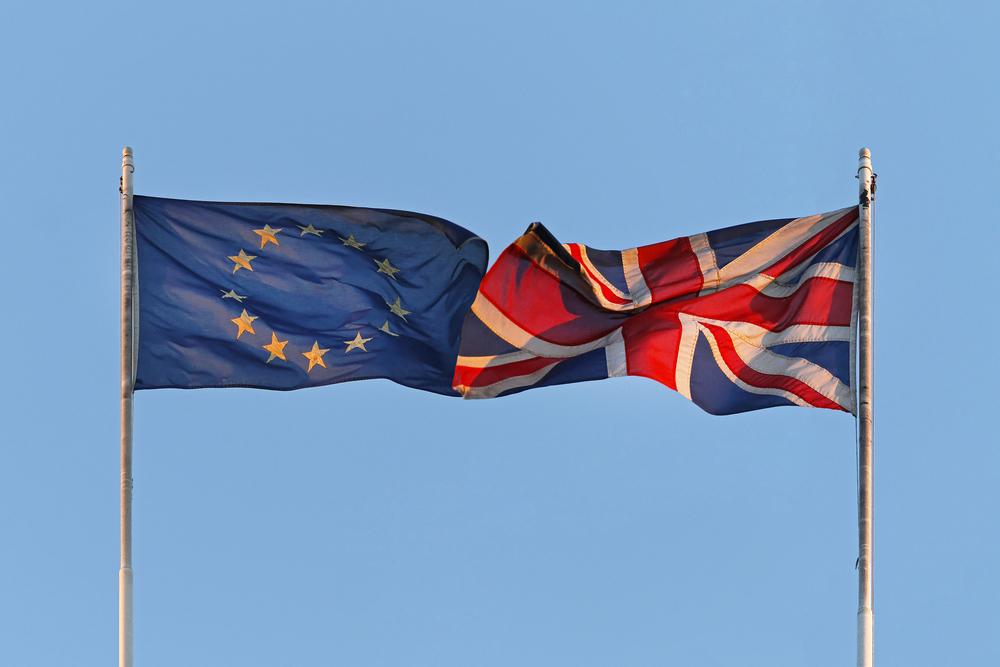
The European Commission has said that it is preparing contingency plans for a no-deal Brexit.
Given the continued uncertainty surrounding the UK government’s Brexit deal, the Commission revealed the “essential and urgent” measures.
In a statement, the European Commission said that the measures will be designed to limit disruption in areas including finance and transport if the UK crashes out of the EU without a deal.
Commissioner Valdis Dombrovskis said on Wednesday: “These measures will not – and cannot – mitigate the overall impact of a ‘no-deal’ scenario.”
“This is an exercise in damage limitation given the continued uncertainty in the UK.”
Some of the contingency plans included will be British airlines to operate flights into and out of the EU and the UK financial services regulations to be recognised as equivalent to the EU’s.
“This decision provides vital clarity to UK clearing houses and their customers in the EU,” said City of London Corporation policy chair Catherine McGuinness.
“I am glad the Commission has started to address the serious cliff edge risks of a no deal scenario.”
“The Commission now needs to take steps to address the significant risks to data transfers and contract continuity for insurance and uncleared derivatives at an EU level,” she added.
Chief executive of the Association for Financial Markets in Europe (AFME) also welcomed the news, calling it an important step.
“This is a very important step to enable continued access for EEA firms to clearing and settlement services in a no deal Brexit scenario,” said Simon Lewis.
“While this addresses a significant risk, it is important for further action at EU and national level to mitigate against other risks and put in place cooperation arrangements between the EU and UK regulators.”
RBS names new finance chief
Royal Bank of Scotland Group Plc (LON:RBS) have named Katie Murray as their new Chief Financial Officer, with Ms Murray having carried out the role on an interim basis following the departure of Ewen Stevenson, to HSBC (LON:HSBA).
Ms Murray’s appointment lays the groundwork for RBS to become the first major bank to have women in its two executive roles – with Deputy Chief Alison Rose lined up to replace the incumbent Chief Executive after 2019.
An RBS spokesperson has said,
“it’s a very different job to four years ago”
Ms Murray is a former Finance Director for Old Mutual Emerging Markets, and KPMG auditor for thirteen years, and thus her background differs greatly from her predecessor Mr Stevenson, who is a former Credit Suisse banker (SWX:CSGN).
Ms Murray has said she will work with RBS colleagues to, “continue to build a bank that is simple and safe for customers, produces positive returns for shareholders and makes a major contribution to the UK economy.”
Last year RBS logged their first profit since their 2008 bail-out to the tune of £45.5 billion of taxpayers’ money, and the company look set to continue the trope of generous bonuses – despite public opposition. Ms Murray is set to receive £750,000 a year – less than the £800,000 per annum received by Mr Stevenson – as well as a £750,000 a year fixed stock allowance and a bonus quota of up to 200% of her salary.
Incumbent RBS Chairman Howard Davies, said, “I am pleased to welcome Katie to the RBS board following a successful period as interim CFO. Katie brings nearly 30 years of finance and accounting experience in capital management, investor relations and financial planning to the role. She has already contributed significantly to RBS over the past three years as the bank has resolved its last major legacy issues, returned to profit and restarted paying dividends.”
The other front-running candidate for the position was William Chalmers, who jointly leads Morgan Stanley’s global financial institutions group.
The company’s shares are currently trading up 1.2p or 0.57% at 210.5p.