JD Wetherspoons posts profit jump as CEO lambastes politician and economic models

Co-op posts mixed results and corroborates Yellowhammer food shortage warning
The Company celebrated a 12% rise in first half sales on a year-on-year basis, up to £5.4 billion. This period also represented a 22nd consecutive quarter of like-for-like sale growth in its Co-op Food branch, which saw total sales increase by 3% during the period. As a result of the performance, the Group said they were able to return £29 million to its members and £6 million to 4,000 local causes. However, this good news was somewhat offset by a drastic contraction of profits led by its funeral branch. The Co-op said that first half profits dropped from £44 million to £25 million, which it said was led by a 10% drop in death rates. The Group added that it expected Co-op Health to be rolled out nationally by early 2020, and that it had extended its online food delivery trials using zero emission electric cargo bikes and in partnership with Deliveroo. It continued by saying it had re-entered the life insurance market with the launch of Co-op Life Cover, and that it was awarded Grocer of the Year at the Grocer Gold Awards and Consumer Business of The Year at The London Evening Standard Awards.We’ve published our interim results report sharing our progress so far in 2019. Thank you to all our colleagues for your hard work and dedication. We’re doing business that’s good for our members and our communities. #ItsWhatWeDohttps://t.co/WJGRXqOHPv
— Steve Murrells (@Steve_Murrells) September 12, 2019
Co-op comments on their performance
Steve Murrells, Chief Executive, stated,
“We’ve enjoyed another good six months where the strength of our business has led to a further £35 million of value being generated for our members and their communities. Our food business continues to perform strongly in a highly competitive market and has now recorded 22 consecutive quarters of like-for-like sales growth. As our largest business, it is providing the fuel for our growth in terms of member value and community impact.”
“In funerals we are actively re-positioning the business to meet the changing needs of our members. We are the market leader but we will also lead the market in providing better choices and options for our customers in the years ahead. Likewise, the development in our insurance, legal and health businesses will enable us to significantly broaden the range of Co-op services, in areas where our members know the Co-op difference can be clearly seen.”
Allan Leighton, Chairman, said,
“We have made further progress during the first six months of this year and the strength of our business can be seen by our underlying financial position and through the increasing impact we’re having in local communities.”
“The Co-op is now 175 years young, and we have worked hard to ensure that we remain relevant to all generations and in particular younger co-operators. Whether this is using our presence at eight music festivals to introduce people to our values and ways of doing things, or by developing motor insurance products specifically with the needs of young drivers in mind. The Co-op is thriving and we are committed to growing our Co-op difference and impact for generations to come.”
Warnings on food shortages
In addition to a mixed but largely positive set of results and outlook, the Co-op corroborated the food shortage warnings laid out in the recently released Operation Yellowhammer paper. Clause seven of the ‘Key Planning Assumptions’ reads as follows, “Certain types of fresh food supply will decrease. Critical dependencies for the food supply chain (such as key input ingredients, chemical and packaging) may be in shorter supply. In combination, these two factors will not cause an overall shortage of food in the UK but will reduce availability and choice of products and will increase price, which could impact vulnerable groups. The UK growing season will have come to an end and the Agri-food supply chain will be under increased pressure at this time of year, due to preparations for Christmas, which is the busiest time of year for food retailers. Government will not be able to fully anticipate all potential impacts to the agri-food supply chain. There is a risk that panic buying will cause or exacerbate food supply disruption.” While we have been told these are a ‘reasonable worst-case scenario’ set of preparatory assumptions, Co-op Chief Executive Steve Murrells seems to confirm that some of these ideas aren’t impossible. While the Company are making efforts to expand their warehouse space to stockpile water and canned goods, he says that the challenge will come primarily from fresh foods. “We think there will be shortages in some fresh food areas. Where that is the case, we would endeavour to bring it in to give our customers a choice,” said Mr Murrells, speaking to The Guardian. He added that it would be easier to “knit fog” than attempt to predict the fallout from a crash-out Brexit. “The question for us is how much of the price increases can we absorb? […] How much can we spread that impact over a period of time?” said Murrells. He said that there would be contingency for their meat supplies given that all of the Co-op’s meat comes form the UK. He noted that to avoid empty shelves, the supermarket would resort to air freighting fresh fruit and other supplies. Regarding panic buying, Murrells said there were “very early signs” that British people were stockpiling. He went on to say that he expected this kind of behaviour to intensify as the UK neared a No-Deal outcome, with consumers most likely heading to larger outlets rather than local convenience stores such as the Co-op. Murrells said that Leaving the EU with a Deal would be the best outcome, “because it was the only way to avoid the inevitable impact on our customers”.Investor notes
The Company’s shares have dipped 0.10% or 13p to 12,800p per share 12/09/19 15:00 BST. The Group has a running yield of 8.748%. Elsewhere in food and beverage news, there have been updates from; Bakkavor Group Plc (LON: BAKK), Avangardco Investments Public Limited (LON: AVGR), Loungers PLC (LON: LGRS), The Coca-Cola Co (NYSE: KO), Devro plc (LON: DVO), Greencore Group plc, (LON: GNC) and NWF Group plc (LON: NWF).ECB cuts interest rates and reinstates QE to tackle eurozone slowdown
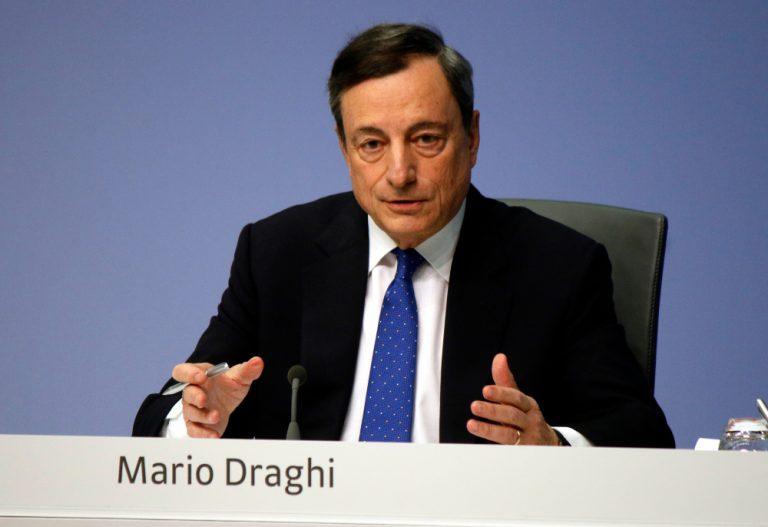
The eurozone’s main interest rate has remained unchanged at 0%, but the deposit facility rate (paid by banks on reserves at the ECB), was dropped by 10bp to negative 0.5%. Regarding its first QE package since 2016, the ECB committed to buying €20 billion of debt per month – lower than the €30 billion commitment that was expected – which will commence from November 1st.European Central Bank, acting quickly, Cuts Rates 10 Basis Points. They are trying, and succeeding, in depreciating the Euro against the VERY strong Dollar, hurting U.S. exports…. And the Fed sits, and sits, and sits. They get paid to borrow money, while we are paying interest!
— Donald J. Trump (@realDonaldTrump) September 12, 2019
Mr Draghi said the interest rate shift would remain “at their present lower levels” until eurozone inflation rates reached their target of 2%. The asset purchase programme announced today was more hawkish than expected, and perhaps geared towards giving incoming president Christine Lagarde additional flexibility. The ECB’s QE programme will, “run for as long as necessary”. Reasons given for the nature of today’s package involved an attempt to counter the “protracted slowdown” in the eurozone economy, which is “more marked than expected”. Further, it is intended to counteract the “persistence of downside risks”, of a trade and geopolitical nature – Brexit, for instance. Finally, because of the recent downward revision in projected inflation levels, and the muted nature of inflation at present. Ranko Berich, Monex Europe head of market analysis, commented on the ECB programme, “At first glance, the ECB has not quite thrown the kitchen sink at the eurozone economy,” “The QE package is shy of market expectations, which were €30bn a month. But the Bank is clearly back in the business of serious policy easing and more aggressive action could easily be taken in response to a worsening in conditions.”Draghi: The European economy is a bank-based economy and we want to protect the transmission of our monetary policy through the lending channel. That’s the philosophy of the measures we took today.
— European Central Bank (@ecb) September 12, 2019
Alongside a No-Deal Brexit, the Joint Committee of the three European Supervisory Authorities warned that a prolonged low-interest environment represented a risk to the financial stability of the EU bloc. The Committee’s report today, read, “While the monetary policy response to weakening growth and inflation outlook has helped restore the confidence in the financial markets in the short term, over the medium term persistently low interest rates, combined with flattening yield curves, put pressure on the profitability and returns of financial institutions, incentivise search-for-yield strategies and increase valuation risks,” A couple of related, concluding questions about helicopter money, ‘giving money directly to citizens’ and ‘should central banks step in’ to do a job governments aren’t doing (one of the questions was inspired by a paper co-authored by Draghi’s thesis advisor) were palmed off by by Mr Draghi, who stated, “This is a fiscal matter, not monetary policy”. Though some will interpret this as an admission that the measures implemented by the ECB are insufficient. Elsewhere in large financial player and macro economic news, there have been updates from; Lloyds Banking Group PLC (LON: LLOY), Jo Johnson quitting, Hilary Benn’s Brexit delay bill, Parliament being prorogued, Barclays (LON: BARC) and Deutsche Bank (ETR: DBK).Draghi: There was no appetite to discuss limits, because we have the headroom to go on for quite some time without raising the discussion about limits
— European Central Bank (@ecb) September 12, 2019
IGAS Energy shares rally alongside H1 EBITDA growth

IGAS Energy comments
tephen Bowler, Chief Executive Officer, said:
“We have had a good performance from our existing producing assets in the first half of the year and we continue to generate strong operating cash flow.”
“From the results at Springs Road, we now know we have a world-class resource and early indications are that we can attain significant gas flow from this basin. We look forward to the full analysis of the data set and to moving forward to appraise this asset.”
“The independent Committee on Climate Change recognises natural gas has a significant role to play to meet the 2050 net zero emissions target. It is clear that the UK needs a secure long-term supply of methane to meet our net zero targets and that the UK sources that methane not only from a diverse supply but also with the lowest emissions footprint – that being domestically produced onshore gas.”
“We were encouraged by the recent statement from BEIS and look forward to a positive dialogue with the appropriate ministers to discuss the role of indigenous oil and gas production as we move to net zero emissions in 2050.“
Investor notes
The Company’s shares have continued to rally, up 6.69% or 3.38p to 53.93p 12/09/19 12:56 BST. Neither a p/e ratio nor a dividend yield are available for IGAS Energy stock, their market cap is £63.58 million. Elsewhere in the oil and gas sector, there have been updates from; Trinity Exploration & Production PLC (LON: TRIN), Baron Oil PLC (LON: BOIL), Cabot Energy PLC (LON: CAB), Reabold Resources PLC (LON: RBD), Eco Atlantic Oil and Gas Ltd (AIM: EOG), Valeura Energy Inc.(LON: VLU) and President Energy PLC (LON: PPC).British American Tobacco stubs out 2,300 roles

Yesterday’s exuberance leaves markets muted despite Trump’s tariff delay
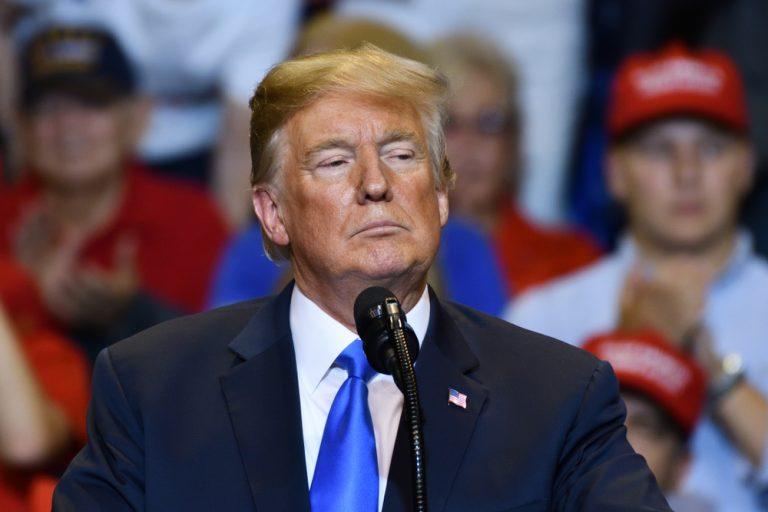
“As investors wait and see whether Mario Draghi will deliver a goodbye kiss of stimulus to the Eurozone, Donald Trump rewarded investors’ recently renewed optimism by delaying October’s scheduled tariff hike on $250 million of Chinese goods.”
“Normally, such a move would be greeted with an explosion of green by the global markets (even if the delay is actually only a 2-week pause). And yet, the European indices were rather timid after the bell. The FTSE pushed up to 7350 as it rose 0.2%, while the DAX and CAC saw similar gains, rising 0.2% and 0.3% respectively.”
“There are likely a couple of reasons for this. The European indices really let rip yesterday, meaning the markets are sort of in the backwards position of having risen sharply BEFORE the ‘gesture of good will’ from Trump some would argue justifies said growth. And, it is worth stating, such a slender increase does still leave them at fresh multi-week highs.”
“The main muting factor, however, will be the relative uncertainty surrounding the day’s ECB meeting. Investors are after not only a rate cut, but a new round of the central bank’s asset purchase programme as well. Anything less than that may leave a bitter taste in the market’s mouth, and could cause the boards to turn red this afternoon.”
“The pound remained rather sanguine this Thursday – almost like Parliament’s prorogation has given it a holiday away from the political rollercoaster of the last few weeks. Against the pound it nudged up 0.1%, while against the euro it was unchanged at €1.1191.”
So, no surprises there then. Investors want the Earth from a central bank which is currently propping up liquidity across European markets. While a continued trajectory of rate cuts is unsustainable, indices will glow red if the ECB don’t comply – investors know the central bank want to foster growth and they’re happy to hold them to ransom for the positive fundamentals they’re seeking. Elsewhere in large financial player and macro economic news, there have been updates from; Lloyds Banking Group PLC (LON: LLOY), Jo Johnson quitting, Hilary Benn’s Brexit delay bill, Parliament being prorogued, Barclays (LON: BARC) and Deutsche Bank (ETR: DBK).Morrisons pre-tax profits rise but Brexit weighs
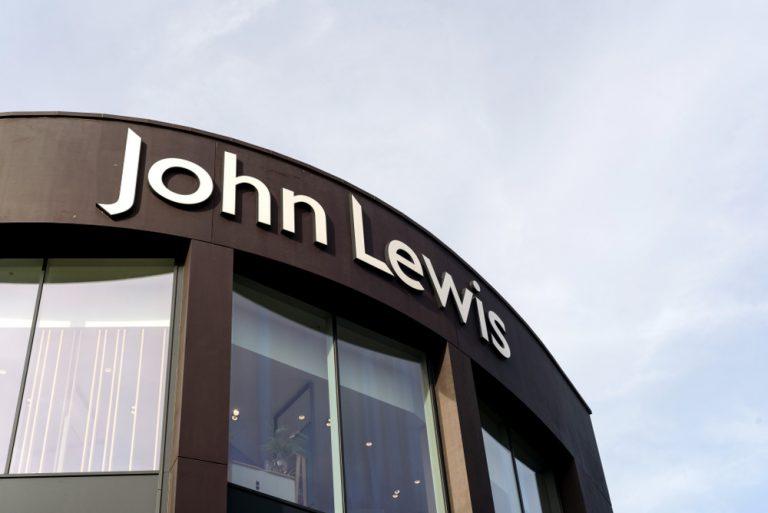
John Lewis warns against no-deal Brexit as profits plunge
LSE bid gives FTSE a short-term surge, ECB stimulus proposal galvanises European indices

“At its peak jumping 15%, before settling for a slightly less impressive 6% increase, the LSE provided the main thrust of the UK index’s afternoon gains. The FTSE added 1.1%, pushing it above 7340 for the first time since the start of August, and leaving it with a good chance of closing the right side of 7300, something it has struggled with since September began.”
“Though the FTSE was far and away the day’s biggest winner, the Eurozone indices still put a solid shift in. Anticipating that Mario Draghi will bestow upon the region a new round of stimulus as his departing present, the DAX and CAC climbed 0.7% and 0.5% respectively.”
“While trade war optimism has been given as a reason to explain Wednesday’s gains, it wasn’t enough for the Dow Jones to come out of the gates hot. Nevertheless, its meagre 0.2% rise still pushed it towards 26950, a level last seen at the end of July.”
“It was a mixed session for sterling, suggesting that some non-Brexit news took hold despite the Scottish courts ruling that Boris Johnson’s prorogation of parliament is unlawful. Against the dollar it fell 0.2%, the greenback aided by a better than forecast PPI reading; against the euro, however, it jumped 0.3%, the single currency fretful ahead of Thursday’s ECB meeting.”
Elsewhere in large financial player and macro economic news, there have been updates from; Lloyds Banking Group PLC (LON: LLOY), Jo Johnson quitting, Hilary Benn’s Brexit delay bill, Parliament being prorogued, Barclays (LON: BARC) and Deutsche Bank (ETR: DBK).Sports Direct shareholders re-elect Mike Ashley