Lloyds looks good value despite PPI charges and bad debts

British banking services company Lloyds Banking Group PLC (LON: LLOY) shares look good value for money, despite ongoing uncertainty and today’s PPI cost announcement. With the PPI compensation claim deadline being hit on the 20th of August 2019, Lloyds announced the final bill for what became a torrent of claims in the closing hours of the claims window. The Company said that corresponding to the last minute surge, they were expecting an extra bill of £1.8 billion. The result came with the claim rate peaking at 800,000 per week – as opposed to the 190,000 forecast in July – and meant that the Company had to suspend its planned £1.75 billion share buy-back plan. Lloyds said, given the “uncertainty around the final outcome for PPI”, it had “decided to suspend the remainder of the 2019 buyback programme, with c. £600m of the up to £1.75bn programme expected to be unused at mid-September”. “Including claims by the Official Receiver, the group now estimates that it will need to make an incremental charge for PPI claims, in addition to the provisions to 30 June 2019, in the range of £1.2bn to £1.8bn in its Q3 interim management statement,” the Company said in its statement. In total, the last-minute rush means that banks have set aside some £50 billion to deal with the PPI scandal, with RBS (LON: RBS) expecting an additional charge of £600 million and CYBG (LON: CYBG) warning of fees around £450 million.

Lloyds investor considerations

The Company’s tangible NAV per share stands at 53p, with a return on tangible equity of 11.5%, which it aims to increase to 12% by the end of the year. For the FY19, its is estimated investors will see EPS of 6.4p. The main threat to Lloyds’ stock is economic uncertainty. With promising earnings and a generous dividend yield, the only explanation for their current share price is some uneasiness surrounding potential economic uncertainty – potentially a No-Deal Brexit and what this could mean for employment, and in turn rising losses from ‘bad debts’. The Company’s bad debts may have increased by 27% to £579 million so far in 2019, but this only represents 0.26% of the Company’s £441 billion loan book. While this represents a risk, it elucidates the bank’s cautious outlook, and doesn’t give cause to fear something like a share price crash of over 50%. Lloyds shares closed at 50.18p per share on Monday, up 0.28% or 0.14p despite the discouraging PPI cost announcement 09/09/19 16:35 BST. Shore Capital analysts retained their ‘Buy’ stance, while Deutsche Bank downgraded their rating from ‘Buy’ to ‘Hold’.
Elsewhere in the banking sector, there have been updates from; Royal Bank of Scotland (LON: RBS), Arbuthnot Banking Group Plc (LON: ARBB), Deutsche Bank (ETR: DBK) and Nationwide (LON:NBS).

UK Investor Magazine Summer Investor Evening 2019 highlights

Held at the historic Skinner’s Hall, the UK Investor Magazine Summer Investor Evening 2019 was attended by over 300 investors, corporate advisors, brokers and press. Presentations from five London-listed companies were followed by drinks and canapés on the roof terrace giving investors a chance to discuss the prospects of each company in more detail.

Sterling rally antagonises the FTSE as UK economy avoids recession

Much to the delight of UK business leaders, the UK economy rebounded from its 0.2% contraction in Q2 2019, and in turn avoided the ‘technical recession’ label given to an economy with consecutive quarters of contraction (Germany, for instance). After a meek start to the day, this surprisingly positive news, and the expected assent of Hilary Benn’s No-Deal-blocking Bill give Sterling a lease of life during trading on Monday, Inversely – and correspondingly, FTSE dipped. Speaking on Monday’s market movements, Spreadex Financial Analayst Connor Campbell said,

“After a shaky start sterling rediscovered the spring in its step on Monday, aided by a surprisingly strong morning for UK data.”

“The main turning point for the pound was news that the country saw a return to growth in July. The GDP reading rose 0.3% against the 0.1% increase forecast, allaying fears that the UK economy would enter a technical recession in this quarter. There were supporting roles for the manufacturing and industrial production figures, which came in at 0.3% and 0.1% respectively against the previously forecast -0.3%.”

“This, combined with confidence that MPs will prevent the government from calling a snap election – AND the likelihood that the Brexit-extension-seeking Benn bill will receive royal assent at some point this evening – rejuvenated sterling. Against the dollar it rose 0.4%, having been down as much at the start of the session, allowing cable to push past $1.234. Against the euro it wasn’t quite as keen, though it still managed to swing from -0.4% to +0.2% as the day went on.”

“Predictably the pound’s recovery saw the FTSE move in the other direction. The UK index had quickly crossed 7300 after the bell; a few hours later and it has tumbled 0.8%, dragged to a one-week low of 7220. In contrast, the DAX and CAC were up and down 0.2% respectively, with the Dow Jones knocking on the door of 26900 thanks to a 90 point increase.”

Other news and macro financial updates have come from; Jo Johnson quits, Hilary Benn’s Brexit delay bill, Parliament being prorogued, No-Deal Brexit preparations, UK GDP during the second quarter, the London Stock Exchange Group (LON: LSE), and analysts’ outlook for markets and currencies.

MXC Capital rallies on improved full-year EBITDA

Technology focused advisor and investor MXC Capital Ltd (LON: MXCP) today posted a turnaround in its profits for the year ended 31 August 2019. The Company’s pre-close trading statement said they expected to see a minimum trading EBITDA of £1.7 million, swinging from a loss of £1.2 million on-year. MXC Capital attributed these gains to management fees from their JV with Liberty Global plc, its partnership with Ravenscroft Ltd to advise the GIF Technology & Innovation Cell, and transaction and consultancy fees and loan interest.

The Group’s shareholders had reasons to remain optimistic, with unaudited NAV per share rising from 95p to 116p on-year, alongside underlying portfolio and liquid assets up from 80.5p to 103p.

The Company added that it has a strong pipeline of investment opportunities, and that the majority of their £21.5 million will be invested within the coming months.

MXC Capital comments

Peter Rigg, Chairman, stated, “The year to 31 August 2019 saw significant progress for MXC both in terms of trading profitability and with respect to its investments. Post a couple of difficult years, I am delighted that the hard work of the MXC team is paying off and that we can reward shareholders for their loyalty by way of a return of capital. Furthermore, the Board believes that the proposed demerger of the Group’s transactional businesses into a separate listed company will give shareholders the opportunity to benefit from the value in these businesses which is currently not fully recognised in MXC’s NAV or its share price. We look forward to the coming years with confidence.”

Investor notes

Following today’s positive update, the Company’s shares rallied 9.84% or 9.35p to 104.34p per share 09/09/19 13:32 BST. The Group’s p/e ratio and dividend yield are unavailable, their market cap is £68.88 million. Elsewhere in the tech sector, there were updates from; ProPhotonix Ltd (LON: PPIX), Frontier Developments PLC (LON: FDEV), Gamma Communications PLC (LON: GAMA), Maintel Holdings plc (LON: MAI), Bigblu Broadbend PLC (LON: BBB), Avanti Communications Group PLC (LON: AVN) and Maestrano Group (AIM: MNO).

Travelodge revenue driven by “SuperRooms”

1
Travelodge posted a 6% increase in revenue in its results on Monday, driven by the success of its “SuperRooms”. Total revenue for the six months ended 30 June amounted to £337.3 million, up 6% compared to the £318.2 million figure recorded the year prior. The increase in sales was driven by a strong contribution from its recently opened new hotels, Travelodge said, also benefitting from its new “SuperRooms”. “SuperRooms” now account for almost 5% of total sales, having been in operation for only two years. The rooms are a new option which provide customers with extra comfort and can also be found in Travelodge PLUS hotels. Travelodge added that ten new hotels were opened in the first half of the year. The company added, however, that it remains cautious on its short-term outlook and that “the UK continues to be in a period of political and economic uncertainty and there are well known cost pressures impacting the wider hospitality and leisure sector”. “It’s quite a tough market out there, but Travelodge has continued to outperform despite the challenging conditions,” Peter Gowers, Travelodge Chief Executive, said in a company statement. “We’ve been investing in greater choice for customers while maintaining our reputation for low prices, helping us attract more and more people looking to make their travel money go further in these uncertain times,” the Chief Executive continued. “Against the backdrop of Brexit uncertainty and a slowing economy, there are clearly some challenging trends to deal with. At Travelodge we’re focused on what we can do, which is deliver value to our customers.” “We’ve been steadily investing to modernise our hotels, adding SuperRooms across the country and launching the new Travelodge Plus format to offer that little bit more choice, while maintaining low prices to stay true to our roots. With all the political and economic uncertainty, we naturally remain cautious about the short-term outlook. But in the longer-term, the fundamentals for low-cost hotels remain good, and with our clear brand proposition and strong development pipeline, we are well positioned for the future.” As the Halloween Brexit deadline approaches, uncertainty concerning the nation’s future prevails. But, for visitors coming abroad, research revealed earlier on Monday that now might be a good time for a trip to the nation’s capital as the weaker pound has lowered costs for foreign visitors.

Medica Group dips despite healthy financial performance

British teleradiology services provider Medica Group PLC (LON: MGP) booked strong progress in its first half fundamentals. The Group reported bumper revenue growth, up 18.2% on a year-on-year comparison fro the first half, up to £21.98 million. This led hikes in gross profit, up 15.1% to £10.46 million, and in adjusted EBITDA and adjusted profit before tax, up 9.7% and 7.2% to £6.15 million and £5.20 million respectively. Medica shareholders saw similar progress, with basic EPS up 9.4% to 3.49 and adjusted EPS up 9.5% to 3.98. Similarly, their interim dividend per share spiked 13.3%, from 0.75p to 0.85p. The Company said they began teleradiology reporting from Australia and Continental Europe, added 28 new reporters to the Group (net of 390), and stated the total number of reported body parts increased by 14.2%.

Medica Group comments

Roy Davis, Chairman, said,

“Medica has consistently delivered year-on-year double-digit revenue growth and these results show that the company’s high-quality clinical service remains important to its clients. Medica is investing in infrastructure and technology to support future growth and continues to provide an attractive environment for reporters looking to broaden their career. For the full year 2019, the Board anticipates revenues will be slightly ahead of its expectations with profit remaining in-line with its expectations as the Company continues to invest in optimising the business for future growth.”

Stuart Quin, Chief Executive Officer, said,

“I am delighted to have joined Medica as CEO. These results demonstrate that Medica remains well-positioned to take advantage of the fast-growing teleradiology reporting market. I look forward to working with the team to continue to deliver a high-quality service for our customers and to develop our growth strategy for the future.”

Investor notes

The Company’s shares are down 1.05% or 1.38p, despite today’s positive update, to 130.12p per share 09/09/19 12:52 BST. Analysts from Peel Hunt reiterated their ‘Hold’ stance on Medica Group stock. The Group’s p/e ratio is 16.97, their dividend yield stood at 1.73%. Elsewhere in health and medical news, there have been updates from; EMIS Group (LON: EMIS), OptiBiotix Health PLC(LON: OPTI) NMC Health (LON: NMC), Astrazeneca plc (LON: AZN) and ValiRx Plc (LON:VAL).

Weaker pound lowers costs for foreign visitors, study finds

3
New research revealed on Monday the silver lining of a Brexit-bashed pound for overseas business visitors staying in the nation’s capital. The leading serviced apartment provider Cuckooz looked at how much more affordable the weaker pound has made a trip to the capital for those on business visits. With the extended halloween Brexit deadline approaching, the only thing certain for the UK is additional uncertainty. But for visitors coming abroad, now might be a good time for a trip to the nation’s capital. The research looks at the average cost of staying in London and how this translates to ten different currencies based on the current exchange rate and the exchange rate before Brexit. According to Cuckooz, in June 2016, the average hotel room would have cost €183 each night. However, the weaker pound today has knocked the price down by 9.2% to €166. What the research reveals, however, is that the largest amount of savings is for those visiting from Japan. Cuckooz said that the Yen has gained the most ground on the pound – a hotel in June 2016 would have cost the equivalent of £170 per night, down 12.6% today at the equivalent of £148 per night. “Brexit may be weighing heavy on the minds of many, particularly those with business ties to the UK, but as it continues to drag on one inadvertent consequence has been the discounted costs of visiting the UK on business as a result of a weaker pound,” said co-founder of Cuckooz, Charlier Rosier. “While we’re not talking hundreds of pounds saved, this does spill over into other areas outside of accommodation and this overall better value for money seems to be stimulating an uplift in the number of people travelling,” the co-founder continued. “Those visiting for business often stay on a longer-term basis and for them, the saving has become more considerable than it has for the weekend visitor. We’ve seen the value of our serviced apartments increase by as much as 16% for some due to fluctuations in currency and this is a pretty considerable saving for those visiting for months at a time.”

Boris Johnson says No-Deal would be ‘a failure’, Amber Rudd replaced, Sterling dips

UK prime minister Boris Johnson has told Leo Varadkar that a No-Deal scenario ‘would be a failure for which we would all be responsible’. This comes with the prime minister writing a letter to the EU requesting a potential extension to the leave deadline, but adding a ‘not really’ caveat, and looking likely to ignore No-Deal-blocking legislation. After relinquishing her whip in protest, Amber Rudd follows a growing number of her peers in leaving government. There shouldn’t be too much mourning, however. Her position in the DWP will be taken over by Therese Coffey, who will likely push the disabled and vulnerable deeper into poverty with the same zeal as her predecessor. On these updates, Sterling dipped as markets opened on Monday morning – this gave the FTSE a lease of life. Speaking on market movements and political ongoings, Spreadex market analysts Connor Campbell stated, “Having spent a good portion of last week rallying in the face of Boris Johnson’s political problems, the weekend’s developments haven’t been greeted with as much glee by the pound.”

“Amber Rudd’s gone, with potentially more resignations to come, further weakening the Prime Minister’s hand. Monday should also be the day that sees the Benn ‘no-deal’ bill – which would likely require the government to ask for a Brexit extension – receive royal assent, snuck in just before Parliament is prorogued. In theory, then, there are a fair amount of positives for the pound to work with.”

“Instead sterling fell half a percent against both dollar and euro, tumbling to $1.224 and €1.1097 respectively – well off the lows struck on September 3rd, but nevertheless lacking the glint in its eye it displayed at its giddiest last week. That might be because Boris Johnson could well ignore any attempts to avert a no-deal Brexit by refusing to ask Brussels for a delay, something that would likely cause a legal challenge by the growing forces that oppose him. Such uncertainty is, of course, the pound’s kryptonite, hence explaining its early losses.”

“To add to its anxiety, the currency has to go through the data-wringer this morning. The monthly UK GDP reading is expected to rise from 0.0% to an exhilarating 0.1%, while the manufacturing and industrial production figures are both set to fall to -0.3%.”

“While the pound frets, the FTSE was able to fling itself back above 7300 with a 0.5% increase. That meant it outperformed its Eurozone peers; the DAX added 0.3% as it nudged to a fresh 6-week peak, with the CAC up just 0.1%.”

Other news and macro financial updates have come from; Jo Johnson quits, Hilary Benn’s Brexit delay bill, Parliament being prorogued, No-Deal Brexit preparations, UK GDP during the second quarter, the London Stock Exchange Group (LON: LSE), and analysts’ outlook for markets and currencies.
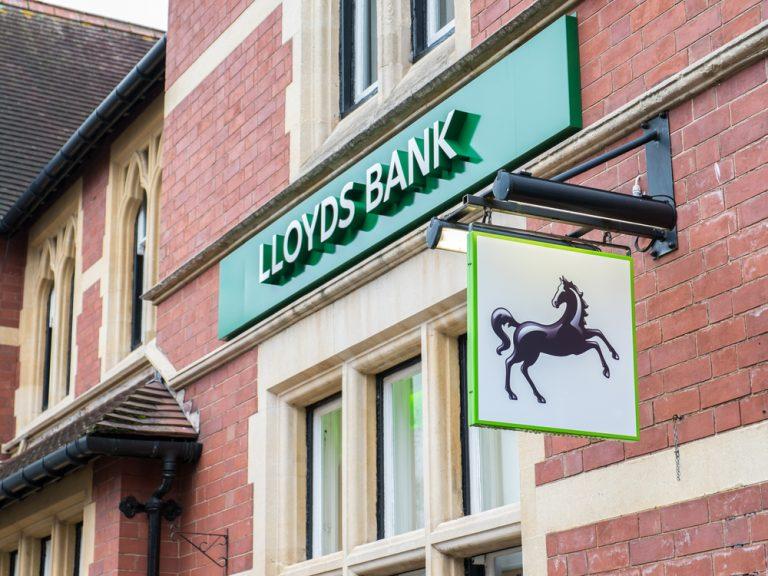
Lloyds sets aside £1.8 billion after spike in PPI claims

4
Lloyds Banking Group (LON:LLOY) reported on Monday that it will dedicate an additional £1.8 billion in order to settle any claims of mis-sold PPI (Payment Protection Insurance). Shares in the bank were down during trading on Monday. In its half year results, published at the end of July, the British bank reported a PPI charge for the first half of 2019 that amounted to £650 million. At the time of its half year results, Lloyds expected PPI claims to continue at a rate of 190,000 per week, but this was not the case. The bank received a higher volume of claims than expected, and it experienced a “significant spike” in the final days before the deadline. In the last month leading up to the deadline, Lloyds received roughly 600,000-800,000 claims each week. Lloyds now expects an extra hit of £1.2 billion – £1.8 billion. The deadline for customers to claim mis-sold PPI was 29 August. As it stands, £36 billion has already been paid out by British banks in order to compensate consumers. Of the figure, £2 billion was paid out between 1 January and 30 June 2019. Once administration costs are included, total costs have amounted to £48.5 billion. The Financial Conduct Authority (FCA) delivered a nationwide communications campaign in order to raise awareness of this deadline to consumers who may have been mis-sold PPI. According to the FCA, the average payment is roughly £1,700 – but this can vary from customer to customer. Just last week, the Royal Bank of Scotland (LON:RBS) issued a warning saying that it expects a hit of up to £900 million after it also saw a rise in PPI claims. The bank has been handling complaints about the mis-selling of PPI since 2011. Shares in Lloyds Banking Group plc (LON:LLOY) were trading at -0.3% as of 12:07 BST Monday. Shares in the Royal Bank of Scotland plc (LON:RBS) were trading at +1.75% as of 12:08 BST Monday.

AB Foods maintains full year outlook

1
Associated British Foods said on Monday that its full year outlook for 2018-19 remains unchanged, highlighting a strong profit performance this year from Primark. AB Foods added, however, that the strong performance is expected to be offset by the anticipated decline in AB Sugar. Its full year results are scheduled to be announced at the start of November. The company said that sales at Primark for the full year are expected to be 4% ahead of last year at constant currency and actual exchange rates. Additionally, AB Foods described early trading of the new autumn/winter range as “encouraging”. “Primark has performed well in the UK where sales in the total clothing, footwear and accessories market have been weak,” AB Foods said in a trading update. “We continued to deliver a significant gain in market share, with sales growth of 3% and a like-for-like sales decline of 1%. Sales growth was driven by a strong contribution from new selling space. We have been encouraged by our customers’ reaction to our new store in Birmingham High Street which showcases our full product range and new food and beverage and beauty services,” AB Foods continued. Earlier this year, Primark unveiled a megastore in Birmingham – the five-floor building has three food outlets, several beauty services and a Hogwarts Wizarding World zone. However, AB Foods warned that, for retail, “the strengthening of the US dollar during this year and the recent weakening of sterling will increase the cost of goods for next year. We anticipate achieving some mitigation from reduced materials prices, the favourable effect of exchange rates in sourcing countries and better buying.” “Combined with a more typical level of markdown, we expect a reduced margin next year.” As for the next financial year, France and Spain will see the most space added as it expects to open 19 new stores. Primark’s first store in Poland is expected to open in Warsaw next year, allowing the brand to enter its thirteenth country. Earlier in July, AB Foods posted a trading update, revealing that it expected a full year climb in revenues on the back of growth in Primark profits. Shares in Associated British Foods plc (LON:ABF) were trading at -2.68% as of 11:02 BST Monday.