Avingtrans revenue growth pumps up full-year profits

Energy and medical sector critical components engineering firm Avingtrans plc (LON: AVG) has seen progress across its fundamentals for the full-year ended 31 May 2019. Owing to its acquisition of Hayward Tyler Group during FY18 and 11% underlying organic growth, the Company’s revenues jumped 34% year-on-year to £105.5 million. This pushed up the Group’s gross margin by 1.2%, to 26.7%, and led a 65% surge in adjusted EBITDA, to £9.4 million.

Additionally, its cash inflow from operating activities increased to £9.0 million, up from a £6.9 million outflow during FY18. Further, its net debt contracted considerably, from £7.1 million, to £2.0 million.

The situation was similarly peachy for Avingtrans shareholders, with their adjusted diluted EPS hiking from 8.4p to 14.9p and their full year dividend rising from 3.6p to 3.8p per share.

Avingtrans comments

Roger McDowell, Chairman, said,

“It has been a record year for the Group, in terms of orders, revenue and profit, reinforced by the deft execution of our now well-proven Pinpoint-Invest-Exit strategy (PIE). The former Hayward Tyler Group (HTG) businesses performed very well in their first full year with the Group and the Ormandy turnaround produced a solid, if modest profit in its first full year since acquisition in February 2018. The recent, tactical acquisitions of Tecmag, Texas; Booth, Bolton, UK; and Energy Steel, Michigan are all integrating well thus far. The Energy divisions and their management teams have proven themselves to be commercially astute and we continue to focus on profitable growth, to build valuable, enduring businesses. Our budding medical division continues to make slow, but steady progress, as it seeks to develop new technologies, to break through into new sectors.”

“We continue to concentrate on aftermarket opportunities, servicing end-user customers with comprehensive solutions, resulting in good growth and strong prospects. The nuclear life extension and decommissioning arenas are fertile ground for us, as demonstrated by contract wins in the period worldwide. Other market areas are also proving fruitful – such as renewable energy – and a more stable oil and gas environment has seen us win important contracts in that sector. Brexit and tariff wars are unwelcome distractions for the Group, but they will not cause us to deviate from our well-planned course. Despite the chill in the macroeconomic air, we remain quietly confident about our prospects in both Energy and Medical, with our strong Balance Sheet allowing us to be both agile and resilient. Recent order wins and our pipeline of opportunities underpin that outlook.”


Investor notes

The Company’s shares were up 0.79% or 1.90p to 241.90p per share 18/09/19 15:07 BST. Analysts from finnCap reiterated their ‘Corporate’ stance on Avingtrans stock. Elsewhere in energy and medical news, there have been updates from; AFC Energy plc (LON: AFC), John Laing Environmental Assets Group Ltd PLC (LON: JLEN), IGAS Energy PLC (LON: IGAS), Trinity Exploration & Production PLC (LON: TRIN), Integumen PLC (LON: SKIN), Medica Group PLC (LON: MGP) and EMIS Group (LON: EMIS).

Velocys shares dip as it commercialises alternative fuels and revenues dive

Sustainable fuel technology Company Velocys PLC (LON: VLS) saw losses during the first half alongside a contraction in revenue, as it commercialised its alternative fuels. The Company’s operating losses narrowed from £11.0 million to £5.2 million year-on-year during the first half, it also added that it raised £7 million in funds during July. However, the positive effects of these developments were offset by its revenues folding from £392,000 to £22,000. Velocys said its Bayou Fuels Mississippi project was converted to a solar power source with carbon capture capabilities. The Group said this would significantly improve its returns and would create, “an attractive differentiator for investment into this project.” The Company added that its Immingham UK project had completed all pre-FEED work and it had delivered one reactor and all the catalyst to its client Red Rock Biofuels.

Velocys comments

Henrik Wareborn, CEO, said,

2019 has been a positive year for the Company. The demand for our Fischer Tropsch technology is growing on both sides of the Atlantic, which is why we have concentrated our efforts on project development and reactor manufacturing. These last six months have seen Velocys accelerate the move from concept to commercialisation – transitioning from research, development and testing, to focusing on commercial scale client delivery and operational excellence.”

“We have delivered our first reactor and all catalyst charges to our client in Oregon (Red Rock Biofuels) and the manufacturing of the remaining reactors is advancing. We are now focusing all our efforts on commercial delivery – for our client in Oregon and for our two projects in Mississippi, USA (Bayou Fuels) and Immingham, UK (Altalto).”

“None of this would have been possible without the recent support of our shareholders new and old along with the hard work and dedication that all our staff have put in to achieve the Company’s goals. I would like to make a personal thanks to Dr Pierre Jungels for his guidance of the Company over the years that he has been Chairman and wish him well for the future.”

Investor notes

The Company’s shares dipped 8.39% or 0.23p to 2.48p per share 18/09/19 14:23 BST. Analysts from Numis reiterated its ‘Buy’ stance on Velocys stock. Neither the Group’s p/e ratio nor their dividend yield are available; they are continuing to implement their long-term strategy, which doesn’t promise much return for shareholders in the immediate future. There have been recent renewable energy updates from; AFC Energy plc (LON: AFC), John Laing Environmental Assets Group Ltd PLC (LON: JLEN), SIMEC Atlantis Energy (LON: SAE), Aquila European Renewables Income Fund (LON: AERI), PowerHouse Energy Group (LON: PHE), PowerHouse Energy Group (LON: PHE) and SIMEC Atlantis Energy (LON: SAE).

Saudi Aramco speaks on drone strikes at its oil installations

Today state-owned oil producer Saudi Aramco spoke out on the drone strikes at its two oil installations on Saturday. The two projects process a combined 8.45 million barrels of oil per day and following the attack, the Company said some 5.7 million barrels per day would be suspended – over half of the country’s total oil output. “Crude prices will still rise a bit, but apparently the world economy dodged a bullet,” said Robert McNally, the president of Rapidan Energy Group. The attacks pushed oil prices up by over 10%, and while a continued hike is unlikely (with regular service expected to resume shortly), the recent attacks revealed just how vulnerable Saudi Arabia is to increasingly cost-effective and high-tech guerrilla tactics. Despite a firm commitment on the part of Donald Trump to do whatever was necessary to protect world oil supply, little can be done to prevent militia groups from gaining access to drone technology that costs little more than USD $15,000 to recreate. Speaking today on the weekend’s attacks, Chairman of Saudi Aramco, Mr. Nasser said, “These synchronized attacks were timed to create maximum damage to our facilities and operations. The rapid response and resilience demonstrated in the face of such adversity shows the Company’s preparedness to deal with threats aimed at sabotaging Aramco’s supply of energy to the world.” “I am enormously proud of the courage, dedication and proficiency of our people who ensured there were no injuries.”

“We have a hard-earned reputation for nearly 100 percent reliability in terms of meeting our international customers’ requirements and we have defended that,” he told journalists from Saudi and international media.The Company adjusted deliveries and shipments to customers by drawing on inventories and offering additional crude production from other fields.

“Not a single shipment to an international customer has been or will be missed or cancelled as a result of these attacks. We have proven that we are operationally resilient and have confirmed our reputation as the world’s leading supplier,” Mr. Nasser said. The Company has met its commitments to its International customers, even in challenging situations, including past Gulf conflicts.”

Not to be deterred by the attacks, the Company said one of the plants was back to full operational capacity and the other remained at 2 million barrels per day, with full capacity expected to resume by the end of September. If any further evidence was needed that the Group were trying to brush off the weekend’s events, Mr. Nasser went on to discuss Saudi Aramco’s impending IPO within the same press conference, “We have said we are ready and will proceed with the IPO when our shareholder takes the decision.” The takeaways can perhaps be broken down into the following statements. The US has found a suitable narrative to use as it re-escalates its war of words with Iran; with Yemeni Houthi rebels claiming responsibility for the attacks after being trained in drone technology by Iranian militia. If Saudi Arabia wishes to avoid increasingly sophisticated retaliations from Yemen, they will either have to reconsider their penchant for causing humanitarian crises, or prepare for the attacks they continue to provoke. Nigh-on laughably, Saudi Arabia are constructing a case to take before the UN, against what has been described as an orchestrated campaign by Iran. You would imagine such a venture would take both remarkable ignorance and a sense of humour, given their track record for violence and human rights abuses. Elsewhere in oil and gas news, there have been updates from; IGAS Energy PLC (LON: IGAS), Trinity Exploration & Production PLC (LON: TRIN), Baron Oil PLC (LON: BOIL), Cabot Energy PLC (LON: CAB), Reabold Resources PLC (LON: RBD), Eco Atlantic Oil and Gas Ltd (AIM: EOG) and Valeura Energy Inc.(LON: VLU).

Curetis finds a salve for its losses as revenues hike 35%

Developer of molecular diagnostic solutions, Curetis NC (AMS: CURE) has seen its losses narrow year-on-year for the first half, as the Company makes good progress in revenue growth. The Group’s revenues grew by 35% during the first half of the financial year, up from EUR 0.8 million to EUR 1.09 million. Alongside this, the Group’s expenses narrowed from EUR 12.44 million to EUR 11.49 million. This led a narrowing in net losses, contracting from EUR -11.56 million to EUR -11.08 million, and a sharp drop in net cash burn, down 47.5% on-year. The situation for Curetis shareholders also improved, with losses per share decreasing from -0.73c to -0.51c. The Company added that it expected to continue business as usual until it ‘combines’ itself with OpGen in 2020.

Curetis comments

“In 2019, we have advanced our commercial roll-out in the U.S. and progressed the anticipated regulatory approvals in the U.S. and in China. We have also made tremendous progress in advancing Ares Genetics from a bioinformatics start-up to an increasingly self-sustained NGS and AMR data intelligence operation with very significant partnerships both in the IVD and pharma space,” said Oliver Schacht, Chief Executive Officer. “The strategic transaction and business combination with OpGen will allow Curetis to access U.S. capital markets, which we believe is essential to accelerate the development of our proprietary molecular diagnostic platforms and solutions for microbiology.”

Investor notes

Despite rallying over 2%, the Company’s shares are now down 0.33% or EUR 0.002 to EUR 0.61 per share 18/09/19 15:01 CST. The Group has a market cap of £15.33 million, their dividend yield is unavailable. Elsewhere in health and medical news, there have been updates from; Integumen PLC (LON: SKIN), Medica Group PLC (LON: MGP), EMIS Group (LON: EMIS), OptiBiotix Health PLC (LON: OPTI) NMC Health (LON: NMC), Astrazeneca plc (LON: AZN) and ValiRx Plc (LON:VAL).

Virgin Atlantic to challenge IAG dominance at Heathrow

2
Virgin Atlantic said on Wednesday that it will challenge IAG’s (LON:IAG) dominance at Heathrow by adding new routes. Virgin Atlantic hopes to serve up to 84 new destinations once the third runway is complete. These will be in the UK, Europe and across the globe and are a fourfold increase on its 19 long haul destinations from Heathrow in 2020. Of the new 84 destination planned, 12 are domestic, 37 are European and 35 are global. The plans will also include unserved destinations such as Kolkata (India), Jakarta (Indonesia) and Panama City (Panama). “IAG currently dominates Heathrow Airport, controlling more than half of the total capacity. A new report published last week found one in four passengers flying from the airport – 18.5 million people – have no choice but to fly with that airline group,” Virgin Atlantic said in a company statement. “Never has the need for effective competition and choice at Heathrow Airport been more evident than during this summer of disruption, which has brought misery for tens thousands of travellers,” Virgin Atlantic CEO Shai Weiss provided a comment. Indeed, many travellers faced interference to their summer holiday plans this summer with the disruptions caused. “Britain, and those who travel to it, deserve better than this. Air passengers need a choice and Virgin Atlantic is ready to deliver when Heathrow expands,” added Shai Weiss. “Heathrow has been dominated by one airline group for far too long. The third runway is a once in a lifetime opportunity to change the status quo and create a second flag carrier. This would lower fares and give real choice to passengers, as well giving Britain a real opportunity to boost its trade and investment links around the world.” “Changing the way take-off and landing slots are allocated for this unique and vital increase in capacity at the nation’s hub airport will create the right conditions for competition and innovation to thrive.” Shares in International Consolidated Airlines Group (LON:IAG) were trading at -0.18% as of 13:13 BST Wednesday.

Kingfisher half year profits drop, shares down

2
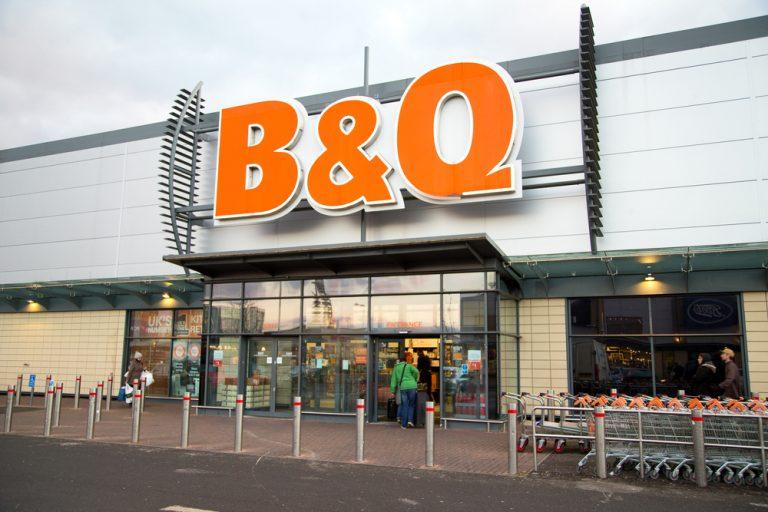
Kingfisher (LON:KGF), the owner of the B&Q brand, posted a decline in underlying profit before tax on Wednesday in its half year results. Shares in the company were down during trading on Wednesday. The home improvement company said that underlying profit before tax dropped by 6.4% for the six months ended 31 July, amounting to £353 million. This compares with a £377 million figure from the year prior. Kingfisher, which has over 1,300 stores in ten countries across Europe, Russia and Turkey, operates under four retail brands – B&Q, Castorama, Brico Dépôt and Screwfix. The company added that total sales over the period declined by 0.9% in constant currency and like-for-like sales dropped by 1.8%. “Our transformation activity continued in the first half of this year, including new range launches across the Group and the rollout of further capabilities within our unified IT platform,” Véronique Laury, Chief Executive Officer, commented in Kingfisher’s results. “These activities resulted in some ongoing disruption that impacted sales at B&Q and Castorama France. This was partly offset by positive sales performances in Screwfix, which continues to grow its market share, and Poland,” the Chief Executive Officer continued. On the 25 September, Thierry Garnier will join Kingfisher as CEO. “In Thierry Garnier, who joins Kingfisher next week, we have found the right individual with the right skills and experience to build on the platform that we are establishing,” Andy Cosslett, Chairman, provided a comment. “In the near term our focus will be on improving execution and delivering on our key priorities for the year. Thierry will bring a fresh perspective to the Group as we focus on delivering growth in shareholder value and creating a compelling experience for our customers and colleagues,” the Chairman continued. Kingfisher added that its outlook by geography remains mixed as continued uncertainty around UK consumer demand prevails. The company said it will remain focused on improving execution and delivering priorities for the year, including the launch of key new and differentiated ranges such as B&Q kitchens in the second half. Shares in Kingfisher plc (LON:KGF) were trading at -2.11% as of 11:18 BST Wednesday.

Lloyd’s of London profits surge

1
Lloyd’s of London posted a surge in profit before tax in its half year results on Wednesday. Profit before tax for the first six months of the year amounted to £2.3 billion, almost four times higher than the £0.6 billion figure reported in June 2018. Net investment income increased to £2.3 billion, up from the £0.2 billion recorded last year. Lloyd’s of London is a 330-year-old insurance and reinsurance marketplace across the globe. “We are pleased to report a profit during the first six months of 2019. It is encouraging that the Lloyd’s market is showing increased discipline in 2019 as evidenced by a reduction in gross written premiums and an improvement in the attritional loss ratio for the current underwriting year,” said John Neal, Lloyd’s Chief Executive Officer, in a company statement. “However, we recognise the importance of continued focus on performance management to maintain this momentum throughout the rest of 2019 and beyond,” the Chief Executive Officer continued. “At the same time as ensuring that our market can deliver sustainable, profitable growth, we need to make some brave choices on how to meet the expectations of our customers and all our stakeholders in the future. The Future at Lloyd’s strategy will ensure that our marketplace is ready for these challenges and opportunities ahead of us, with the first blueprint to be published on 30 September.” Indeed, on 30 September Lloyd’s of London will release the first blueprint outlining how the Future at Lloyd’s strategy will be managed and progressed. Last year, Lloyd’s of London suffered from a series of natural disasters such as hurricanes and the wildfires in California, posting a loss before tax of £1 billion. The loss recorded in 2018 followed its first loss in six years, which was a £2 billion loss recorded in 2017.

Pendragon shares down as uncertainty weighs

1
Pendragon (LON:PDG) warned that Brexit uncertainty was weighing on customer confidence in its half year results on Wednesday. Shares in the company were down almost 10% during Wednesday morning trading. The motor retailer said that, as a result of difficult market conditions, it predicts annual underlying loss before tax to be at the bottom of its expectations, whilst also cancelling its annual dividend. “Economic and market conditions are very challenging,” Pendragon said in its half year results. “The heightened political and Brexit uncertainty, as to both outcome and timing, is adversely affecting customer confidence,” Pendragon continued. “We are not anticipating any improvement in this for the rest of our financial year and are closely monitoring market conditions and customer behaviour particularly during the important trading month of September.” Pendragon posted an underlying loss before tax of £32.2 million in its half year results, down from the £28.4 million profit reported in 2018. “Whilst market conditions have been challenging in the first half of 2019 with headwinds in both the used and new car markets the Group has continued to deliver like-for-like revenue growth,” Chris Chambers, Non-Executive Chairman, said in the company’s half year results. “However, there has been a material decline in the Group’s profitability principally as a result of the actions taken to address excess used car stock,” Chris Chambers added. “We made significant progress reducing this exposure in the latter period of the first-half and we remain committed to the strategy of growth in the Group’s used car proposition. The business is fully focussed on maximising performance, but we expect the market to continue to be challenging during the second half of 2019.” At the end of last year, the motor retailer issued a profit warning, sending shares down. As the Brexit Halloween deadline approaches, the only thing certain for the nation at this point is additional uncertainty. Shares in Pendragon plc (LON:PDG) were trading at -9.52% as of 09:39 BST Wednesday.

Three bedroom properties sell the quickest across UK

New data revealed on Tuesday that, from the point of listing online to accepting an offer, three bedroom homes are the quickest to sell across the nation. The estate agent comparison site, GetAgent.co.uk, said that so far in 2019 three bedroom homes are taking an average of 122 days to sell across the UK. Two bedroom homes follow closely, taking an average of 126 days to sell. Four bedroom homes are next at an average of 141 days, one bedroom properties follow at 150 days and five bedrooms taking the longest of all to sell at 173 days. If home owners really want to sell their property quickly, then a three bedroom home in Scotland is the winning combination, according to the data. Indeed, the nine quickest areas for the sale of three bedroom properties are all located in Scotland. Three bedroom homes are also the quickest to sell in London with an average selling time of 148 days. “Three-bed homes are hot property in current market conditions and as a result, those with one to sell can expect a quicker transaction than others in the market, even in London,” the founder and CEO of GetAgent.co.uk, Colby Short, provided a comment. “A three-bed is typically the first family foot on the ladder for growing families and often the last time a buyer will upsize for the long-term, if not completely,” the founder and CEO continued. “That’s why they’re consistently in high demand but there is a real lack of suitable stock currently on the market, as well as an insufficient level being delivered by housebuilders to meet this demand. As a result, three-bed homes are bucking wider market trends to sell much faster than the rest and will continue to do so.” Elsewhere in property, UK house prices increased by 1.8% in August according to Halifax’s House Price Index.

Oil prices weigh on markets and feed precious metals rally

Largely following on from yesterday’s trends, market indices struggled to recover from the tensions in the Gulf and ensuing oil price hike. As if markets hadn’t taken more than their fair share of beatings and uncertainty, the jump in Brent Crude not only makes day-to-day activities more costly (the arbitrary case) but the events in the Gulf are yet to be resolved, and will thus weigh in already frigid market sentiment. If any illustration of this fact was needed, there was an almost knee-jerk reaction from investors, with precious metals gaining almost immediately after the developments in the oil sector.

Oil and today’s movements

Speaking on the behaviour of indices following the beginning of trading, Spreadex Financial Analyst Connor Campbell commented, “As Brent Crude let rip, the global markets remained subsumed in red on Monday, fearful over the implications of oil’s rise.” “Though not quite back at the $72 per barrel-nearing levels it initially shot to, Brent Crude only gained in confidence as the day went on, climbing 10.5% to cross $66.50 after reports came out that Iran had seized a UAE oil tanker. This, obviously, was a tasty treat for BP and Shell, who bounced 4.6% and 2.6% respectively following the attack on the facility in Saudi Arabia.” “However, the Western indices weren’t quite as pleased. Also dealing with some downbeat data out of China, the likes of the DAX, CAC and Dow all fretted over what these soaring oil prices will mean for growth; ditto the potential for further destabilisation in the region.” “The German and French bourses fell 0.7% apiece, while the Dow dropped 100 points to loiter just above 27100. Benefiting from its sizeable oil stocks, the FTSE’s losses in comparison were pretty manageable; the UK index slipped 0.3%, just about taking it under 7350 but off of the day’s lows.” “With investors eyeing up safe havens – gold rose 0.8% – the dollar was one of the day’s other notable winners. Against both the pound and euro alike the greenback climbed half a percent, knocking cable below $1.2412 while kicking the single currency back to $1.1013.” “Given the enormous response from Brent Crude, investors are going to be on high alert for any developments overnight that’ll dictate whether or not the black stuff can keep gushing higher all the way through to Tuesday morning.”

Precious metals are the golden ticket

With no decisive movements, but a host of indications and uncertainty prevailing, investors are preparing for what is more commonly being accepted as the ‘impending doom’. Whether true or not, many have heard enough chatter around a dreaded ‘recession’ and too few encouraging updates to the contrary. They are perhaps only being prudent, then, by looking increasingly towards either shorts (market or options) and deep out of the money puts, or buying into precious metals. As stated by Vanguard Capital AG in their last monthly summary, “The main winners in this environment have been long duration bonds and precious metals.” “[…] Moving forwards, we think a core holding in precious metals will be very important for portfolios over the next decade and investors who haven’t allocated into the asset class need to pay close attention. Clearly, the recent run up since July has been extreme and so waiting for pullbacks to buy is the preferred strategy from these levels.” Vanguard added that they expected some room for risk assets to rally during September but that this would be contingent on the Fed implementing more accommodative policy; which isn’t wholly likely, considering Powell’s desire to maintain some wiggle room for (even) more gloomy times. As such, inverse risk assets such as gold continue to rally. Elsewhere in markets and macro economic news, there have been updates from; ECB stimulus, the bid for the London Stock Exchange (LON: LSE), Lloyds Banking Group PLC (LON: LLOY), Jo Johnson quitting, Hilary Benn’s Brexit delay bill, Parliament being prorogued, Barclays (LON: BARC) and Deutsche Bank (ETR: DBK).