AB Foods shares jump on confident expectations

0

Associated British Foods plc (LON: ABF) have seen their shares jump on Friday morning after the firm gave strong expectations in the update.

Associated British Foods plc is a British multinational food processing and retailing company whose headquarters are in London.

Its ingredients division is the world’s second-largest producer of both sugar and baker’s yeast and a major producer of other ingredients including emulsifiers, enzymes and lactose.

The firm has seen a positive few weeks of trading. At the start of November, shares were driven 5.62% by a confident owner outlook.

AB Foods also mentioned the performance of Primark as a main contributor to good results, as overall sales at Primark came in at £7.79 billion – a 4.2% year-on-year uptick at actual exchange rates.

Shares of AB Foods jumped 0.88% to 2,518p. 6/12/19 10:09BST.

Today, the firm updated shareholders by saying that the company will benefit “materially” from the increase in sugar prices and further cost reduction in its current financial year.

Speaking at the company’s annual general meeting, Chair Michael McLintok said the company expects another year of strong profit and margin growth in grocery, with Twinings Ovaltine drink in particular benefiting from a more efficient tea supply chain.

McLintock said fast fashion retailer Primark has a strong pipeline of new sites, with margin to be reduced by “only a small” amount year-on-year, hurt by a weaker pound for purchases being largely offset by lower costs in both the cost of goods and overheads.

“Our businesses have completed all practical preparations for Brexit and contingency plans are in place should our businesses experience some disruption at the time of exit,” McLintock said.

Shareholders will be pleased that the outlook reiterated in the company’s recent annual report has been sustained.

AB Foods will be pleased with the figures that they have generated over the last few weeks, considering the state of the current retail supermarket industry.

Sainsbury’s (LON: SBRY) saw their profits take a bruising at the start of November. said that, for the 28 weeks to 21 September,

The FTSE100 listed firm said underlying profit before tax declined by 15% to £238 million, compared to the £279 million figure recorded for the same period the year prior.

Additionally, rival Marks and Spencer saw their profits plunge last month, as the firm saw a 5.5% decline in clothing sales and the firm announces mass store closures.

AB Foods should remain optimistic, as the insurgence of rival brands such as Aldi and Lidl have put the big 4 up to a stern test.

Shareholders will be confident from the update given today, as spirits remain high entering the busy festive period.

Andrew Neil calls out Boris Johnson over avoiding election debates

2
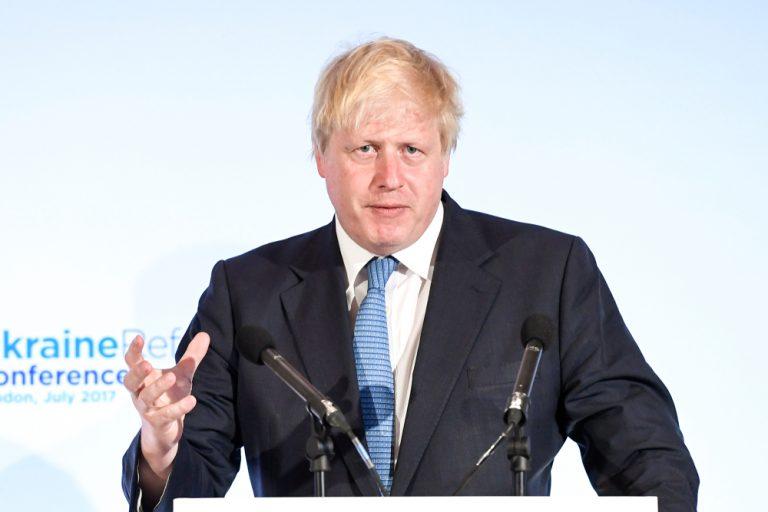
It is that time of year ladies and gentlemen, I wish I could reference the festive period but rather I am talking about the bleak outlook of the UK Political system as a General Election consumes the festive spirit. The antics are back out in the limelight again as we see soundbites, accusations, debates and alleged promises which neither party is seeming to be able to concretely confirm. As the respective party leaders get ready for December 12, they have been put through their paces by British Media, other party leaders and internal party officials testing them on every aspect of policy from Brexit to housing. This morning’s headlines across the British newspapers have mentioned PM Johnson’s lack of effort to arrange a public debate, and some even suggesting that Johnson is not up to the contest. Andrew Neil a classic name in the political boxing ring, renowned for his pestering nature and bullish personality has called out Johnson in a tweet as published by the BBC. The tweet, which is found below suggested that Johnson is scared to dance in the ring with him. Certainly this is another piece of bait, which Johnson will not be taking and is not seemingly falling for. BBC joined the party, and jointly challenged PM Johnson to a debate in an attempt to cash in on viewer numbers and put the the probable election winner to a rigorous test. “BBC challenges chicken PM” is the Daily Mirror’s take as it accuses the prime minister of “running scared”, which has caught the attention of many legislators in Westminster also. Many citizens rely on the TV debates as a way to be formally educated before they visit election polls in six days time, however Johnson has refused to take part in any form of debate and this has alerted voters on his untrustworthy and false nature. I think you have to hand it to Johnson – this has never been such a busy time for a British Prime Minister, with the ongoing election battles continuing to flood constituencies combined with this week’s NATO meetings which has seen Justin Trudeau have a dig at Donald Trump for being late, Johnson has had a busy time whilst assuming the Number 10 Office. It has been around a week since two young lives were fatally taken in a terrorist attack on London Bridge, and Johnson has had this to deal with also – as the election manifesto’s took a turn this week to Foreign Policy and domestic security. The pressure will continue to ramp up on Johnson, until he agrees to debate publicly with Andrew Neil. Even Nigel Farage had his expected few words saying “It’s not too late”. Johnson has stuck to his words in rejecting all forms of engagement and debate with any media platform, evidenced by the fact that only a few days ago he rejected the prospect of a sit-down interview with ITV’s (LON: ITV) Julie Etchingham. With the other party leaders engaging in streamed debates, it seems that Johnson will have to come out of hiding at some point – but I feel there are no expectations to fulfill this request as the Prime Minister has already seen a busy week with the commitments mentioned before. The battle for Number 10 continues to go on, as campaigning enters its final few days. It seems for now that neither party has done enough to win a 326 seat majority and the chances of a Hung Parliament are seeming like the winning bet. It will only be seen as to how voters cast their decisions on Thursday, however we do know that the British media have taken a dig at PM Johnson for not engaging in these debates, as the future of British Politics has never been so uncertain.

Tesla’s Cybertruck spotted on roads in California

0
The new cyber truck developed by Tesla (NASDAQ: TSLA) was spotted driving on public roads for the first time. A Tesla Model 3 followed the cyber truck as both vehicles drove on a street near SpaceX’s headquarters in California.

Cyber Truck

Elon Musk decided to develop the cyber truck after realizing that there is a need for more environmentally friendly and energy efficient trucks in the market. Elon Musk believes that current trucks in the market are not fit for the 21st century as they do not use sustainable energy. The cyber truck includes advanced specs. It is able to increase its speed from 0mph to 60 mph in less than 3 seconds. Tesla believes the cyber truck offers more performance than an advanced sports car and better utility than a normal truck. The cyber truck is extremely resistant to external and internal damage. Tesla planned an experiment on the truck to test its damage resistance. As a part of the experiment, Tesla officials threw a metal ball at the truck. The metal ball damaged two windows of the truck. However, it did not completely break the windows, proving a high level of damage resistance.

High Demand

Tesla received more than 25,000 pre-orders for the cyber truck. The exact release date of the cyber truck remains uncertain. However, there is already a high demand for the product. Consumers need to pay $100 in order to be able to pre-order the cyber truck. Consequently, Tesla generated approximately $25 million in a week. The cyber truck has been extremely popular within the first week of its unveiling.

Competition

Tesla announced that the company intends to start the production of the cyber truck in 2021. Orders will be completed in late 2021. If the cyber truck becomes popular among truck users, it is likely to redefine the truck industry by creating competition in the manufacturing sector to make more sustainable trucks. Ford (NYSE: F) contested the damage resistance of Tesla’s new product by claiming that damage tests have not been conducted fairly.  

China says tariffs must be rolled back for a deal to be done

The turbulent start to December was led by the usual suspects of 2019 market uncertainty, and Thursday saw the US-China trade war saga take its next turn. After a frenzied start to the week, markets collected themselves as China’s ministry of commerce made an announcement – a ‘phase one’ of any potential deal would be contingent on tariffs being rolled back. Speaking on the latest development and market movements on Thursday, Spreadex Financial Analyst Connor Campbell stated,

“After a few big sessions, Thursday was more of a mixed bag, a breather from a frenzy of trade headlines.”

“While the markets avoided the kind of bloody plunges that opened December, the afternoon wasn’t without its losses. Especially since China failed to appear quite as trade deal-ready as yesterday’s Bloomberg report suggested, the country’s commerce ministry insisting that tariffs would need to be rolled back for a ‘phase one’ agreement to be reached.”

“The persistent uncertainty on the topic seemingly contributed to the Dow Jones’ 50 point dip as the bell rang on Wall Street, one that took the index back under 27600. The DAX was also down, shedding half a percent, but with the French CAC rising 0.3%.”

“With the pound holding onto its gains against the dollar and euro, leaving it at 7- and 31-month highs respectively, the FTSE fell 40 points. That left the UK index at 7140, causing it to once again strike a 6-week low.”

Elsewhere on Thursday, developments came from; Glencore PLC (LON: GLEN) being investigated by the SFO, AJ Bell PLC (LON: AJB) posting a strong full-year, AstraZeneca plc (LON: AZN) receiving Chinese authorisation and Bigblu Broadband plc (AIM: BBB.L) suffering due to its debt position.

National strike paralyzes France

0
France faces the biggest wave of industrial action in modern history. Most flights, busses and trains across France will not be running for five days.

Why is there a national strike?

The main goal of the strike is to protest against President Macron’s plan to reform the pension system in France. President Macron hopes to revise the current pension system in France. According to President Macron, the current pension system is way too costly for the country to maintain. President Macron wants to transition to a points-based pension system.

How will the national strike impact France?

Starting today, travellers going to France or leaving France will experience chaos due to the national strike. The national strike causes significant disruptions to the French economy as well as British businesses who work with business partners in France. There will be no trains running from London to Paris until Tuesday. Eurostar has already cancelled more than 100 train services between today and Tuesday.

Flights

Furthermore, most flights to and from France will be cancelled. Airlines such as Easyjet (LON: EZJ) , British Airways (LON:BAY) and Ryanair (LON: RYA) cancelled most of their flights to and from France due to the national strike. Air France (EPA: AF) announced that more than a third of its domestic flights will be cancelled within the next five days. Most flights to and from Charles de Gaulle got cancelled this morning.

Transportation

Moreover, ferries in France reported that they expect disruptions starting this afternoon. The SNCF railway company reported that a minimum of 9 out of 10 of their domestic and international trains will be cancelled. The SNCF is France’s biggest and nationally owned railway company. Cancellations of their services will have a significant negative impact on the French economy as it will greatly disrupt business operations. The strike will impact many private businesses as most public transportation systems in French cities will be closed during the strike.

Paris

The subway system in Paris is mostly closed starting today. Most employees in Paris use the metro to get to work. Subway closures will disrupt local business operations in Paris as employees are likely to arrive late or not show up to work. Furthermore, police ordered all businesses, cafes and restaurants along the route of planned protests to close. The French government appointed an additional 6,000 police across Paris. Protests are likely to turn violent. The police warned Parisians of potential violence and damage.

Who is striking?

Many workers are taking industrial action against President Macron’s proposal. Teachers, medics, airport workers, truck drivers and railway workers are among those who are striking. The strike will paralyse France for days. Impacts of the strike are likely to exceed the length of the strike as France will need time and money to recover from the consequences of the chaos the strike creates.

Tourism

The national strike has a huge impact on tourism in France. Many tourists cancelled their hotel reservations due to the strike. Major tourist attractions such as the Eiffel Tower will be closed during the strike. The Louvre Museum also reported that its opening will be delayed and some of its rooms will be closed due to the strike.

England

France isn’t the only country in the region facing negative consequences of strikes. England is four days into its 27 day long South Western Railway strike.  

Apple purchase first batch of carbon-free aluminium

2

Apple Inc (NASDAQ: AAPL) have said on Thursday that they have bought the first batch of carbon-free aluminum, in an attempt to expand its environmental strategy policies.

Shares in Apple currently trade at $263 (+0.57%). 5/12/19 15:50BST.

The metal has been provided by Elyis, a Montreal based firm composing of Alcoa Corp (NYSE: AA) and Rio Tinto (LON: RIO) who is a FTSE100 (INDEXFTSE: UKX) listed firm.

Rio Tinto hit news headlines yesterday after the firm saw its shares in green despite safety concerns at its Richard Bay operations.

Rio have been involved in the promotion of environmentally friendly policies, as the firm saw its shares spike in November after Rio Tinto made a pledge to the ERA to clean up a uranium mine.

Additionally, the firm, said they will take part and underwrite a fundraise by invest Energy Resources of Australia (ASX: ERA).

Today, Apple announced that the aluminum will be shipped this month from an an Alcoa research facility in Pittsburgh and used in Apple products, although the technology company did not say which ones.

“For more than 130 years, aluminium – a material common to so many products consumers use daily – has been produced the same way. That’s about to change,” Lisa Jackson, Apple’s vice president of environment, policy and social initiatives, said in a statement.

Apple uses aluminium housings for many of its electronics, including iPhones, Apple Watches and Mac computers. Apple last year introduced Mac models that use recycled aluminium.

The Alcoa-Rio partnership want to commercialize a technology that uses ceramic anode to make aluminum which only emits oxygen by 2024.

Alcoa has already produced test metal with the process and joined with Rio Tinto to bring it up to commercial scale. Elysis plans to licence the technology and says that existing smelting facilities can be retrofitted to use it.

All parties involved have not disclosed the size or the cost of the first purchase. They described it as a “commercial batch,” and Elysis said the process is expected to have lower operating costs than traditional aluminium smelting.

Many multinationals such as Coca Cola HBC AG (LON: CCH) have made an ensured effort to step up to address environmental issues at a time where it has never been so important.

The steps made by firms such as Apple in this partnership shows ones in the right direction and will certainly put the firms in good media spotlight.

Multinationals need to make sure that these efforts are sustained and global efforts are put together to combat climate change and global warming.

Glencore shares plummet after SFO commence bribery investigation

4

Glencore PLC (LON: GLEN) shares have plummeted on Thursday afternoon following an investigation by the Serious Fraud Office on bribery allegations.

Glencore was founded in 1974 by commodities trader and financier Marc Rich. Under its billionaire chief executive, Ivan Glasenberg, the company has become the world’s biggest commodity trader, supplying the raw materials used in products from cars to smartphones.

Shares of Glencore PLC plummeted 8.5% to 218p. 5/12/19 15:21BST.

This afternoon, a statement was released to the stock market updating shareholders and investors that Glencore were set to come under investigation from the SFO.

In a statement to the stock market, the company said: “Glencore has been notified today that the Serious Fraud Office has opened an investigation into suspicions of bribery in the conduct of business of the Glencore group.”

“Glencore will co-operate with the SFO investigation.”

The SFO said: “The SFO confirms it is investigating suspicions of bribery in the conduct of business by the Glencore group of companies, its officials, employees, agents and associated persons.

“As this is a live investigation we cannot comment further.”

In May last year, Bloomberg reported that the SFO was preparing an investigation into Glencore to examine its dealings in the Democratic Republic of Congo (DRC).

That report sent Glencore’s shares down by as much as four per cent. It is not evident if the SFO’s announcement today is connected to Glencore’s DRC operations.

On Tuesday, Glencore Chief Executive Ivan Glasenberg alluded to a retirement next year, as he speculates about his future with the company.

“The old guys will be leaving. How soon? We’re reviewing it right now. I would imagine it would occur next year,” said 62-year-old Glasenberg, who has been chief executive since 2002.

“I’ve always said I don’t want to be an old guy running this company. As soon as those guys are ready to take over, I’ll be ready to step aside.”

“It’s more of the same, but now it’s getting attacked from a different angle,” said Hunter Hillcoat, a London-based analyst at Investec Securities Ltd. “Glencore was already trading at a discount because of the DoJ, but when this news comes out it gets whacked again.”

DS Smith wraps up productive half-year but shares dip

International packaging business DS Smith plc (LON: SMDS) saw its share price dip on Thursday, despite booking an impressive set of fundamentals during the half-year. The Group’s revenue rose 4% year-on-year to £3.19 billion. This lead a jump in adjusted operating profit of 15% and profit before tax of 31%, up to £351 million and £213 million respectively. DS Smith shareholders enjoyed similar success, with the Company’s adjusted EPS up 5% to 17.4p, and their interim dividend per share rising 4% to 5.4p per share. The Company celebrated ‘Record Group profitability’ despite economic headwinds. It added that it saw good organic profit growth in its European division, while progress in its US business was offset by the impact of export paper pricing. Elsewhere on Thursday, Bigblu Broadband plc (AIM: BBB.L), Clipper Logistics PLC (LON: CLG) and AJ Bell PLC (LON: AJB) all saw their share prices dip, despite reporting good financial progress.

DS Smith comments

Miles Roberts, Group Chief Executive

Our leadership in e-commerce and sustainable packaging solutions has enabled us to perform well despite a difficult macro environment and volatility in paper pricing. The continued growth in margin and strong pricing discipline has been particularly pleasing as we deepen our relationships with FMCG customers and grow market share.”

“We continue to capitalise on the strong long-term growth drivers of fibre-based packaging, with our industry-leading innovation driving differentiation in the market. Assuming current macro-economic conditions prevail, we anticipate an acceleration of volume growth in the second half of the year which, together with the resilience of our business model, supports our expectation of further growth in the year.”

Investor notes

After a slight recovery, the Company’s shares were down 5.70% or 21.60p, to 357.30p per share 05/12/19 15:16 GMT. Analysts from Peel Hunt reiterated their ‘Buy’ stance on DS Smith stock. The Group’s p/e ratio is 11.38, their dividend yield stands at 4.54%.

Cora Gold shares receive boost on mineral resource estimation

1

Cora Gold Ltd (LON: CORA) have seen their shares jump on Thursday afternoon, following a mineral resource estimation for its operations in Mali.

Cora Gold is a gold exploration company focused on two world class gold regions in Mali and Senegal in West Africa. Historical exploration has resulted in the highly prospective Sanankoro Gold Discovery, in addition to multiple, high potential, drill ready gold targets within its broader portfolio.

Cora Gold’s primary focus is on further developing Sanankoro in the Yanfolila Gold Belt (southern Mali), which Cora Gold believes has the potential for a standalone mine development.

Shares in Cora Gold jumped 2.43% to 5p. 5/12/19 15:00BST.

Cora Gold have seen a very productive few months, with shares being sustainably in green. In July, the firm saw its shares in green after they announced an extension of high grade gold mineralisation at its Sanankoro Gold Discovery in Southern Mali.

A few weeks after, Cora again pulled it out of the bag as it reported progress at its Selin project at the Sanankoro Gold Discovery in Southern Mali.

The Company said that gold oxide mineralisation extended up to depth of 90 metres. They recorded potential commercial mineralisation subsections of 25 metres at 2.81 g/t, 19 metres at 1.61 g/t and 9 metres at 2.37 g/t.

Today, the firm said it has received a maiden pit constrained mineral resource estimate from independent consultants SRK Consulting UK Ltd for its Sanankoro gold project in southern Mali.

Chief Executive Jonathan Forster said: “This estimate is the first step in defining the overall oxide potential at the project, where to date less than a quarter of the one to two million ounces SRK exploration target has been tested.”

“We have also been able to include a small amount of sulphide material in the mineral resource estimate, confirming our belief that exploration expansion into the sulphide zones could provide significant future upside,” Forster said.

Whereas the gold recovery from oxides is shown to range from 92.9% to 95.7%, the sulphide resource estimate has assumed an 80% extraction rate for gold recovery. This has been determined on the basis of “very preliminary” metallurgical testing of two sulphide samples, Cora noted.

One test was conducted on sulphide core to provide a preliminary indication of the hardness of the sulphide ore, the company said, with results showing that the sulphide ore is “moderately hard”.

The gold mining sector has been very busy this week, and firms have seen their shares become volatile.

The mineral and mining sector has been busy this week, as FTSE100 Fresnillo saw their shares in red on Monday as the firm cut its 2019 production estimates.

Additionally, FTSE250 listed Centamin PLC have seen their shares in green following an unanimous board rejection of a hostile takeover approach by rival Endeavour Mining.

Scientists funded by the Bill and Melinda Gates Foundation develop a monthly contraceptive pill

0
The Bill and Melinda Gates Foundation funded a research project that developed a new contraceptive pill for women. The gelatine capsule developed by the US research team offers an alternative to the birth control pill.

The Pill

The gelatine capsule sits in the user’s stomach for weeks, and slowly releases hormones required to prevent pregnancy. The newly developed pill is likely to create competition in the pharmaceutical sector. The commonly used birth control pill requires a daily intake. In comparison, women only need to take the newly developed pill once a month.

Impacts

The research team that developed the pill believes the product will allow women to have more control over their fertility. The pill will create more choices for women. Furthermore, the gelatine capsule solves the concerns raised by many women about forgetting to take a daily dose. Many women report forgetting to take the pill or running out of the pill when travelling. Currently, the newly developed pill has only been tested on pigs. The experiment on pigs found that the monthly dose was sufficient for the hormones to stay in the body for 29 day following intake.

The Bill and Melinda Gates Foundation

The Bill and Melinda Gates Foundation believes that the newly developed pill has a great potential to redefine women’s reproductive rights across the world. Consequently, the research team hopes to start human trials within the next couple years. The research team reported that the newly developed pill is likely to be more successful in preventing unwanted pregnancies by increasing patient adherence. Moreover, monthly treatments tend to be more successful compared to daily treatments due to increased patient adherence.

Redefining Reproductive Rights

Millions of women across the world prefer oral contraceptives. If the newly developed pill passes human trials, it is likely to become popular among those who prefer oral contraceptives. The newly developed pill offers the possibility of redefining human health and gender equality across the world by reducing the number of unwanted pregnancies. Additionally, the reduced dosage makes the pill more accessible for women living in developing nations. On the other hand, reduced dosage decreases production costs of the pill. Furthermore, it reduces transportation costs of sending the pill to nations where many live under the poverty line. If successful, the gelatine capsule will have a tremendous impact on global health.