N Brown swings to profit with online retail focus

Clothing retail conglomerate N Brown Group plc (LON: BWNG) shares bounced on Thursday following the publication of its half-year results, which revealed a positive turnaround in the Company’s fundamentals. The Group, which owns Jacamo, Simply Be and JD Williams, saw its profits surge on the back of a hike in online sales, which now comprise 84% of product revenue. Despite a 5.4% contraction in Group revenue, the Company swung from a £23.8 million loss to a £14.7 million profit, in a year-on-year comparison of the six month period ended 31 August. Similarly, adjusted EBITDA rose 4.0% to £54.1 million and adjusted profit before tax grew 3.9% to £38.1 million. N Brown shareholders also enjoyed some progress, with adjusted EPS bouncing 6.0% to 8.87p, while the Group’s interim dividend for the period remained flat at 2.83%.

N Brown comments

Steve Johnson, Chief Executive, said,

“We announced our new strategy in May to return N Brown to sustainable profit growth and we have made good progress over the first half of the year.”

“In particular, we have delivered on our strategy of growing digital revenue across Simply Be, JD Williams, Jacamo and Ambrose Wilson. This has been achieved by taking a more targeted approach to marketing and customer recruitment. The retail environment remains heavily promotional, but we are concentrating on continuing to improve our customer proposition and ensuring we operate as efficiently as possible, which has led to an increase of 4% in adjusted EBITDA for the period. We remain focussed on implementing our plans and the Board’s full year expectations are unchanged.”

Investor notes

Following the announcement, the Company’s shares have rallied 9.10% or 9.10p to 109.10p per share 10/10/19 14:18 BST. Peel Hunt analysts reiterated their ‘Buy’ stance on N Brown stock, the Group’s p/e ratio stands at 4.68 and their dividend yield is enticing at 6.59%. Elsewhere in retail and on the highstreet, there have been updates from; ScS Group PLC (LON: SCS), McColl’s Retail Group PLC (LON: MCLS), Boohoo Group PLC (LON: BOO), Burberry Group plc (LON: BRBY), Associated British Foods plc (LON: ABF), H&M (STO: HM-B) and Sports Direct International Plc (LON: SPD).

Real Estate Investors switches to Fixed Rate Loan with Lloyds

REIT Real Estate Investors plc (LON: RLE) announced that it had changed its variable interest rate facility to a fixed rate loan facility. The loan sum amounts to £10.0 million and will be fixed at an annual interest rate of 3.129% per annum until 30 November 2023. Following completion of the new facility, the Company noted that 77% of its debt will be in fixed interest rate form, without increasing the average cost of its overall debt, which remains at 3.7%. Real Estate Investors added that its new facility with Lloyds is secured against a portfolio of the Group’s properties. Currently, the Company holds a total portfolio of 1.53 million sq ft of commercial property across all sectors in the Midlands.

Real Estate Investors comments

Responding to the update, Company CEO Paul Bassi stated,

“In line with our stated strategy, we have taken advantage of the low interest environment to fix this facility with Lloyds Bank which has given us increased certainty over our cost of borrowings without raising our overall costs.”

“We are well placed, given our existing cash and banking facilities, to maintain our opportunistic approach to acquiring further criteria compliant assets and we anticipate concluding some of our pipeline acquisitions in the near future.”

Investor notes

The Company’s shares have rallied 1.89% or 1.00p following the news, up to 54.00p per share 10/10/19 12:58 BST. Liberum analysts reiterated their ‘Buy’ rating on Real Estate Investors stock, their p/e ratio is 13.77 and their dividend yield is inviting at 6.72%. Elsewhere in property development and estate agency news, there have been updates from; Shaftesbury plc (LON: SHB), Rightmove Plc (LON: RMV), Berkeley Group Holdings Ltd (LON: BKG), Redrow plc (LON: RDW), U+I Group PLC (LON: UAI), Hunters Property PLC (LON: HUNT) and GCP Student Living plc (LON: DIGS).

Castleton Technology shares sink 40% after poor trading update

5
Castleton Technology PLC (LON: CTP) have announced their six month trading figures. Performance has slipped since the last update as stock prices fall drastically. They provide software and managed services to the public and not for profit sectors. Working alongside 600 social housing providers in the UK, Australia and Ireland, the shares of Castleton have seen a decline of 40.86%. The company reported revenues of not less that £11.6 million in six months to September 30th, significantly less than sales of £12.9 million in the same period in 2018. Adjusted EBITDA of not less than £2.9 million and cash generation of of not less than 79% EBITDA. Dean Dickinson, CEO of Castleton said “The second quarter of the financial year has been significantly weaker than we expected particularly compared to the strong comparable period last year. This is primarily due to revenues of a one -off nature. Whilst this is difficult in the short term it highlights the importance of transitioning away from one – off revenues and focusing our efforts on growing our recurring revenues. In the first quarter of the year we reorganised the Group to streamline our sales and delivery functions . Embedding this has both taken longer and been more disruptive than we anticipated, however it positions the Group well for the longer term. Despite these short term challenges, we are confident that the move to ‘One Castleton’ will enable us to offer customers better service and drive future growth.
Recurring revenue has accounted for 65% of total revenue in the period, which shows little progression in the 6 month term.
Trading in HY2019 has fallen below expectations, due to both product and professional services being lower than expected.
However, the with the increase in recurring revenue this has still not been enough to offset the loss of one of revenue. As a result EBITDA and operating cash are lower than the strong results of the same period last year.
Castleton are still confident in the companies ability to show stronger progress in the second quarter, despite poor performance reports.
The Castleton board of directors have long term strategy plans which need to be formalized. These include the merger of the Company’s managed services and software divisions.
The next set of results are being published on 5th November 2019 where the next update will be scrutinized by board members.
In the technology sector, there have been updates to Facebook (NASDAQ: FB), Blue Star LTD (LON: NMCN), Facebook (NASDAQ: FB) Xeros Technology (LON: XSG).

Stanley Johnson lauds Extinction Rebellion ‘crusties’

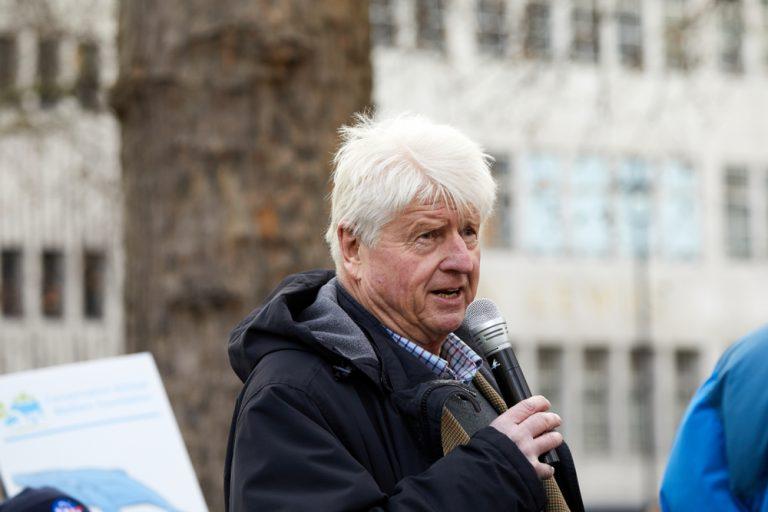
Stanley Johnson, former Conservative MEP and father of the current prime minister, stated that the work being done by the Extinction Rebellion is “extremely important”. Speaking at an event hosted by the organisation at Trafalgar Square, Stanley Johnson showed solidarity with their cause, as well as speaking in defence of his son’s remarks about the protesters. Speaking at a book launch on Monday prime minister Boris Johnson stated, “I am afraid that the security people didn’t want me to come along tonight because they said the road was full of uncooperative crusties and protesters of all kinds littering the road. “They said there was some risk that I would be egged.” In response, the prime minister’s father stated that the comments were made in jest, and that the entirety of the Johnson family understood the importance of environmental preservation. “I’m showing up here because I think what they [Extinction Rebellion] are doing is extremely important.” Said Stanley Johnson. “From tiny acorns, big movements spring. We have been moving far too slowly on the climate change issue.” “I regard it as a tremendous compliment to be called an uncooperative crusty, that was a remark made in humour.” “I don’t believe there is a single dissenting voice in the family.” He said. “Don’t forget we grew up in the country, we grew up on Exmoor, nature is in our blood.” “I don’t think you need to say ‘will he [Boris] listen [to the protests]’. If you listen to what he said on the steps of Downing Street that very first day, he ended with an appeal for movement on the environment and animal welfare, and that is a very, very good sign.” During the protests in April, some 1,130 arrests were made during the 11 day duration of the protests. In this round of demonstrations, 600 arrests have been made thus far and 500 additional police officers will be sent to London from around England and Wales. In response to the arrests, organisers have called upon protesters in custody to refuse bail conditions, in attempt to fill London’s police cell capacity. “By not co-operating we fill police cells for longer which means arrested individuals will be sent further and further afield.” Said one of the organisers. The Met responded by saying it had capacity for 650 people in police cells, and added, “contingency plans are in place, should custody suites become full”. Following a letter from Metropolitan Police Commissioner Cressida Dick, the Home Office said it would review police powers. For now, the police and politicians alike will have to deal with what they’ll view as an inconvenience that won’t go away – and to that extent the protests are serving their purpose. Elsewhere in political and macro economic news, there have been updates from; Hong Kong protester shooting and China’s strategy, the Supreme Court’s ruling, the collapse of Thomas Cook (LON: TCP), ECB stimulus, the bid for the London Stock Exchange (LON: LSE), Lloyds Banking Group PLC (LON: LLOY), Hilary Benn’s Brexit delay bill, Barclays (LON: BARC) and Deutsche Bank (ETR: DBK).

Dollar hits one week low following sour China negotiations

The US Dollar has hit a one week low this morning as negotiations in Washington commenced between US and China. Yesterday, it was reported that Trump had made the controversial decision to limit China visa issuance, escalating the situation. The move to ban Chinese Nationals entering the USA followed the stance by the US President against the treatment of Muslims in the Xinjiang region. The prospects of a trade agreement between the two nations kept market traders on edge as the dollar slipped. However, if China were to change its stance and move to give compromise to the United States, this may add to the weakening of the Chinese Yen. As trade talks commenced, the US Dollar fell by 0.3% to 9,884 representing a one week low. Stuart Oakley, global head of flow FX at Nomura drew attention to Chinese Yen fix as he said “The USD/CNY fix (by China’s central bank) will be key to watch over the next 4-5 sessions. It’s been pegged around 7.0730 for several weeks. A move away from that level will give us a clear signal as to how the trade negotiations have gone.” In the latest news from Washington, it seems that negotiations have reached a stalemate. China have refused to discuss forced technology transfers or the use of artificial intelligence. If this continues to be the trend for negotiation talks, then negotiations may end earlier than scheduled for both Thursday and Friday. However, Bloomberg have reported that Trump is willing to give concessions. This involves a currency deal in an attempt to gain electoral success. Furthermore, investors and traders have also been waiting for further information. The updates to the Federal Reserves latest policy will dictate whether the Central Bank will cut rates or not. Negotiations between China & US constantly ebb and flow, as China have been reported to accept a trade deal. How these talks commence will dictate the changes in the Dollar, and as more information is released traders will be quick to pounce on short term fluctuations.

BlackRock launches Circular Economy fund in conjunction with the Ellen MacArthur Foundation

In a milestone partnership for the asset management industry, BlackRock have partnered with the Ellen MacArthur Foundation to launch a circular economy fund. The circular economy is an approach that aims to stamp out the ‘take-make-waste’ model of the linear economy by reducing pollution, keeping materials in the economy and preventing deforestation. The fund named ‘BGF Circular Economy’ will invest in the preservation of materials and eradication of waste by seeking out stocks from a pool of 800 companies that display characteristics supporting the circular economy. While impact and ethical investing has been a theme for the past decade, upcoming climate control targets are now creating numerous opportunities outside of traditional ethical investments, such as renewable energy. “Investors have a vital role to play in scaling the circular economy. They can, for example, allocate capital, provide services and engage with companies on their strategies. At the same time, the circular economy presents new opportunities to create value for investors, while addressing major global issues including climate change, biodiversity loss and pollution,” said Dame Ellen MacArthur. Working with fund manager Evy Hambro and his team at BlackRock, the Ellen MacArthur Foundation highlighted specific areas of the circular economy, such as addressing the 30% waste of nutrients throughout the value chain, as targets for investment. On Ellen MacArthur Foundation suggestions the BlackRock team are to undergo a qualification process for a wider strategy that is centred on the tiering of risk that allocates 40% of the fund to the top ten holdings. This ground-breaking approach to structuring a fund based on risk-tiering is the first time BlackRock have employed such a model. The fund has outlined three categories of companies they have set out to invest in. These are ‘Adopters’, ‘Enablers’ and ‘Beneficiaries’ of the circular economy. Adopters Adopters are those companies that have made a contribution to the circular economy an integral part of their company. An example is Adidas who plan to make 11 million pairs of trainers from recycled plastic from the ocean. Enablers Those companies that facilitate the circular economy through their service. This may be a resale or sharing platform that enables individuals and businesses to keep materials in circulation and avoid waste. Beneficiaries Beneficiary companies stand to benefit from increased activity in the circular economy, for example companies whose existing products benefit from the move away from hard plastics. The fund was launched with $20 million seed assets provided by BlackRock and will now seek further backing from the wider market. Commenting on the overall process of launching the fund and interactions within BlackRock, Hambro said the reception for the thematic approach to the circular economy was meet enthusiasm while the Ellen MacArthur Foundation were positive on the prospect of the launch tasing awareness throughout the asset management industry.  

IAG supports net zero carbon emissions by 2050

4
International Airlines Group announced on Thursday that it will commit to achieving net zero carbon emissions by 2050. The owner of British Airways is the first airline group worldwide to do so. Shares in International Airlines Group (LON:IAG) were up during Thursday morning trading. International Airlines Group said that it will “contribute to both the UK government’s commitment to a net zero carbon economy by 2050 and the United Nations’ objective to limit global warming to 1.5 degrees”. Over the past few weeks, people have joined across different timezones, cultures and generations in an attempt to unit against the growing climate crisis. International Airlines Group said that British Airways will offset carbon emissions for all of its UK domestic flights from 2020. The company also said that it would invest $400 million in sustainable aviation fuel in the next 20 years and replace old aircrafts with more carbon efficient versions. “Today aviation represents two per cent of global CO2 emissions,” Willie Walsh, IAG’s Chief Executive, said in a company statement. “We’re investing in new aircraft and innovative technology to reduce our carbon footprint in an industry where there’s no current alternative to jet fuel,” the Chief Executive added.

“In addition to our own initiatives, there must be a global solution and we’re participating in the new United Nations aviation offsetting scheme which allows our industry to invest in carbon reduction in other sectors.”

“Aviation’s dependency on fossil fuels means that it’s essential that governments support its efforts to decarbonise by providing incentives to accelerate investment in new technologies. Global warming needs a global solution and all these initiatives will help limit the worlds temperature increase to 1.5 degrees.

Climate activist Greta Thunberg addressed world leaders recently on the topic of the climate crisis: https://platform.twitter.com/widgets.js Shares in International Airlines Group (LON:IAG) were trading at +0.5% as of 11:04 BST.

UK GDP dips but looks set to sidestep recession

The UK economy (GDP) dipped by 0.1% during August, following a downturn in manufacturing and production activity, and a 0.3% hike in July, which was led by the service sector and irregularly high output from the TV and film sector (which was factored into manufacturing). Despite this month’s drop, the UK economy looks set to avoid a technical recession, which is contingent on consecutive quarterly contractions in GDP. Following the figures for August, the UK GDP would have to perform an unlikely nosedive of 1.5% in September in order to achieve that gloomy threshold. We’re not ready to fully rule that out, of course, with the tensions persisting on the international stage, as well as our self-inflicted diplomatic debacle, the mood as a whole is decidedly pessimistic. That being said, Capital Economics reported that the UK GDP could grow by as much as 0.4% during the third quarter, in spite of persistent warnings of grey skies in both the political and economic landscape. ING Economist James Smith echoed the view that the UK was likely to avoid recession, “UK GDP contracted by 0.1% in August, suggesting there is very little to cheer about in the UK economy at the moment.” “That said, the economy will most likely avoid a near-term technical recession. Consumer activity is continuing to grow, even if confidence remains fairly depressed. Shoppers appear to have been less fazed by the ups-and-downs of the Brexit process than businesses.” “But even so, economic growth is likely to remain fairly modest for the rest of this year, averaging around 0.2-0.3% per quarter. This means that the Bank of England is likely to remain cautious, although we still feel its probably too early to be pencilling in UK rate cuts.” https://platform.twitter.com/widgets.js This quarter will close at the end of October, and fears not only over tariffs but also the potential impact of restricted free movements will have to be considered, especially in the context of the recently booming TV and Film sector, which is reliant upon the transit of talent and equipment across borders. The UK’s three month rolling growth rate is up to 0.3%. Elsewhere in political and macro economic news, there have been updates from; Hong Kong protester shooting and China’s strategy, the Supreme Court’s ruling, the collapse of Thomas Cook (LON: TCP), ECB stimulus, the bid for the London Stock Exchange (LON: LSE), Lloyds Banking Group PLC (LON: LLOY), Hilary Benn’s Brexit delay bill, Barclays (LON: BARC) and Deutsche Bank (ETR: DBK).

UK indices nervously await GDP readings and Boris-Varadkar compromise

Moving gingerly rather than negatively, the pound Sterling and FTSE were both full of anticipation after the first bell. They both held off on their regular market-opening movements and awaited the outcome of both the August monthly GDP readings and the talks between Boris Johnson and Leo Varadkar. July revealed a surprisingly positive story for the UK, but it is feared some of the miasma of stale market and political sentiments will have leached into GDP performance in August. Similarly, Boris Johnson will be speaking with Taoiseach Leo Varadkar in an attempt to revive some incarnation of his new (non) backstop chop suey, following the EU’s outright rejection – which was followed by a condemnation of the prime minister’s approach. Should the talks prove as fruitless as the others preceding it, expect indices to react negatively, as a the increased likelihood of a No Deal outcome never fails to make markets shiver. Speaking on the market’s movements, Spreadex Financial Analyst Connor Campbell commented,

“On the day the latest trade talks between the US and China actually begin, the UK markets have a data-distraction to tide them over this morning.”

“After a better than forecast reading for July, August’s monthly GDP reading is set to act as a reminder, if it was needed, that the UK economy is struggling with the uncertainties of pre-Brexit. Analysts are expecting a dreary 0.0% reading, a sharp comedown from the previous 0.3% – let’s just hope it doesn’t turn negative.”

“There’s likely little joy to be found in the manufacturing and industrial production figures either. The former is estimated to fall from 0.3% to 0.1% month-on-month, with the latter set to suffer a similar slide from 0.1% to 0.0%.”

“Ahead of this the pound pushed 0.1% higher against the dollar, straining to keep off its recent 5-week lows, but shed another 0.2% against the euro, leaving it at its worst price since September 5th. The FTSE, meanwhile, added a handful of points as it remained short of 7200.”

“The session’s UK data might not come to mean much, however, dependent on what kind of news leaks out of the impending meeting between Boris Johnson and Irish Taoiseach Leo Varadkar, the pair seeking to find a compromise on the issue of the Irish border after talks collapsed with the EU.”

Elsewhere in political and macro economic news, there have been updates from; Hong Kong protester shooting and China’s strategy, the Supreme Court’s ruling, the collapse of Thomas Cook (LON: TCP), ECB stimulus, the bid for the London Stock Exchange (LON: LSE), Lloyds Banking Group PLC (LON: LLOY), Hilary Benn’s Brexit delay bill, Barclays (LON: BARC) and Deutsche Bank (ETR: DBK).

Brexit uncertainty weighs on house purchases, RICS

0
New data on Thursday revealed that house. buyer enquiries have fallen as Brexit uncertainty discourages people from house purchases.

The Royal Institution of Chartered Surveyors’ (RICS) UK Residential Market Survey for the month of September revealed that a more cautious approach from buyers is visible over the month, and the new buyer enquiries net balance dropped to -15%.

Additionally, in September, a decline was reported in home listings coming onto the market.

The new instructions net balance dropped to -37% for the month, which is the weakest reading since June 2016, according to the data. Indeed, as the nation has now entered the month of the extended Brexit deadline, uncertainty prevails. Just yesterday the UK Pound saw a slump to its lowest level in over a month amid an uncertain Brexit outcome. “There are good reasons for thinking the latest dip in both buyer enquiries and vendor instructions is a response to the endless wrangling about Brexit, as the October 31st deadline approaches,” Simon Rubinsohn, RICS Chief Economist, commented on the data. “Indeed, much of the commentary from respondents based further away from London and the South East remains relatively sanguine, which is also reflected in some of the metrics capturing expectations,” the Chief Economist continued. “However, unless there is a speedy resolution to the ongoing impasse it does seem inevitable that the stand-off between purchasers and sellers will deepen making it harder to complete transactions. This will not only be a direct hit on the housing market itself but could have ramifications for the wider economy as the normal spend on furniture, fittings and appliances that typically accompanies a house move is also put on hold.” Brexit uncertainty has also weighed on other sectors, with retailer John Lewis warning that a no-deal departure from the European Union will have a “significant” impact on its business.