
London Stock Exchange opens North-American headquarters in Cleveland, Ohio
London Stock Exchange Group decides to open the North American headquarters of its Elite initiative in Cleveland, Ohio.
A dull Tuesday for currencies and indices

In the aftermath of a roaring Monday for the Dow Jones, Tuesday was entirely underwhelming. While the DAX and CAC hovered near or above 17 and 12 year highs respectively, the Dow Jones decided to relax, while gold prices hit new daily lows.
Speaking on the day’s movements, or lack thereof, Spreadex Financial Analyst Connor Campbell stated,
“The markets didn’t have that much in them this Tuesday, trading predicated on the vestiges of Monday’s surge of trade optimism.”
“No index really stood out as the day went. The FTSE’s 0.4% increase placed it at the front of the pack, its mining stocks doing a lot of the heavy lifting”
Today in the mining sector, ARC Minerals Ltd (LON: ARCM) uncovered further copper assays, Lucara Diamond Corp (TSE: LUC) was pessimistic in its revenue guidance and MC Mining (LON: MCM) was granted a coal mining right in South Africa.“[However], that still leaves the UK index short of 7400, and lacking the multi-year/all-time highs struck by its peers.”
“The DAX held above 13130 and not much else, struggling to find a reason to build on yesterday’s near-17 month peak. The CAC, meanwhile, shuffled to a fresh 12-year high of 5840 after adding 20 points.”
“Closing Monday at an all-time best, the Dow Jones decided to put up its feet on Tuesday. The US index could only muster a 0.1% increase, keeping it from hitting 27500. It may need to wait for another trade deal update if it is to make any further serious strides.”
“In one of the more notable elements of Tuesday’s trading, investors started offloading their euros, sending the single currency down half a percent against the dollar and 0.4% against the pound (sending sterling back above €1.1622).”
Amryt Pharma boasts 20% year-to-date revenue bounce

Biopharmaceutical research, development and production company Amryt Pharma Holdings Ltd (LON: AMYT) posted impressive impressive fundamentals for the first three quarters.
Elsewhere in health and pharmaceuticals, Curetis NC (AMS: CURE) and Integumen PLC (LON: SKIN) also boasted revenue growth, while Sanofi SA (EPA: SAN) and Deltex Medical Group plc (LON: DEMG) were both less positive.
This followed the Company’s acquisition of Aegerion Pharmaceuticals on the 24th of September 2019.
Following the acquisition, Amryt said that it has two commercial-stage assets – Juxtapid® / Lojuxta® and Myalept® / Myalepta® (lomitapide and metreleptin respectively) – and the infrastructure needed to commercialise these assets in North and Latin American, European, Middle Eastern and African markets.
During the period, the two offerings performed well for the Group. Lomitapide yielded pro forma revenues of $51.1 million, up 6.5% year-on-year for the same period. It was outshone by metreleptin, though, which generated revenues of $61.7 million, up 34.7% on-year.
This led to a total take of $113.1 million in Company revenues for the year-to-date, up 19.7%.
The Company added that it is deploying its proven Lojuxta strategy in Europe to reinvigorate it Juxtapid business in the US market. It also said that the integration of Aegerion was underway, and that relocation of non-customer facing roles from Boston to Dublin were on track.Amryt comments
Dr Joe Wiley, CEO, stated,
“The first nine months of 2019 have been momentous and transformational for Amryt. Through the acquisition of Aegerion, we have evolved from a company with a single asset on the market in EMEA to become a global biopharmaceutical company with two orphan disease products and a commercial infrastructure across North America, EMEA and LATAM.”
“For the nine-month period to 30 September 2019, pro-forma revenues of the combined company have grown by 19.7% compared with the same period in 2018. Myalept has continued to grow in the US where the product is approved for Generalized Lipodystrophy, and we are now in the active launch-phase of Myalepta in EMEA, where this product is approved for both Generalized and Partial Lipodystrophy. It has been pleasing to see Lojuxta continue to deliver revenue growth and we are now implementing in the US a similar strategy to that used to significantly grow Lojuxta in Europe.”
“Looking to our pipeline, our late stage development asset, AP101, for the treatment of wound-related complications in EB, continues to enrol patients in the Phase 3 study following the encouraging outcome of interim safety and efficacy analyses conducted by the Independent Data Monitoring Committee. The study is on track to be fully enrolled in the coming months.”
“Amryt is now very well positioned to execute on our strategy of becoming a global leader in the rare and orphan disease space and most importantly, delivering therapies to patients with unmet needs.”
Investor notes
The Company’s share price has rallied 2.50% or 3.00p following the update, up to 123.00p per share 05/11/19 14:13 GMT. Neither a dividend yield nor a p/e ratio are available for Amryt Pharma stock, their market cap is £191.63 million.Huazhu in talks to buy Steigenberger

Huazhu Group Ltd (NASDAQ: HTHT) is set to buy German firm Steigenberger hotels as it looks to extend its global expansion plans into the German market.
Huazhu will add a reputable firm to their portfolio, as Steigenberger are one of one of Germany’s most well-known upmarket chains.
Huazhu, already the world’s fifth-largest hotel group by market capitalization, is paying £604 million in cash for Steigenberger parent Deutsche Hospitality.
The deal makes a statement to competitors in the hotel industry, and will give Huazhu a major foot holding in the German market as well as exposure into Europe.
That values Deutsche Hospitality, whose brands include MAXX by Steigenberger, IntercityHotels and Zleep at 17-18 more its 2019 expected EPITDA or at less than 10 times expected 2022 core earnings.
Established brands such as Hyatt (NYSE: H) , Hilton (NYSE: HLT), Accor (EPA: AC) trade at 11-14 times their expected core earnings over the next twelve months.
Huazhu who are Chinese based, also have American operations situated in New York.
They run a business model involving franchising hotels, and on leased properties open 1,000 hotels each year. The acquisition looks to add 5,000 hotels to its file.
Deutsche Hospitality operates 118 hotels and has 36 hotels under development, with a focus on Europe. It has plans to increase that number to 250 by 2024.
The move comes at a time where competitors have had mixed experiences in the industry.
Marriott (NASDAQ: MAR) have recently purchased Elegant Hotels which form as a rival to the newly formed firm, whilst Intercontinental have been hit hard by political unrest in Hong Kong.
With the help of Huazhu that will go faster than 2024,” Huazhu Chief Executive Jenny Zhang told Reuters, adding that four of five Deutsche Hospitality brands will be rolled out in China.
No job cuts are planned as part of the deal, she said, adding that Huazhu does not expect to encounter any issues with antitrust regulators or German authorities overseeing foreign investments in the country.
“Huazhu has enormous respect and admiration particularly for the prestigious Steigenberger brand,” Qi Ji, Huazhu Group founder/executive chairman, said in a statement. “Huazhu is committed to fully respecting and embracing the heritage of the company, and working closely with the company’s associates, owners and business partners in helping to write the next chapter.”
“This acquisition is an important milestone in our global growth strategy. Deutsche Hospitality is a perfect strategic fit and we expect competitive advantages for both companies. The brands of Deutsche Hospitality will enhance the offering of Huazhu and its operating capabilities in the high-end European hotel market,” said Qi Ji Founder and Executive Chairman of Huazhu Group.
Nanoco enter initial talks for formal sale
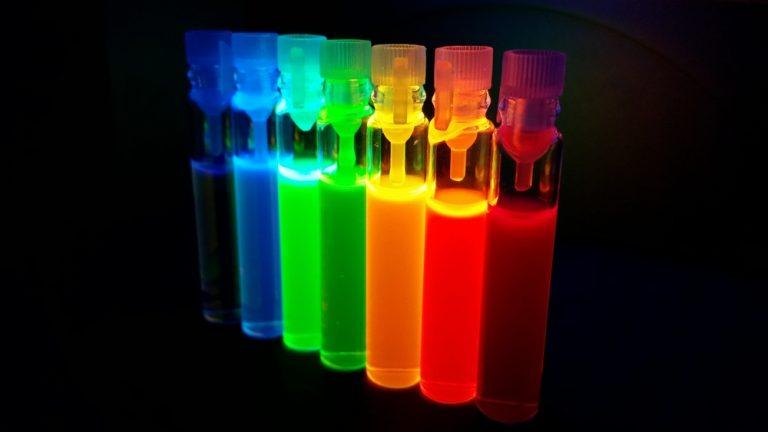
Nanoco Group PLC (LON: NANO) have updated shareholders that initial sales talks have commenced as it tries to recover from the loss of a major contract this year.
The Manchester based firm has found financial 2019 very tough, with a loss of consumers and experiencing volatile share prices across the year.
Nanoco Group make quantum dots used in vibrant displays, grew its revenue this year as it earned from contracts.
Shares are down about 60% this year after losing a contract in the United States, which accounts for a significant proportion of its revenue.
Nanoco announced in a statement that they had appointed Evercore (NYSE: EVR) as its financial adviser to monitor the formal sale process.
Quantum Dots are semiconductor crystals 10,000 times finer than a human hair. They convert electrical energy into light and can be manipulated to produce precise colours, and are mostly used in televisions.
The company had a market cap of £43.1 million as of Monday’s closing stock price of 15 pence, far from its high of 205 pence in 2005.
“Nanoco remains in active discussions with existing and other potential new customers for our materials and services with a particular focus on the display and infra-red sensing markets. In addition to these potentially lucrative commercial opportunities for continued funding of the company’s operations, the board is also reviewing other sources of funding,” Nanoco said.
“The company’s current resources give reasonable headroom for the sale process and commercial opportunities to come to successful conclusions, with contingency plans in place if needed,” it added
The positivity and optimism stands as Nanoco were talking today about ‘active discussions with existing and other potential new customers’ for its materials and services with a ‘particular focus on the display and infra-red sensing markets,’ the company said.
Nanoco said it currently expected indicative proposals for the company to be submitted in mid-December.
Shares of Nanoco have spiked 7.17% since the announcement and are trading at 16p per share. 5/11/19 14:49BST.
ARC Minerals taps further high-grade copper assays
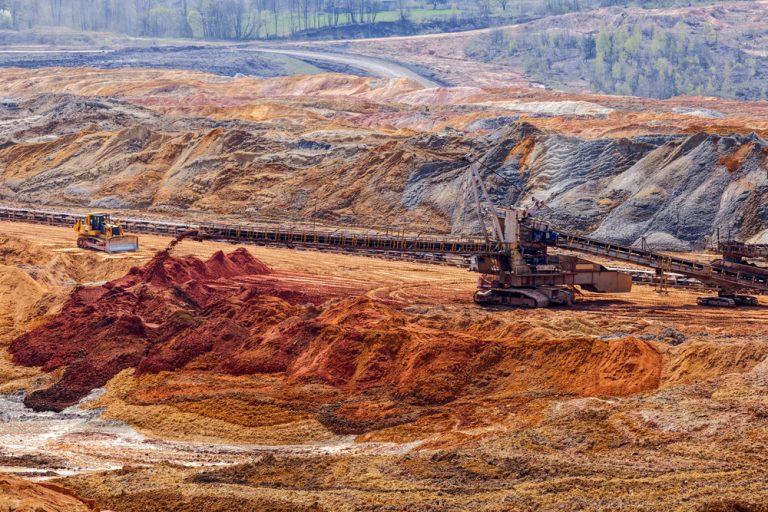
Copper mining company ARC Minerals Ltd (LON: ARCM) announced on Tuesday that it had discovered additional near surface, high grade copper assays from its maiden diamond drill exploration programme at its Cheyeza East project in Zambia.
Today’s update followed a year of good progress for the Company, with ARC Minerals also acquiring a 5% interest in Zaco Ltd and identifying West Lunga as a drilling target.
The Company reported back with the following intersection yields:
· CHDDE047 intersected 1.44% Cu over 20m from 34.50m and 1.41% Cu over 11m from 52m
· CHDDE049 intersected 1.20% Cu over 14m from 38m
· CHDDE051 intersected 0.93% Cu over 14.50m from 17.50m
· CHDDE027 intersected 0.62% Cu over 15.50m from 44.50m
· CHDDE045 intersected 0.61% Cu over 10.74m from 74.50m
The Group also posted a series of highlight high grade copper assay segments, the most impressive of which was 3.67% Cu over 5m from 34m. Elsewhere in mining, Lucara Diamond Corp (TSE: LUC) was pessimistic in its revenue guidance, MC Mining (LON: MCM) was granted a coal mining right in South Africa, KEFI Minerals PLC (LON: KEFI) said it was still waiting for a go-ahead at the Tulu Kapi Gold project and Panther Metals Plc (NEX: PALM) secured a lucrative exploration licence.ARC Minerals comments
Nick von Schirnding, Executive Chairman, stated,
“I am pleased to report further positive drilling results from Cheyeza East. It is becoming clear that we are sitting on a potentially significant economic prospect – and one that seems to be expanding. A number of holes such as 27, 28 and 45 are to the northwest and southwest of the high grade zone already identified and bodes well for delineating a significant resource. We have commenced a study to supply the Kalaba plant with material from Cheyeza East which is very exciting. To date over 75% of holes drilled at Cheyeza have shown mineralisation.”
“In the meantime, we have commenced drilling at the Muswema and West Lunga target areas which we will report back on once we receive assays.”
Investor notes
The Company’s share price is down 1.66% or 0.049p to 2.90p per share 05/11/19 13:42 GMT. Neither a dividend yield nor p/e ratio are available, their market cap is £21.45 million.Shell set to purchase French wind farm specialist
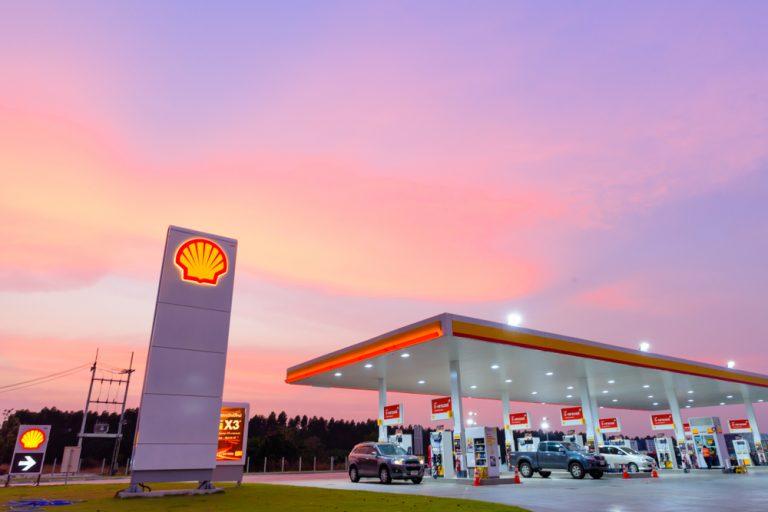
Royal Dutch Shell Plc Class B (LON: RDSB) have moved to purchase French wind farm specialist EOLFI as part of its plans to expand into the oil major’s electricity business.
EOLFI have focused largely on solar and wind energy operations, including a specialism in offshore wind farms.
Offshore wind is one of the fastest growing renewables markets, with floating structures the technology’s next frontier as they utilise waters that are too deep for traditional turbines.
The FTSE100 (INDEXFTSE: UKX) listed firm, generate most of their revenue from Oil and Gas, however last week they reported a slump in profits in their third quarter update.
This fall in profits came as no surprise as the global price of oil had dropped due to economic and political events.
Shell was not the only oil giant to report falling profits after SABIC (TADAWUL: 2010) reported an impairment loss of $400 million, and Total SA (LON: TTA) profits fell 15% in the same period.
Shell have big aims to diversify out of oil and gas into renewable energy, and this move is a bold statement to competitors.
Shell want to become the world’s largest electricity company and expects to invest £1.6 billion to $3 billion a year — nearly 10% of its overall spending — on its power division by 2025.
“We believe the union of EOLFI’s expertise and portfolio with Shell’s resources and ability to scale up will help make electricity a significant business for Shell,” Offshore Wind Shell vice president Dorine Bosman said in a statement.
The financial details of the deal are yet to be formalized and released, however initial negotiations have commenced. Further details of the deal are expected to be released at the start of December.
EOLFI is part of a group developing a pilot project off the coast of Brittany, France.
The deal looks like a potential dime for Shell, as EOLFI have operations in renewable energy.
If the acquisition formulates Shell could benefit from expertise and diversification into a new sector.
Shares of Shell are trading at 2,329p having spiked 1.17% after this news hit headlines. 5/11/19 14:21BST
Lucara Diamond revenue guidance at lower end following mixed Q3
Diamond exploration and mining company Lucara Diamond Corp (TSE: LUC) posted a mixed set of results during Q3, and subsequently revised its revenue outlook towards the lower end of its full-year guidance.
During Q3, the Company accrued $45.3 million of revenue, down marginally from $45.7 million year-on-year. Further, Lucara Diamond Corp’s year-to-date EBITDA was also down to $50.2 million, from $55.7 million on-year.
However, the Group sold 14% more carats during the quarter, from 101,600 to 116,200 carats. Also, the Company’s revenues for the first three quarters stood at $136.5 million, up from $135.6 million, due to three tenders and sales through its Clara platform. Its cash flow during the third quarter also stood at $13.8 million, jumping from $3.7 million a year earlier.
The Company paid a quarterly dividend of CA$0.025 per share. It said that it had made a change in its revenue guidance, down to between $170 to $180 million.
Elsewhere in mining, MC Mining (LON: MCM) was granted a coal mining right in South Africa, KEFI Minerals PLC (LON: KEFI) said it was still waiting for a go-ahead at the Tulu Kapi Gold project and Panther Metals Plc (NEX: PALM) secured a lucrative exploration licence.Lucara Diamonds comments
Eira Thomas, President and CEO stated, “Lucara continues to deliver solid results and strong margins on the back of strong operational performance at Karowe in Q3. With operating margins at Karowe approaching 60%, and no long-term debt, Lucara is well positioned to continue to weather the difficult diamond pricing environment that has prevailed since the beginning of the year. Moreover, this continued strong performance combined with the encouraging results reported in our recently completed feasibility study (see news release “Lucara Announces Positive Feasibility Study For Karowe Underground”), provides a compelling rationale for investing in an underground expansion at Karowe, potentially adding 13+ years of mine life and generating an after-tax NPV (@5%) of US$718 million and in excess of US$5.0 billion in gross revenue. Our latest special stone recoveries, which include a 9.7 carat blue diamond, a 4.1 carat pink diamond, a top white 123 carat diamond and most recently, a top white 106 carat diamond continue to bode well for our final sale of the year, and we remain on track to meet or exceed our guidance in every respect. We continue to see positive progress with Clara, reaching $6 million of total value transacted on the platform since sales began in December 2018.”Investor notes
The Company’s shares stand at 1.06 CAD per share 04/11/19 15:59. Their market cap is 420.67 million CAD, their dividend yield is inviting at 9.43%.IWG report revenue against after business expansion

IWG PLC (LON: IWG) have reported revenue gains after opportunities for business expansion in its franchise department came to bloom.
The office space provider built momentum with its expansion plans and international franchise business, after a period of volatility in share price and a bid from Terra Firma (CVE: TII).
IWG reported a 9.4% increase in revenue to £692.3m in the three months to 30 September, driven by the Europe, Middle East and Africa (EMEA) and US markets.
This comes after the news that IWG had sold its Swiss business in a £94 million deal, to a joint entity owned by private banking group J. Safra Group and real estate investor P. Peress Group.
During the third quarter, IWG reported that company added 66 new organic locations to its network with net growth capital investment of £64.4 million.
“Where it makes strategic sense, we are ready to use our strong financial position to undertake such activity,” the company said.
IWG said: “We remain very confident in the structural, long-term growth in the flexible workspace market and IWG’s leading position within it, which we continue to extend. “
IWG added “We believe our transition to a franchising model by partnering with a growing and diverse range of third parties will deliver a quicker and more asset light approach to growth, which benefits all stakeholders”
“We are making excellent progress in shaping the business to benefit from this significant growth opportunity. We continue to invest in our leading global platform and management to support our strategy and look forward to the rest of the year with confidence.”
Additionally, IWG boss Mark Dixon set an example to the industry about WeWork’s hectic year warning other businesses about potential problems.
Dixon said: “There is a possibility some WeWork tenants could be concerned about the headlines and worried about potential disruption to their businesses.”
The FTSE 250 (INDEXFTSE: MCX) firm reduced debt to £301.2 million from £433.9 million.
Shares of IWG are trading at 396p per share. 5/11/19 14:05BST.
AB Foods Owner confidence drives shares up
Associated British Foods plc (LON: ABF) have given investors renewed confidence about future trading, driving share prices up.
AB Foods have forecasted strong growth figures in their next trading update, alluding to progress in its sugar and grocery businesses supplementing the further expansion of its Primark fashion chain.
Earlier in the year, AB Foods maintained expectations for their full year outlook.
Following this renewed confidence, seniority at AB may even look to exceed expectations to beat analyst and market predictions.
The main factor which has driven AB Food’s success in financial 2019 has been the expansion in sugar sales.
Profit from the division slumped 79% to £26 million in 2018-19. However, it is set to benefit materially from increases in European Union sugar prices and from further cost reductions.
“We had forecast the sugar decline, it’s now behind us, and the group still made progress despite it,” Chief Executive George Weston told Reuters.
“Prices in Europe are significantly ahead of where they were a year ago,” he said.
The group are expecting another strong year of trading, with emphasis on the Twining’s Ovaltine brand expanding from more efficient tea supply chains.
Primark, which generates about half of group revenue and profit, plans to add a net 1 million square feet of additional selling space in the new year. A small reduction in margin is expected, reflecting currency moves.
Weston said he was pleased with Primark’s trading so far in the 2019-20 year, highlighting the UK performance as “solid” in a tough overall market.
“We’re not completely immune from it, but we think we are winning,” he said, adding: “We’re well set up for Christmas.”
For the financial year ending September 14, overall sales at Primark came in at £7.79 billion – a 4.2% year-on-year uptick at actual exchange rates.
AB Foods said Primark performed well in the UK, with a “significant gain” in market share and sales growth of 2.5 per cent driven by the opening of four new stores – such as Birmingham High Street, which is now Primark’s biggest store worldwide.
Sales in the Eurozone were 4.8 per cent ahead of last year at constant currency, boosted by growth in Spain and France and strong performances in Italy and Belgium, despite tough political outlook with the EU.
AB Foods said “the positive reception by US consumers to Primark, combined with our profitable store model, gives us confidence for further expansion in the US market”.
Weston concluded by saying “Next year the group is well-positioned for further progress, with the continued expansion of Primark, a material improvement in our sugar profit and strong profit growth in grocery.”
AB Foods will be pleased with the current state of the supermarket industry, with firms such as Tesco (LON: TSCO), Marks and Spencer (LON: MKS) and Sainsbury’s (LON: SBRY) all setting up new initiatives to stimulate consumer demand.
Shares have spiked 5.62% as a result of this confident outlook, AB Food shares are trading at 2,375p per share. 5/11/19 13:47BST.