
Anglo Pacific invest $20 million into industrial minerals market

Anglo Pacific Group plc (LON:APF) have seen their shares in green on the back of an interesting update provided today.
The natural resources firm said that they have invested into the industrial minerals market, in an update on Monday.
The firm noted that they are set to commit $20 million into a financing agreement, which has been secured by Incoa Performance Minerals LLC.
In return, Anglo Pacific will receive 1.23% gross revenue royalty once the mine starts producing.
Incoa are developing a calcium carbonate mine in the Dominican Republic along with a processing facility in Alabama. Incoa will produce calcium carbonate for the US market, Anglo Pacific said.
The initial $20 million investment will allow Incoa to bring its product to the market, however the offer is conditional depending on Incoa completing construction and bringing the project into production.
Julian Treger, CEO and Executive Director of Anglo Pacific Group, said:
“We are delighted to announce the opportunity to invest US$20 million into the Incoa calcium carbonate project, allowing us to expand our portfolio further to include industrial minerals. The transaction is structured such that funds are only invested when the operation is in production and generating cashflow.
The Incoa project meets many of the Group’s investment criteria, especially in relation to ESG, product quality, long mine life, attractive cost profile and, by the time the funds are invested, the project will be generating cashflow. This will further diversify our portfolio and will continue our trajectory of reduced exposure to coal.
The US$20 million Anglo Pacific Tranche 2 Commitment provides the Group with a proportionate portfolio exposure to the Dominican Republic, an established mining jurisdiction with a number of companies operating high-value assets, the most prominent of which is Barrick Gold’s Pueblo Viejo project which constitutes the largest gold mining project in Latin America.
We are also delighted to continue partnering with Orion following the previously completed Mantos acquisition.”
Cora Gold begin test work to look at oxide ore in Mali
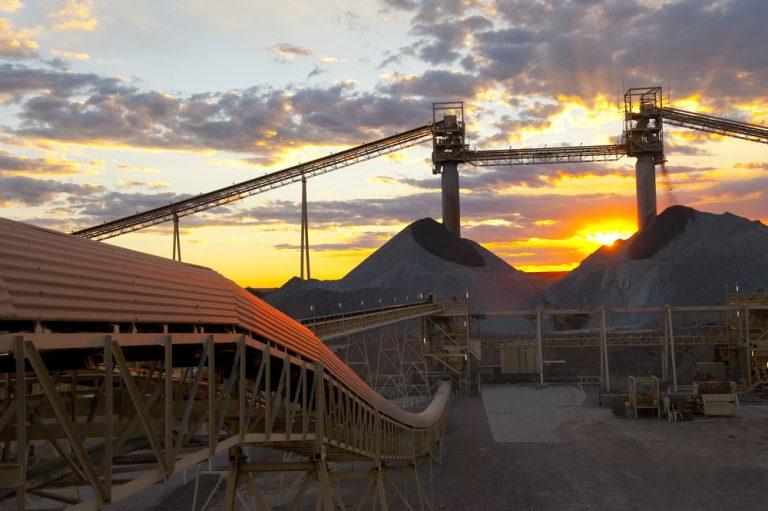
Cora Gold Ltd (LON:CORA) have told the market that they have begun work in Mali.
The gold miner said today that a test work program has commenced looking at oxide ore from the Sanankoro project in Mali.
The work is being carried out with Hummingbird Resources (LON:HUM) which has an 18% stake in Cora.
Bert Monro, CEO of Cora Gold, commented, “The recently completed Scoping Study at Sanankoro showed the potential for a standalone mine with an 84% IRR and less than 18 month payback period at a US$1,400 gold price. Whilst this is clearly a highly compelling standalone project, Cora’s board is simultaneously assessing additional opportunities through which to potentially fast track development, including identifying synergies with operating mines in the vicinity. We are pleased to be working with our largest shareholder, Hummingbird, to investigate the opportunity to potentially deliver a high-grade concentrate which could, in principle, create a fast track route to low capex and positive cash flow for the Company.
“We are committed to delivering the optimum route of development for the benefit of all stakeholders and will provide updates on this test work in due course.”
A sample size of 350kg is being sent to North America for tests, to see whether commercial viability is possible to send the oxide ore from Sanankoro to Hummingbird’ producing Yanfolila gold mine.
Cora Gold give Mali update
Last week, the firm gave another update on its operations in Mali. The gold miner said that drilling in Southern Mali had produced “significant” mineralisation away from the existing resource. Cora has been targeting shallow oxide extensions beyond the existing work at the Sanankoro gold project. The current resource stands at an estimated 5.0 million tonnes of ore, containing 265,000 ounces of gold from a grade of 1.6 grams of told per tonne of ore. The company also said that they have seen a 1,500 metre-long gold structure as a continuation of Zone B North, as well as 500 metres of new mineralisation along strike to the west of Zone C. Shares in Cora Gold trade at 5p (-0.50%). 2/3/20 13:37BST.Kainos acquire Intuitive Technologies LLC for undisclosed sum

Kainos Group PLC (LON:KNOS) have announced that they have acquired Intuitive Technologies LLC for an undisclosed sum.
Kainos noted that Intuitive Technologies has completed over 500 Adaptive Insights projects. Adaptive Insights is a Workday Inc company and its software is used for business planning.
The firm added that Intuitive Technologies is a “a trusted advisor in the areas of financial consolidation, budgeting, planning, forecasting, reporting and accounting solutions”.
From the statement above, this displays the kind of confidence that Kainos hold in their new acquisition.
Commenting on the acquisition Brendan Mooney, CEO, said:
“I am delighted to welcome the IntuitiveTEK team to Kainos, and into our ever-expanding Workday practice. The team’s expertise, excellent reputation, and passion for building strong customer relationships aligns with our business, and we look forward to having them on board. As a leading Workday partner, we see this acquisition as an important step to deepen our expertise in Adaptive Insights Business Planning Cloud in the United States, where we continue to see growing demand from clients in modernizing their planning and financial management processes.”
Kainos complete two merger deals in November
In November, the technology firm announced that they had agreed two merger deals, which led to shares jumping. The firm said its revenue in the six months to September 30 rose by 29% year-on-year to £86.9 million from £67.2 million. Pretax profit was 38% higher at £12.0 million from £8.7 million last year. On an adjusted basis, excluding “share-based payments and related costs”, the profit growth was more modest at 27% year-on-year to £12.8 million from £10.1 million. Revenue in its core Digital Services segment grew by 29% to £73.7 million from £57.3 million last year. Kainos also said that it has acquired Formulate Ltd, a technology consultancy firm based in Worcestershire in the west Midlands, England. It has also bought the Adaptive Insights arm of Implexa GmbH. Kainos said: “Implexa is the only accredited Adaptive Insights partner in Germany, and adds Hamburg-based software and consulting capabilities to Kainos’ existing Frankfurt presence and capabilities.” Shares in Kainos trade at 739p (-0.93%). 2/3/20 12:36BST.Finablr warn that results could be affected by coronavirus and malware attack
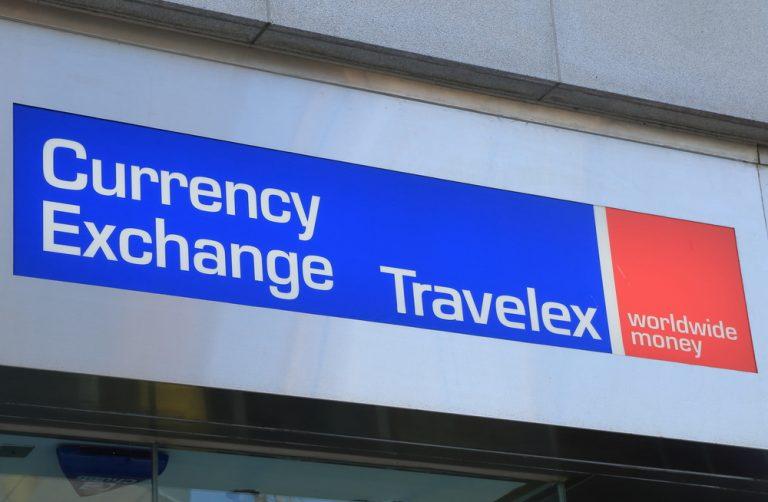
Finablr PLC (LON:FIN) have told the market that its results could be affected by a malware attack and the ongoing coronavirus epidemic.
Just before the turn of the New Year, Finablr saw their subsidiary business Travelex face an attack with a software virus.
Following this attack, the firm had to conduct its business manually which led to both shares crashing and business taking a massive bruising.
Today, Finablr added that they expect their earnings to take a £25 million hit following both events.
Finablr said: “Travelex has a cyber-insurance policy in place which we currently expect to off-set a material proportion of this EBITDA reduction in addition to covering the direct costs of recovery. However, the timing of EBITDA recognition and receipt of the insurance recovery is yet to be determined.
At present, Travelex does not expect the cyber-attack to have any material impact on trading during our peak periods in Q2 and Q3 2020 which contribute a large proportion of Travelex’s annual EBITDA. Travelex’s current expectation is that the results for the FY20 would reflect the benefit of the cyber-insurance policy and cost actions taken by the business.”
In addition to the malware attack, the firm added that the coronavirus could affect its Travelex business, considering the exposure and business it has within airports and the travel sector.
Due to the attack, Finablr noted that they cannot release their final results until mid April.
The firm commented: “Following the cyber-attack that affected its business from 31 December 2019, Travelex announces that it has successfully restored all its customer-facing systems in a phased and controlled programme.
The decision to immediately take the Travelex systems offline at the time of the attack contained the spread of the malware and protected the integrity of customer and partner data. The Business Continuity Plan was initiated promptly, as a result of which the majority of the business remained operational and was able to continue trading in spite of the precautionary shutdown.
Certain financial reporting tools were unavailable for part of January, as a result of which the publication of Travelex’s FY19 results is now expected to be from mid-April.”
Finablr’s data hacking crisis
At the start of January, the story hit news headlines as Finablr saw their shares crash 15%. Travelex who was the victim of the vicious cyber attack has a presence in more than 70 countries, and holds a portfolio over 1,200 branches and 1,000 ATM’s worldwide. Customers of Travelex have said that they have been caught up with their money being left in the midst of a cyber attack. As far as public media is aware, the criminals behind the attack demanded a ransom of £4.6 million or the threat of leaking data and deletion of systems has been poised. Reports have suggests that a ransomware gang called Sodinokibi carried out the attack. The gang have made claims that it first accessed the company’s computer network six months ago and since have downloaded 5GB of customer data, something which will worry the market and consumers. “Travelex been successful in containing the spread of the ransomware. Travelex has also confirmed whilst there has been some data encryption, there is no evidence structured personal customer data has been encrypted, and there is still no evidence any data has been exfiltrated,” said Finablr. Shares in Finablr trade at 60p (-0.98%). 2/3/20 11:56BST.Starcom shares bounce as revenue jumps 14% but loss widens

Starcom PLC (LON:STAR) have seen their shares bounce on Monday following a steady set of final results.
The firm did note that its’ loss had widened across 2019, however shareholders can expect growth across the year.
Shares in Starcom trade at 1p (+5.05%). 2/3/20 11:16BST.
The media company told the market that it had seen a pretax loss of $1 million across 2019, compared to the $831,000 figure one year ago.
Starcom alluded this wider loss to rising operating expenses, as these costs rose to $3.5 million fro $3.3 million. These costs rose due to non-cash expenses including depreciation and share option provisions.
On a better note, Starcom saw revenues surge 14% to $6.8 million from $6 million year-on-year.
Adjusted earnings before interest, tax, depreciation and amortisation totalled $300,000 compared to $8,000 Ebitda loss a year ago.
Avi Hartmann, CEO of Starcom, commented, “I am pleased to report another year of progress for the Company, moving into EDITBA positive for the first time, which we believe is a turning point and a clear indication of the Company’s future performance.
“Based on our existing range of products, mature technology, global client base, recurring SaaS revenues and substantial sales pipeline, the Company anticipates continued growth in 2020. We further anticipate higher margins in the future as our product mix migrates more towards the IoT sector. One of the key focuses of 2020 is to expand our sales and marketing team to take advantage of the opportunities before us, whilst ensuring we maintain our competitive edge through continued R&D.”
Going forward the firm said that it is looking to migrate towards the he higher margin IoT products, gross margin should continue to improve.
The Chairman concluded:
“Based on the existing range of products, mature technology, global client base, recurring SaaS revenues and substantial sales pipeline, the Company anticipates continued growth in 2020. The Board also anticipates that as the product mix continues to migrate towards the higher margin IoT products, gross margin should continue to improve.
The innovative Lokies is expected to be one of the key growth engines for the Company in 2020. The agreement and the purchasing plan provided by the Russian distributer signed up in 2019 underpins this assessment. Also encouraging is the three-year OEM contract recently signed with Cubemonk for the incorporation of our Kylos Air unit into their product.
Zero is progressing with its own sales of the Starcom-inside motorbikes which may have an impact on other similar manufacturers. The Board is therefore optimistic about the prospects for the Company in 2020, particularly the opportunities presented from its relationships with Cubemonk, CropX and WIMC, as well as its North African distributor.
We plan to expand our sales and marketing team to strengthen our ability to take advantage of the opportunities we now see as well as continuing to focus on R&D to maintain and improve our competitive edge.”
Starcom agree deal with CubeMonk
A few weeks back, Starcom told the market that they had signed a three year supply and support agreement with US shipping serviced provider CubeMonk Inc. The wireless solutions and technology firm said that the agreement would allow the supply and support of Kylos Air technology units. The Kylos Air technology will be used as part of CubeMonk’s tracking service for air containers. Starcom expressed that they had been working with CubeMonk over the last year to implement Kylos Air technology for shipping solutions. The firm noted that the trial had been successfully completed, and had produced pleasing results – adding that it had seen “very positive feedback from the end users in the trial.”Wizz Air set to expand into Abu Dhabi
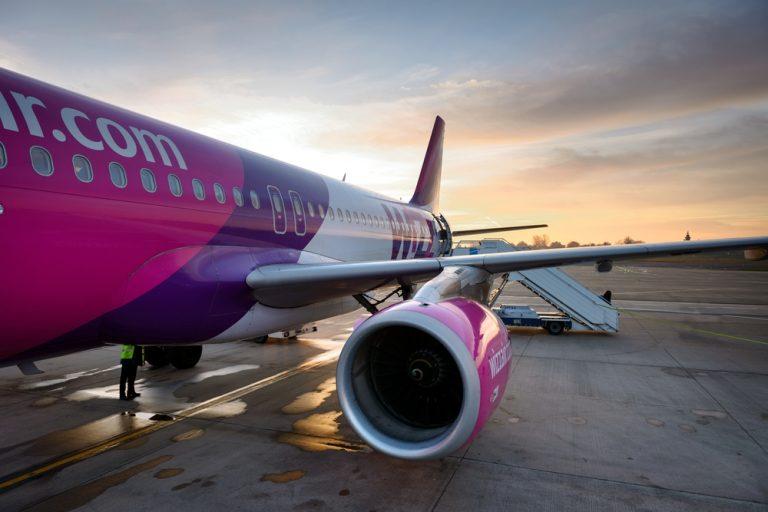
Wizz Air Holdings PLC (LON:WIZZ) have announced their intentions to launch operations in Abu Dhabi.
The FTSE 100 airline firm said that operations should commence this Autumn, following the completion of a partnership agreement.
The announcement to move into the Middle East was made a few months back, in December – and the firm said that it was looking to set up a deal with Abu Dhabi Development Holding Co PJSC.
Wizz Air noted that the agreement had now bee completed, and that this means it can operate in Europe, the Middle East, Asia, and Africa from Abu Dhabi’s international airport.
József Váradi, CEO of Wizz Air Holdings, said: “Today marks an important milestone on the way to establishing our new airline in Abu Dhabi. The joint venture agreement with Abu Dhabi Developmental Holding Company to form Wizz Air Abu Dhabi underpins our long-term dedication to bringing an economically and operationally highly efficient as well as environmentally most sustainable airline business model to boost Abu Dhabi’s aviation development. Wizz Air’s mission feeds into Abu Dhabi’s diversified economic strategy as we aim to stimulate traffic by creating demand to the benefit of growing Abu Dhabi’s touristic and economic diversity. We look forward to welcoming passengers on board our young, green and ultra-efficient fleet.”
Mohamed Hassan Al Suwaidi, CEO of ADDH, added: “Tourism is a high priority in Abu Dhabi’s growth strategy. Significant investment is going not only into our airports but also the tourist infrastructure, including hotels, resorts and cultural attractions. Last year the emirate achieved a record high of 11.35 million visitors and a key driver for this is the connectivity that enables people to visit Abu Dhabi easily and affordably. Our partnerships with Wizz Air and others will help elevate the UAE’s capital as a highly competitive regional and international destination for leisure and business travellers alike.”
Wizz Air boast strong third quarter
In January, Wizz Air reported a very strong third quarter performance – which led to shares in green. In the three months to December 31, revenue was 25% higher year-on-year at €637.3 million from €511.3 million. Ticket revenue alone was 16% higher at €336.3 million, which represents significant progress for the budget airline, in an industry which has seen hardship. Notably, the firm also swung to a quarterly pretax profit of €22.4 million from a €21.2 million loss one year ago. Passengers carried also climbed 23% year on year and totaled 10 million in the third quarter, whilst load factor edged 1.1 percentage points higher to 92.5%. Shares in Wizz Air trade at 3,350p (-1.90%)/ 2/3/20 11:09BST.Hiscox lift annual dividend, despite reporting mixed 2019

Hiscox Ltd (LON:HSX) have seen their shares bounce despite the firm seeing drop in profits within their full year results.
The FTSE 250 listed firm reported that its pretax profit had sunk 61% to $53.1 million, compared to the $135.6 million figure a year ago.
Hiscox noted that its performance had been affected by ‘large catastrophes’ as the firm alluded to issues such as hurricane Dorian in the Bahamas and typhoons Faxai and Hagibis.
Notably, the firm also said that it had seen higher claims and claim adjustment expenses at $3.21 billion versus $2.33 billion.
In addition to this, expenses for the acquisition of insurance contracts totaled $944.9 million, seeing a significant rise from the $882 figure one year ago.
On a better note, Hiscox saw their total annual income grow by 9.4% to $2.91 billion from $2.66 billion the prior year. Net premiums earned also rose by 2.7% from $2.57 billion to $2.64 billion.
The firm is still assessing the impact of the current coronavirus, and added that its main area of exposure would be in event cancellations travel and personal accidents – however only small claims have been received.
Hiscox declared an annual dividend of 29.6 cents per share, giving a total of 43.35 cents – seeing a 3.6% jump from 41.85 cents across 2018.
Bronek Masojada, Chief Executive Officer, Hiscox Ltd, commented:
“Our strategy of balance, between big-ticket lines and our more steady retail earnings, provides resilience and opportunity. Our growing Retail profits and strong investment return has enabled us to weather a third consecutive year of storms. We are investing for growth as we look to capture the many opportunities we see ahead.”
Going forward, Robert Childs, Chairman added:
“We aim to balance Hiscox Retail with the higher-volatility big-ticket businesses. Looking forward, we expect our retail business to get back on track, with better growth this year than last and an improved combined ratio. We will trim the reinsurance business to suit conditions. The London Market is seeing improvements in rates and conditions. In the past these improvements have made it straight through to much better returns. We have the brand, talent and diversity of product and geography to make the most of the opportunities ahead.”
Hiscox suffer FTSE 100 demotion
In December, Hiscox looked likely to be relegated into the FTSE 250. The firm had seen a mixed period of trading over the last year, as reported in November. For the nine months to 30th September, gross written premiums grew 5.6% to $3.21 billion from $3.04 billion a year prior. Additionally, gross written premiums grew 7.3% on the year before showing strong ground made by the UK based insurance provider. Hiscox came to the $165 million claims reserve after assessing the insured market loss for Hurricane Dorian in August, Typhoon Faxai in late August and early September, and Typhoon Hagibis in October. Dorian struck Bermuda, Faxai affected Japan and Hagibis touched a number of countries including Japan and Russia. For the full year, Hiscox expected its combined ratio of between 97% and 99%. Any combined ratio below 100% means an insurer made a profit from its underwriting, which is a positive note for investors. Hiscox is targeted a combined ratio of between 90% and 95%, in the medium term and could be set to achieve this. Shares in Hiscox trade at 1,285p (+4.81%). 2/3/20 10:55BST.Boris Johnson intends to ‘drive a hard bargain’ in UK-US trade talks
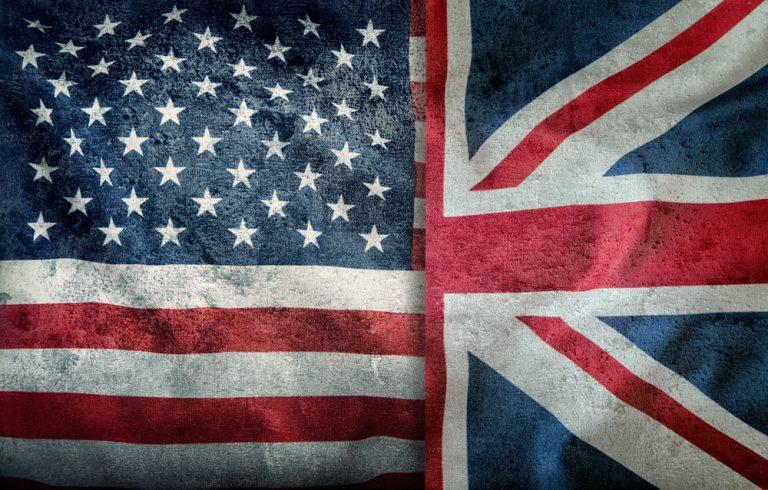
Boris Johnson has told the UK that he will drive a hard bargain, following plans to negotiate a trade deal with the US.
Last week, Liz Truss welcomed Robert Lighthizer into London – as the two parties looked to sit at the negotiating table to discuss trade formalities.
Since the December election, PM Johnson has made a number of pledges including trade deals outside of Brexit.
The last few weeks have been busy for the British Prime Minister, and certainly a deal with the United States should fall at the top of his priority list.
The newly elected Conservative Government have promised to boost the British economy by almost £3.5 billion, benefit areas such as Scotland, the Midlands and also maintain food standards across the United Kingdom.
There was heavy speculation that the NHS could also be partially sold off, in an attempt to partially privatize the UK Healthcare System, in similar fashion to the US.
However – Johnson has reaffirmed his status saying that the NHS is not for sale, and that the NHS will continue to work in the interest of British people.
“We’re going to drive a hard bargain to boost British industry,” said Mr Johnson.
“Trading Scottish smoked salmon for Stetson hats, we will deliver lower prices and more choice for our shoppers.”
Talks with the US are expected to start this month – however there is more optimism that a post-Brexit deal with the United States can be struck, following the difficulties that Johnson currently faces in Brussels.
The relationship between Johnson and Trump seems to be amicable – Trump is currently embarking on his election campaign and has visited India most recently, whilst looking to capture the American vote to give himself another tenure in office.
Frances O’Grady, general secretary of the Trades Union Congress, said: “The government should be focused on getting a good trade deal with the EU – not cosying up to Donald Trump.”
Following sanctions and exports between both nations, it is difficult to speculate which direction these talks could go in.
The US is the UK’s second largest trading partner after the EU, and this is something that PM Johnson will have to bear in mind.
Following the apparent ‘decline’ of the special relationship with the USA, Boris Johnson will have to make sure that he strikes a balance between getting a good deal with the US and not hindering further relations – which could lead to tariffs, embargo and other economic sanctions.
Senior shares jump 7% on mixed final results

Senior plc (LON:SNR) have seen their shares spike following a mixed set of final results.
Shares in Senior trade at 152p (+7.65%). 2/3/20 10:12BST.
The engineering and defense first said that its’ results had been pleasing, despite the recent problems that Boeing (NYSE:BA) had been facing.
The Chief Executive noted: “Senior has delivered robust full year results for 2019 with adjusted earnings per share growth and a strong free cash flow performance. This result has been delivered in a period where the business has faced challenges caused by the grounding of the Boeing 737 MAX fleet.
The civil aerospace market has been impacted by the grounding of the Boeing 737 MAX fleet following the Lion Air and Ethiopian Airlines tragic air accidents. As a consequence, in mid-April 2019 Boeing reduced the programme build rate from 52 airplanes per month to 42 per month. In December 2019, Boeing announced the temporary suspension of 737 MAX production beginning in January 2020, pending the certification and return to service of the airplane.”
Despite the strong final results, Senior did allude to drops in revenue across 2020, however shareholders have reacted optimistically to the update provided today.
The firm reported that revenue had jumped 3% across 2019 to £1.11 billion, but without currency movements the figure saw a decline.
Looking at profit figures, Senior saw their pretax profits fall by 53% on an actual basis, tp £28.7 million.
The FTSE 250 listed firm added that they had been bruised by a £22 million loss in disposal following the sale of its Flexonics operations in France in 2019.
The aerospace division, saw their revenues increase by almost 6% to £835.4 million, however adjusted operating profit in the division dropped 8.7% to £76.4 million.
Going forward, the firm did not give such an optimistic sentiment for 2020. Senior expect Aerospace revenue to drop by around 20%, as performance will be more second half weighted.
Senior have proposed a final dividend of 5.23p per shares, giving a 2019 total of 7.51p.
Commenting on the results, David Squires, Chief Executive of Senior plc, said:
“Senior delivered robust full year results for 2019 with adjusted earnings per share growth and a strong free cash flow performance. This result has been achieved in a period where the business has faced challenges caused by the grounding of the Boeing 737 MAX fleet. It is clear that our performance in 2020 will continue to be affected by the 737 MAX situation and the Company is taking all necessary actions to mitigate the impact.
We are closely monitoring the development of the coronavirus (COVID-19), including the potential impact of any macroeconomic disruption on our end markets, our supply chain and those of our customers.
However, we entered 2020 with a robust balance sheet and a continued focus on cost, efficiency and cash generation. We are taking firm actions to restructure the business and have every confidence in returning to growth in 2021.”
Senior review their Aerostructures division
In December, the firm gave an update saying that they would be performing an internal review. Senior confirmed that it has been reviewing all strategic options for its Aerostructures business, which includes an early stage assessment of a potential divestment of the division,” the FTSE 250 listed company said. The Hertfordshire-based company added that the Aerostructures review is in line with Senior’s policy to review its portfolio and evaluate all its operating businesses in terms of their strategic fit within the group. The Aerospace unit supplies components for airplanes such as Boeing accounts for 70% off overall revenues, and the aerospace business includes divisional sections such as fluid conveyance and engines.Sage dispose Brazilian operations within £10 million deal
The Sage Group Plc (LON:SGE) have told the market that they have sold their Brazilian business on Monday.
The FTSE 100 listed firm said that the deal had been completed with local management in a deal valued at up to £10 million.
Following its annual results – which were published last year, Sage noted that it was looking to offset its Brazilian operations.
The initial deal will cost £1 million, and there could be a deferred consideration of up to £9 million.
Sage added that the business had decided to restructure their focus and strategy – more towards subscription software services and products.
The firm commented: “This divestiture is part of Sage’s strategy to focus on subscription software solutions that are in or have a pathway to the Sage Business Cloud.”
The deal is expected to be completed within the next two months – and shareholders have been pre-warned that the firm may face a loss on disposal of £15 million.
Sage concluded: “Sage expects to report a statutory non-cash loss on disposal of £15m on completion, of which £11m reflects the reclassification of foreign exchange losses from other comprehensive income to the income statement.”